
12 Moody Half Bathroom Ideas That Make a Tiny Space Feel Bigger
A tiny half bathroom is the best room in the house to go dark. It’s small enough that one bold move covers the whole space, guests see it more than any other room, and deep colors do something surprising here: instead of closing the room in, they blur the corners and make the walls feel farther away. Below are 12 moody half bathroom ideas that work in genuinely small spaces, each built around paint, light, or texture rather than square footage you don’t have. The same small-space logic applies upstairs — see these ideas for making a tiny space feel bigger in the bedroom.

1. Drench the Whole Room in One Deep Color

Color drenching means taking one deep shade across the walls, trim, door, and ceiling with no white breaks. In a tiny half bath, this erases the visual lines that tell your eye exactly how small the room is, so the space reads as one continuous cocoon instead of four tight walls. Charcoal, inky navy, and deep olive all work. Tip: use the same sheen everywhere for the smoothest effect, and paint a large test swatch to check it in both daylight and evening light before committing.
2. Pick a High-Gloss Finish to Bounce Light Around
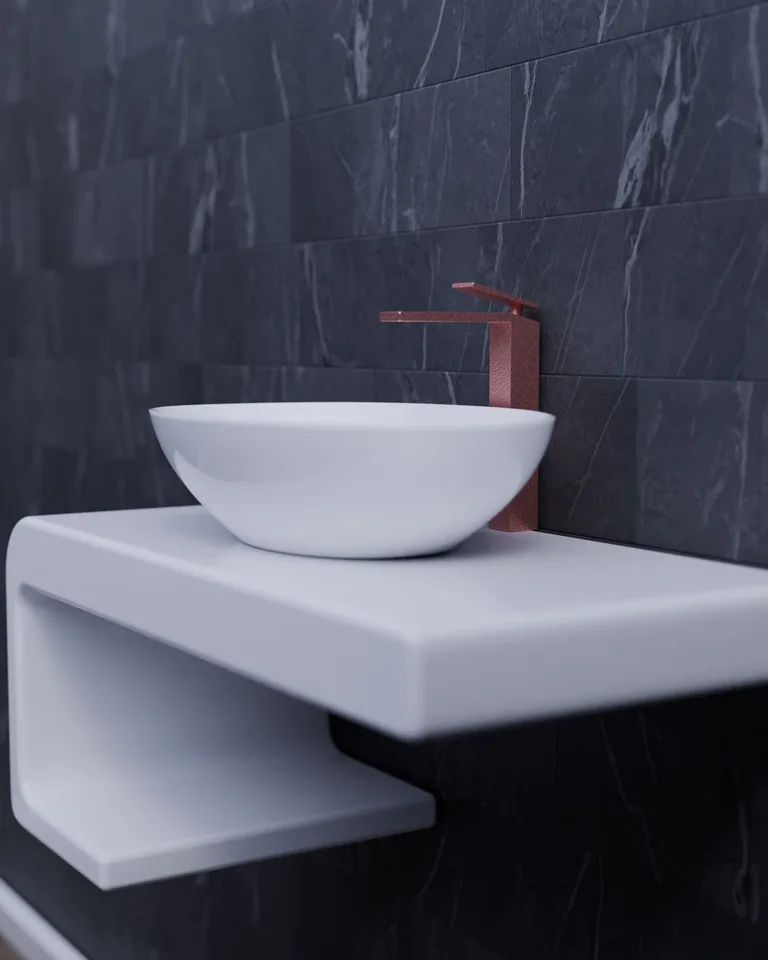
Flat dark paint absorbs light, but a satin or semi-gloss dark paint reflects it. In a windowless powder room, that reflected glow is what keeps the room from feeling like a cave. Glossy deep walls act almost like a dim mirror, pushing lamplight and sconce light back into the room. Tip: gloss shows every wall imperfection, so fill, sand, and prime carefully first — or save the gloss for the lower half of the wall and go matte above.
3. Hang an Oversized, Statement Mirror

A half bath usually has exactly one mirror, which makes it the highest-impact piece in the room. Go bigger than feels sensible — a mirror that nearly fills the wall above the sink doubles the visible light and visually doubles the room. An antiqued or ornate frame adds character against dark walls without needing any other decor. Tip: hang it so it reflects the prettiest light source in the room, not the toilet or the door.
4. Swap Cool Bulbs for Warm, Low-Kelvin Sconces
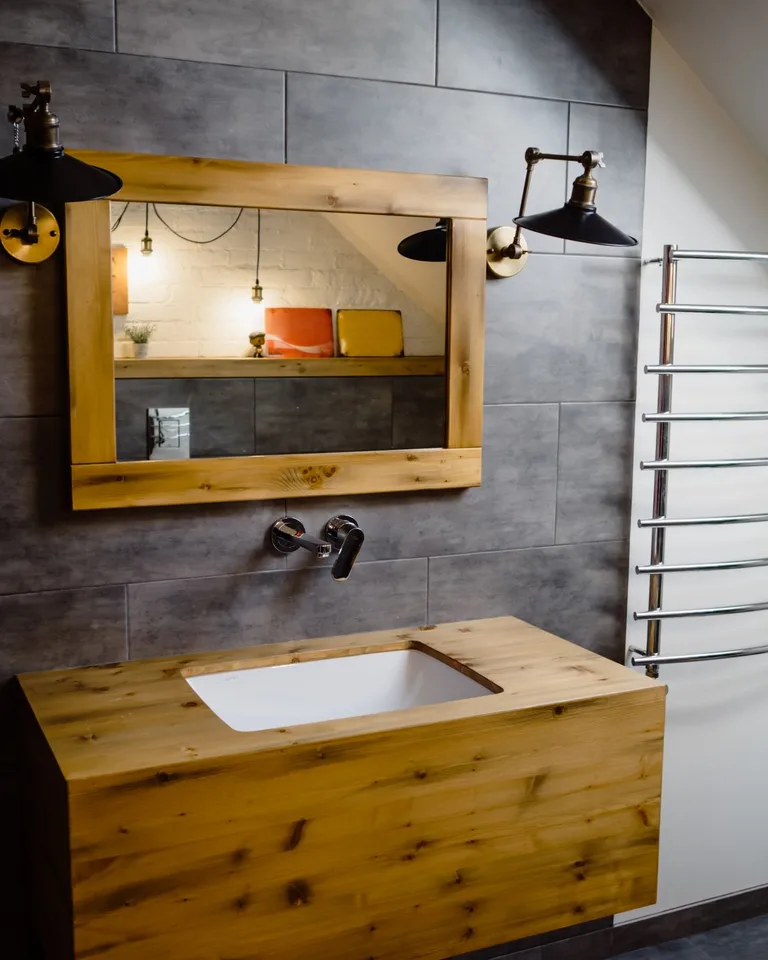
Harsh white overhead light is what makes dark bathrooms feel gloomy instead of moody. Replace it with warm sconces around 2700K, mounted at eye level on either side of the mirror. The warm tone flatters skin, softens dark paint, and creates the layered glow that makes small dark rooms feel intentional — the same thinking behind lighting a bedroom vanity well. Tip: put the sconces on a dimmer — full brightness for getting ready, low for atmosphere when guests visit.
5. Ground the Space with Matte Black Fixtures

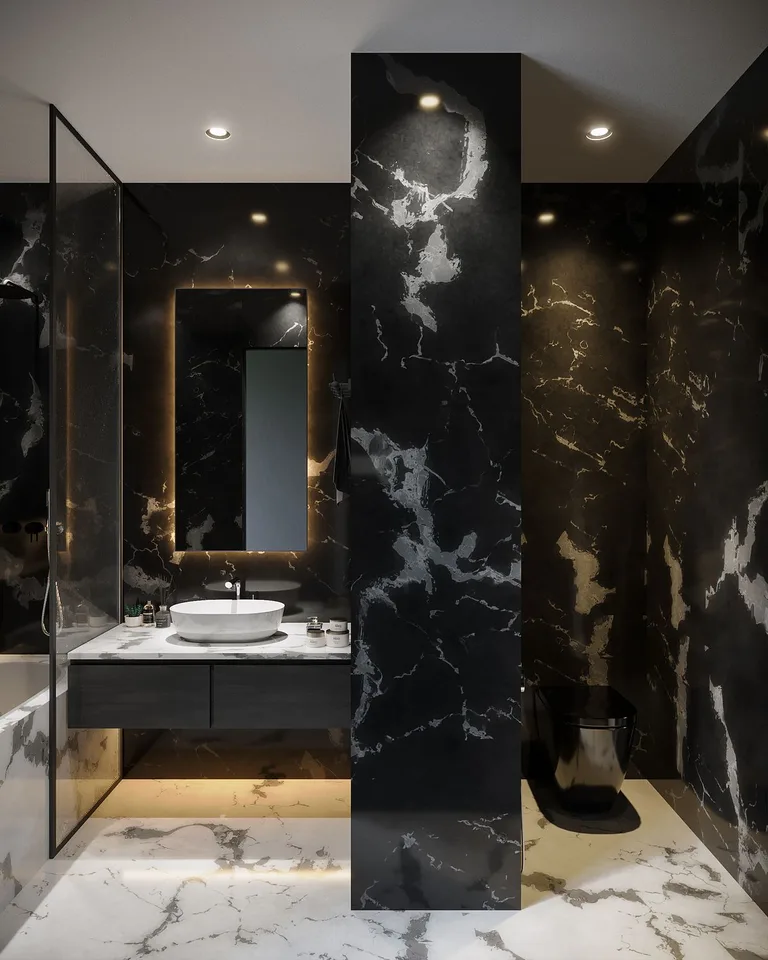
Matte black faucets, towel hooks, and cabinet pulls disappear just enough against dark walls to keep the room calm, while their crisp edges give the eye something to land on. Unlike chrome, black fixtures don’t create bright hotspots that chop up a small room — the same reason black works as punctuation in a black and white bedroom. Tip: choose fixtures with a fingerprint-resistant coating — matte black shows water spots and smudges faster than any other finish.
6. Float the Vanity to Reveal More Floor

A wall-mounted vanity frees up the floor underneath, and visible floor is one of the strongest signals of spaciousness in a small room. It also makes the room far easier to clean — nothing blocks the mop. In a moody palette, a floating vanity in walnut or black keeps the look light without sacrificing the drama. Tip: confirm your wall can carry the load; a floating vanity plus a stone top is heavy, so anchor into studs or add blocking.
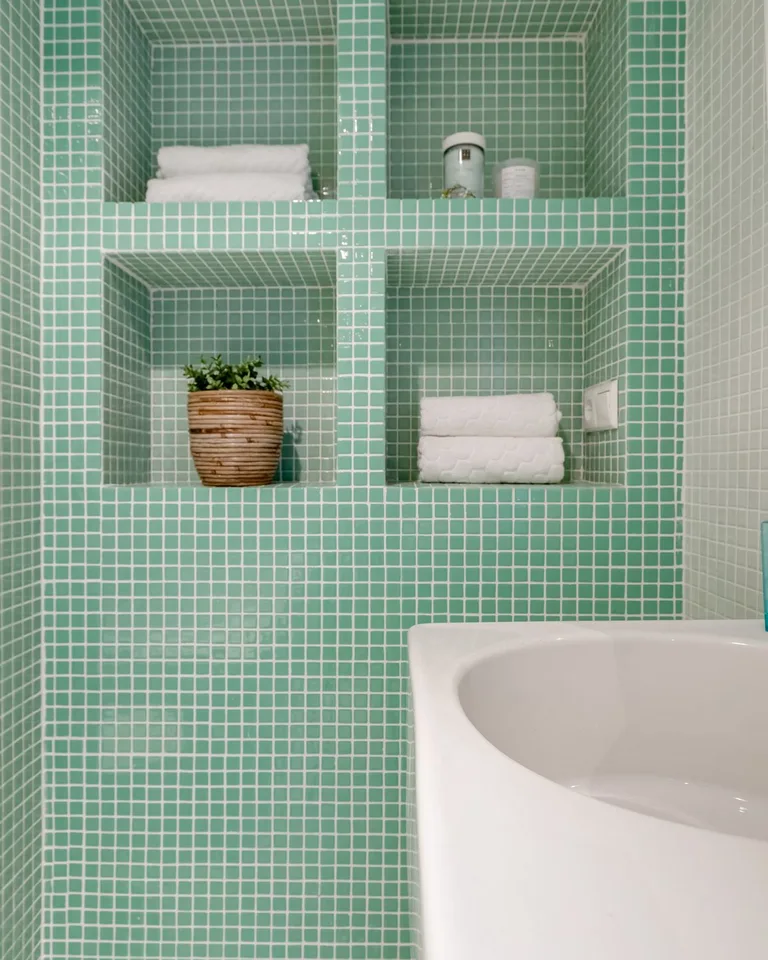
7. Tile Halfway Up in Deep Green Zellige

Handmade-look zellige tile in deep green catches light differently on every tile, so the wall shimmers instead of sitting flat. Running it halfway up the wall — with dark paint above — gives you texture at eye level where it matters most, without the cost or visual weight of full-height tile. Tip: keep grout lines tight and use a grout color close to the tile; high-contrast grout makes handmade tile look busy in a small space.
8. Add Drama with Moody Botanical Wallpaper
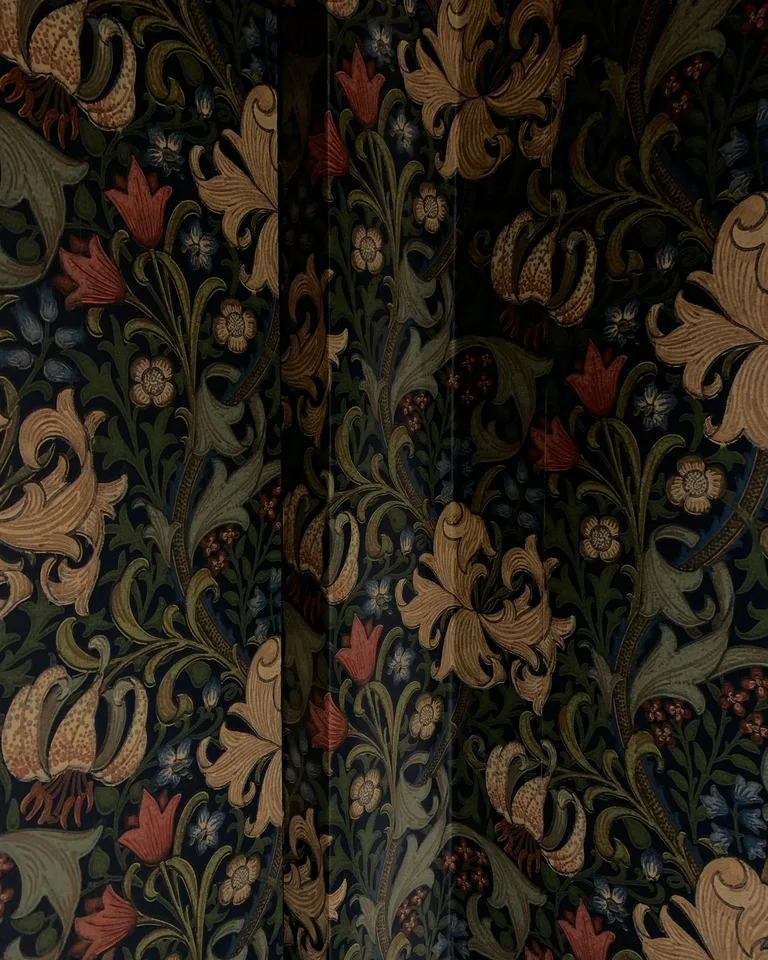
One wall of oversized botanical wallpaper turns a plain powder room into a jewel box overnight. Dark floral or chinoiserie patterns thrive in small half baths because the room is viewed all at once — the pattern reads as art, not clutter. Peel-and-stick versions make this one of the easiest renter-friendly upgrades around — no paste, no damage. Tip: use vinyl or moisture-resistant wallpaper near the sink, and consider papering just the wall behind the mirror for maximum impact at minimum cost.
9. Layer Texture with Dark Limewash or Stone-Look Walls

When every surface is dark, texture does the talking. Limewash, Roman clay, or a dark stone-look finish gives walls a soft, cloudy movement that flat paint can’t match, adding depth without adding color. In a tiny room, that subtle variation keeps dark walls interesting from every angle. Tip: limewash is forgiving to apply but seal it properly in a bathroom — moisture and unsealed plaster are a bad combination.
10. Warm It Up with Walnut and Wood Accents

Dark rooms need at least one warm material to feel inviting rather than cold. Walnut is the classic choice — a wood vanity, mirror frame, or even a small stool introduces honeyed tones that glow against charcoal or navy walls. The contrast makes both the dark and the wood look richer. If you love that honeyed warmth, warm-toned neutrals like warm beige build a whole bedroom palette around it. Tip: one wood tone is enough; mixing walnut, oak, and teak in a 30-square-foot room gets chaotic fast.
11. Hide an LED Strip Behind the Mirror

A backlit mirror is the secret weapon of moody small bathrooms. The hidden LED strip throws a soft halo onto the dark wall behind it, outlining the mirror in light and creating depth exactly where the room needs it. It doubles as flattering, shadow-free task lighting. Tip: choose a mirror with a built-in defogger if your half bath shares ventilation with a shower — a fogged mirror kills the effect.
12. Pair a Dark Vanity with a Brass Faucet

If a full dark room feels like too much, start with the vanity. A near-black vanity cabinet grounds the space and hides wear, while a single brass or gold faucet becomes the jewelry of the room. The warm metal pops against the dark cabinetry in a way it never could against white. Tip: repeat the brass once more — a mirror frame or cabinet pull — so the faucet looks chosen rather than accidental.
Frequently Asked Questions
Won’t dark paint make my small bathroom feel smaller?
Not necessarily. Dark colors blur the edges and corners of a room, which can make walls feel farther away rather than closer. The key is treating the room as one continuous space — painting trim and ceiling the same tone — and balancing the dark color with warm lighting and a good mirror.
Is it okay to use dark colors in a small bathroom with no window?
Yes — windowless powder rooms are actually ideal candidates for dark palettes, since there is less natural light creating harsh contrast. Layer your artificial light instead: warm sconces at the mirror, a soft overhead on a dimmer, and if possible an LED strip behind the mirror.
Can I mix dark walls with light flooring in a small bathroom?
Absolutely. Light flooring against dark walls creates a clean contrast line that grounds the room and keeps it from feeling heavy. Pale tile or light wood-look flooring also bounces a little light upward, which helps in rooms with a single light source.
What lighting works best in a dark small bathroom?
Warm white light around 2700K–3000K, layered from at least two sources. Sconces at eye level beside the mirror give the most flattering light; add a dimmable overhead for general brightness. Avoid a single cool-white ceiling fixture, which is what makes dark bathrooms feel flat and gloomy.
What paint finish should I use on dark bathroom walls?
Satin or semi-gloss for moisture resistance and easy cleaning, with the bonus that a slight sheen reflects light around a dark room. In a well-ventilated half bath without a shower, a matte or eggshell dark paint also works and hides wall imperfections better — just make sure it is rated for bathrooms.
Start with the change that costs the least — usually paint and lighting — and live with it for a week before deciding whether the room needs tile, wallpaper, or new fixtures. In a space this small, one confident dark move often does the work of five. And when fall rolls around, channel the same drama into curated Halloween decor finds that look expensive, not cheesy.