
12 Warm Minimalist Living Room Ideas for a Calm, Cozy Home
A warm minimalist living room is not about owning less for the sake of it. It is about keeping only what earns its place, then making every surface, fabric, and light source feel inviting. The formula is simple: a warm white or cream base, at least four natural textures, wood you can actually see the grain in, and layered lighting that stays under 2700K in the evening. Get those four things right and the room feels calm instead of cold, personal instead of staged.
This guide walks through twelve warm minimalist living room ideas built on that formula. None of them require a renovation, and most of them work in a single weekend. You will find exact measurements — rug sizes, coffee-table distances, bulb temperatures — because warm minimalism fails or succeeds in the details, not in the mood boards.

Before the ideas, one rule worth memorizing: warm minimalism runs on discipline, not decor. Pick one accent color (terracotta, rust, olive, or cognac brown all work) and repeat it two or three times around the room. That single repetition is what keeps a pared-back space feeling designed rather than empty, as our rust accent living room decor ideas guide shows in more detail.
Start With a Low, Cream Linen Sofa

The sofa is the single biggest surface in the room, so it sets the temperature. A low-profile sofa in warm cream or oatmeal linen reads as relaxed and makes ceilings feel higher. Look for slim arms, visible wood or matte black legs, and upholstery with a visible weave — linen, cotton bouclé, or a tight performance weave all work. Avoid bright white fabric; under evening light it glows blue and undoes all the warmth you are building.
One sofa is enough for most rooms. Warm minimalism works best when the seating is a single confident piece rather than a matched set, and a low cream sofa lets the wall color and textures around it do the talking. Keep the throw pillows to three or fewer in a single texture family so the sofa stays the calm anchor.
One last foundation move before the ideas: repaint in warm white, not bright white. It is the cheapest change on this list and the one most people get wrong. Swap stark white for a warm white with a yellow or red undertone, and test at least three swatches on your actual wall across a full day, because undertones shift dramatically between morning and evening light. The same temperature logic applies in every room of a warm home — the warm white kitchen ideas walkthrough explains the math in depth. Paint the ceiling two or three shades lighter than the walls rather than brilliant white, and keep skirting boards in the same tone as the walls.
Add One Rattan or Cane Chair

Mixing rather than matching is what separates a warm minimalist room from a furniture showroom. One rattan or cane accent chair beside a fabric sofa adds visual rhythm without adding noise. The unifying rule: every piece must share the same color temperature, so pair light rattan with warm woods and cream fabrics, not with cool gray or chrome.
Rattan also solves the hardness problem. Minimalist rooms full of upholstered rectangles can feel flat; one woven piece introduces an open, airy texture that catches light differently through the day. Choose a chair with a simple curved silhouette — soft curves are one of the fastest ways to warm up clean lines.
Size the Rug Correctly
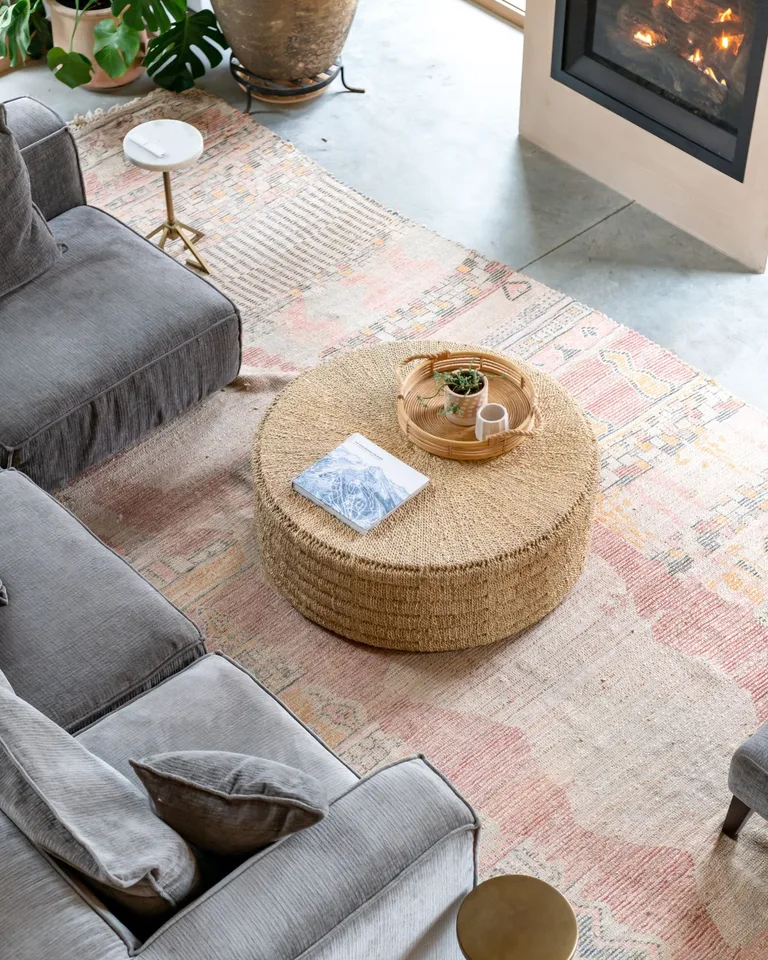
The most common mistake in minimalist living rooms is a rug that is too small. A floating rug under the coffee table makes the seating area look like an island and shrinks the room. For most living rooms, an 8 by 10 rug works; larger rooms need 9 by 12. The test is not the room size but the furniture: at minimum, the front legs of every seat should sit on the rug, with 8 to 24 inches of bare floor between the rug edge and the walls.
Material matters as much as size. A flat synthetic rug adds nothing; a wool, jute, or cotton rug adds one of the four textures your room needs. Wool is the warmest underfoot and dampens the echo that makes bare minimalist rooms feel harsh, while jute adds a rougher, more organic grain for contrast against smooth upholstery.
Hang Floor-Length Linen Curtains

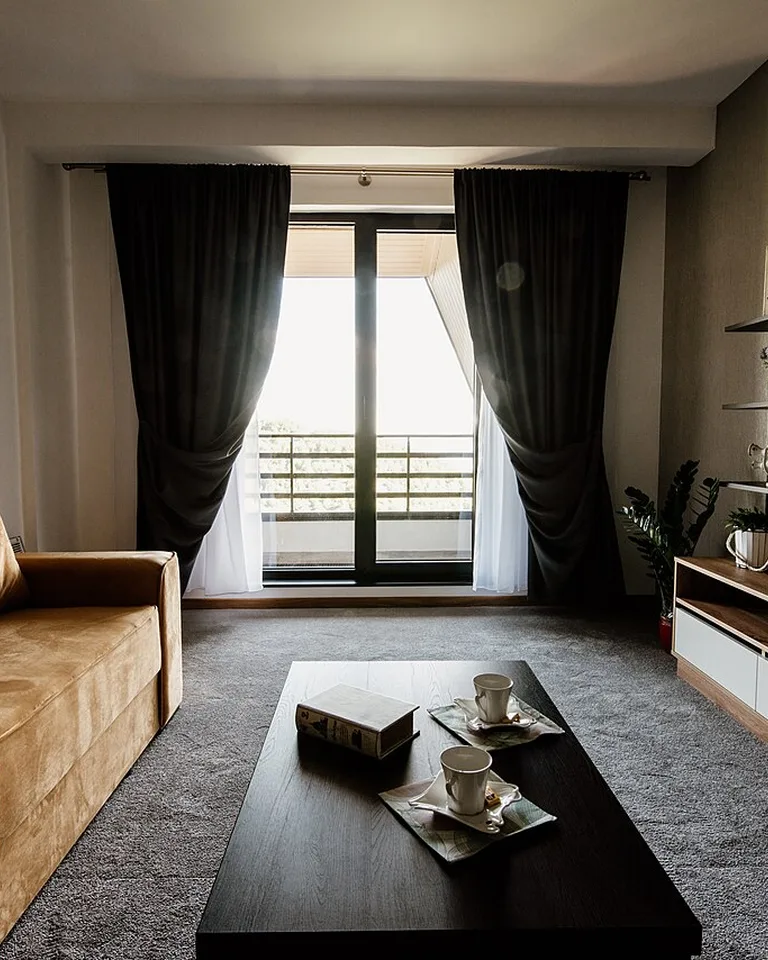
Bare windows make a minimalist room feel unfinished and cold, especially at night. Dense, floor-length curtains in natural linen or cotton soften the architecture, kill window glare, and — with a thick wool rug — noticeably reduce the echo that plagues rooms with hard floors. Mount the rod high and wide so the window looks larger and the fabric stacks off the glass during the day.
Keep the color in the warm-neutral family and match the wall undertone rather than the sofa fabric — the sofa, curtains, and rug in the exact same finish is the fastest way to make a room read as flat. A sheer linen layer under a heavier drape gives you daytime privacy without losing daylight.
Layer One Great Knit Throw
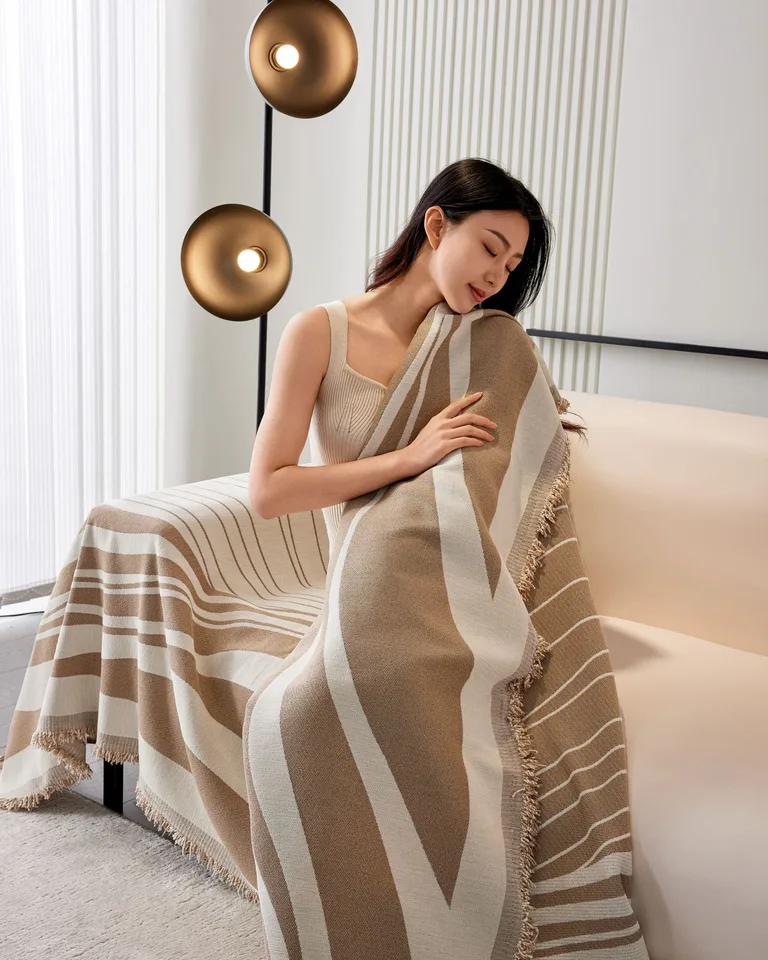
You do not need a pile of throws; you need one with real texture. A chunky knit, waffle weave, or washed-linen throw draped over one sofa arm introduces the soft, touchable layer that minimalism often lacks. Drape it casually — folded military-neat throws look like a store display, while a loosely thrown one signals the room is actually lived in.
Stick to the room’s palette rather than introducing a new color. A cream throw on a cream sofa sounds boring, but when the weave is different from the upholstery, it reads as texture rather than matchiness. If you want color, reserve it for the throw and repeat that same tone once elsewhere, like a small vase or a book cover.
Anchor the Room With a Sculptural Wood Table

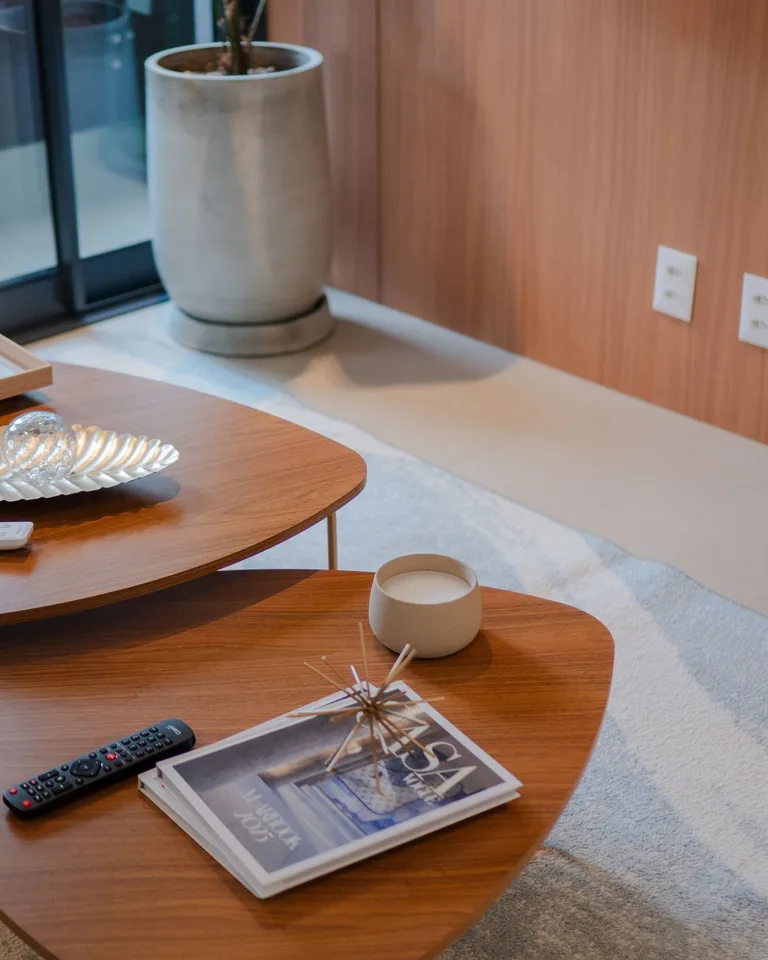
One substantial coffee table beats a cluster of small tables every time. Choose solid wood — oak, walnut, or even a live-edge slab — with a finish that shows the grain, because visible wood grain is doing more warming work than any accessory. A round table softens the geometry of sofas and chairs; a rectangular one suits longer sofas. Either way, keep it at roughly two-thirds the sofa’s length, 14 to 18 inches from the sofa, and at about the same height as the seat cushions.
Wood tones do not have to match perfectly. Deliberately mixed woods read as collected and personal, which is exactly the warmth a minimalist room needs. For more on letting wood grain lead the palette, the natural wood cabinet ideas guide breaks down how to pair tones without clashing.
Bring In One Statement Plant

A single large plant does what a dozen small accessories cannot: it adds life, height, and an organic shape that contrasts with all the rectangles. An olive tree, fiddle-leaf fig, or tall snake plant in a simple clay or ceramic pot fills an empty corner without filling it with clutter. Place it where it gets the light it needs and let it be the only tall thing in that corner.
Scale is the whole game here. One 5-foot plant reads as intentional; five small succulents scattered around read as clutter. Keep the pot simple — raw terracotta, matte ceramic, or a woven basket cover — so the plant, not the container, is the statement.
Style a Few Handmade-Look Ceramics
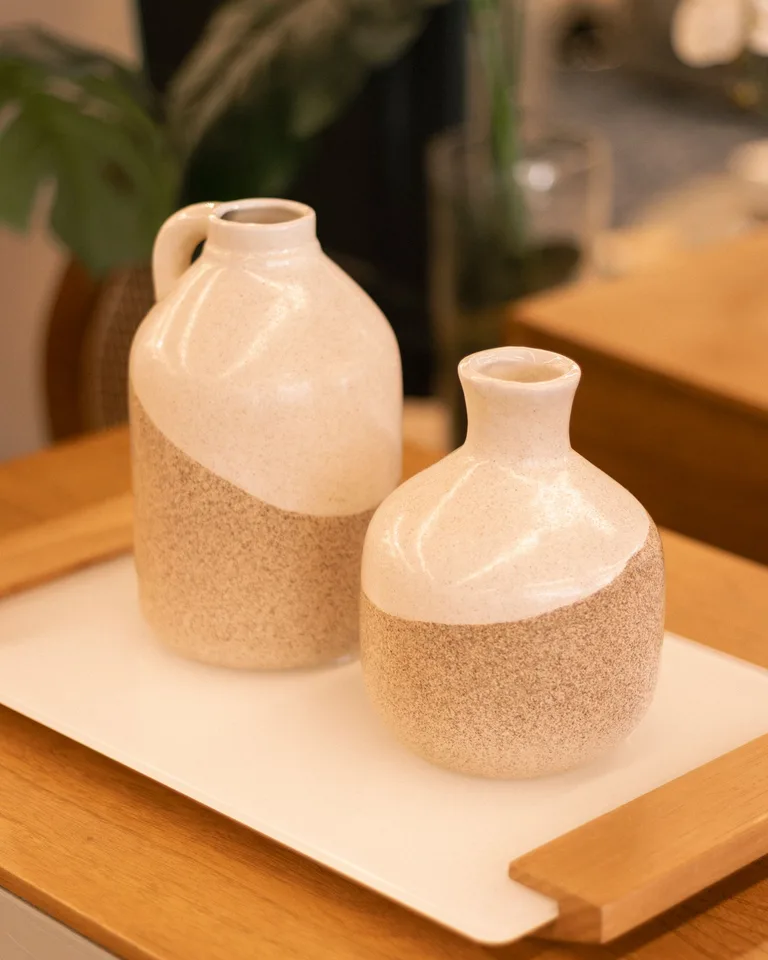
Warm minimalism allows decoration, but only a few pieces, and handmade-looking ceramics are the ideal choice. Three vessels in the same material family — a tall vase with dried branches, a low bowl, a small pitcher — give surfaces something to hold without looking decorated. Matte stoneware, raw clay, and speckled ceramic all catch light in a way glossy porcelain does not.
The discipline matters: five to seven personal objects on display at a time is a good ceiling for a minimalist living room. Group your ceramics in odd numbers on one surface rather than spreading them across every shelf, and swap a piece seasonally instead of adding more.
Hide Everyday Clutter in Woven Baskets

Minimalism falls apart the moment remotes, chargers, and spare blankets have nowhere to go. Lidded baskets in seagrass, rattan, or woven cotton hold all of it while adding another natural texture to the room. One large basket beside the sofa for throws and one medium basket for the miscellany most rooms accumulate keeps every surface clear.
This is the practical side of the “fewer, better pieces” rule. Closed storage is what lets the open space stay open — a minimalist room that is actually used needs somewhere for the mess to disappear, and woven texture beats a plastic bin every time.
Hang One Large, Quiet Artwork
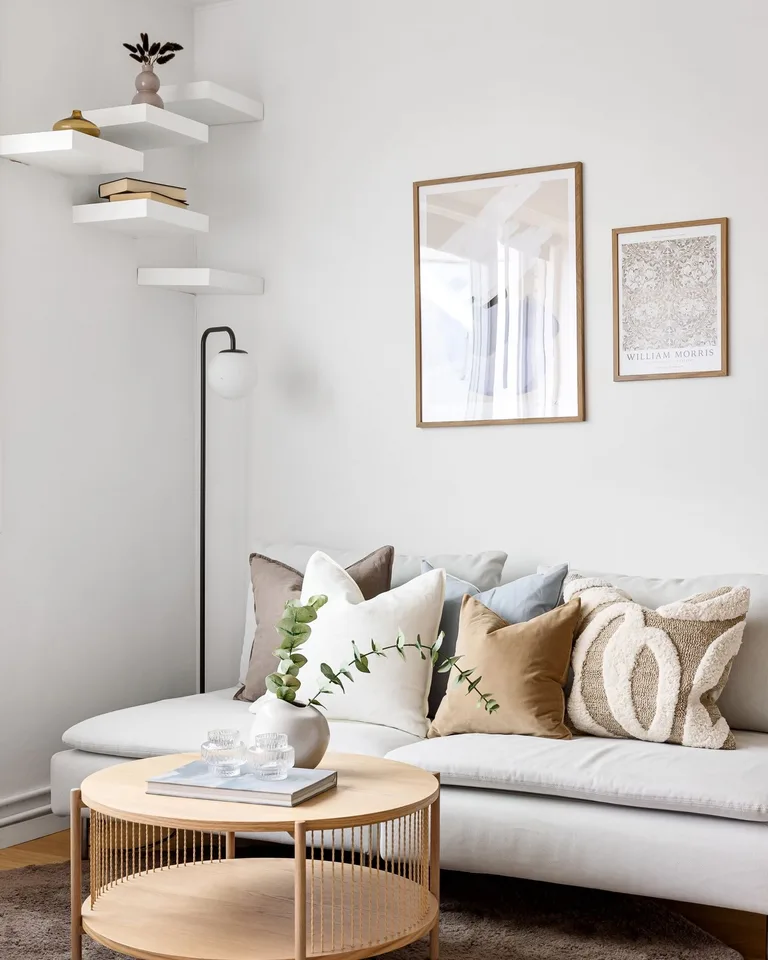
Walls are where minimalist rooms most often feel empty. The fix is not a gallery wall — it is one large piece that anchors the seating area. A neutral abstract canvas, a simple line drawing, or a framed textile in the room’s palette gives the eye somewhere to rest without introducing visual noise. Hang it so its center sits at eye level from a seated position, roughly 57 inches from the floor.
Scale beats quantity. A single 3-by-4-foot piece over the sofa does more warming work than six small frames scattered around, and it keeps the walls feeling intentional. Choose art with at least one warm tone pulled from the room — clay, ochre, warm gray — so it ties into the palette instead of floating apart from it.
Layer Warm Light and Kill the Overhead
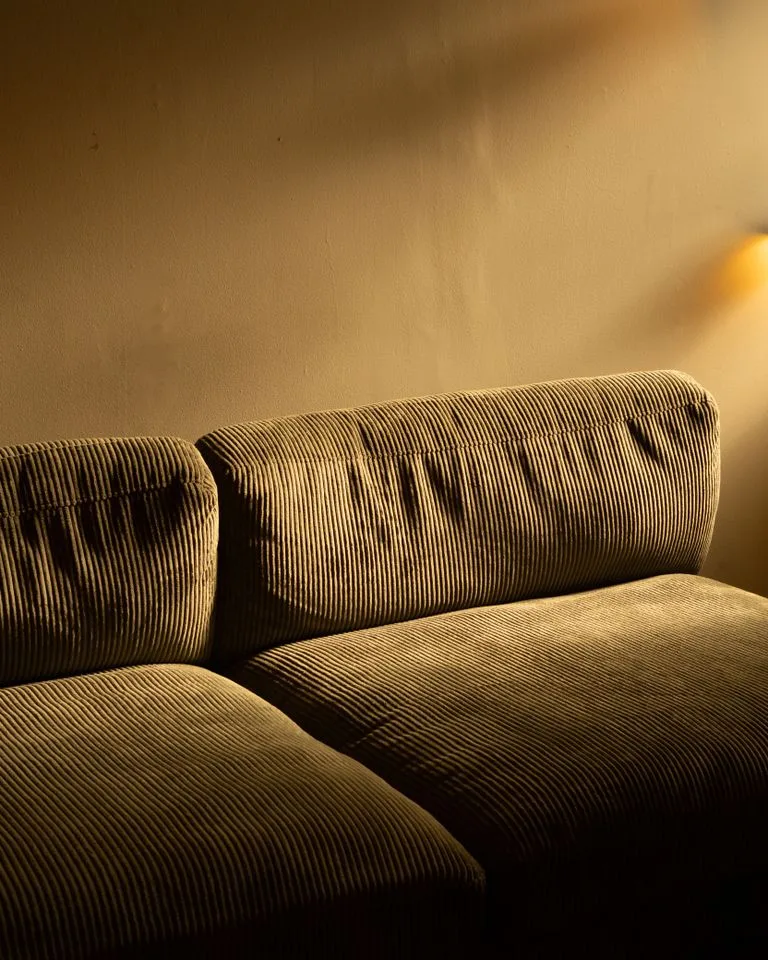
Lighting is the fastest lever in this entire list. One harsh overhead fixture makes even the warmest room feel clinical, so plan three light sources at different heights instead: a floor lamp beside the seating, a table lamp on a side surface, and something small like candles or a low accent light. Switch every bulb to warm white around 2700K — it is the single bulb temperature that reads as candlelight rather than office.
Add dimmers if you can; being able to drop the room from daytime brightness to evening glow is what makes a minimalist space feel cozy after dark. Keep overhead lights off after 6 p.m. as a rule, and let the two or three lower sources carry the room. For the full cozy-lighting playbook, the cozy fall living room ideas guide layers these same principles seasonally.
Carve Out a Small Reading Corner
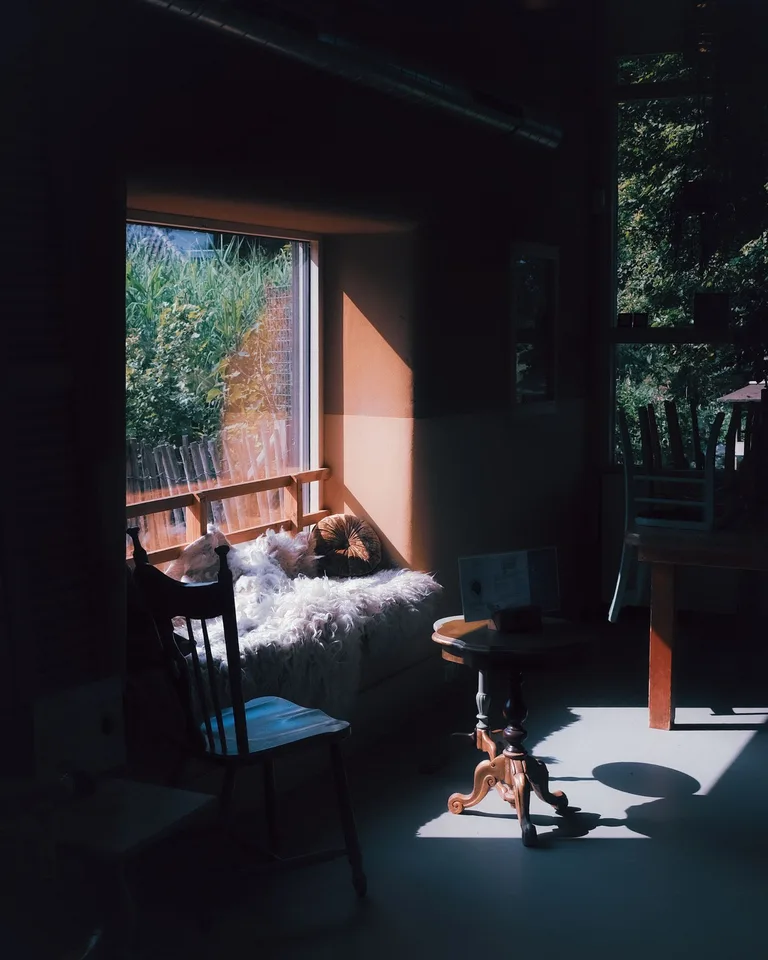
Every warm minimalist living room benefits from one spot that is unapologetically about comfort: an upholstered armchair with a small side table and a floor lamp behind it. It does not need much space — a 4-by-4-foot corner works — but it gives the room a human-scale destination beyond the main sofa, and it makes the whole space feel designed for actual evenings rather than photographs.
Keep the corner in the same palette and material family as the rest of the room so it feels connected, not separate. A deep-toned accent chair in cognac or walnut brown can supply the room’s one darker note here, grounding the lighter palette around it. One throw and one small stack of books is all the styling it needs.
Frequently Asked Questions
How do I make a minimalist living room feel cozy?
Layer warm neutral colors, real wood, and at least four touchable textures — wool, linen, jute, rattan — over the room’s clean lines. Swap the overhead light for two or three warm lamps at 2700K, add one large plant, and keep five to seven personal objects on display so the room feels lived in rather than staged.
What colors are best for a warm minimalist living room?
Cream, warm beige, taupe, and warm greige make the calmest base, with walnut brown, terracotta, olive green, or cognac as a single repeated accent. Avoid bright white and cool grays; they pull the temperature down no matter how many textures you add. The texture-layering approach behind this palette is the same one behind texture-first neutral design elsewhere in the home.
Is warm minimalism the same as Japandi?
They overlap but are not the same. Japandi is a specific blend of Japanese and Scandinavian design with its own rules about craftsmanship and restraint. Warm minimalism is broader — any minimalist room made warmer through natural materials, warm whites, and layered light, regardless of cultural references.
What size rug do I need for a minimalist living room?
An 8-by-10-foot rug suits most living rooms and a 9-by-12 suits larger ones. The real test is the furniture: the front legs of every seat should sit on the rug, with 8 to 24 inches of bare floor between the rug edge and the walls. When in doubt, size up one increment from what feels right.
How do I keep a minimalist room from looking empty?
Give the open space a job by framing one strong piece — a sculptural wood table, one large artwork, or a statement plant — and keep a few meaningful objects in view. Empty space reads as intentional when it is clearly arranged around something worth looking at.
Warm minimalism rewards patience more than spending. Start with paint and light, the two cheapest changes, then add texture one layer at a time — rug, curtains, throw, plant — and stop when the room feels calm. The goal was never less for its own sake; it is a room where everything left in it is something you actually like looking at.