
8 Entryway Bench Ideas With Storage That Keep Your Front Door Clear
The right entryway bench does two jobs at once: it gives you a place to sit while you deal with boots, and it hides the shoes, bags, and winter gear that pile up by the front door. For most entryways, the sweet spot is a bench 17 to 19 inches high, 14 to 16 inches deep, and long enough to fill the wall with a few inches to spare — with at least 36 inches of clear walkway in front so the door swings open without hitting it.
Below are eight bench ideas worth considering, each with sizing notes, placement tips, and styling ideas. The placement rule that matters most: measure your entry, map the bench footprint on the floor with painter’s tape, then open the door all the way. If the door edge touches the tape, the bench is too deep or too close.
1. The Lift-Top Storage Bench That Swallows Shoe Clutter
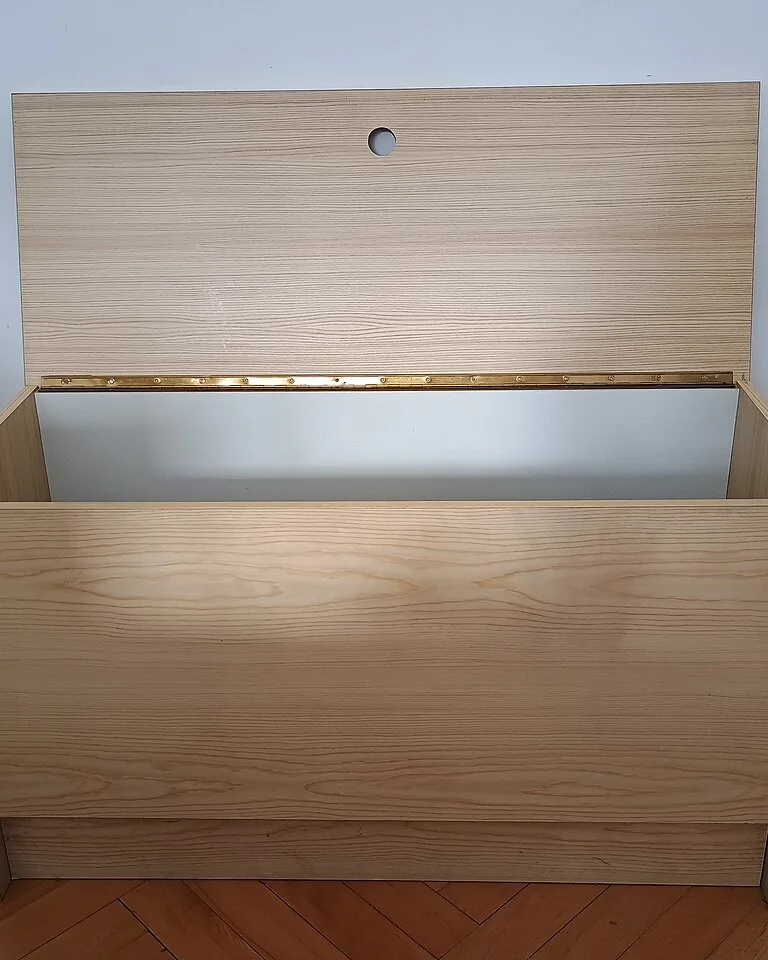
A lift-top bench is the hardest-working option for a busy household. The hinged seat opens to reveal one big compartment that holds shoes, umbrellas, dog leashes, and the everyday clutter that never makes it to a closet. Closed, it looks like a clean-lined bench; open, it is a catch-all with a lid.
This style suits families and anyone dealing with wet or muddy shoes daily, because everything disappears out of sight in one motion. Look for a model with soft-close hinges so the lid does not slam, and leave about six inches of clearance above the seat if you are placing hooks or a shelf over it — you need room to lift the top fully. If your entryway is tight on wall space, this bench on its own can carry the whole landing zone, the same way a dedicated drop zone organizes a kitchen entry.
2. A Cubby Bench With Baskets for Grab-and-Go Mornings
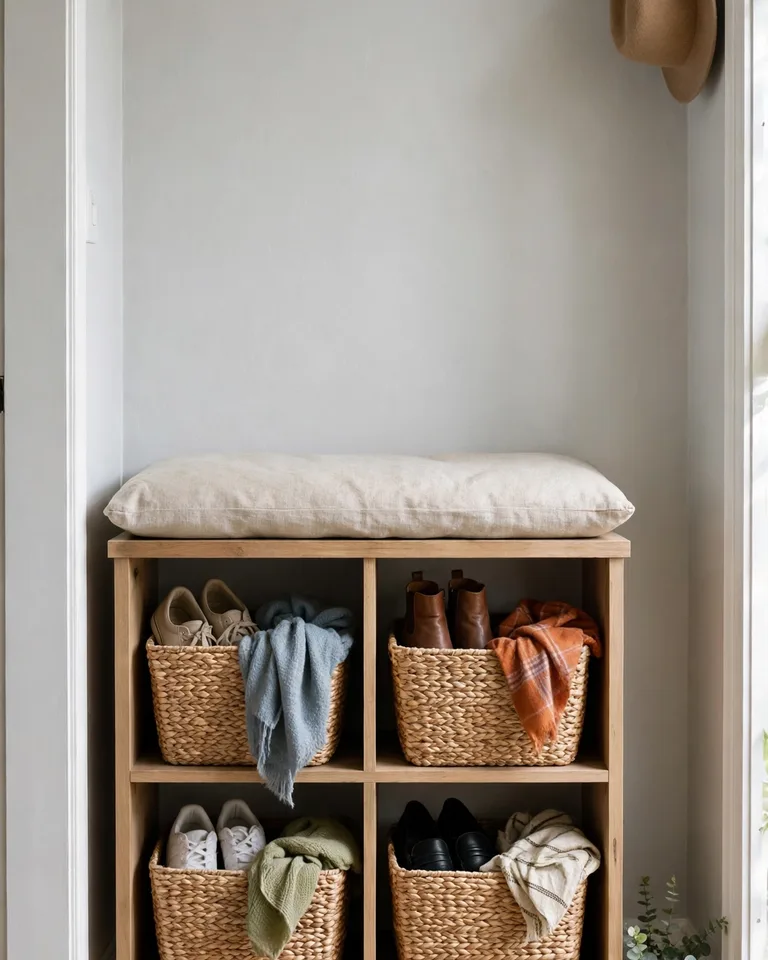
Cubby benches divide the space under the seat into open compartments, usually two to four. Slide a woven basket or fabric bin into each cubby and assign one per person or per category: work shoes, gym bag, pet gear, kid supplies. Because the compartments are open, you can grab what you need without opening anything.
The trade-off is visibility — open cubbies look tidier with matching baskets than with bare shoes on display. Measure your largest pair of boots before buying; many stock cubbies fit sneakers but not tall boots. This setup pairs well with a mudroom-style bench if your entry opens off a garage or back door.
3. A Slim 10-to-12-Inch Bench for Narrow Walls
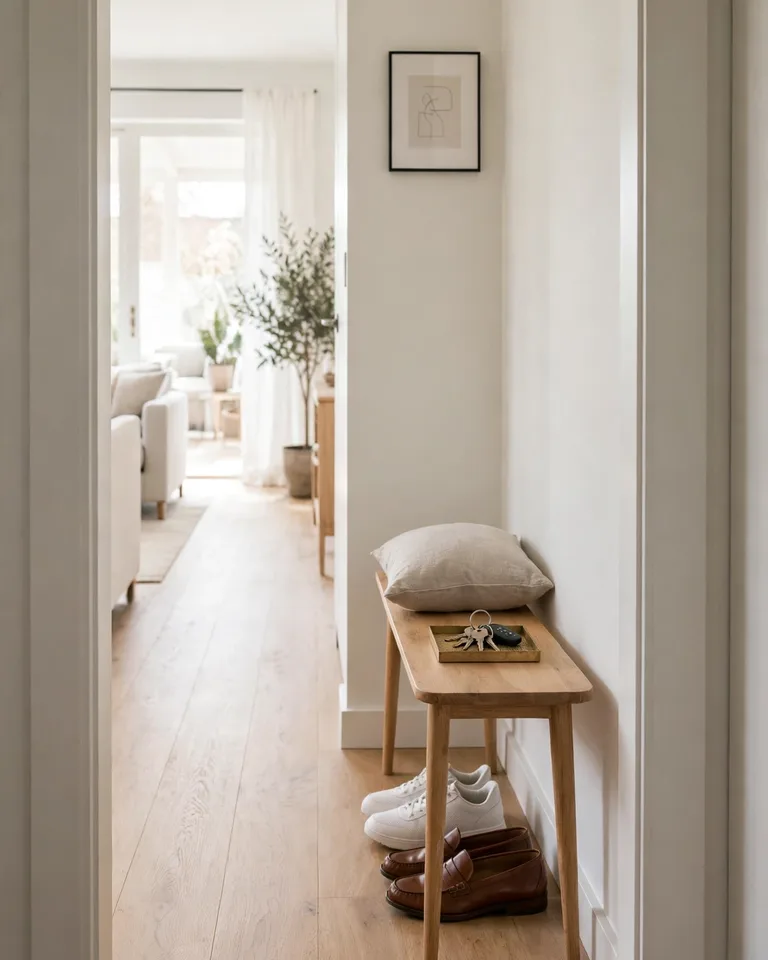
In a hallway entryway, depth is the number that matters. Anything deeper than about 12 inches starts eating the walking path. Slim benches built at 10 to 12 inches deep give you a real seat for pulling on boots while leaving a comfortable walkway — especially important in apartment entryways where the front door opens onto a narrow hall.
Choose a bench with open space or a low shelf underneath rather than a bulky cabinet base; seeing floor beneath it keeps a narrow hall from feeling blocked. Pair it with vertical storage — a peg rail or a row of hooks mounted above — so coats and bags live on the wall while the floor stays clear.
4. A Floating Bench That Keeps the Floor Visible
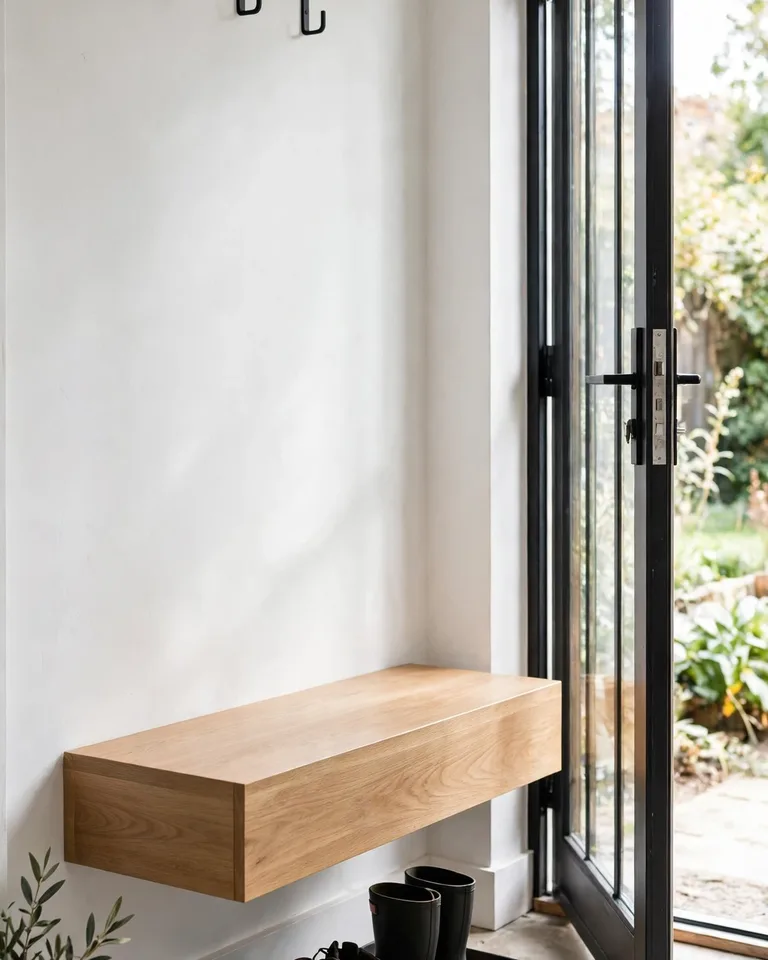
A wall-mounted floating bench bolts to the studs and hovers a few inches off the floor. Because the floor runs uninterrupted underneath, the entryway reads bigger and you can slide a boot tray or low basket beneath for extra shoe space. Visually it is the lightest bench you can put in a small space.
This is a strong pick for narrow or dark entryways, where every bit of visible floor helps — the same trick that makes very small entryways feel less cramped. Installation needs solid wall anchoring, so it is better for homeowners than renters; and keep the seat depth at 12 to 14 inches so it does not cantilever too far off the wall.
5. The Corner Bench for Tight Entryways
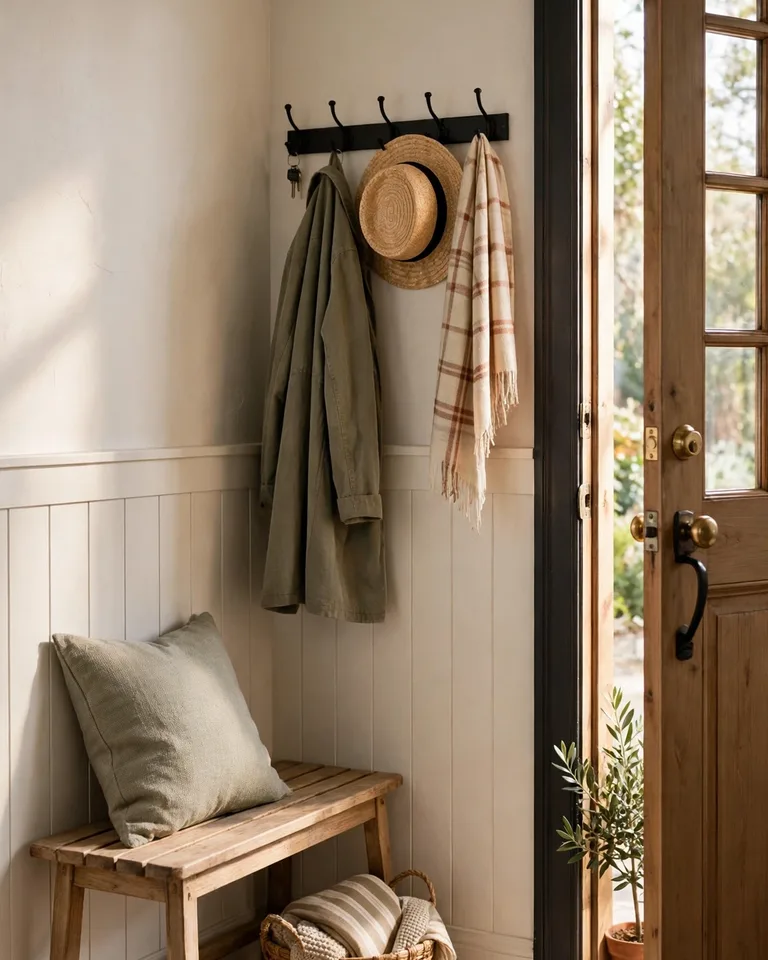
When no straight wall is long enough for a bench, a corner can do the job. A small bench set diagonally or an L-shaped corner unit uses dead space that would otherwise hold nothing, and it stays out of the door swing entirely because corners sit outside the door’s arc.
Keep the bench width to what the corner allows — usually 24 to 32 inches per side — and resist the urge to add a tall coat rack beside it, which can crowd the sightline when you walk in. A low corner bench plus one high hook rail on the adjacent wall is a complete, door-swing-safe setup for a small apartment entry.
6. The Hall Tree Bench: One Piece, Whole Landing Zone
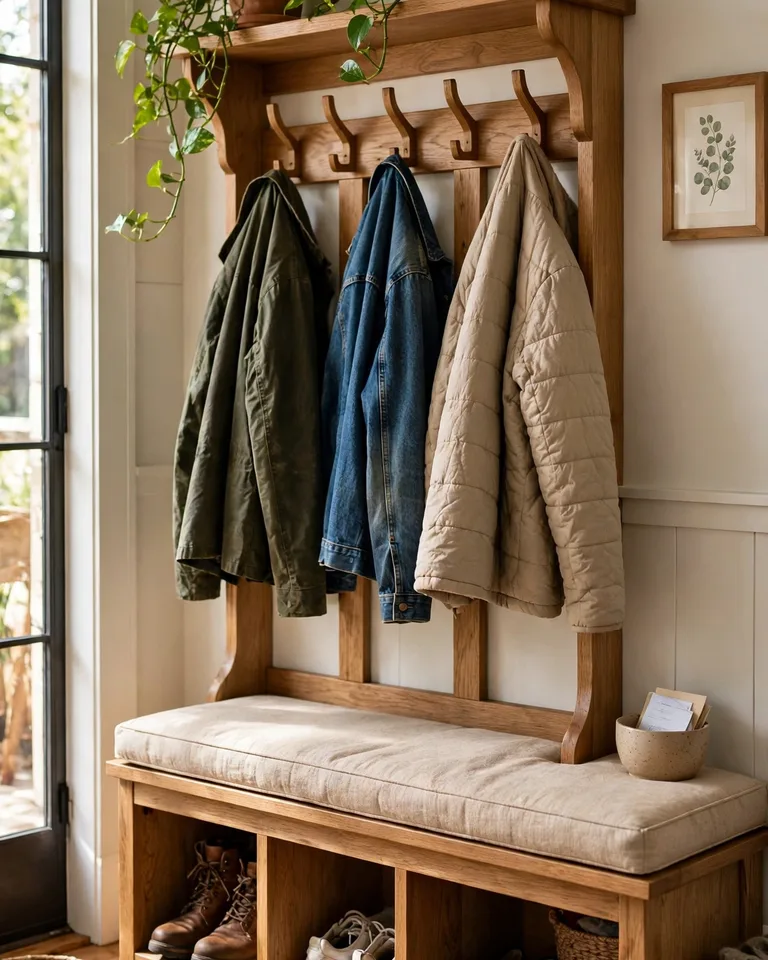
A hall tree combines a bench, coat hooks, a top shelf, and often cubbies into one tall unit. If your entryway has no coat closet, this single piece replaces three separate purchases and keeps everything — coats, shoes, hats, bags — in one organized column.
The catch is height: hall trees run 60 to 72 inches tall, so they need a full-height wall and can overwhelm a low-ceilinged foyer. Check that hanging coats will not drag on the bench seat — standard seat height plus a hook rail about 40 inches above the seat keeps most coats off the cushion. For households that need serious hidden shoe capacity, pair it with the storage approach in our guide to under-bed storage — the same “one obvious spot per item” rule keeps any space tidy.
7. An Upholstered Storage Bench for Cozy Comfort
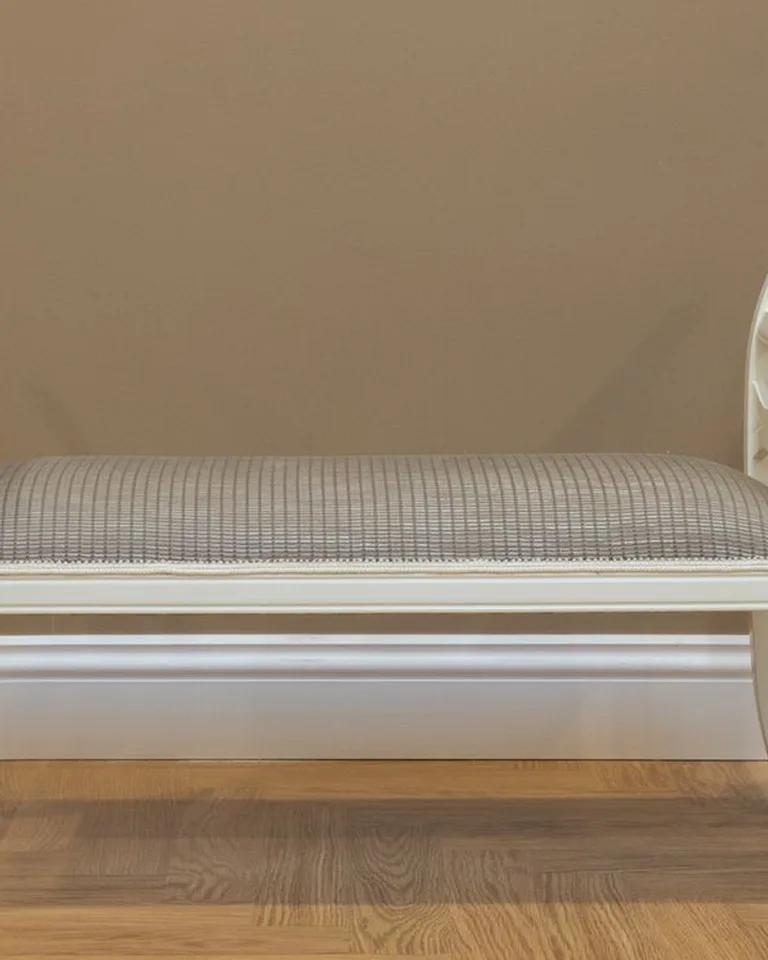
An upholstered bench — tufted, linen, or performance-fabric covered — softens a hard-surfaced entryway and doubles as comfortable seating. Many designs hide a storage compartment under the cushion, so you get softness and function together.
Fabric in an entryway takes abuse: muddy paws, wet coats, and boot scuffs. Choose a stain-resistant performance fabric in a mid-tone (charcoal, camel, olive) rather than white or cream, and pick a style with removable legs or a wipeable base. If the cushion is thick, remember to subtract it from your target seat height — a 16-inch base plus a 3-inch cushion lands right in the 17-to-19-inch comfort zone.
8. A Simple Wooden Bench Styled Like Furniture, Not Storage
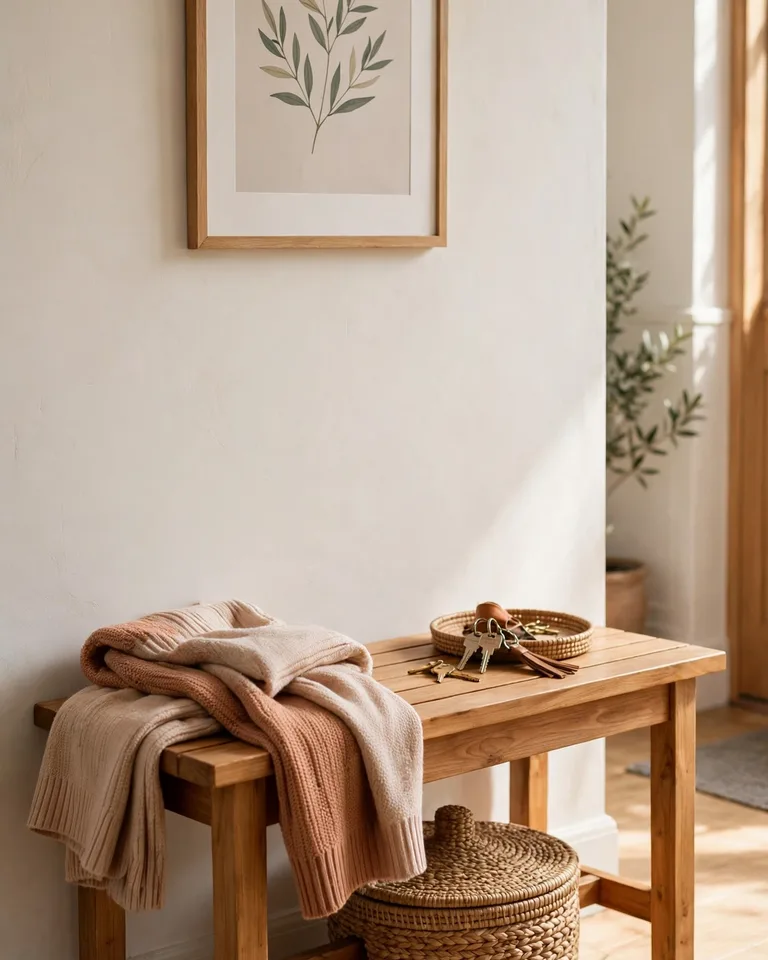
Sometimes the best bench is just a bench: a solid wood backless piece with no compartments, styled as furniture. It anchors the entryway, holds a basket underneath for shoes, and wears beautifully with age. A well-chosen wood bench works in farmhouse, Scandinavian, and modern interiors alike.
Because it has no built-in storage, the styling does the organizing: a lidded basket underneath for shoes, a tray on top for keys, and a folded throw over one end for softness. Solid wood also outlasts particleboard in a high-traffic spot — worth remembering when a bargain bench starts wobbling at the joints after a year.
How to Place It So the Door Swings Clear
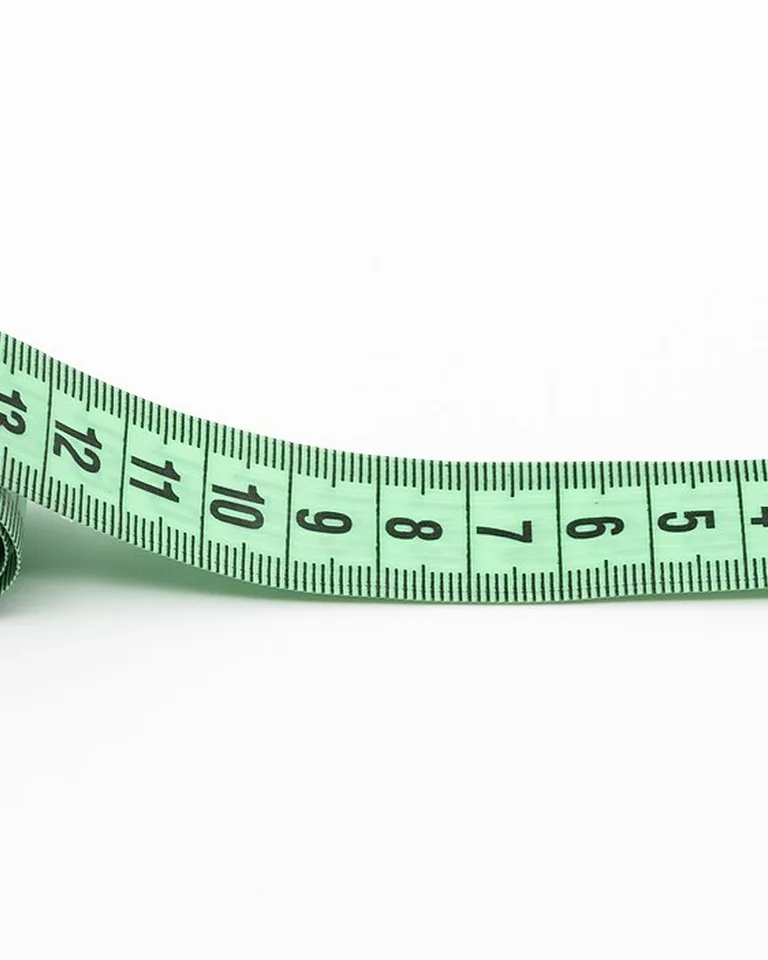
Placement mistakes are the number one reason entryway benches get returned. Follow this order before you buy:
- Map the footprint with tape. Mark the bench’s length and depth on the floor with painter’s tape, plus the cushion overhang if there is one.
- Open the door fully. Swing the front door through its whole arc. The tape and the door should never touch — leave at least a few inches of margin.
- Walk the path. With the tape down, walk past carrying a bag. You want a minimum of 30 to 36 inches of walkway; 36 inches is the comfortable standard most sizing guides recommend.
- Check the swing direction. If the door swings inward against the bench wall, place the bench on the hinge side of the door or on the opposite wall — never in the door’s arc.
- Confirm wall clearance. Leave two to three inches between the bench ends and adjacent walls or trim so the piece does not look wedged in.
When in doubt, go shallower rather than longer. A bench you can walk past easily beats a roomier one you have to squeeze around every day.
How to Style an Entryway Bench
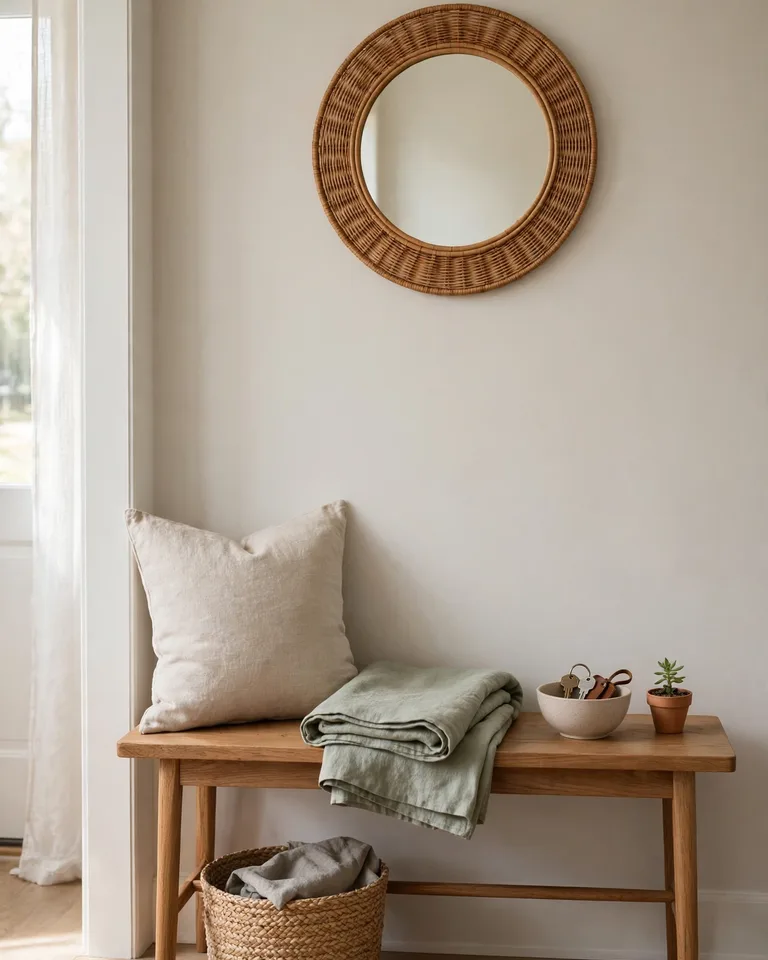
Styling turns a storage piece into part of the room. Work in three layers:
- Seat layer: one cushion or a folded throw — two at most. A bench crowded with pillows loses its job as seating.
- Wall layer: a mirror or framed print above the bench (a mirror also bounces light and visually widens a narrow entry), plus a hook rail if you need coat storage.
- Surface layer: a small tray or bowl for keys and sunglasses, one small plant or vase, and nothing else. The top of the bench is a landing zone, not a shelf.
Keep the color story tight: pick two neutrals and one accent drawn from the rest of your home, and repeat them in the cushion, the basket, and the wall art. That repetition is what makes an entryway look designed instead of assembled.
How to Keep the Bench Storage Actually Organized
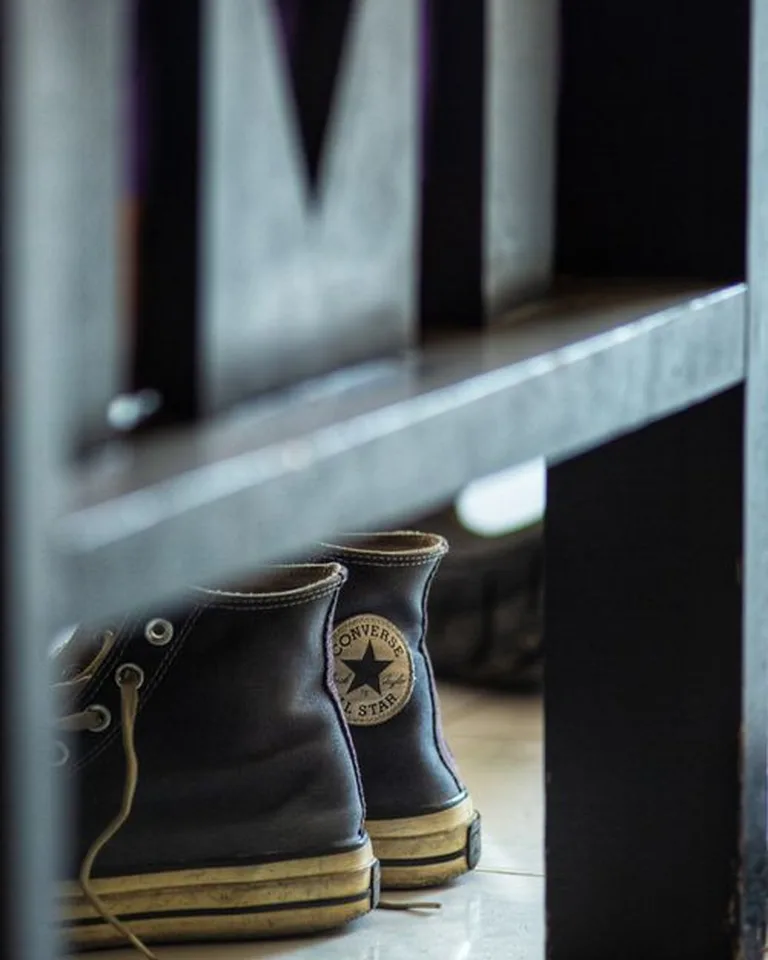
A storage bench only stays tidy with a simple rule: every item gets one assigned spot, and the bench holds only what you use this week. Two pairs of shoes per person at the door is the workable limit for most households; everything else belongs in a closet. Seasonal gear — heavy boots in summer, sandals in winter — rotates out, or it will swallow the compartment by month two.
Once a season, pull everything out, vacuum the inside, wipe the surfaces, and tighten any loose screws or hinges. Five minutes of maintenance keeps a lift-top bench closing softly and a cubby bench looking intentional instead of stuffed.
Entryway Bench FAQs
What is the best size for an entryway bench?
Most entryways work best with a bench 30 to 40 inches long and 14 to 16 inches deep in a small space, or 48 to 60 inches long in a larger foyer. Seat height should be 17 to 19 inches. Always leave at least 36 inches of clear walkway in front of the bench, and map the footprint with tape before buying.
How deep should an entryway bench be?
A depth of 14 to 16 inches suits most entryways and gives comfortable seating without blocking traffic. In narrow hallways, choose 10 to 12 inches deep so the bench does not eat the walking path. Anything deeper than about 18 inches belongs in a mudroom, not a standard entryway.
How high should an entryway bench be for comfortable seating?
Around 17 to 19 inches from floor to seat — roughly the height of a dining chair. Shorter adults and kids usually prefer 17 to 18 inches because it is easier to sit and stand. If you are adding a thick cushion, subtract its thickness from the bench height so the finished seat lands in that range.