
Apartment Entryway Ideas: 12 Renter-Friendly Ways to Build a Drop Zone
You don’t need a foyer, a mudroom, or even a hallway to have a working entryway. What you need is one committed spot by the front door where keys, shoes, bags, and coats land every time — instead of spreading across the apartment. Start with the landing zone, add storage that fits your wall (not your floor), and finish with light and a mirror so the corner feels intentional.

These 12 apartment entryway ideas are built for renters and small spaces: no drilling required for most of them, nothing deeper than a foot, and every piece earns its place. Work top to bottom and stop when your daily routine is covered.
Give keys a home first

The single highest-impact entryway change is also the smallest: a dedicated spot for keys. A row of small hooks, a magnetic strip, or a shallow tray by the door ends the morning key hunt permanently. Mount it at whatever height you’ll actually use — right beside the door handle is better than a “proper” spot across the room you’ll never walk to.
Tip: If you can’t drill, heavy-duty adhesive hooks hold keys and lanyards easily; just check the weight rating and pull straight down (never sideways) when removing them.
Corral shoes before they spread

Shoes are what turn an entry corner into a mess, so contain them first. A slim tilt-out shoe cabinet — some are barely 6 inches deep — hides a week’s worth of footwear against the wall, and the top becomes a bonus surface for a tray or small lamp. Keep only the pairs you wear weekly here; off-season shoes belong in under-bed storage, not by the door.
Tip: A washable boot tray underneath catches wet soles in winter and keeps the cabinet base clean.
Lay down a doormat as the dirt barrier

A doormat does two jobs: it visually marks where the entryway begins, and it stops dirt at the door instead of tracking it into the living room. In apartments where the door opens straight into the main room, that visual boundary matters even more — it’s the line that says “shoes stop here.” Choose a low-profile mat so the door still swings freely over it.
Tip: Layer a washable rug just inside the door over the mat in rainy months; you can toss it in the wash instead of scrubbing.
Hang a round mirror to open the space
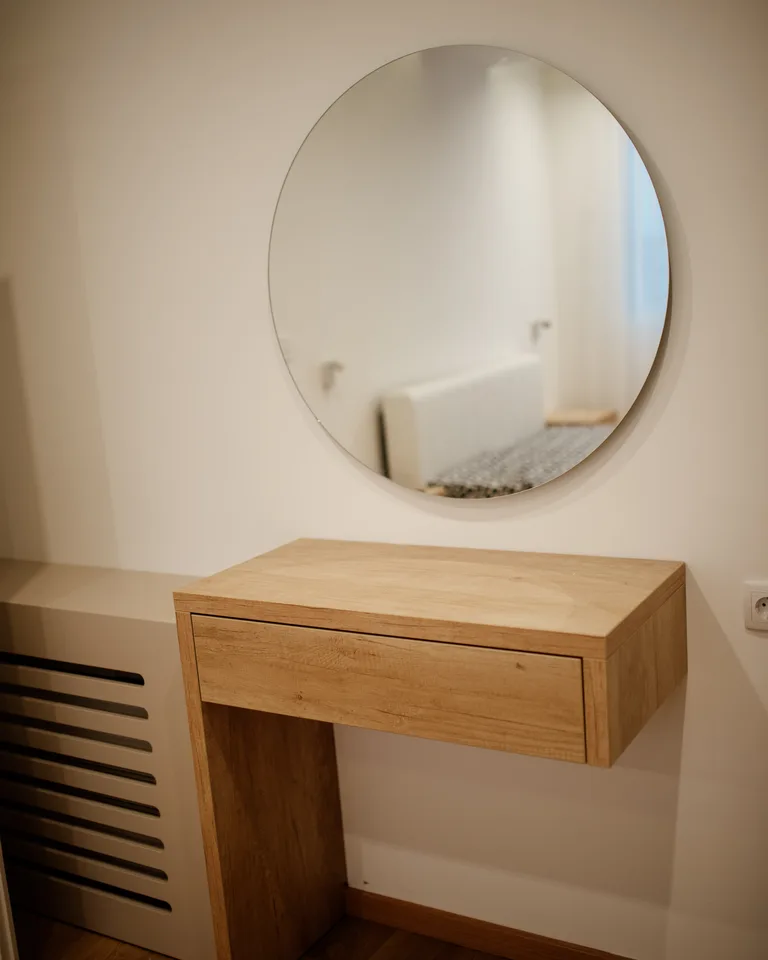
A mirror by the door is useful for the last-look check, but in a small entry its real job is bouncing light and faking depth. A round mirror softens all the hard rectangles of door frames and furniture, and hung opposite the nearest light source it can make a dark corner feel twice as bright. Lean a full-length one if you have the floor space; hang a round one if you don’t.
Tip: Hang it at eye level and keep the frame slim — a chunky frame eats visual space you don’t have.
Add a storage bench that earns its footprint
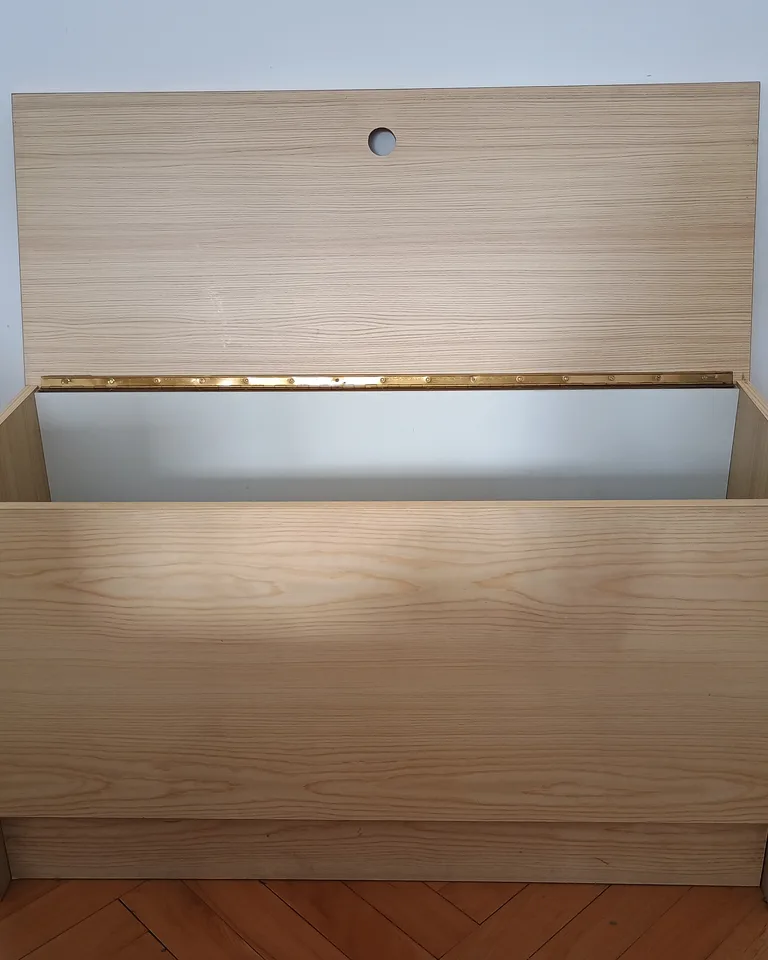
If you have even two feet of wall, a narrow storage bench solves three problems: somewhere to sit while lacing shoes, hidden storage for scarves and gloves, and a surface on top for a basket or tray. Measure your door swing first — the bench must never block the door or the main walking path. In truly tight spots, a single sturdy chair does the same job with a smaller footprint.
Tip: Pick a bench with legs rather than a solid base; seeing floor underneath keeps a small entry feeling airy.
Define the zone with a washable runner
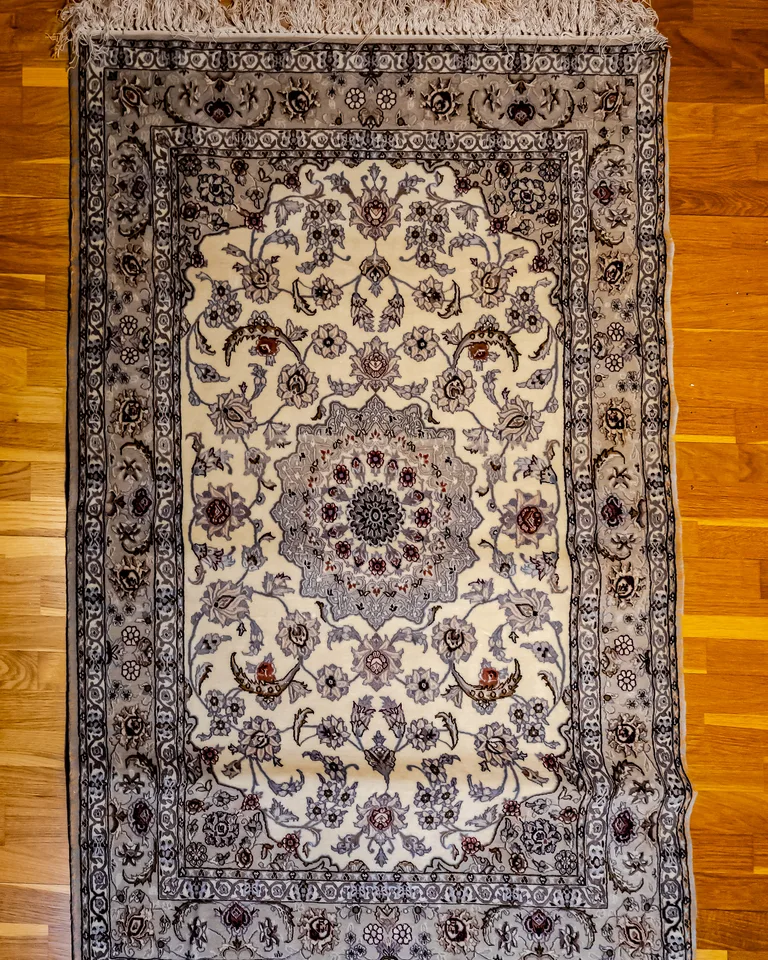
No walls? A rug draws them for you. A runner or small rug just inside the door creates an invisible room — everything entry-related lives on the rug, everything else stays off it. Washable rugs are the practical pick here since this is the highest-traffic, dirtiest patch of flooring in the apartment. A pattern hides wear far better than a solid color.
Tip: Size it to your actual drop zone — usually 2×3 or 3×5 feet — not to the room; a rug that creeps into the living area stops reading as “entry.”

Mount a row of hooks for bags and coats

Hooks are the hardest-working square inches in any small entryway: bags, coats, hats, dog leashes, and umbrellas all hang instead of piling. A single rail with 3–5 hooks handles a one- or two-person household; resist the urge to add more, because a wall of overloaded hooks just becomes another clutter zone. This is another win for renter-friendly upgrades — adhesive and over-the-door options need zero holes.
Tip: Hang everyday coats here and store off-season ones in a closet; the rail should never hold more than you’ll wear this week.
Float a shelf for mail, sunglasses, and the daily dump

When there’s no room for a console table, a floating shelf 8–10 inches deep does the same job without touching the floor. Keys, mail, sunglasses, and a small tray for pocket change all live here, at a height you can reach without thinking. If even a shelf feels like too much, a wall-mounted mail sorter with attached key hooks compresses the whole station into one product.
Tip: Add a tiny lidded box or lidded basket on the shelf for the things you don’t want to look at — spare batteries, rubber bands, takeout menus.
Hide the overflow in woven baskets

Every entryway accumulates the un-sortable: reusable bags, scarves, the dog’s spare leash, sunscreen. A lidded woven basket tucked under a bench or beside the door swallows all of it while looking like decor. Baskets also soften the hard lines of hooks and shelves, which keeps a purely functional corner from feeling like a locker room.
Tip: One basket per category max — when a basket overflows, that’s the signal to relocate things, not to buy a second basket.
Park umbrellas in a dedicated stand
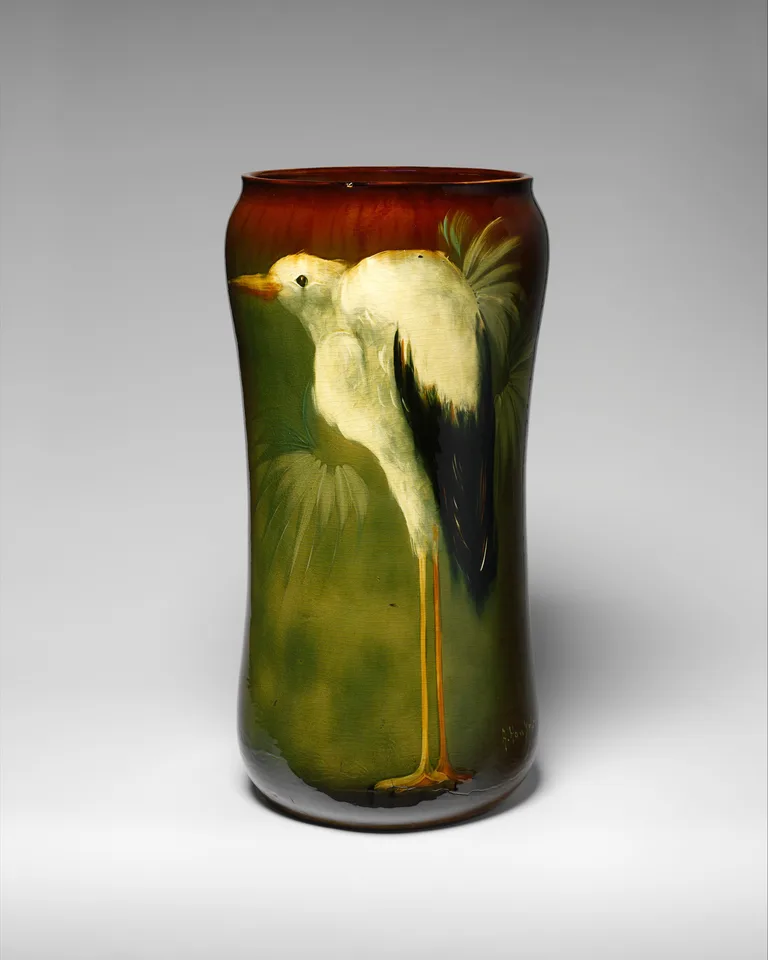
Wet umbrellas dripped across the floor undo all your entryway work in one rainstorm. A slim umbrella stand — even a tall, narrow planter or crock works — gives them a drip-safe home by the door. Place it on the hinge side of the door so it never interferes with the swing, and empty it once umbrellas dry.
Tip: A stand with a removable drip tray saves your floors and makes cleanup a ten-second job.
Add one plant for life

A single low-light plant — a snake plant, pothos, or ZZ — on the shelf or beside the bench makes the entry feel like part of the home rather than a utility strip. Greenery softens all the hard storage surfaces, and it’s the cheapest “decor” that actually changes how a space feels. If your entry gets zero natural light, a good faux plant beats a dying real one every time.
Tip: Hang a pothos from a hook instead of using floor space; trailing leaves draw the eye up and make low ceilings feel higher.
Finish with a warm light source

Entry corners are often the darkest square feet in an apartment, borrowing whatever light spills from the living room. A small lamp on the shelf or a plug-in sconce above the hooks changes that completely — warm light makes wood, baskets, and textiles look richer and tells guests (and you) that this corner was designed, not leftover. Stick to 2700K warm white so it flatters skin tones for that last mirror check.
Tip: Put the lamp on a timer or smart plug so the entry glows welcoming before you even get home.

Apartment entryway FAQs
How do you create an entryway in a small apartment?
Choose one spot near the front door and define it with functional pieces: hooks, a small tray, a narrow console or floating shelf, a mirror, and a rug. You don’t need a separate room or hallway to make an entryway feel intentional — one committed wall is enough.
What can I use instead of an entryway table?
A floating shelf, a narrow wall-mounted ledge, a small bench, or a slim console all work. Pick whichever gives you a landing surface for keys and mail without narrowing the main walking path.
How can renters decorate an entryway without damaging the walls?
Use removable adhesive hooks, over-the-door organizers, freestanding or leaning mirrors, narrow freestanding furniture, and small rugs. Always check adhesive weight limits, and remove them by pulling straight down to protect the paint.
How do you organize shoes when there is no entryway?
Use a slim tilt-out shoe cabinet, a compact shoe rack, a storage bench with shoe space underneath, or an over-the-door organizer. Keep only weekly-wear pairs by the door and store the rest elsewhere.
How do you make a small entryway feel welcoming?
Start with a rug to define the zone, add a mirror to open it up, and bring in one warm light source. One plant or a seasonal touch — a curated Halloween decor pumpkin in October, a small wreath in December — makes it feel personal without clutter.
Build it in this order — keys, shoes, hooks, light — and stop when your routine is covered. If your “entryway” is really just the wall beside your bedroom door, these very small entryway ideas pair well with small bedroom layouts for studio apartments, and a bedroom vanity mirror can double as your last-look check on the way out.