
12 Low-Ceiling Bedroom Decor Ideas That Make the Ceiling Feel Higher
If your bedroom ceiling sits at 8 feet or lower, you already know the usual advice: hang curtains high, buy a low bed, paint everything white. The problem is that most of that advice was written for someone else’s house. In a genuinely low-ceiling bedroom, what matters is not any single trick but the styling layer — the decor pieces you choose and where you put them. Get that layer right, and the ceiling stops reading as a lid and starts reading as a design decision.
The short answer: the fastest way to make a low-ceiling bedroom feel taller is to hang curtains as close to the ceiling as possible in one unbroken drop, paint the walls and ceiling in the same tonal family, keep furniture low with a strong horizontal line, and light the walls rather than the ceiling. The 12 decor ideas below build on those four principles — no renovation required.
One note before you shop: this is a decor guide, not a storage guide. Every piece here earns its place by changing how tall the room feels, whether through vertical lines, horizontal calm, or light. If your real problem is clutter, pair these ideas with our small-bedroom styling rules for making a tiny room feel bigger — but start here, with what the eye sees first.
1. Ceiling-Mounted Sheer Curtains in One Unbroken Drop
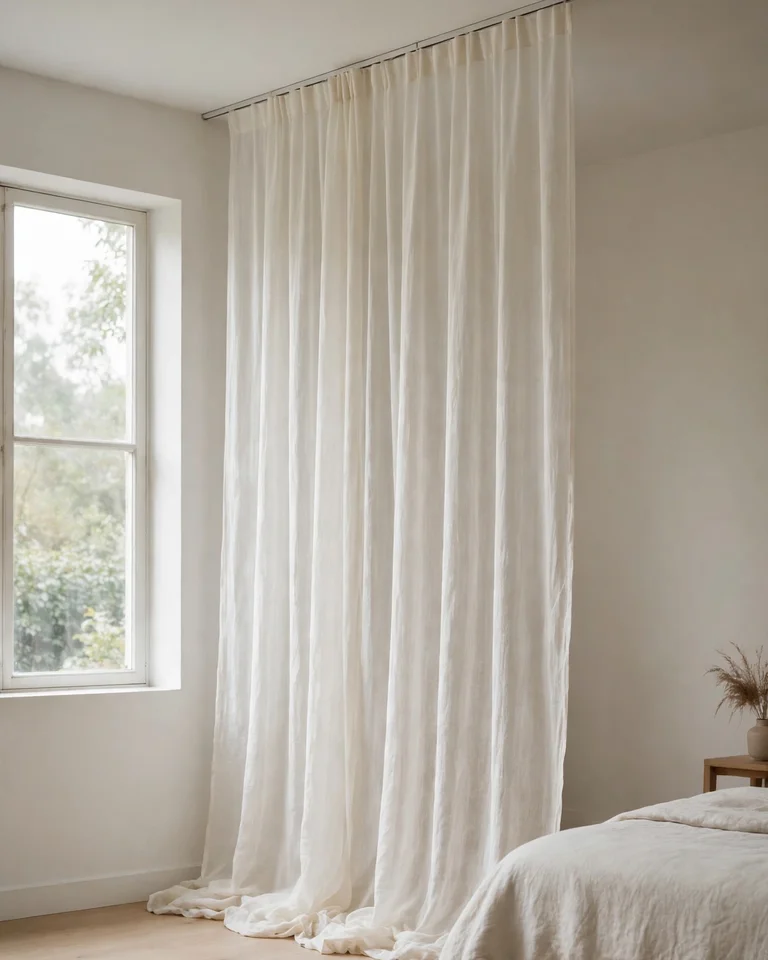
This remains the highest-impact, lowest-cost move you can make in a low-ceiling room. When fabric falls in one straight, unbroken line from ceiling to floor, the eye reads the full height of the wall as one finished plane instead of stopping at the window frame — and where your window frame stops is usually where the ceiling starts feeling short.
The details matter more than the fabric itself. Mount the rod or track 2 to 4 inches below the ceiling line, never at window height. Choose lengths that kiss the floor or pool slightly — 96 to 108 inches covers most rooms — and keep the fabric light and neutral: ivory, white, pale gray. Skip heavy valances and chunky finials; any horizontal break at the top of the window is exactly what destroys the illusion. For renters, ceiling hooks with a peel-and-stick track get you the same unbroken drop without drilling.
2. A Vertical Shiplap or Board-and-Batten Accent Wall

Vertical paneling is the architectural version of vertical stripes: boards running from baseboard to ceiling pull the eye upward in one continuous motion, which reads as height rather than containment. Behind a low bed, a single paneled wall gives the room the kind of deliberate structure that makes a low ceiling feel like a design choice instead of an accident.
Two rules make this work. First, run the panels in a matte finish with no cap rail at the top — a cap rail creates a hard horizontal line at ceiling height, which is precisely what you are trying to avoid. Second, keep it to one wall. Paneling every wall in a low room can feel busy; one feature wall behind the bed does the vertical work while the rest of the room stays calm. Paint the panels the same color as the surrounding walls for a tone-on-tone effect, or go one shade deeper for quiet contrast.
3. Color Drench the Walls and Ceiling in One Tone
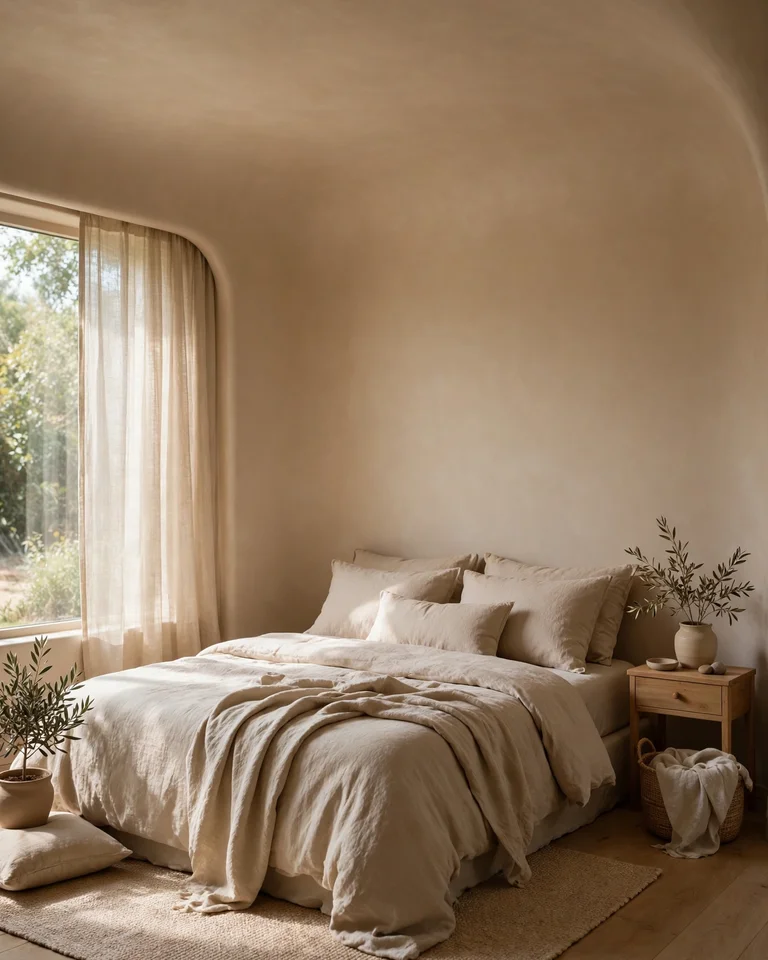
Here is the counterintuitive one: a bright white ceiling in a colored room is usually the highest-contrast surface in the space, which means your eye keeps snapping upward to it — and every upward glance is a reminder of how low it is. Painting the walls and ceiling the same color (called color drenching) erases the hard line where wall becomes ceiling, and the boundary simply stops registering.
You do not need a dark color for this to work. Warm beige, dusty sage, soft clay, or muted greige all drench beautifully — see our warm beige bedroom ideas for how this palette behaves at different light levels. Keep the finish matte or flat on the ceiling; gloss reflects the room’s own compressed surface back at you. If full drenching feels like a commitment, start with the ceiling in the same hue family as the walls, one or two values deeper — it settles into the background instead of dominating it.
4. A Low Bench at the Foot of the Bed

Nothing says “finished room” like a bench at the foot of the bed — and in a low-ceiling bedroom it does double duty. Kept at 12 to 16 inches high, lower than the top of the mattress, the bench extends the bed’s low horizontal band across the room. The whole composition — bench, bed, floor — reads as one long, calm line, which is the horizontal calm that makes a low ceiling stop pressing down.
Choose a slim profile with tapered wood or metal legs so you can see floor beneath it, and upholster in a tightly pulled linen, bouclé, or faux leather in a neutral: warm beige, soft gray, muted olive. Thrifted solid-wood benches are everywhere and reupholster easily with a yard of fabric, foam, and batting — a genuinely satisfying weekend project that looks like it cost three times what it did.
5. One Wide Horizontal Mirror at Eye Level

Mirrors do make rooms feel bigger — but placement decides whether they help or hurt. A tall vertical mirror in a low-ceiling room draws the eye up and stops it abruptly at the ceiling. Worse, a big mirror hung opposite the ceiling can reflect the ceiling back at you, giving you two low ceilings for the price of one.
The fix is a wide mirror hung horizontally, 40 to 60 inches wide and 24 to 30 inches tall, at eye level above a low dresser or console. It stretches the room sideways, bounces daylight across the walls, and never invites the eye to measure the ceiling. Lean it against the wall with non-damaging bumpers or hang it on two simple clips, and style the surface below with a lamp on one end and a low vase or small stack of books — nothing tall, nothing fussy. For more on getting mirror placement right, see our full-length mirror placement guide for bedrooms.

6. Slim Picture Ledges With Landscape Art

In a low-ceiling room, tall vertical artwork pulls the gaze up toward the ceiling — the last place you want attention. Wide, horizontal prints do the opposite: they stretch the wall sideways at eye level and give the room a composed, gallery-like calm.
Slim picture ledges, 2 to 3 inches deep and 24 to 48 inches long in matte black, warm brass, or white, are the ideal delivery system. You can swap prints seasonally without patching holes — useful everywhere, essential for renters — and matching the ledge finish to your curtain rod or light fixture makes the whole wall look intentionally designed. Hang one ledge above the bed or stack two at slight offsets, and choose landscape-oriented prints: horizons, seascapes, abstract bands of color.
7. A Flush-Mount Statement Light, Warmed and Dimmed
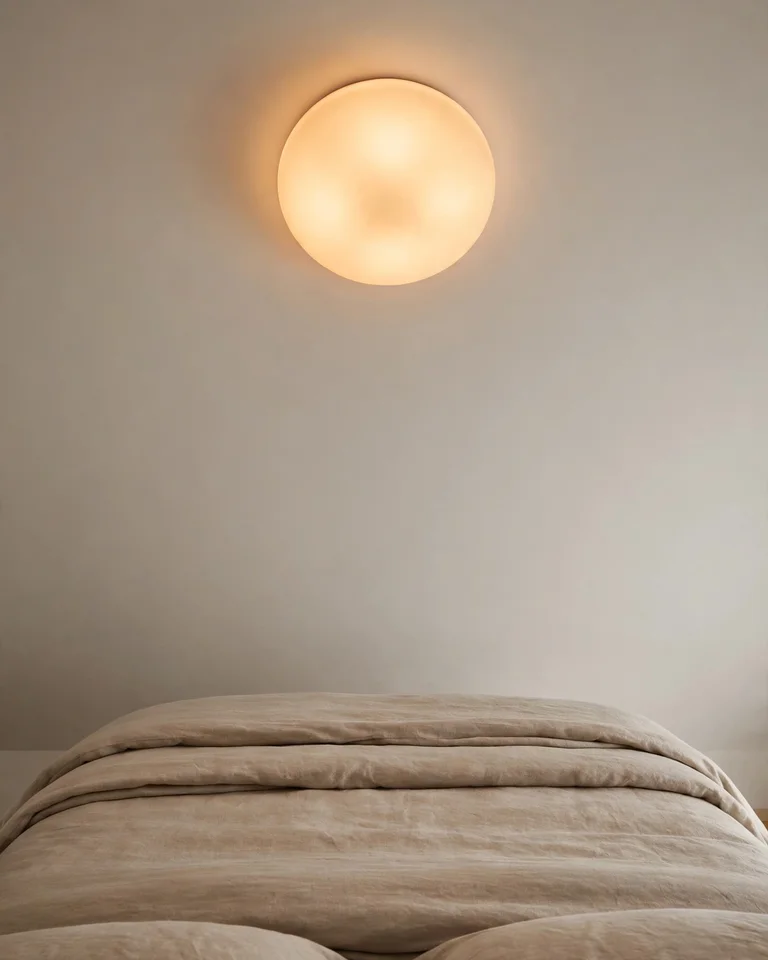
Pendants and chandeliers are the enemy of the low-ceiling bedroom: a pendant in a 7.5-foot room hangs just inches below the ceiling, and that tiny gap reads as severe compression. The answer is not to skip a ceiling fixture — it is to choose one that disappears. A flush-mount panel or dome, one to two inches thick, keeps the ceiling plane smooth and unbroken while still giving you real light.
“Disappears” does not have to mean boring. Look for a 12- to 18-inch round or square panel with a frosted diffuser and matte white or brushed nickel trim, in warm to neutral white (2700–3500K), on a dimmer. Dimmed to 50 percent in the evening, a flush mount paired with a small bedside lamp reads as intentional mood lighting rather than a compromise. Most panels mount with two screws on a standard junction box, and plug-in options exist for renters.
8. Wall Sconces Mounted Higher Than You Think
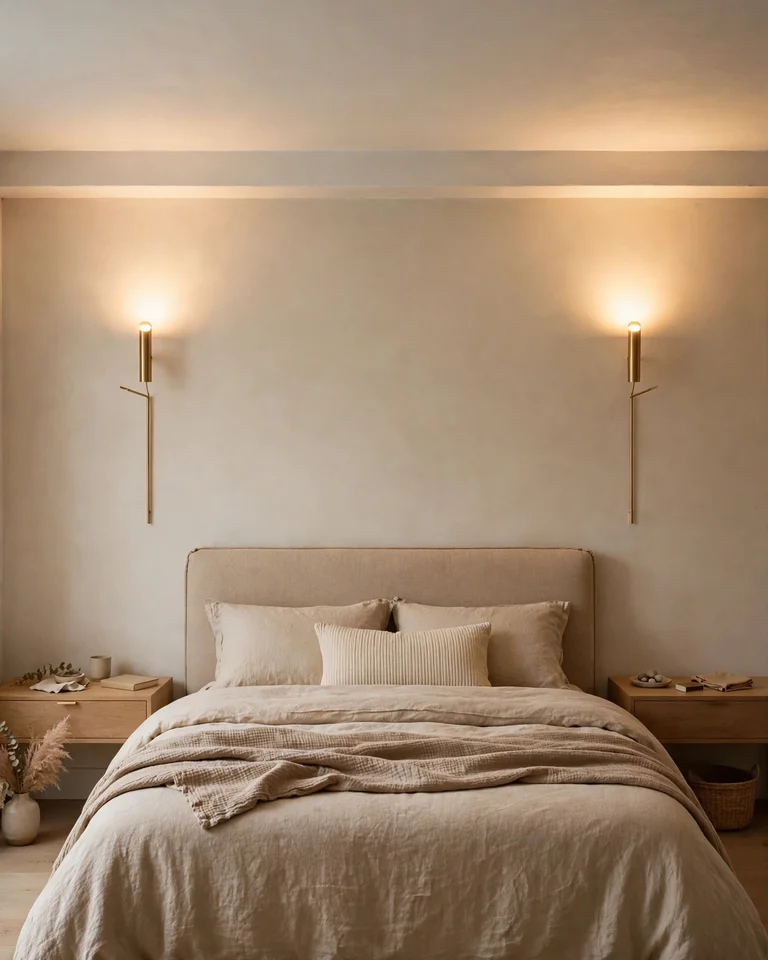
When the ceiling cannot carry the lighting, the walls have to. Wall sconces mounted slightly higher than the usual 60 inches from the floor do two jobs at once: they wash light upward, which genuinely lifts your perception of where the ceiling begins, and they free your nightstands from bulky table lamps, keeping the bedside line low and clean.
Flanking the bed is the classic placement, but sconces also work beside a reading corner or above a dresser. Choose slim profiles in brass, matte black, or ceramic — nothing with a deep projection that juts into the room — and look for shades that direct light both up and down for the most flattering spread. Plug-in sconces with cord covers mean renters can do this without an electrician.
9. One Tall Plant and Nothing Else Vertical
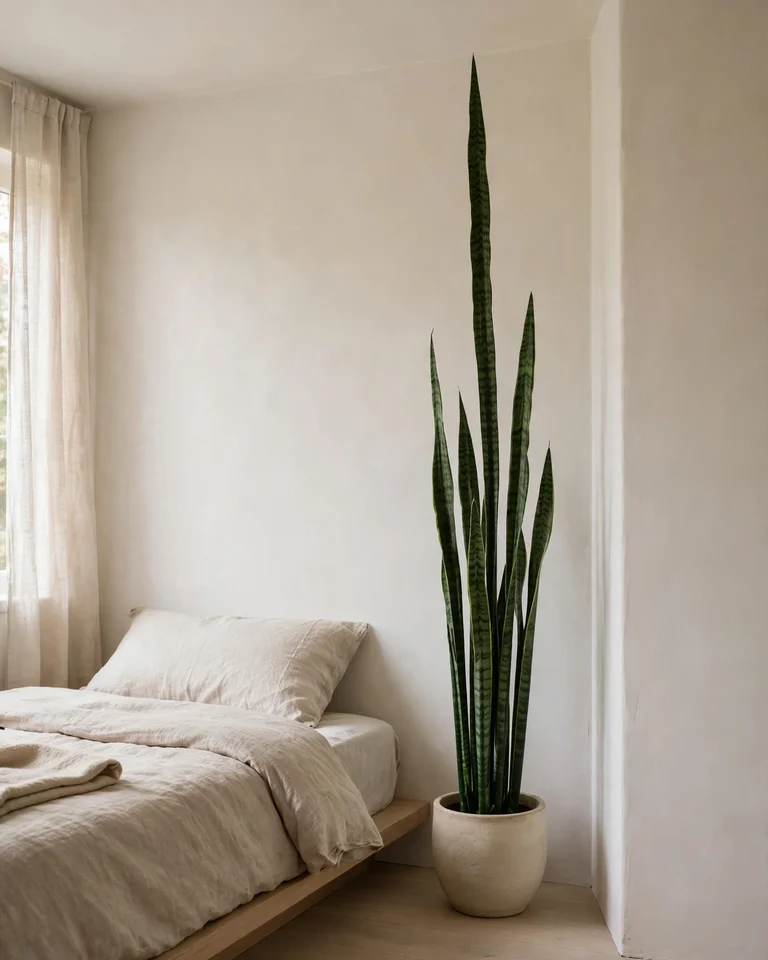
This is the exception that proves the low-profile rule: a single tall plant in one corner gives the eye one deliberate vertical line to travel up, which paradoxically makes the ceiling feel further away. The key word is one. A room full of tall objects reads as clutter fighting the ceiling; a single sculptural plant reads as intention.
Snake plants, olive trees, and fiddle-leaf figs all work — upright growers with a narrow footprint. Pot it in a simple ceramic or woven planter that sits directly on the floor (a plant stand adds height you may not want), and keep every other vertical in the room low. One plant, one corner, done.
10. A Flat-Weave Rug With Horizontal Banding
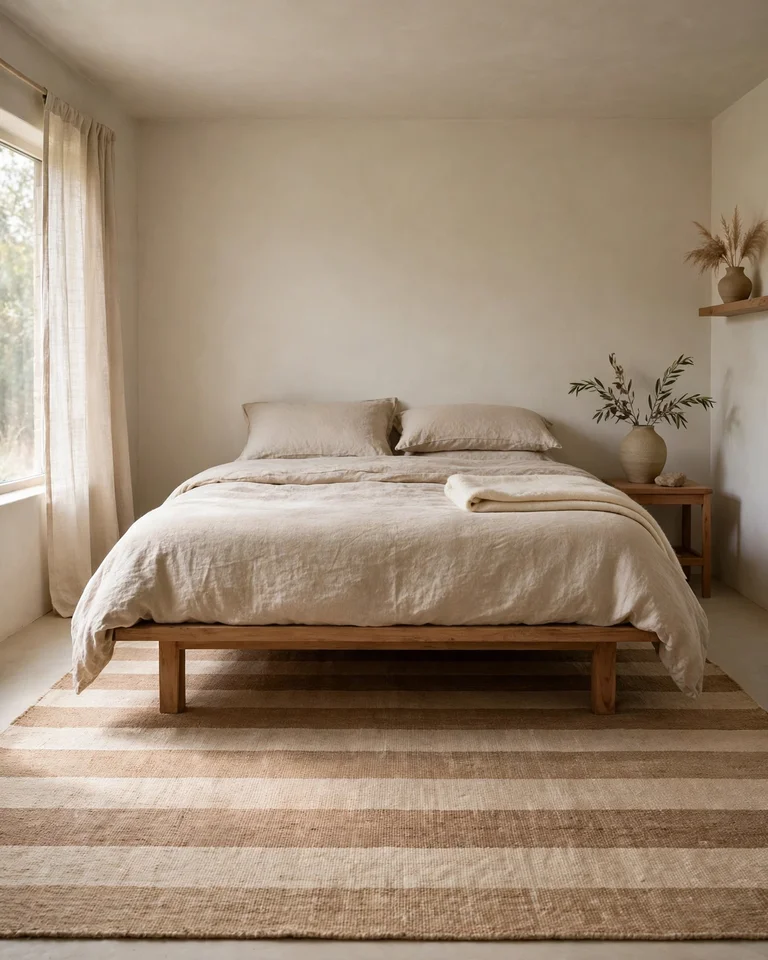
Rugs do quiet structural work in low-ceiling rooms. A flat-weave rug with wide stripes running parallel to the room’s longest wall pulls the eye along the floor plane instead of up toward the ceiling — and a floor plane that feels expansive creates perceived breathing room above it. Low pile matters: a thick shaggy rug raises the visual floor and steals inches you do not have.
Size it generously — all four bed legs should sit on the rug, with at least 18 inches of rug extending past the bed on each side. A rug that stops short of the bed legs fragments the floor plane into pieces, which is the opposite of what you want. Flat-weave cotton or wool in tonal stripes is durable, affordable, and easy to clean.
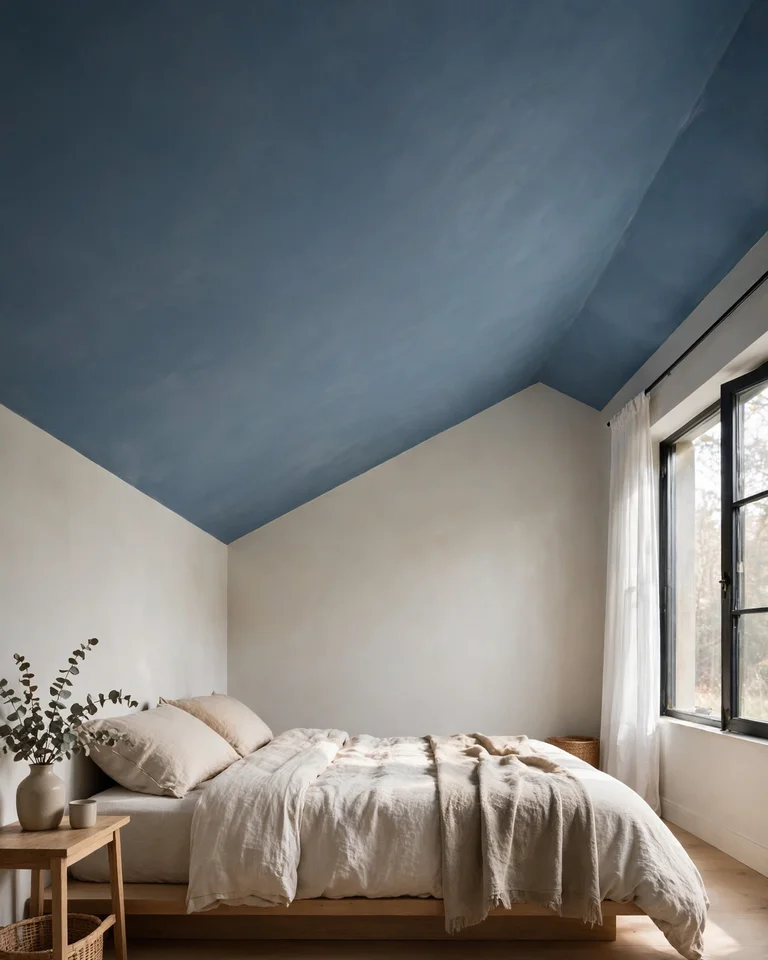
11. Paint the Ceiling One Shade Deeper Than the Walls
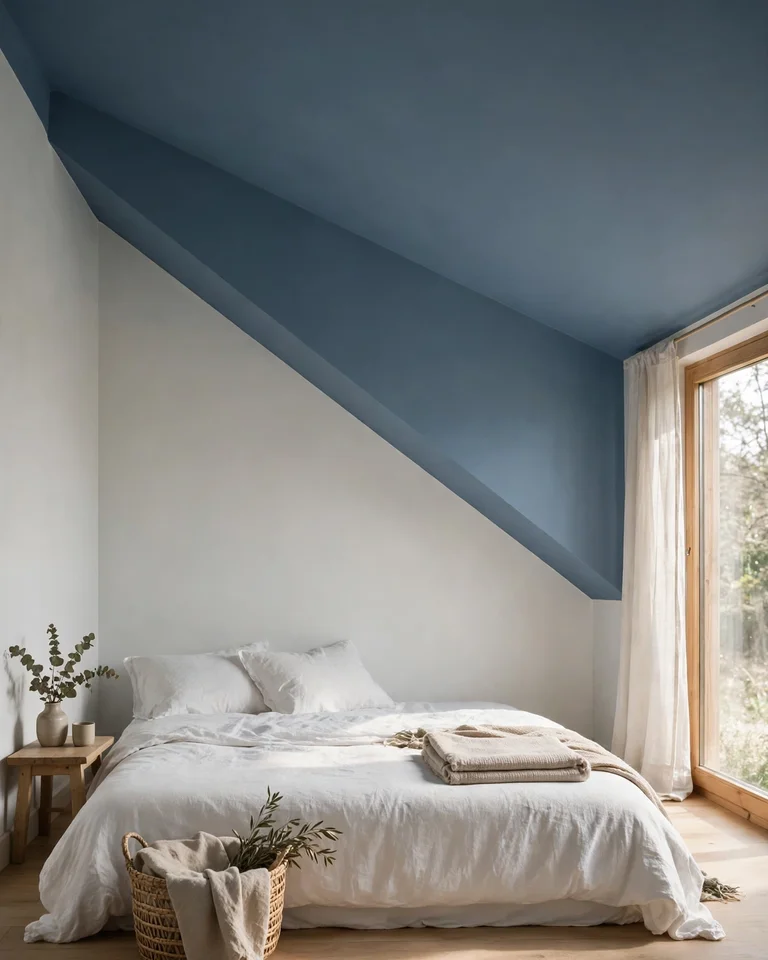
If full color drenching feels like too much, try the halfway version that surprises almost everyone: a ceiling painted one or two shades deeper than the walls, in the same hue family. A dusty sage wall with a slightly deeper sage ceiling, for example, consistently reads as more spacious than the same room with a white ceiling.
The logic: a bright white ceiling against colored walls is the room’s highest-contrast surface, so the eye keeps returning to it. A ceiling in a tone close to the wall color settles into the background and becomes less of an event. The ceiling does not disappear — it just stops being the thing the room is about. This works especially well in bedrooms, where the function of the space is restful rather than active. For more on how white behaves as a base, our white bedroom decor guide breaks down warm versus cool whites.
12. Tonal Layered Bedding Styled Low and Loose

The bed is the largest object in the room, so how you dress it sets the ceiling’s competition. Bedding in one tonal family — linen duvet, a folded throw, two sleeping pillows and two shams, all in warm neutrals or soft variations of one color — reads as a single calm mass rather than a stack of competing layers. Keep the total height low: skip the mountain of Euro shams, which is just a tall headboard by another name.
Texture does the interesting work here since color stays quiet. Mix washed linen, a knit throw, and a quilted coverlet in the same tone and the bed looks styled without looking tall. Drape the throw across the lower third of the bed rather than folding it at the top — it extends the horizontal line you have been building across the whole room. See our cozy fall bedroom ideas for how layered textiles warm up a low room without adding visual height.
3 Decor Mistakes That Make Low Ceilings Feel Lower

Before you buy anything, check that you are not committing one of these three common errors — each one undoes the good work above:
1. The white-on-white box. White walls, white ceiling, white trim with no contrast gives the eye no reason to move anywhere except straight up into a flat, oppressive plane. The room feels smaller, not larger. If you love light colors, you need tonal variation — warm off-whites against soft greige, matte against matte — not a single bleached surface.
2. Mirrors that double the problem. As covered above, a large mirror on the wall directly opposite a low ceiling reflects the ceiling back at you. You now have two low ceilings. Keep mirrors horizontal, at eye level, and aimed at walls or windows — never at the ceiling plane.
3. Heavy molding and glossy finishes. Thick traditional crown molding visually steals two to four inches of ceiling height with its shadow line — in a 7.5-foot room, that is structural damage done with paint and plaster. High-gloss ceiling paint does similar harm by reflecting the room’s own compressed surface back into the space. Slim trim and matte finishes, always.
Frequently Asked Questions
How can I make my low-ceiling bedroom look taller without renovating?
The highest-impact non-renovation changes are: hang curtains as close to the ceiling line as possible with fabric that reaches the floor; replace a tall bed frame with a platform bed at 14–18 inches floor-to-mattress; remove any furniture that ends within 18 inches of the ceiling; and swap hanging fixtures for flush-mount lights or wall sconces. None of these require permits or structural work, and together they change how the room’s proportions read. Our narrow bedroom ideas use the same horizontal-emphasis principle for rooms that are tight in the other direction.
Can dark colors work in a low-ceiling bedroom?
Yes — often better than people expect. A deep slate, warm charcoal, or saturated navy applied to all four walls and the ceiling removes the contrast between wall and ceiling, so the room reads as one continuous surface instead of a box with a lid. It works especially well in bedrooms because the room’s job is restful, not active. The room stops trying to look bigger and commits to feeling intimate and finished.
What is the best ceiling color for a low-ceiling bedroom?
Contrary to almost universal advice, pure white is often not the best choice — it creates the highest-contrast surface in the room and keeps pulling the eye upward. A ceiling in the same hue family as the walls, one or two values deeper, recedes into the background. If you want a light ceiling, choose a warm off-white rather than a bright cool white, and finish it matte rather than eggshell or semi-gloss.
What type of lighting works best in a bedroom with a low ceiling?
Flush-mount ceiling fixtures and wall sconces are the two best options, because both keep the ceiling plane clear. Recessed downlights and cove lighting that washes light upward also work well. Avoid pendants, chandeliers, and low-hanging fans — in a low room, the small gap between a hanging shade and the ceiling reads as severe compression and can undo every other good decision in the room.
What are the biggest mistakes to avoid in low-ceiling rooms?
Oversized furniture that ends within 18 inches of the ceiling, curtains hung at window height instead of ceiling height, bulky hanging light fixtures, artwork hung too low, too many competing horizontal lines, and relying on a single harsh overhead light. Each of these makes a low ceiling feel lower; fix them before spending money on new decor.
A low ceiling does not have to mean a compromised bedroom. The rooms that work are the ones that stop apologizing for their proportions and commit to them: low, horizontal, tonal, and deliberately lit. Start with the curtains and the paint, add one vertical accent and one horizontal mirror, and the ceiling you have will finally look like the ceiling you chose.