
12 Small Bedroom Ideas That Make a Tiny Room Feel Bigger
Small bedrooms don’t need more square footage — they need better decisions. The rooms that feel cramped are rarely the smallest ones; they’re the ones where the bed eats the sightline, the rug floats in the middle of the floor, and every surface fights for attention. Fix the scale, the sightlines, and the placement, and a 10-by-12 room can feel genuinely spacious.
These 12 ideas are all design tricks that change how big the room reads — bed placement, proportions, pattern, and light. They work whether you’re renting, whether your ceilings are eight feet or sloping, and most of them cost nothing more than rearranging what you already own.

The fastest wins are almost always about the bed: where it sits, how tall it is, and how much floor you can see around it. The rest of the room — curtains, mirrors, art, rug — supports that one big decision. Get the bed right first, then layer the visual tricks on top.

Center the Bed on the Longest Wall

The single most transformative move in a small bedroom is bed placement, and the default answer is the longest uninterrupted wall. It gives you symmetrical access on both sides, keeps the doorway sightline open, and stops the bed from jutting into the middle of the room where it becomes an obstacle course.
Test it before you commit: a queen bed needs roughly 24 inches of clearance on the main walking side and enough room to open drawers and doors. If the longest wall is the one with the window, a low headboard that sits below the sill can still work — just keep the window operable and don’t block the draft of warm air from a radiator.
In genuinely narrow rooms, the math changes. If the room is only a few inches wider than the bed, centering it just creates two useless slivers. That’s when you switch to idea two — but always test the long wall first, since skinny rooms reward one deliberate wall choice more than anything else.
Tuck One Side of the Bed Into the Corner
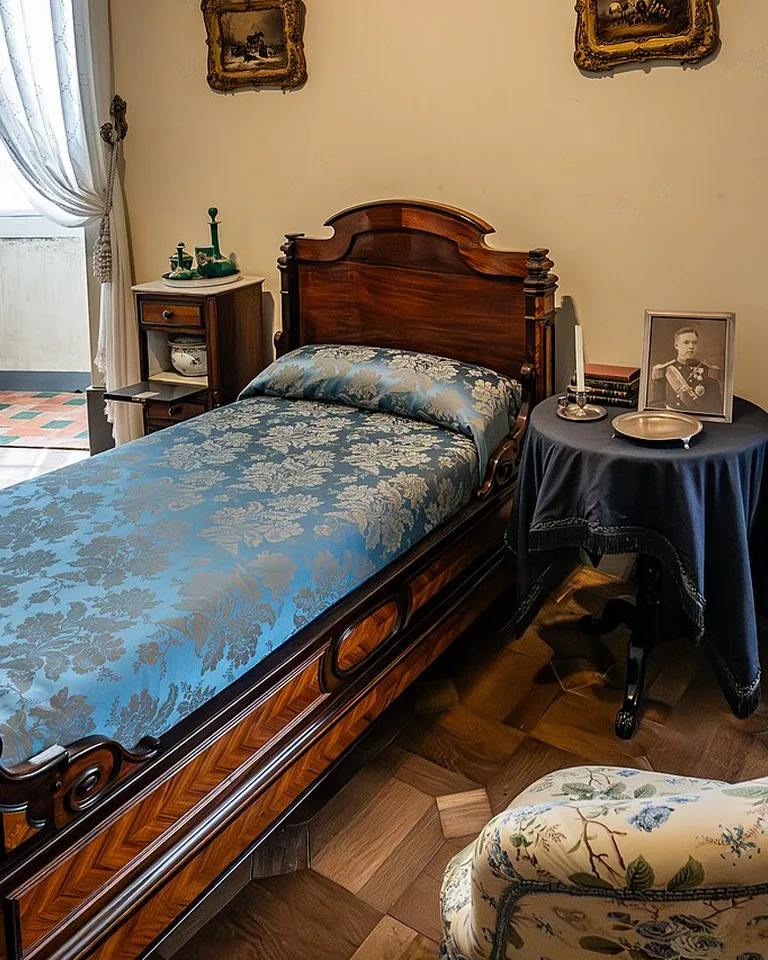
Breaking the “never push the bed against the wall” rule is exactly right when one sleeper uses the room, or when the room is a shared kids’ space. Trading two narrow, useless gaps for one proper walkway is a straight upgrade: you gain a full clear path on one side instead of two strips you can’t walk through.
The corner also does visual work. A bed anchored in the corner reads as a cozy nook rather than furniture that couldn’t fit, and it opens the opposite corner for a dresser, a reading chair, or simply breathing room. If you’re sharing, it pays to have the honest conversation about who climbs over whom — it’s less convenient for two people, but for a guest room or a child’s room it’s the smartest layout in the book.
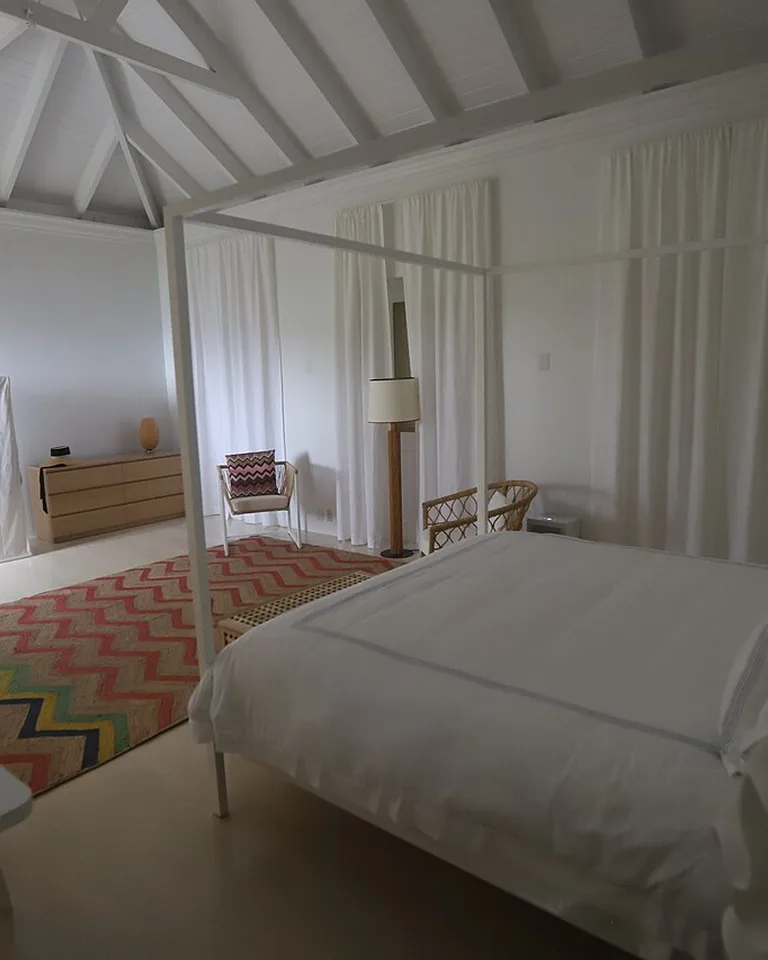
Choose a Tall Headboard to Pull the Eye Up

In a small room, the eye settles wherever there’s something to look at. A tall headboard gives it a vertical destination and makes the ceiling feel higher than it is, while a low bed can make a room read as squat and unfinished. Full-width designs work even better: a headboard that spans the whole wall makes the room feel wider, not just taller.
You don’t need an expensive frame to get the effect. A painted panel, a length of fabric stretched on a board, or a tall piece of art mounted where a headboard would sit all create the same upward pull. What matters is the vertical line, not the price tag.
Pick Furniture That Shows Legs

Bulky furniture that sits flush on the floor looks like a solid block — it visually swallows every inch of floor it touches. Pieces with slim legs let the floor run underneath, and that visible floor space is what the brain reads as “room.” It’s the same reason a glass side table disappears in a small living room.
Apply the rule everywhere: the bed frame, the nightstands, the dresser. You don’t need everything on legs — one or two pieces are enough to break up the heaviness. A floating nightstand or a narrow-legged bench does the job without giving up storage.
Drench the Room in One Color

Every color change in a room is a visual stop sign: wall to trim to ceiling to furniture, each boundary reminds the eye where the room ends. Painting walls, ceiling, and even built-ins in one light tone erases those boundaries, and the room reads as one continuous envelope instead of a small box.
Warm, light neutrals — soft beige, pale oak tones, warm off-white — do this best, especially in rooms with cool northern light where pure white can feel sterile. Add texture instead of contrast to keep it interesting: linen bedding, a woven throw, a wood nightstand. If you want one deeper note, keep it to bedding or art — small doses, never the walls. A light, warm palette is the easiest backdrop a small room can have.
Hang Curtains From Just Below the Ceiling
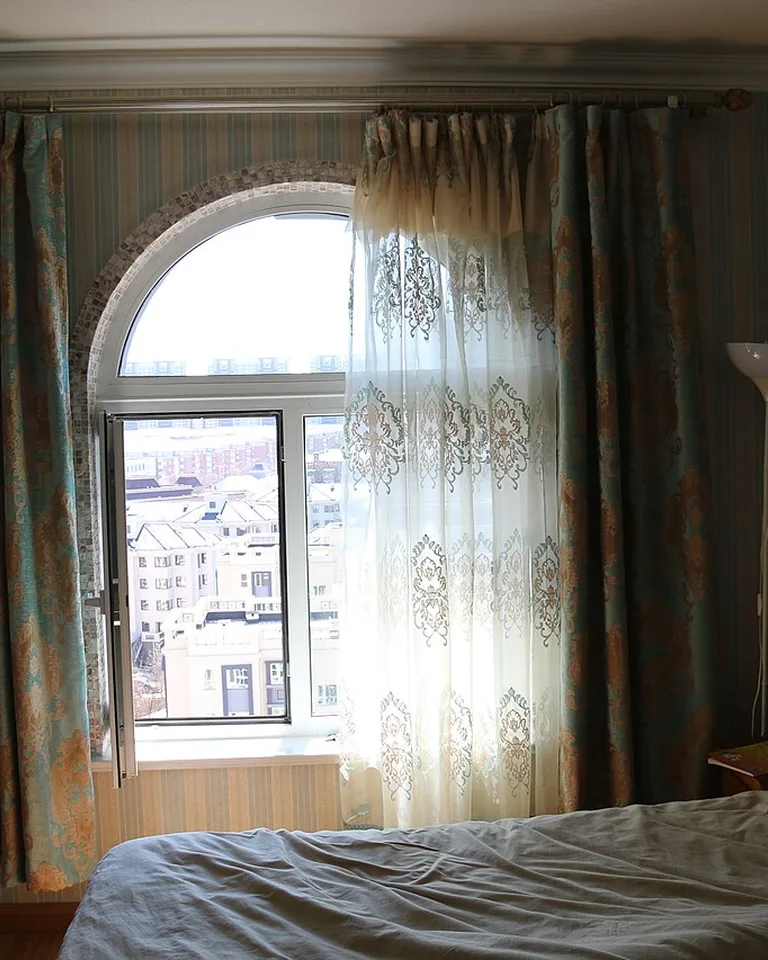
Curtains hung right at the window frame chop the wall in half and advertise exactly how small the window is. Move the rod up to just below the ceiling and extend it six to eight inches past the frame on each side, and the window instantly looks taller and wider — the eye travels up, the ceiling feels lifted, and the whole wall gains presence.
Let the fabric fall all the way to the floor; curtains that stop at the sill break the vertical line you’re trying to build. Sheers alone work if you want daylight, layered over a separate blackout panel for night. The rod itself is a ten-minute upgrade — it’s one of the cheapest transformations on this list.
Go Oversized With the Rug

The most common small-room rug mistake is the little floating mat that sits between the bed and nowhere. A too-small rug chops the floor into pieces and makes every piece look smaller. One large rug that slides under the bed and extends past it on at least two sides unifies the floor into a single surface — and one surface reads as one bigger room.
As a rule of thumb, the rug should reach at least 18 inches past the sides and foot of the bed. If budget is tight, a plain flat-weave in a light tone does the job; the size matters far more than the pattern here.
Lean One Large Mirror Against the Wall

Mirrors earn their reputation honestly: placed well, they double light and add real visual depth. One big mirror beats a cluster of small ones, which just scatter reflections and look busy. A full-length leaner against the wall or a large mirror on the wall perpendicular to the window bounces daylight deep into the room.
Placement is the whole game. Opposite or beside the window works; directly opposite the bed is a matter of taste — some people find it distracting. What you want the mirror to reflect is light or a clean view, not clutter, so style the sightline before you hang it. If you love the idea, full-length mirror placements have more tricks for making the depth feel deliberate.
Wrap the Walls in One Pattern

It sounds backwards, but one bold pattern on every wall can make a small bedroom feel bigger than a safe plain one. The reason: a single continuous pattern gives the eye nowhere to land, so it never registers the walls as separate surfaces. Multiple competing prints do the opposite — each one is a boundary.
Large-scale prints work best; small busy patterns can feel fussy in close quarters. And the trick extends beyond wallpaper: carrying the same bedding fabric onto a headboard, or matching the bed skirt to the curtains, keeps the room reading as one thing instead of five.
Move the Lighting to the Walls
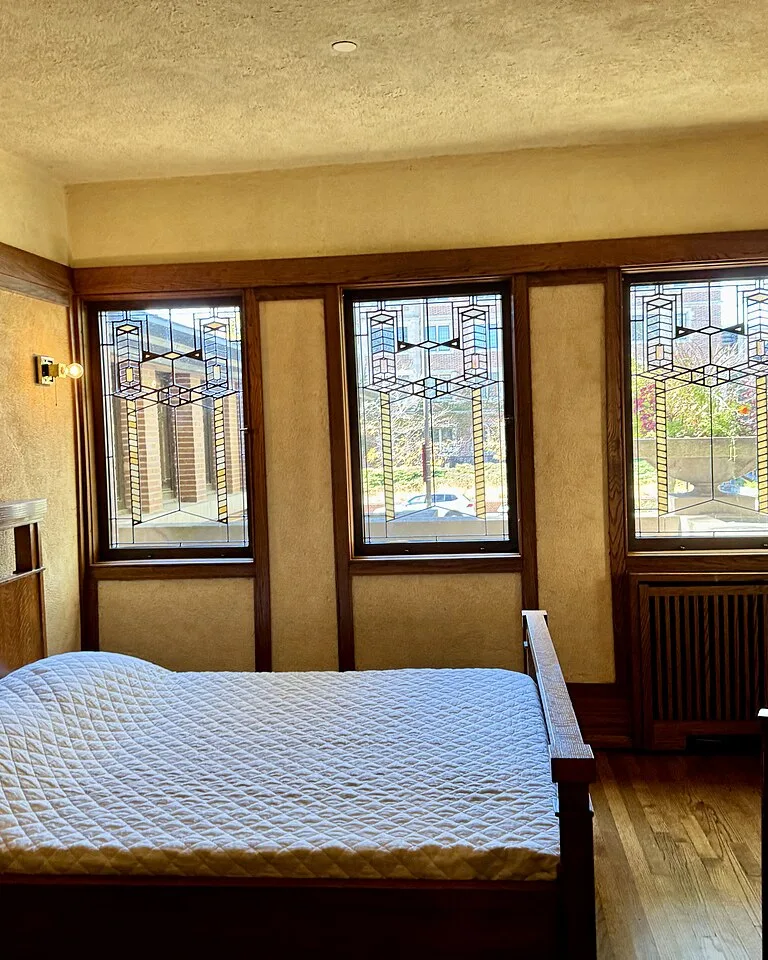
Every table lamp in a small bedroom eats the only surface you have — the nightstand. Wall sconces, plug-in pendants, or a swing-arm lamp mounted beside the bed give you reading light at the right height while leaving the nightstand for a book, a glass of water, and nothing else. Less surface clutter reads as more room.
Layer your light while you’re at it: one ceiling source, one bedside source, one more somewhere else in the room. Three warm sources at different heights (around 2700–3000K) make a small room feel considered rather than lit like a storage cupboard — and a warm, layered lighting scheme is what makes the whole room feel like a retreat instead of a box.
Match the Curtains to the Wall Color
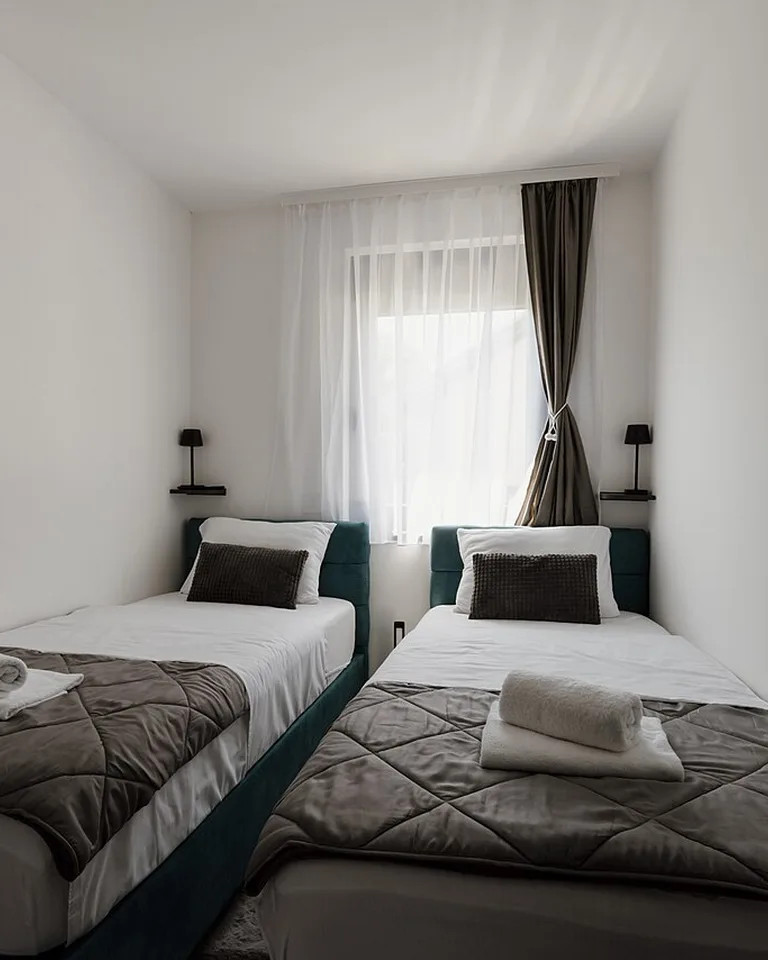
Curtains in a contrasting color draw a hard frame around the window, which is the opposite of what a small room wants. Matching the curtain fabric to the wall color lets the window treatment dissolve into the wall, so the eye keeps traveling instead of stopping. It’s the same tonal-envelope logic as the one-color room, applied to the busiest wall.
The match doesn’t have to be exact — same family, same lightness is enough. Sheers are the easiest version since they nearly disappear on their own, and in a rental they’re fully reversible: you’re just swapping fabric, not paint.
Hang One Big Piece of Art, Not a Gallery

A dozen small frames turns a small wall into a flea market. One large piece above the bed — a 24-by-36 canvas or bigger — anchors the room and gives it a single focal point, which paradoxically makes the wall feel larger than a scattered gallery does. Big art reads as confidence; small scattered art reads as clutter.
If you already own a collection of small pieces, group them tightly in one grid so they read as a single unit with one outer edge. The principle is always the same: fewer visual units, calmer room, bigger feel.
Frequently Asked Questions
Where should the bed go in a small bedroom?
Start with the longest uninterrupted wall, which usually gives the best combination of bed access, walking space, and clear doors. Test the placement with the room’s real dimensions first — in some rooms a short wall, a corner, or the wall under the window (with a low headboard) actually works better. There is no single correct answer; the right spot is the one that protects clear walkways and keeps the doorway sightline open.
Is it okay to put a bed against the wall?
Yes, especially for a single sleeper, a child’s room, or a guest room. Pushing one side of the bed against the wall converts two narrow, unusable gaps into one useful walkway, and it frees up the opposite corner for storage or a chair. It’s less convenient when two people need regular access to both sides of the bed every night.
Can you put a bed under a window?
You can, when it produces the best overall floor plan. Use a low headboard that sits below the sill so the window stays operable, make sure you can still reach the window for ventilation, and use full-height drapes to frame it deliberately. It works less well with drafty windows or radiators directly under the sill.
Should a small bedroom have two nightstands?
Not necessarily. Two nightstands earn their place when two people both need bedside storage and the room comfortably fits them. Otherwise, one nightstand — or a wall-mounted shelf or sconce — creates a better layout and leaves more open floor. Let the room’s width decide, not the symmetry habit.
What color makes a small bedroom look bigger?
Soft, light, warm neutrals — warm white, beige, pale greige — because they blur the boundaries between walls and ceiling. Pure white can feel cold and exposed in a north-facing room, so add warmth through bedding and curtains. One dark accent wall can work too, since dark colors visually recede, as long as the rest of the room stays light.
Do mirrors really make a room look bigger?
Yes, when they’re large and placed to reflect light or a clean view — a full-length mirror opposite or perpendicular to a window effectively doubles the daylight entering the space. The bigger the mirror, the bigger the effect. Avoid scattering several small mirrors around, which just adds visual noise.
How high should I hang curtains?
Mount the rod as close to the ceiling as looks natural — typically four to eight inches above the window frame — and extend it six to eight inches past each side so the window looks wider. Let the curtains fall all the way to the floor. This single change makes ceilings look taller and windows look bigger.
A small bedroom rewards every deliberate choice twice over: once in the floor space you free, and once in how calm the room feels to stand in. Start with the bed, build the vertical lines with curtains and a tall headboard, keep the palette and pattern quiet, and let one big mirror and one big rug do the heavy lifting. And if you’re thinking about what goes inside the room as well as around it, under-bed storage ideas pair naturally with these layout tricks — plus a clear path from the door, which small entryway ideas that flow into the bedroom can help with.