
12 Sage Green Bedroom Hardware and Lighting Pairings That Actually Work
Sage green is one of the most forgiving bedroom colors you can choose, but it punishes careless pairings. Get the hardware finish and lighting tone right, and the room glows. Get them wrong, and that calm herbal color turns cold and flat. The short answer: sage green works best with warm metals like brushed brass and aged bronze, soft diffused lighting at 2700K, and natural wood nearby. Matte black and polished chrome can work too, but only as deliberate contrast accents, repeated sparingly.
This guide is built differently from a standard decor roundup. Each idea below is a tested pairing: one hardware or metal finish matched with one lighting choice, all adapted for how a bedroom actually gets used — reading at night, waking up in morning light, and relaxing with the lamps low. If you want the broader decorating picture, start with our guide to sage green bedroom decorating, then come back here to nail the finishes.
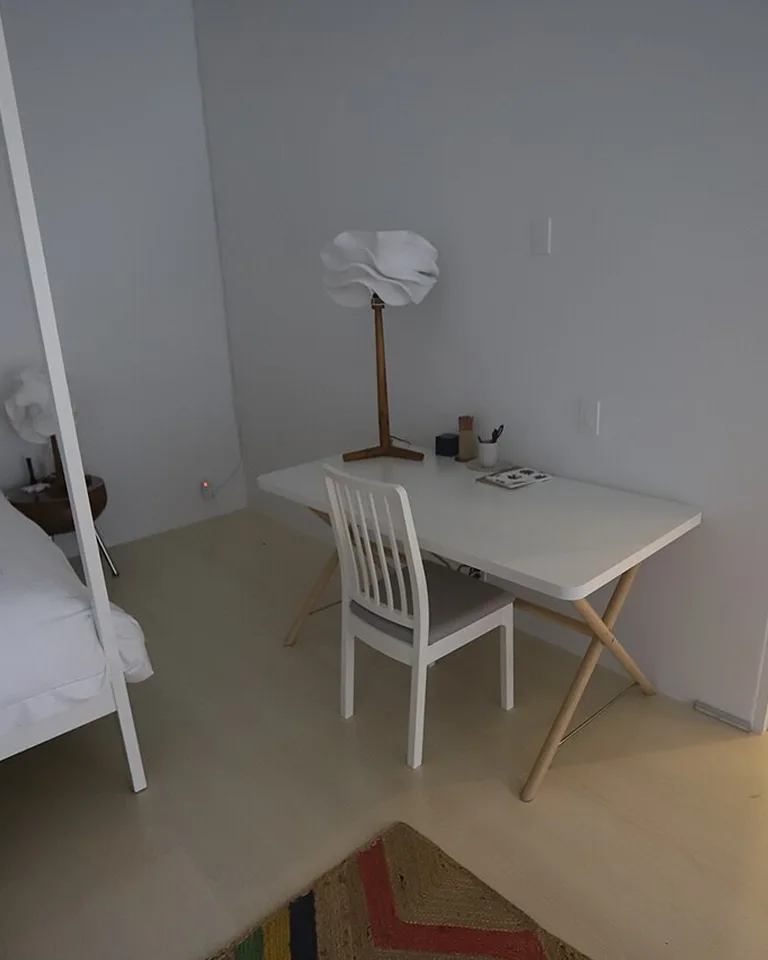
The rule behind every pairing on this list comes down to temperature. Sage carries gray and a little yellow in its undertone, so warm finishes (brass, bronze, wood, amber glass) blend in effortlessly, while cool finishes (chrome, nickel, matte black) create contrast that sharpens the room. Neither is wrong — you just have to choose your role for each piece of metal in the room and repeat it on purpose.
One more decision to make before you buy anything: pick your wall commitment first. A warm beige or cream backdrop lets you use sage in bedding and furniture, while full sage walls demand warmer lighting to keep them from reading gray at night. Either route works; the pairings below are marked for which one they suit.

Lighting temperature matters more in a sage bedroom than in almost any other room. Swap your bedside bulbs for warm white (2700K) before you judge any pairing. Sage shifts through the day — silvery in the morning, closer to olive by evening — and warm light keeps it in its prettiest range after sunset. Our roundup of cozy bedroom lighting ideas goes deeper on bulb choices and dimmer placement if you want more detail.
Wooden Pulls with Linen-Shade Bedside Lamps
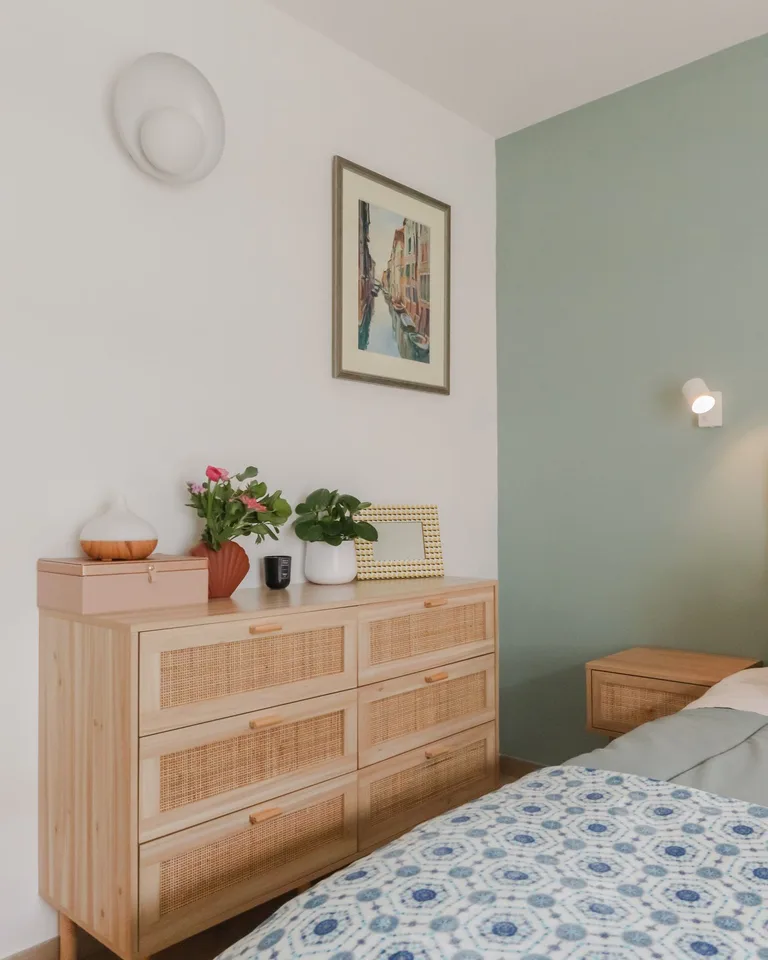
The safest pairing in the entire list is also the most underrated: wooden drawer pulls matched with lamps that have linen or fabric shades. Wood-on-wood never fights sage’s undertone because it reads as texture rather than color, and a fabric shade spreads light the way opal glass does — softly, in every direction, so the green reads stable from morning to night.
This works on a dresser, nightstands, or a wardrobe. Choose pulls in a finish close to your other wood furniture — light oak with oak, walnut with walnut — rather than introducing a third wood species. Then pick bedside lamp shades in natural linen or oatmeal cotton. The pairing suits full-sage walls especially well, since the warm diffused light stops the color from going chalky after dark.
Practical tip: if your dresser came with metal pulls you hate, wooden replacement pulls are the cheapest hardware swap you can make — usually a screwdriver job, no drilling, and renter-friendly since you can refit the originals when you leave.
Dark Round Knobs on White Furniture with a Warm Floor Lamp

White furniture against sage walls is a classic, but plain white knobs on white drawers disappear into nothing. Small dark knobs — matte black, aged bronze, or oil-rubbed bronze — give each drawer a visual anchor and stop the room from feeling washed out. One dark knob per drawer is enough; don’t add a second dark element on the same piece.
The floor lamp matters here because white furniture rooms often rely on a single ceiling light. A warm floor lamp in the corner near the dresser throws side light across the knobs and the wall, adding the depth that cool overhead light flattens. Keep the lamp shade fabric, not glass, so the glow stays soft. For more ways to keep an all-white scheme from feeling sterile, see our white bedroom ideas.
Practical tip: test the knob size before committing — a 1-inch round knob can look lost on a wide dresser drawer, while a 1.5-inch knob or a small cup pull reads intentional.
Aged Brass Pendant with Ribbed Glass Shades
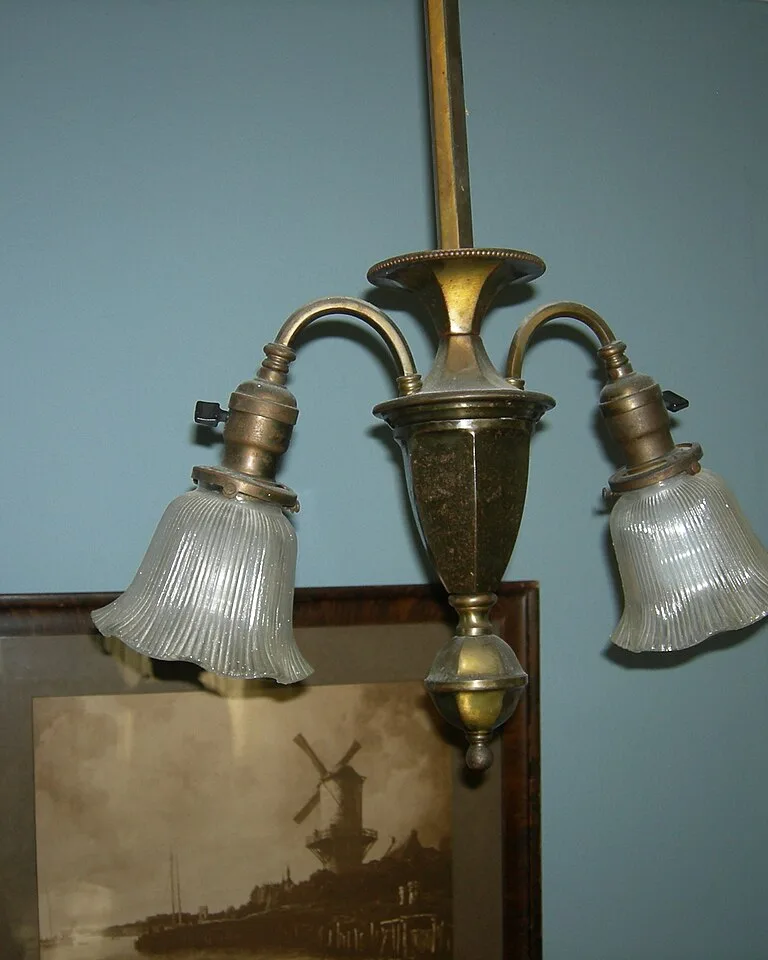
Brass is sage’s best friend among metals, and a ribbed or fluted glass shade is the smartest way to use it overhead. The ribs catch and scatter the light, so you get gentle texture on the ceiling instead of the harsh downward cone a bare bulb produces. In a bedroom, where you spend most of your time looking at the ceiling, that difference is enormous.
This pairing belongs on a ceiling fixture — a semi-flush mount in rooms with low ceilings, or a short pendant over a reading chair. Keep the brass aged or brushed rather than high-polish; polished brass reflects so sharply it can look costume-like against muted sage. Aged brass develops a soft patina that sits at the same “volume” as the paint.
Practical tip: for low ceilings, measure the fixture’s depth, not just its width. A shallow ribbed-glass flush mount feels built-in, while a deep one visually lowers the ceiling even if it’s beautiful.
Antique Bronze Accents with a Woven Rattan Pendant
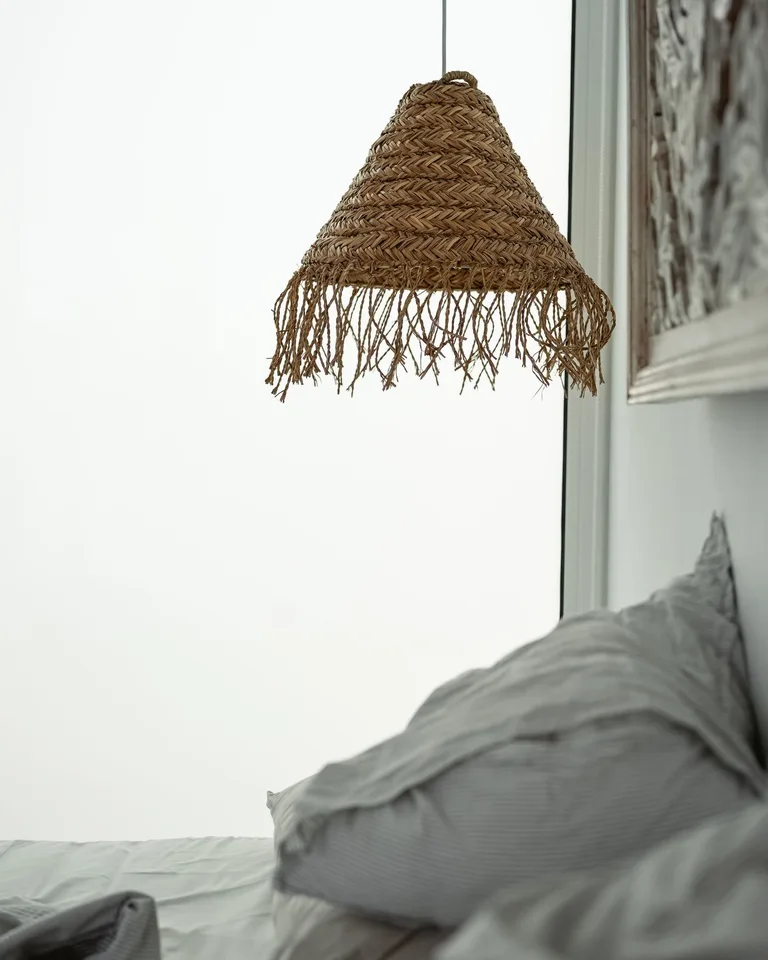
Sage and warm brown are a powerhouse combination, and this pairing leans all the way into it. Antique bronze hardware — on drawer pulls, curtain rods, or a bed frame — brings brown’s warmth in metal form, while a woven rattan pendant adds the same warmth in texture. Together they give a sage bedroom an earthy, collected feel without a single new paint color.
Hang the rattan pendant over the bed or in a reading corner, not centered in the room — bedroom pendants work best when they mark a zone. Keep everything else quiet: cream bedding, one neutral rug, no busy patterns competing with the weave. The pairing suits the renter-friendly version of this look too, since plug-in rattan pendants with cord covers need no wiring.
Practical tip: rattan shades filter light downward in a honeycomb pattern. If you read in bed, hang the pendant beside the bed rather than directly over your pillow, or the pattern lands on your book.
Cane-Shade Sconces with 2700K Warm Bulbs

Bedside sconces free up your nightstands, and cane or woven shades on a sage wall are pure magic — the weave throws a starburst of warm light across the paint that makes even a flat sage wall look textured. This is one of the few pairings where the light fixture itself is the decoration, so keep the rest of the wall bare.
The bulb choice is non-negotiable here: warm white, 2700K or below. A cool bulb behind a cane shade turns the sage wall chalky and kills the cozy effect. Dimmable bulbs are worth the extra cost since sconces double as your pre-sleep light. Mount them at about shoulder height when you’re sitting up in bed, roughly 55 to 60 inches from the floor.
Practical tip: if hardwiring isn’t an option, look for plug-in sconces with cord covers that match your wall color — from two feet away they read as hardwired.
Oil-Rubbed Bronze Sconces Flanking the Bed

When you want the bedroom to feel a little more formal, mount oil-rubbed bronze sconces on both sides of the bed. The dark bronze reads almost black at night but reveals warm golden undertones up close, which is exactly the layered effect that makes sage look expensive rather than plain. Symmetry is the point here — two matching sconces frame the headboard like art.
This pairing suits deeper sage walls and wood bed frames best. If your walls are a pale, silvery sage, the dark sconces can feel heavy — in that case, choose the cane-shade version above instead. Keep the sconce shades simple: a small fabric shade or an exposed warm bulb. Anything ornate competes with the bronze finish itself.
Practical tip: put the sconces on a separate switch or smart bulbs from the ceiling light. Being able to kill the overhead light while the sconces stay on is what makes this pairing feel like a boutique hotel.
Matte Black Lamp with Black Metal Frames

Matte black is the deliberate contrast choice for sage. It works — but only when you repeat it. One black lamp on a nightstand next to a black picture frame and a black curtain rod reads as a decision. One black lamp floating alone in a room of brass and wood reads as a mistake.
A mushroom or dome-shaped black lamp is the easiest way in: the shape is soft enough that the dark finish doesn’t feel harsh, and it throws light both up and down, which flatters sage walls. Place it on the nightstand and echo the black in exactly one or two other spots — a frame, a mirror edge, a drawer pull — then stop. If you lean toward this modern edge, our olive green bedroom ideas show how deeper greens handle black accents at a larger scale.
Practical tip: matte black shows dust. In a bedroom, where lamps sit at eye level when you’re lying down, wipe the shade weekly or the dust reads as gray fuzz against the dark finish.
Amber Glass Lamp Bases with Cream Fabric Shades
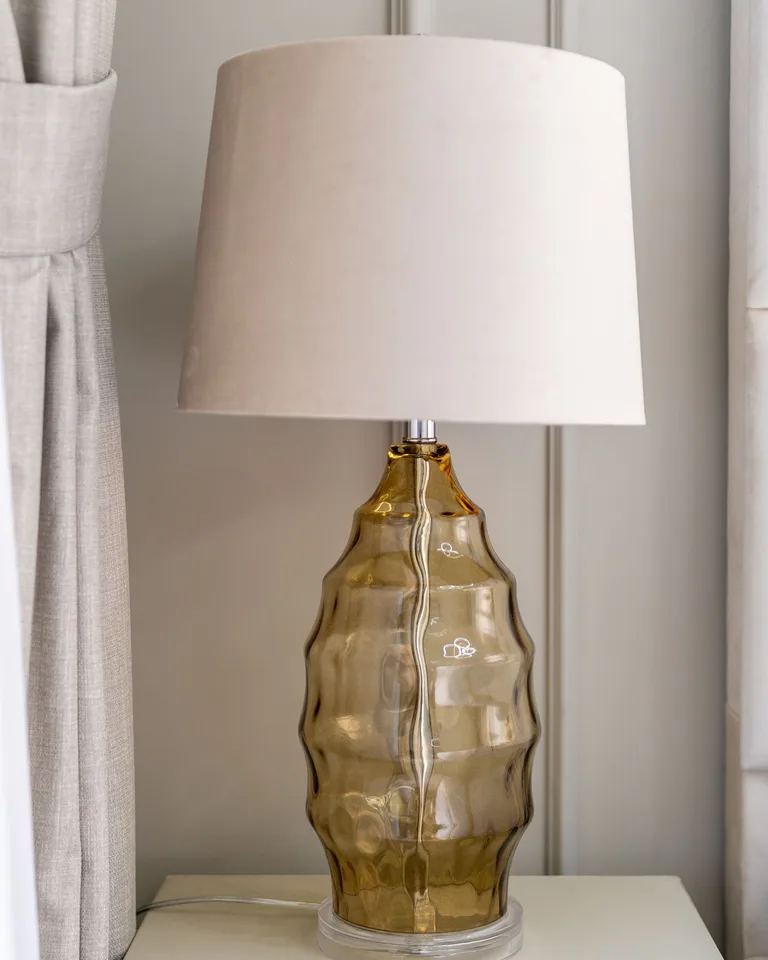
Amber or honey-toned glass is the sleeper hit of sage pairings. It has the warmth of brass without any metal at all, and when the lamp is on, the base itself glows — giving you two light sources for the price of one. Against sage walls, an amber base picks up the yellow undertone in the paint and makes the whole corner feel sunlit even at night.
Pair it with a cream or oatmeal fabric shade, never a colored one; a second strong color on the shade fights the amber base for attention. This lamp style bridges traditional and modern rooms, so it works whether your sage bedroom leans farmhouse or contemporary. It’s also the best choice if you’re pairing sage with blush or dusty pink accents, since amber flatters pink undertones.
Practical tip: amber glass varies wildly between makers — hold the base next to your wall color in daylight before buying. Too orange and it clashes; too brown and it disappears. Honey is the sweet spot.
Ceramic Lamps with Pleated Shades and Brass Trim

Pleated fabric shades are having a moment, and a sage or teal pleated shade with brass trim is tailor-made for a sage bedroom. The pleats add old-world texture, the brass trim ties into any brass hardware in the room, and a ceramic base in white, cream, or soft green keeps the whole thing grounded.
This is a statement lamp, so give it room: one on a dresser or a single nightstand, not a matching pair that doubles the visual noise. The shade color should sit close to your wall color — same family, slightly deeper or lighter — so the lamp feels like it grew out of the room rather than being dropped in.
Practical tip: pleated shades collect dust in the folds. A soft dry paintbrush run along the pleats once a month keeps them crisp without crushing the fabric.
Round Mirror with a Warm Metal Strap or Frame

A round mirror does quiet work in a sage bedroom: it bounces lamplight around the room, doubles your sconces after dark, and breaks up the rectangle-heavy geometry of beds and dressers. The frame finish is the pairing decision. A warm metal frame — brass, bronze, or even a leather strap with brass fittings — keeps the mirror in the warm family that sage loves.
Hang it where it reflects a lamp, not where it reflects clutter. Opposite a window is the classic spot for daylight, but opposite your bedside sconce doubles your evening light for free. If you’re working with a small room, our bedroom mirror ideas cover placement tricks that make tight spaces feel larger.
Practical tip: a leather-strap hanging mirror is the easiest no-drill option — one hook, and the strap itself becomes the warm accent.
Sage Wainscot with Dark Wood Trim

If full sage walls feel like too much, try sage on the lower wall with dark wood trim dividing it from a warm white upper wall. The wood trim acts as a built-in warm accent that runs around the entire room, and it gives you a natural place to stop the green — which solves the most common sage problem: not knowing where the color should end.
This is a bigger commitment than swapping hardware, but it’s the highest-impact wall treatment for a sage bedroom. The dark wood — walnut stain, espresso, or a deep bronze-painted trim — warms the green from every angle, so the room reads cozy rather than cool even in north-facing light. Keep bedding cream or oatmeal to echo the upper wall.
Practical tip: paint a large sample board and lean it against the wall for three days before committing. Sage’s undertone shifts dramatically between morning and lamplight, and wainscot puts the color at eye level where you’ll notice every shift.
Smoked-Glass Pendant on a Brass Stem

For the moody end of the sage spectrum — deeper, grayer greens — a smoked or dark-tinted glass pendant on a brass stem adds drama without heaviness. The dark glass reads as a soft shadow when off and a warm ember when lit, while the brass stem keeps it firmly in sage’s warm family.
Hang it low over a reading chair or in a bedroom corner to create a pool of light, not centered as the room’s main fixture. Smoked glass dims the bulb naturally, so use a slightly brighter warm bulb than you think you need — the tint eats some of the output. This pairing suits adult primary bedrooms best; in a small or north-facing room it can feel too dark.
Practical tip: because smoked glass shows fingerprints badly, choose a pendant you can reach to wipe, or one with a shape that doesn’t invite touching.

Frequently Asked Questions
What colors pair well with sage green? Earthy neutrals do the heavy lifting: cream, warm beige, oatmeal, and terracotta all sit comfortably with sage. Natural wood tones — oak, walnut, rattan — add warmth, and for metals, brushed brass and aged bronze are the safest warm choices, with matte black as a deliberate contrast accent.
Can sage green work in a small bedroom? Yes, with lighter sage shades that lean more white and gray. Keep the larger surfaces — walls, bedding, big furniture — in light tones, and introduce any deeper sage through smaller pieces like lamps, pillows, or a single accent wall. Maximize natural light and stick to warm bulb temperatures so the room doesn’t read cold.
Which undertone pairs best with sage green bedding? Sage carries a cool, green-leaning undertone, so neutrals with a green-beige or green-gray base blend most seamlessly. If you want contrast instead of blending, a warmer pink-beige or gold-beige creates deliberate, appealing tension. Check any neutral against your bedding in daylight before committing, since two “neutrals” that don’t agree will always look slightly off.
The through-line in every pairing above is simple: sage green rewards warm, diffused, and textured, and it punishes cold, sharp, and flat. Choose your metal finish, choose your light temperature, repeat both on purpose, and the room takes care of the rest.