
White Bedroom Decor Ideas That Feel Warm, Not Sterile
A white bedroom can be the calmest room in the house — or the coldest. The difference is never the color itself; it’s the layers you build on top of it. White only reads sterile when it’s flat: one shade, one texture, one light source. Give it variation — warm whites against cool ones, linen against knit, a little brass, a little rattan — and the same white walls start feeling serene, expensive, and genuinely cozy.
The 12 white bedroom decor ideas below are built around that principle: keep the palette restful, but make every surface earn its place. You’ll find the exact bedding formula that keeps an all-white bed from looking flat, the natural materials that warm the room without adding color, and the small reflective and lighting tricks that keep white glowing instead of glaring. Start anywhere — each idea works on its own, and together they pull the whole room together.

1. Mix Warm and Cool Whites Instead of Matching Them
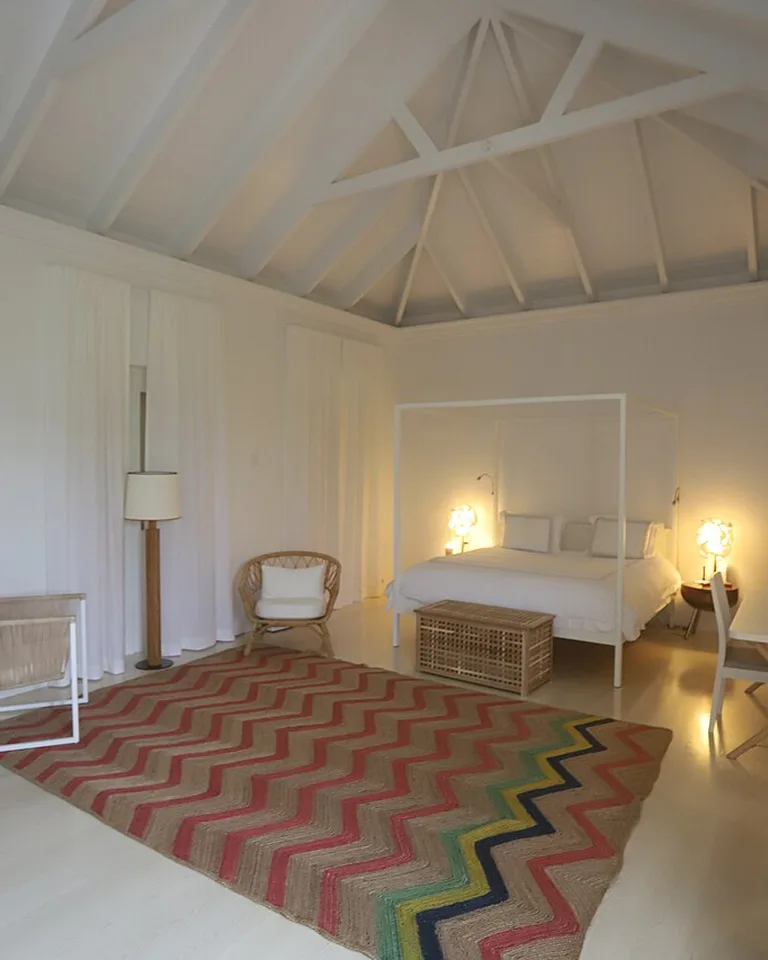
The fastest way to make a white bedroom feel flat is to use one white everywhere. Real depth comes from undertones: warm whites (ivory, cream, alabaster) feel cozy and sunlit, while cool whites (pure white, chalk) feel crisp and airy. Used together — say, warm white bedding against cool white walls, or an ivory rug under a crisp white duvet — they create subtle contrast that reads as texture.
Pick a dominant undertone first, then add its opposite in two or three places. In a south-facing room with golden light, lean cooler to keep things balanced; in a north-facing room, lean warm to counter the blue-ish light. If you’re unsure, test paint swatches on the wall and look at them in morning and evening light — undertones shift dramatically through the day.
Why it works: your eye reads the slight temperature differences as layers, which is exactly what stops an all-white room from looking one-dimensional. Tip: look for names like “alabaster,” “ivory,” and “Swiss coffee” for warm whites, and “chantilly” or “decorator’s white” for cool ones — and don’t be surprised if you need three swatches to find your winner.
2. Start With a Washed Linen Duvet Cover as the Foundation

Linen is the single best textile for a white bedroom because it never looks perfectly smooth — and that’s the point. The natural slubs and wrinkles in washed linen catch light unevenly, which gives your bed a relaxed, lived-in depth that crisp cotton percale can’t match. A white or ivory linen duvet cover is the workhorse layer everything else sits on.
Choose stonewashed or garment-washed linen for the softest hand feel; it gets better with every wash. Keep the rest of the bedding slightly simpler so the linen stays the star, and don’t iron it — the casual rumple is the look. If you’re drawn to a more tailored feel, a warm beige bedroom shows how the same natural fabrics read in a creamier palette.
Why it works: linen’s irregular weave breaks up large white surfaces, so the bed reads as inviting rather than clinical. Tip: buy one size larger than your duvet insert so the cover drapes loosely and looks plush instead of stretched tight.
3. Layer an Ivory Quilted Coverlet for Middle-Ground Texture
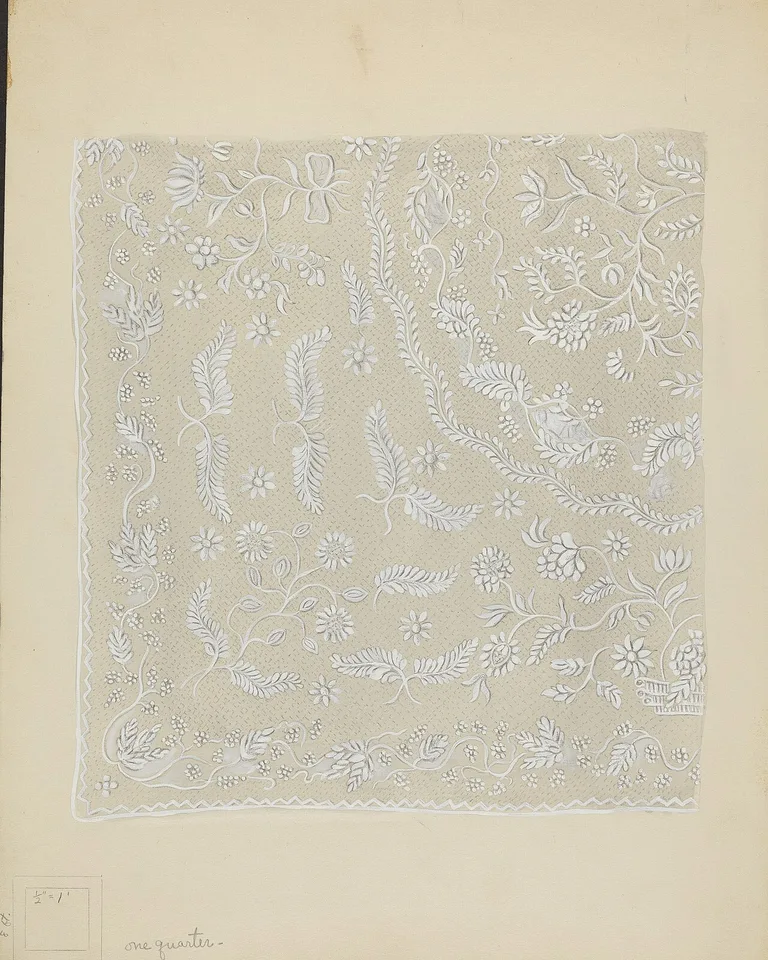
A quilted coverlet folded across the foot or middle of the bed does something a duvet alone can’t: it adds a second pattern of texture at a different scale. The stitched quilting creates small shadows and rhythm across the white surface, which keeps the bed interesting even when the rest of the bedding is plain. Ivory — slightly warmer than the duvet — adds that undertone contrast from idea one.
Fold it in thirds and lay it just past the halfway point of the bed so it overlaps the duvet, not the pillows. Quilted coverlets are also practical: they’re light enough for warm sleepers but add real warmth when nights turn cool, and they protect the duvet from feet and pets.
Why it works: two textured layers at different scales (linen’s loose weave, quilting’s tight stitching) read as deliberate styling, not just a white bed. Tip: choose a coverlet with a simple stitch pattern — diamond or channel quilting — since fussy patterns fight the calm of an all-white scheme.
4. Drape a Chunky Knit or Ribbed Throw at the Foot of the Bed

If linen is soft and the coverlet is smooth, the foot-of-bed throw should be the opposite: chunky, nubby, visibly textured. A heavy knit or ribbed cotton throw in white or cream breaks the bed’s horizontal lines and gives your eye one more surface to land on. It’s also the most-used textile in the room — the one you actually pull over yourself on the couch-adjacent reading corner.
Casually drape it rather than folding it into a perfect rectangle; the asymmetry looks intentional and relaxed. Washable cotton or cotton-blend knits are the practical choice here — they survive frequent washing without pilling into a mess the way some acrylics do.
Why it works: high-contrast texture at the bed’s end anchors the whole composition and photographs beautifully. Tip: keep the throw to roughly a third of the bed’s width so it reads as an accent, not a second coverlet.
5. Build a Simple Pillow Formula: Euro Shams, Sleepers, and One Bouclé Lumbar

Pillows are where white bedrooms either get luxurious or go overboard. The formula that always works: two white euro shams standing upright against the headboard, your sleeping pillows laid flat in front of them, and one textured lumbar pillow (bouclé, ribbed, or cable-knit) centered on top. Three layers, done — no pillow mountain required.
The lumbar is the hero because its texture differs from everything behind it. A bouclé lumbar in ivory against smooth white shams is the classic move, but a soft ribbed knit or even a subtle ticking stripe works. Keep it to one lumbar; two fighting accent pillows is where calm turns cluttered.
Why it works: the stepped heights (tall shams, flat sleepers, low lumbar) create a composed pyramid that looks styled without effort. Tip: use pillow inserts one size up from the covers for that plump, designer look — and fluff them with a karate chop to the top edge for a casual crease.
6. Add a Vintage-Style Milk-Glass Table Lamp for Warm Light

White bedrooms live or die by their lighting, and overhead light alone is almost always too harsh. A milk-glass or opal-glass table lamp on each nightstand gives you a warm, diffused glow that flatters white walls instead of washing them out. Vintage-style shapes — a simple dome, a pleated shade — add character without adding color.
Fit them with warm bulbs (2700K) on the bedside lamps while keeping the overhead on a dimmer or off in the evenings. The glass itself softens the light, so even a brighter bulb reads gentle. This is the same layered-lighting logic behind small bedroom ideas that feel bigger — light at multiple heights opens the room up.
Why it works: diffused warm light turns white surfaces golden in the evening, which is when a white room is most at risk of feeling cold. Tip: match the two bedside lamps for symmetry, but let the rest of the room’s lighting vary — matching everything looks like a showroom.
7. Add a Rattan Accent Piece for Natural Warmth

White needs at least one warm natural material to feel grounded, and rattan is the easiest win. A woven rattan accent chair or small cane side table introduces honey-toned texture right where your eye lands — against white walls and bedding, the contrast is striking, and the room suddenly has depth and a hint of the organic. Tuck it into an empty corner or beside the bed as a catch-all for tomorrow’s clothes.
You don’t need a matching set; one rattan piece mixed among painted or upholstered furniture looks collected rather than catalog-bought. If a full chair feels like too much, a small rattan side table delivers the same warmth in a smaller footprint. The open weave keeps even a solid piece from feeling visually heavy.
Why it works: natural materials trigger a “warmth” reading that paint and fabric alone can’t deliver. Tip: if rattan feels too coastal for your taste, swap in light oak or a cane-webbing bench — same effect, different mood.
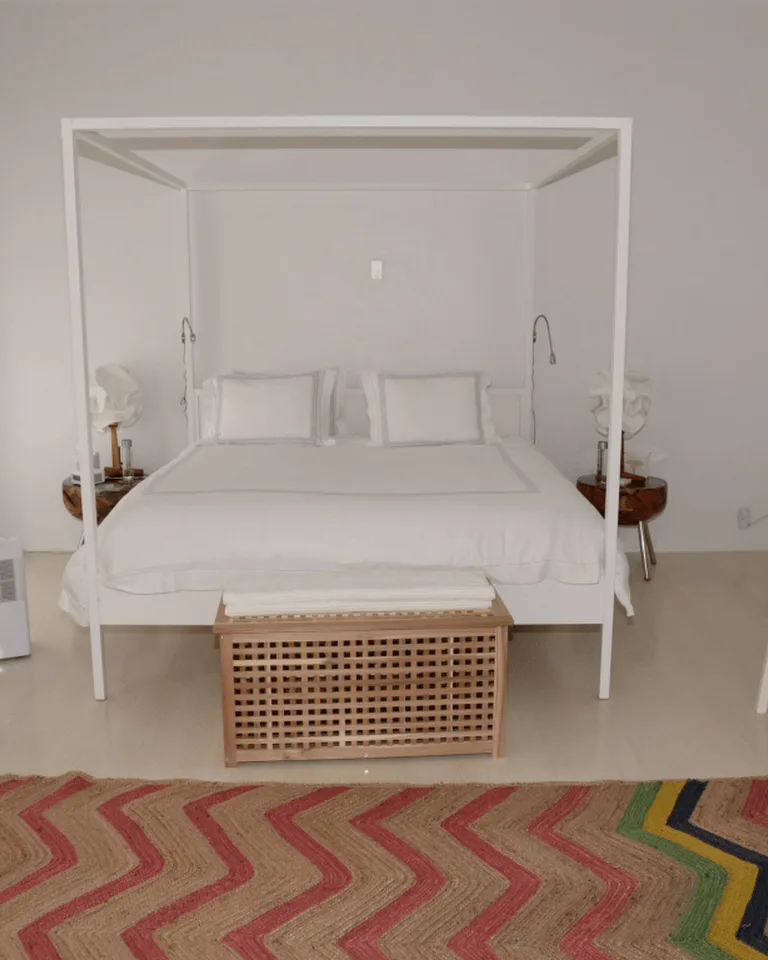
8. Hang Sheer Cotton Curtain Panels on a Brass Rod
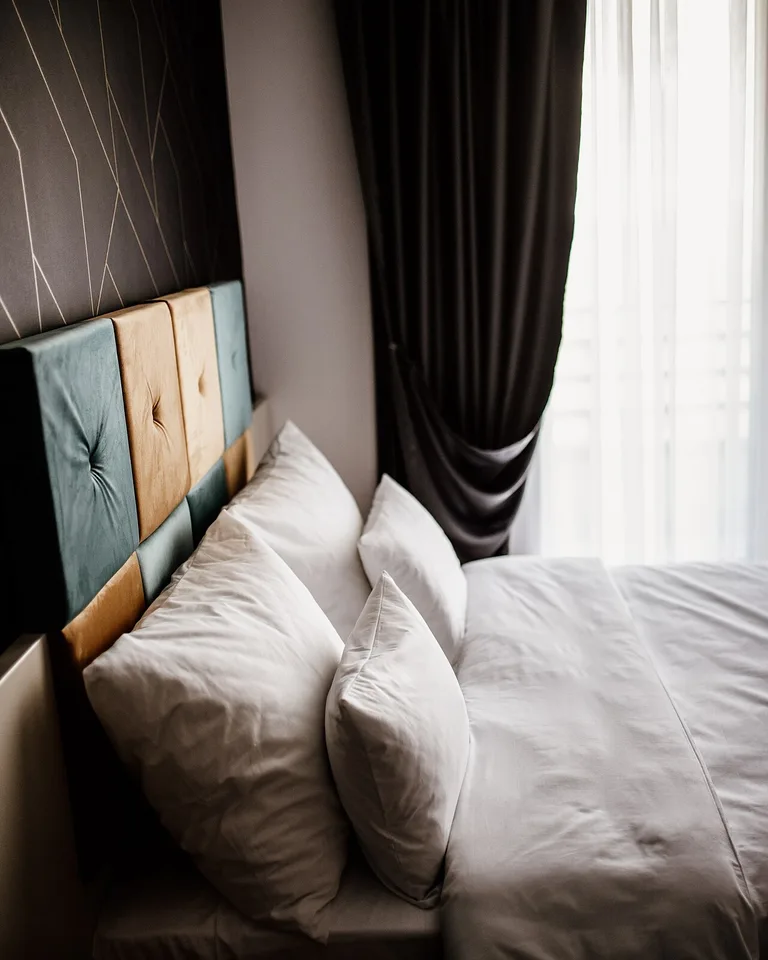
Sheers are the white bedroom’s secret weapon: they soften daylight into a glow, add vertical softness, and move with the air in a way nothing else in the room does. Floor-to-ceiling cotton panels in white or ivory make windows feel taller and ceilings higher, and the filtered light they produce is the most flattering light a white room can have.
The brass rod matters as much as the curtains. A slim brass or aged-bronze rod introduces the room’s warm metallic accent — just enough to stop the palette from feeling icy. Hang the rod 4 to 6 inches above the window frame and extend it 6 to 8 inches past each side so the panels stack on the wall, not the glass.
Why it works: moving, light-filtering fabric adds life and dimension that static surfaces can’t. Tip: use two panels per window even on narrow windows — the fullness looks luxurious, and cotton panels are affordable enough to double up.
9. Ground Everything With a Woven Jute Area Rug

A bare floor under a white bed is the number-one reason white bedrooms feel cold. A woven jute or sisal rug adds coarse natural texture exactly where the room needs it — underfoot — and its warm tan tone is the perfect counterweight to cool whites above it. The rug also defines the bed zone, which makes the whole layout feel intentional.
Size it generously: the rug should extend at least 18 to 24 inches beyond the bed on both sides and at the foot. In a small room, that might mean an 8×10 rug under a queen — which feels extravagant but looks right. Layer a smaller soft rug (a vintage-style runner or a sheepskin) on top of the jute beside the bed if you want a softer landing for bare feet.
Why it works: texture underfoot changes how the whole room feels the moment you step in, morning and night. Tip: choose a tight, flat weave for bedrooms — chunky braided jute sheds and can be rough on bare feet.
10. Style a Whitewashed Oak Floating Shelf With Ceramics
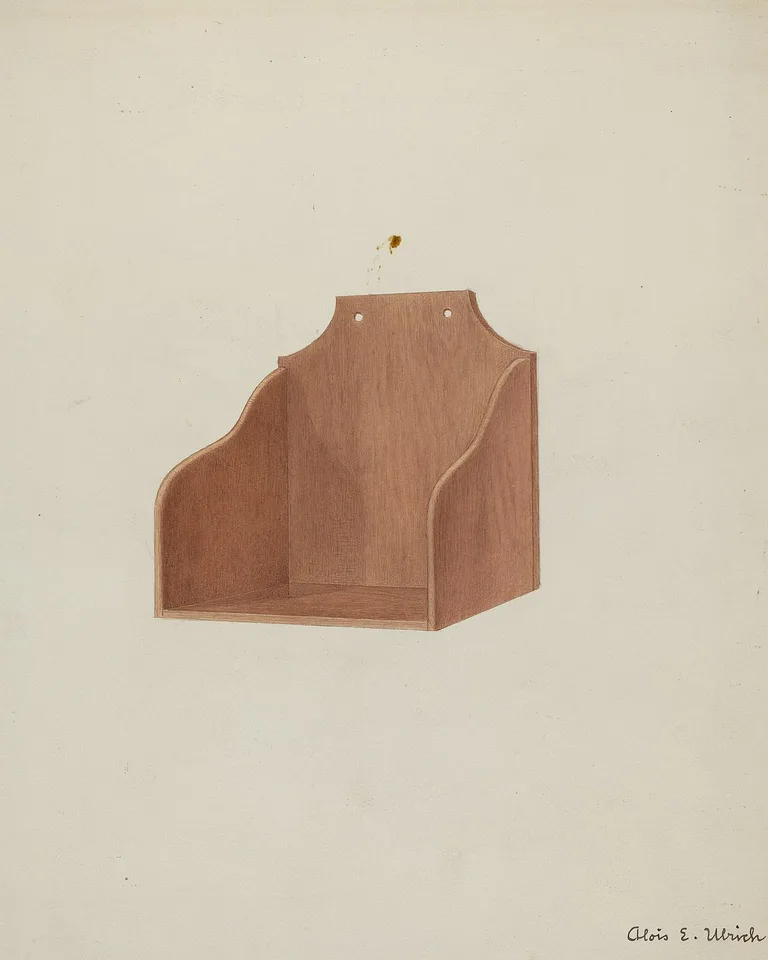
White walls need a little punctuation, and a single floating shelf in whitewashed oak gives you a display spot without the weight of a bookcase. Style it with three to five pieces in a tight palette: a scalloped ceramic vase, a small stack of linen-bound books, a trailing plant cutting in a glass. Negative space between objects is part of the look.
Hang it at eye level or slightly above, ideally on the wall you face from the bed — art you can’t see from the pillows is art wasted. If shelves feel like dust collectors to you, the same styling rules apply to the top of a low dresser. For more ways to style a bedside zone, bedroom vanity ideas cover the same “small surface, big impact” thinking.
Why it works: one restrained display moment adds personality while the surrounding white space keeps the room calm. Tip: group objects in odd numbers and vary their heights — the eye reads that as curated, while even, same-height rows read as a store shelf.
11. Hang Framed Black-and-White Botanical Prints

An all-white room with zero contrast eventually looks washed out. Black-and-white botanical prints are the gentlest way to add that missing contrast: the black lines give the eye definition, while the botanical subject keeps the mood soft and natural. One framed print above the bed — or a small grouping of two or three on a side wall — works better than one oversized piece; repetition feels calmer.
Keep the frames simple and consistent — thin black frames or natural oak — and use generous white mats so the art breathes. Botanical subjects (ferns, eucalyptus, grasses) echo the natural materials elsewhere in the room, which ties the whole scheme together. If you prefer something bolder, the high-contrast approach in black and white bedroom ideas shows how far the monochrome palette can go.
Why it works: a controlled dose of black sharpens every white around it, making the room look brighter by comparison. Tip: hang art so the center sits at about 57 inches from the floor — gallery height — or 6 to 8 inches above the headboard, whichever applies.
12. Finish With an Antique-Style Mirror and Real Greenery

The last two pieces a white bedroom needs are reflection and life. An antique-style mirror — leaning or hung — bounces daylight around the room and adds a warm metallic note that ties back to the curtain rod. Place it where it catches a window, not the bed, for the best light play. A full-length mirror works the same magic if you need the function too.
Then add one living thing: a faux or real olive tree in a textured white ceramic planter, a trailing pothos on the shelf, even a bundle of dried pampas grass in that scalloped vase. Green against white is the oldest contrast in decorating, and it instantly tells the brain the room is alive, not staged.
Why it works: mirrors double your light and greenery softens every hard edge — together they erase any last trace of sterility. Tip: if you go faux with the plant, invest in a good one and keep it dusted; a cheap, dusty fake does the opposite of what you want.

Frequently Asked Questions
How can I prevent a white bedroom from feeling cold?
Layer textures (linen, knit, bouclé, woven rugs), add warm natural materials like rattan or light wood, and use warm-toned layered lighting — bedside lamps plus a dimmable overhead — instead of a single cool ceiling light. A few brass or wood accents go a long way toward perceived warmth.
Will white furniture make my small bedroom look bigger?
Yes. White reflects light and reduces visual clutter, which makes a small room feel more spacious — especially combined with good lighting and a mirror to bounce daylight around. Just add enough texture and storage so the room doesn’t feel barren.
What bedding colors work best with white furniture?
Almost anything works against white, which is the point. For a calm scheme, layer warm whites, ivory, and cream; for personality, add soft pastels or earth tones through pillows and throws. If you want a rosier direction, blush pink bedroom ideas pair beautifully with white furniture. Test one pillow or throw first to see how it reads in your light.
Can I use white in a bedroom facing north?
Absolutely — but lean into warm whites and warm materials. North-facing rooms get cooler, bluer natural light, so warm wood tones, textured textiles, and layered warm lighting balance it out and keep the room from feeling chilly or gray.
What paint finish works best in a white bedroom?
Eggshell or matte on walls hides imperfections and gives a soft, velvety look; use satin sparingly on trim where you want wipeable durability. Higher-sheen finishes reflect more light but show every flaw, so save them for small accents.
A white bedroom isn’t about restraint for its own sake — it’s about giving texture, light, and natural materials room to be noticed. Build the layers in the order above, from undertone to bedding to light to living things, and white stops being the absence of color and becomes the whole point of the room.