
Black and White Bedroom Ideas That Don’t Look Flat
A black and white bedroom looks flat for a simple reason: with no color to create depth, texture, finish, and light have to do all the work — and most monochrome rooms skip them. The fix is not adding color. It is layering at least three textures, mixing matte and glossy finishes, and lighting the room in warm layers. Do that, and black and white stops looking stark and starts looking expensive. These 14 ideas show exactly how.
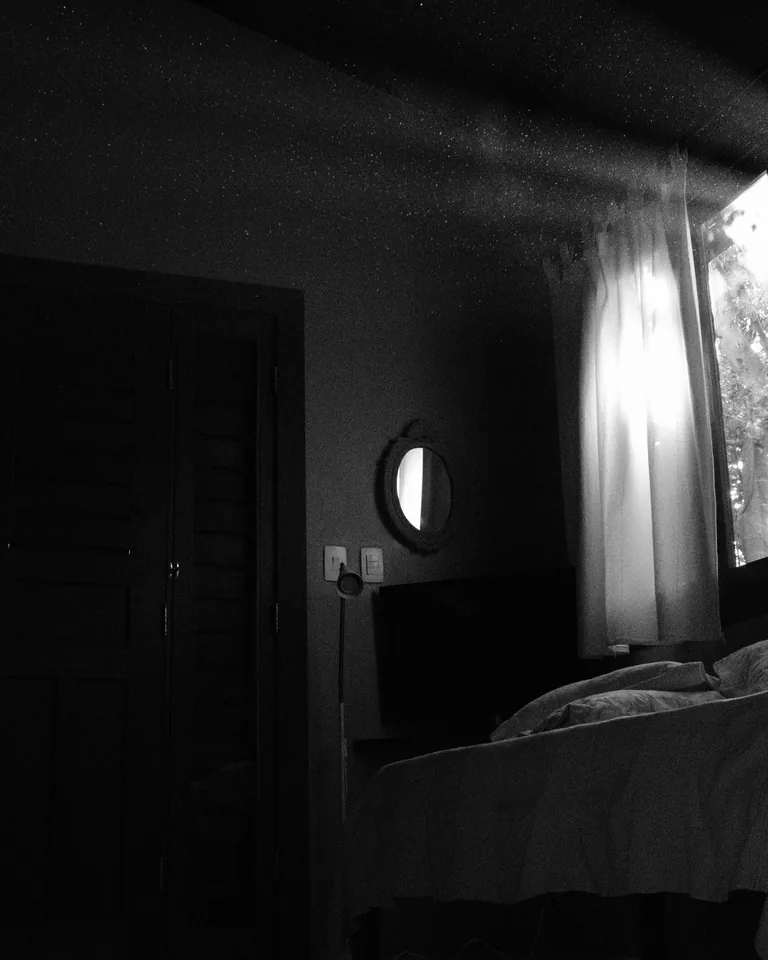
Commit to a Ratio Before You Buy Anything
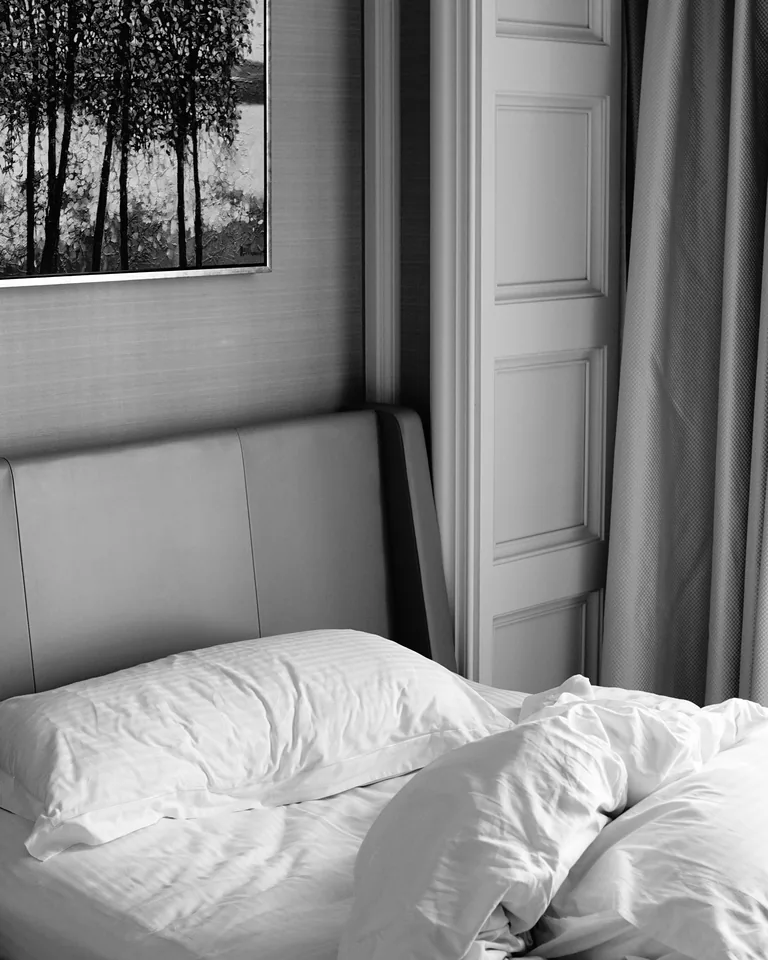
Flat monochrome rooms usually fail at the planning stage: black and white scattered evenly everywhere, so nothing has weight. Decide your ratio up front. White-dominant (roughly 70% white, 30% black) feels airy and calm; black-dominant feels dramatic and cocooning. The classic 60-30-10 formula — 60% white, 30% black, 10% accent — keeps the balance from tipping.
Tip: smaller rooms should lean white-dominant. Black recedes visually, but large black surfaces in a tiny room close in fast. For more on working with tight square footage, see these small bedroom ideas.
Layer at Least Three Textures

In a colorless room, texture is the decoration. A monochrome bed needs a minimum of three distinct textiles to avoid looking flat: think smooth cotton sheets, a chunky knit throw, and velvet or bouclé pillows. Each texture catches light differently, which is what creates the sense of depth that color normally provides.
Tip: run your hand over candidates in the store. If two fabrics feel the same, they will look the same in black and white — keep shopping until you have three genuinely different hands.
Mix Matte and Glossy Finishes
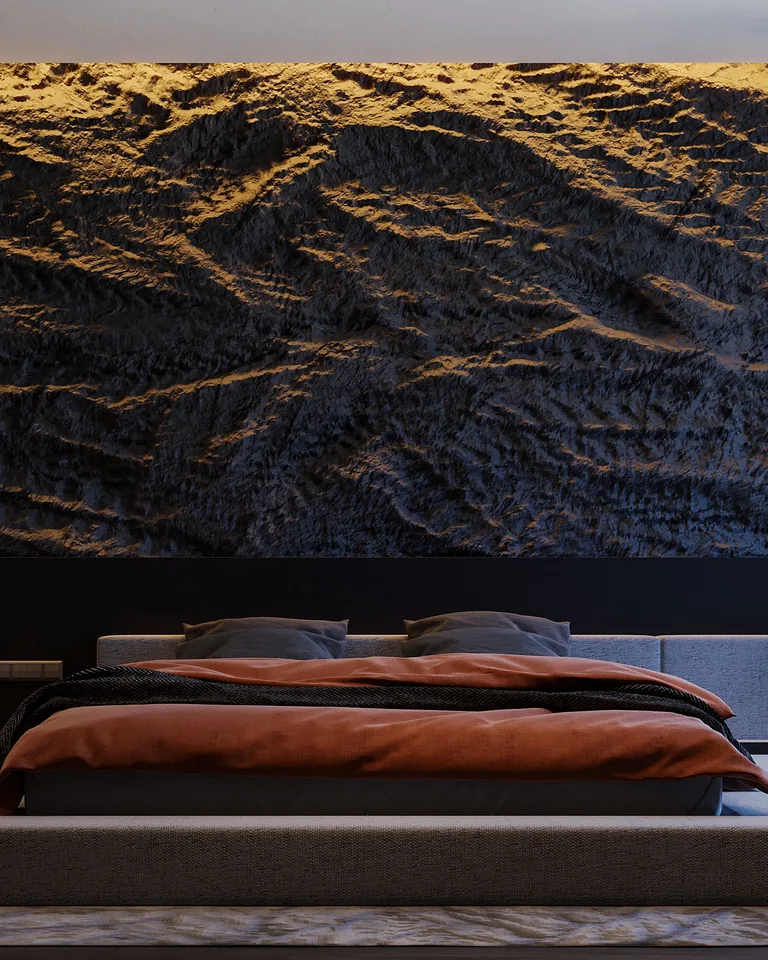
An all-matte black and white room reads as institutional; an all-glossy one reads as a showroom. The expensive look comes from mixing: matte black walls with a glossy lacquered nightstand, flat white paint with a mirrored tray, brushed metal with honed stone. Finish variation is the subtlest depth cue in the room, and the eye registers it instantly.
Tip: audit your finishes before buying anything new. If everything you own is matte, your next purchase should shine — and vice versa.
Paint One Black Accent Wall Behind the Bed
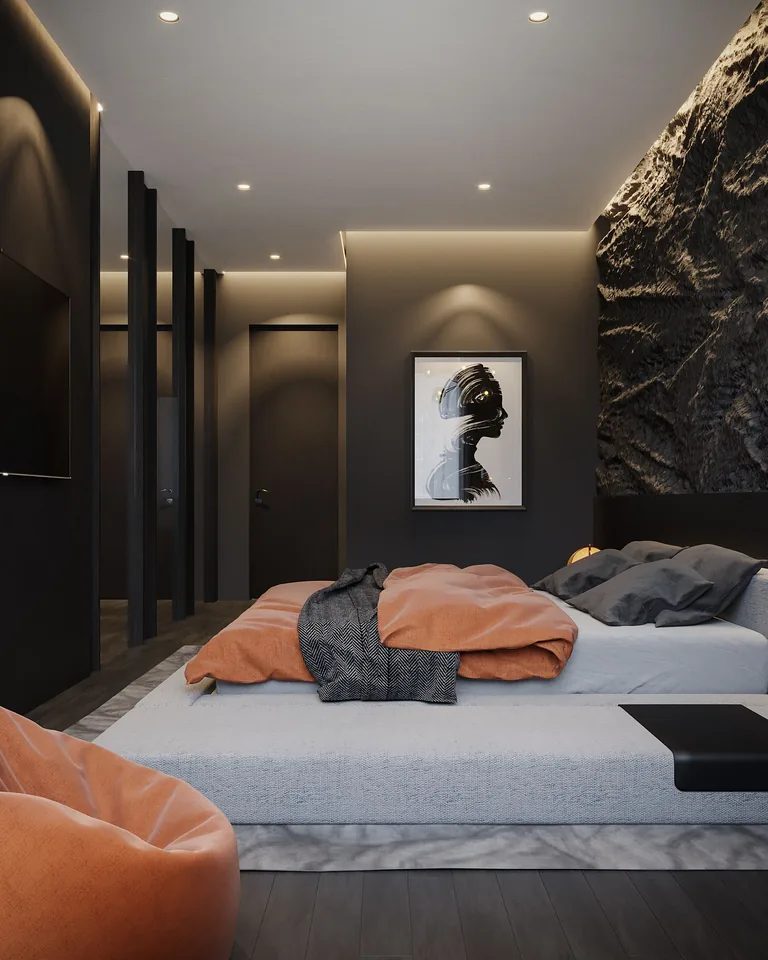
A single black wall gives the room a backbone. Paint the wall behind the bed in a deep, warm black and keep the other three walls crisp white. The bed pops forward, the room gains instant architecture, and the contrast makes the white walls look brighter. If you love this moody moment, the same instinct drives moody half bathroom ideas — dark walls, light fixtures, high drama.
Tip: choose a black with brown undertones rather than blue for a bedroom. Blue-blacks feel cold at night; warm blacks feel enveloping. Test the swatch under your evening lamps.
Hang One Oversized Black-and-White Art Piece
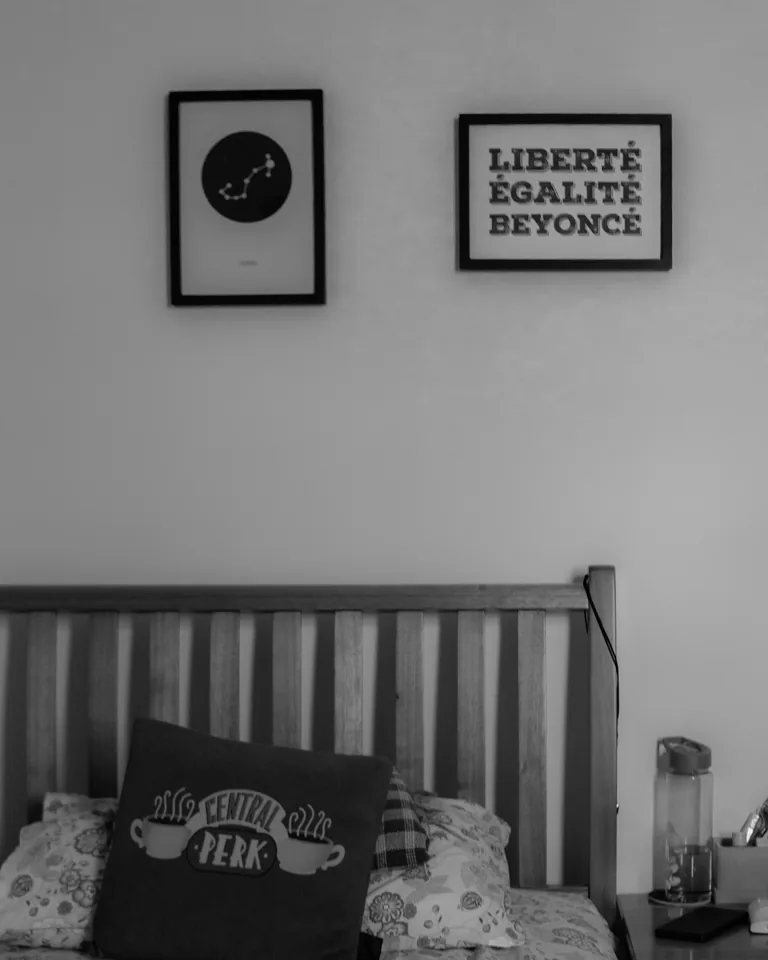
One large-scale piece of black-and-white art — an abstract canvas, a dramatic photograph — does more for depth than a dozen small frames. Hang it 8 to 10 inches above the headboard so it reads as part of the bed’s composition. The scale creates a focal point that stops the eye from skating across flat walls.
Tip: the art should contain both true black and true white, not just gray. High-contrast art echoes the room’s palette instead of muddying it.
Let a Single Graphic Pattern Anchor the Room
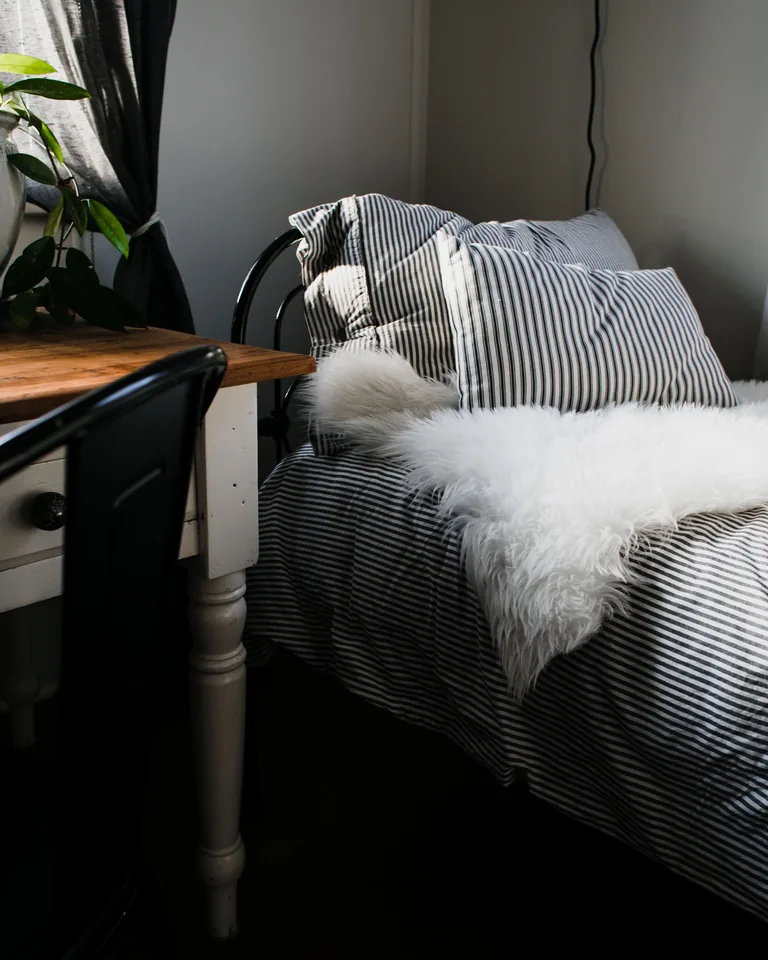
Pattern is energy in a monochrome room, so give it one job and one location: a striped duvet, a geometric rug, or a bold houndstooth throw. One strong pattern gives the room rhythm; two competing patterns give it a headache. Let the pattern be the hardest-working textile in the room and keep everything else quiet.
Tip: mid-scale patterns work best. Tiny prints disappear in monochrome and oversized prints can overwhelm — a classic stripe or medium geometric is the safe, stylish middle.
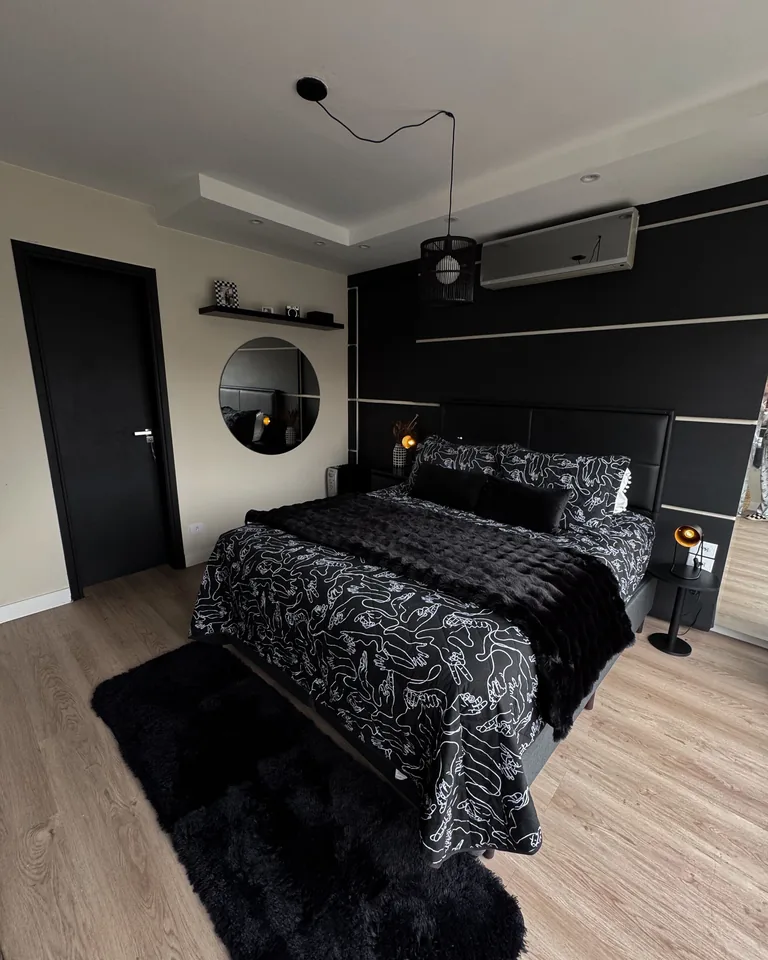
Layer Warm Lighting: Ambient, Task, and Accent
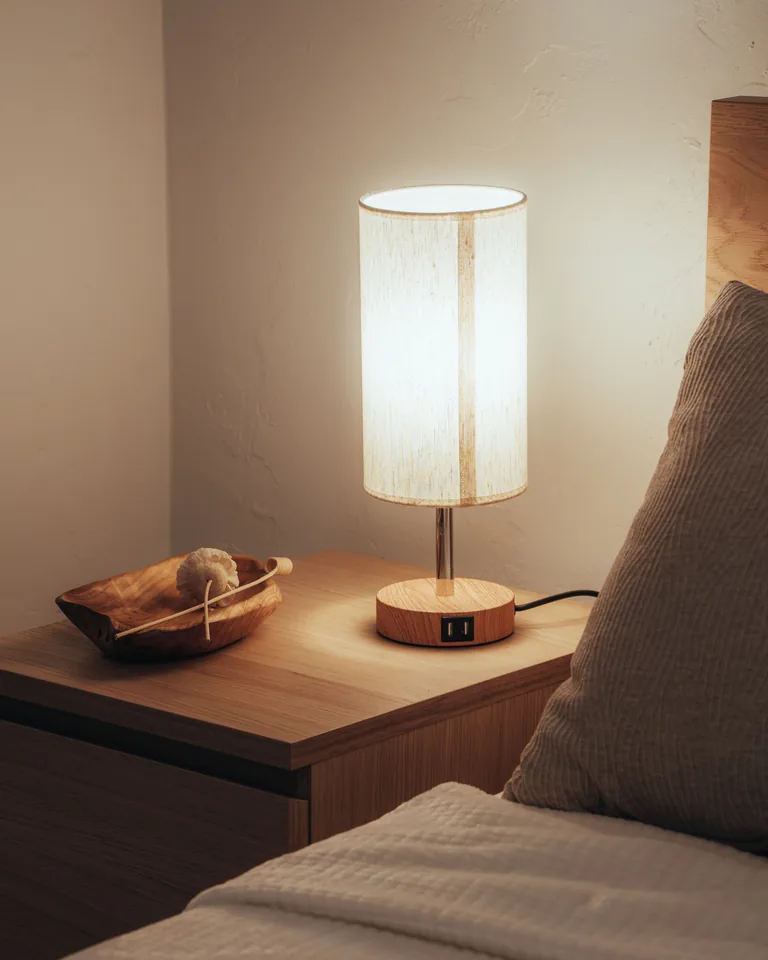
Lighting is the single biggest difference between a flat monochrome room and a dimensional one. You need three layers: ambient light for the room (2700–3000K bulbs, never cool white), task light for reading (bedside lamps or sconces), and one accent — a picture light, a floor lamp in the corner, an LED strip behind the headboard. Put the bedside lamps on dimmers so you can soften the contrast at night.
Tip: harsh overhead light makes white glare and black go dead. If you only change one thing, swap every bulb to warm 2700K and watch the room transform.
Warm It With Natural Wood Tones
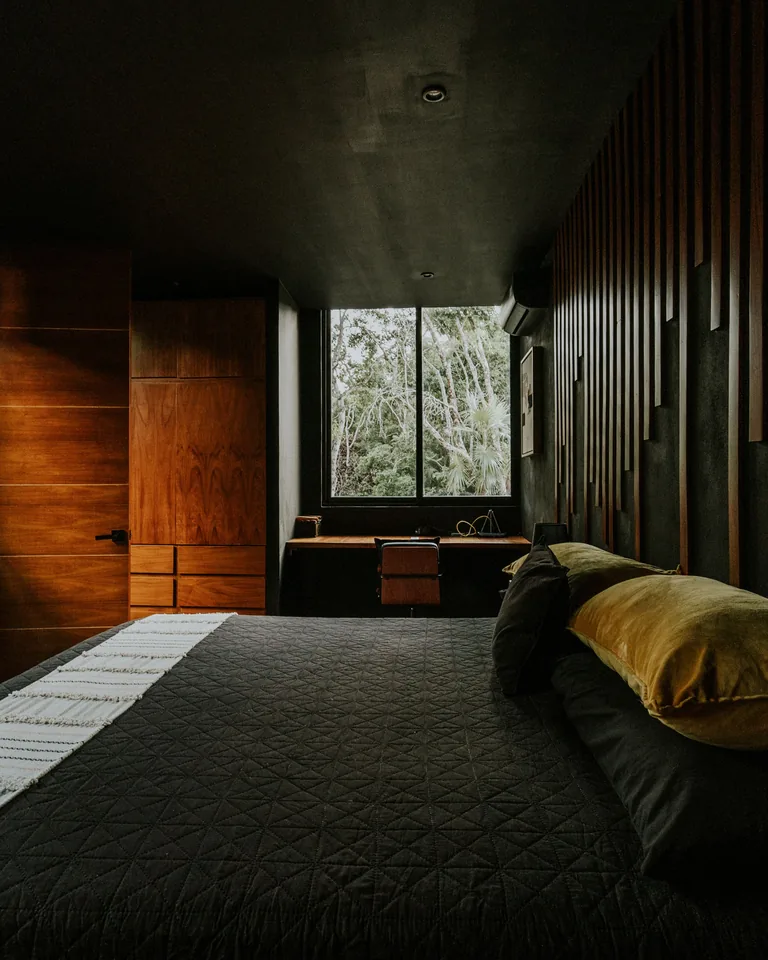
Wood is the organic counterweight to monochrome’s graphic punch. A walnut nightstand, an oak bench at the foot of the bed, or light wood flooring breaks up the black-white binary with grain and warmth. Wood reads as a neutral here, not a third color, so the palette stays disciplined. This is the same light-wood warmth that anchors a modern farmhouse bedroom makeover.
Tip: one or two wood pieces is enough. A full wood furniture set plus black and white starts reading rustic, which is a different room entirely.
Add One Metallic Accent in Brass or Gold
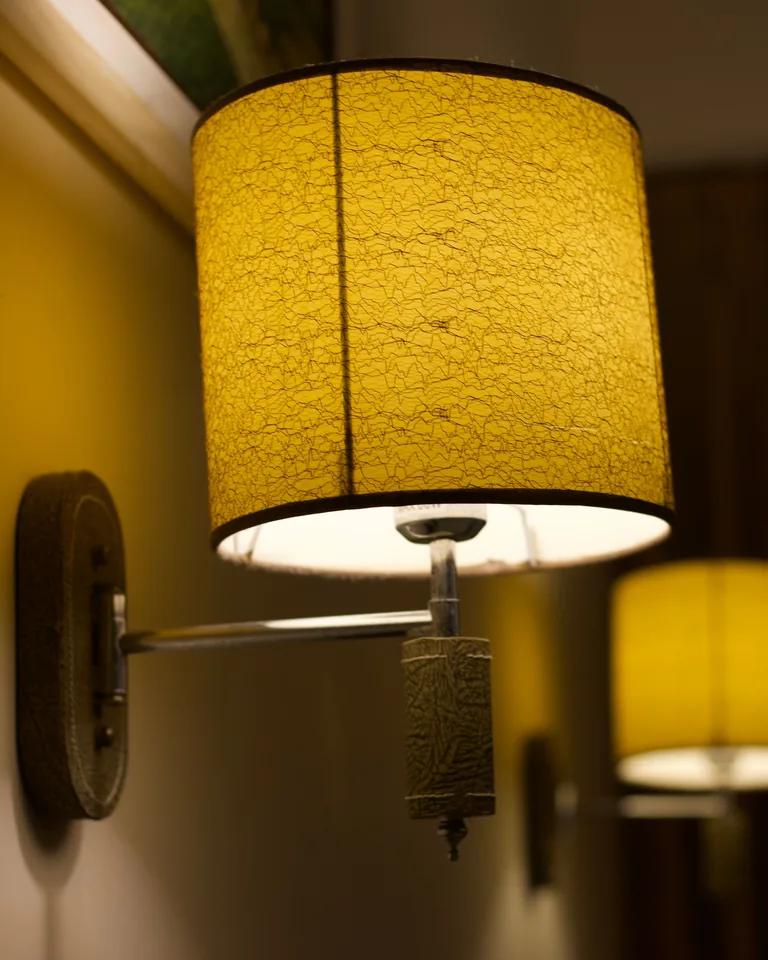
A single metallic — brushed brass lamp bases, gold picture frames, champagne hardware — adds the reflective glint that flat monochrome lacks. Metal catches light and throws it around the room, which is literally adding dimension. Keep it to one metal and repeat it two or three times so it looks deliberate.
Tip: brushed and aged finishes beat polished chrome here. Soft gold warms the palette; icy chrome cools it further.
Bring in Greenery for Organic Contrast
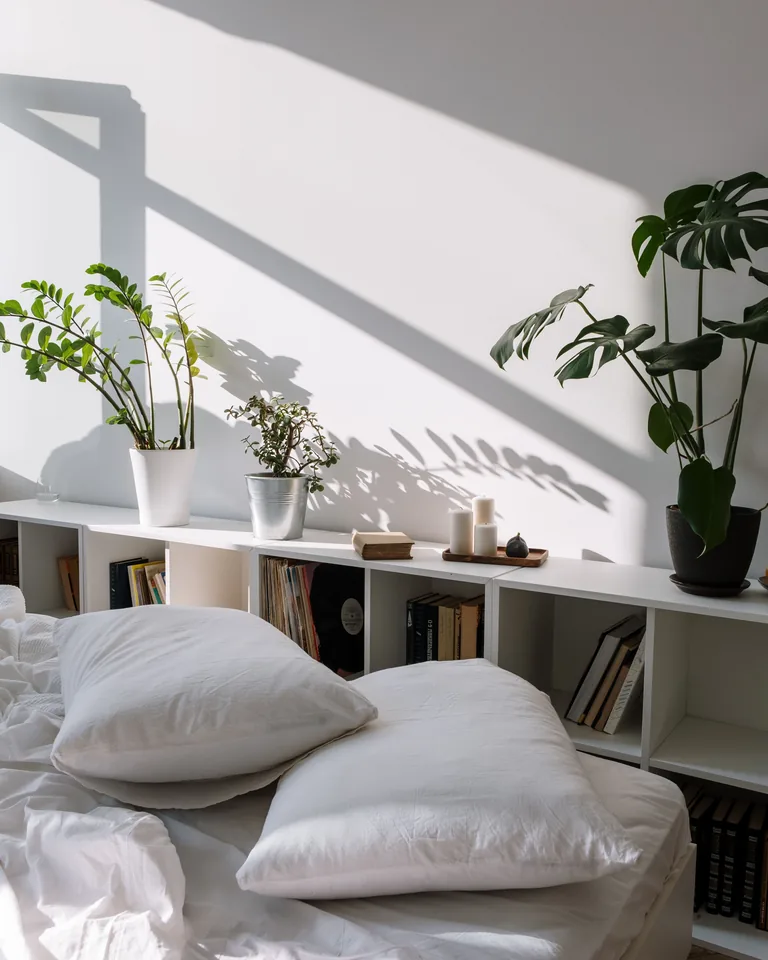
A plant is the cheapest depth-builder in a black and white bedroom. Green leaves introduce organic shapes that contrast with the room’s straight lines, and the color reads as neutral-ish against monochrome — it freshens without breaking the scheme. One medium plant on the nightstand or a tall one in the corner is enough.
Tip: choose plants with architectural leaves — a snake plant or monstera echoes the graphic quality of the room better than a trailing pothos.
Use Mirrors to Bounce Light and Add Depth
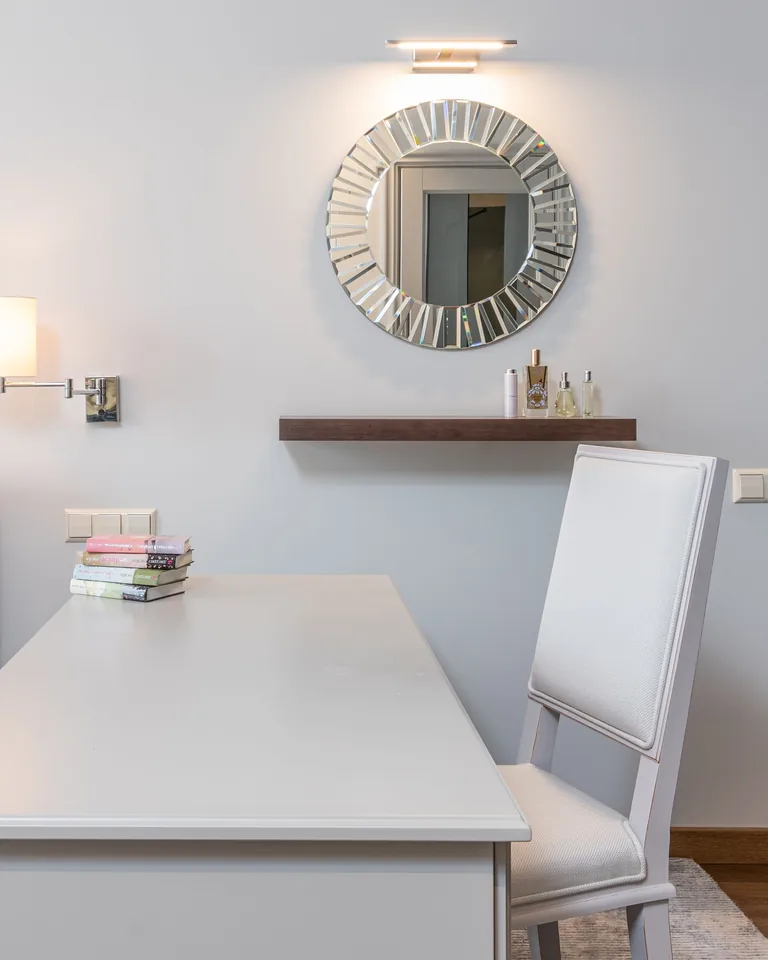
Mirrors do double duty in monochrome rooms: they bounce light into dark corners and create the illusion of depth on flat walls. A large leaning mirror opposite the window doubles your daylight; a round mirror above the dresser breaks up rectangular monotony. The frame itself is a design choice — black frame for graphic punch, brass for warmth. A bedroom vanity with a good mirror earns its footprint twice over in a small monochrome room.
Tip: keep what the mirror reflects edited. A mirror that doubles clutter doubles the mess — style the reflected zone as carefully as the mirror wall.

Build a Monochrome Gallery Wall
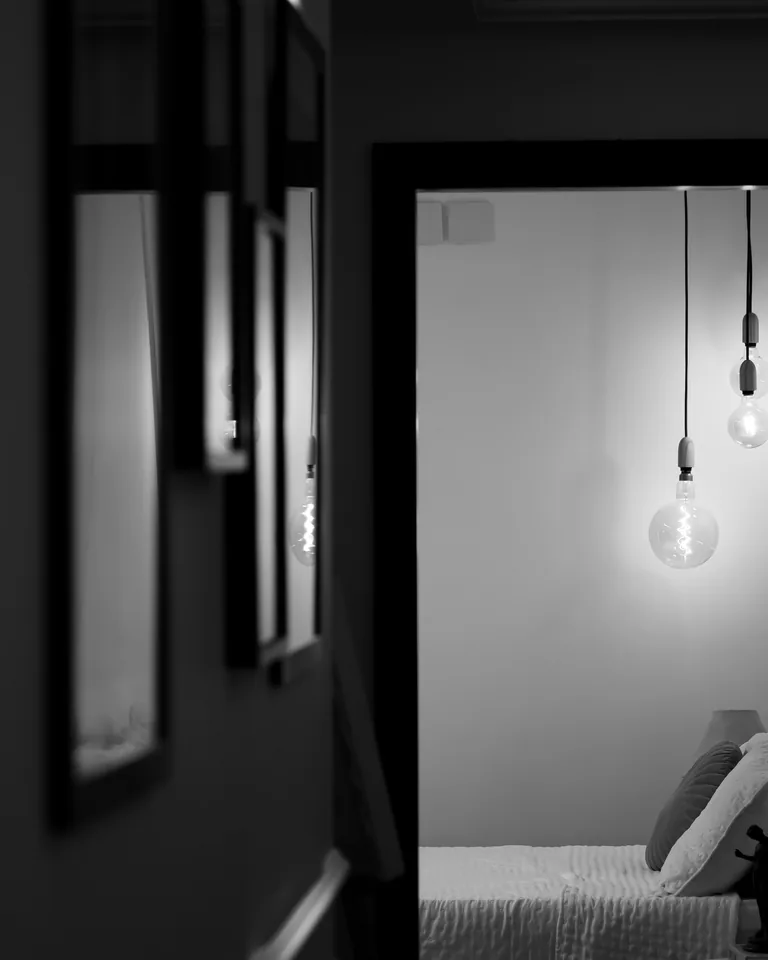
A gallery wall of black-and-white photography in mixed black, white, and wood frames turns an empty wall into the room’s most dimensional feature. Vary the frame sizes and include plenty of white matting — the matting is what keeps a gallery wall from reading as a black blob from across the room. Personal photos work beautifully here; monochrome printing unifies even mismatched shots.
Tip: lay the arrangement on the floor first and photograph it. What looks balanced flat usually works on the wall, and it saves you a dozen nail holes.
Bridge the Contrast With Soft Gray
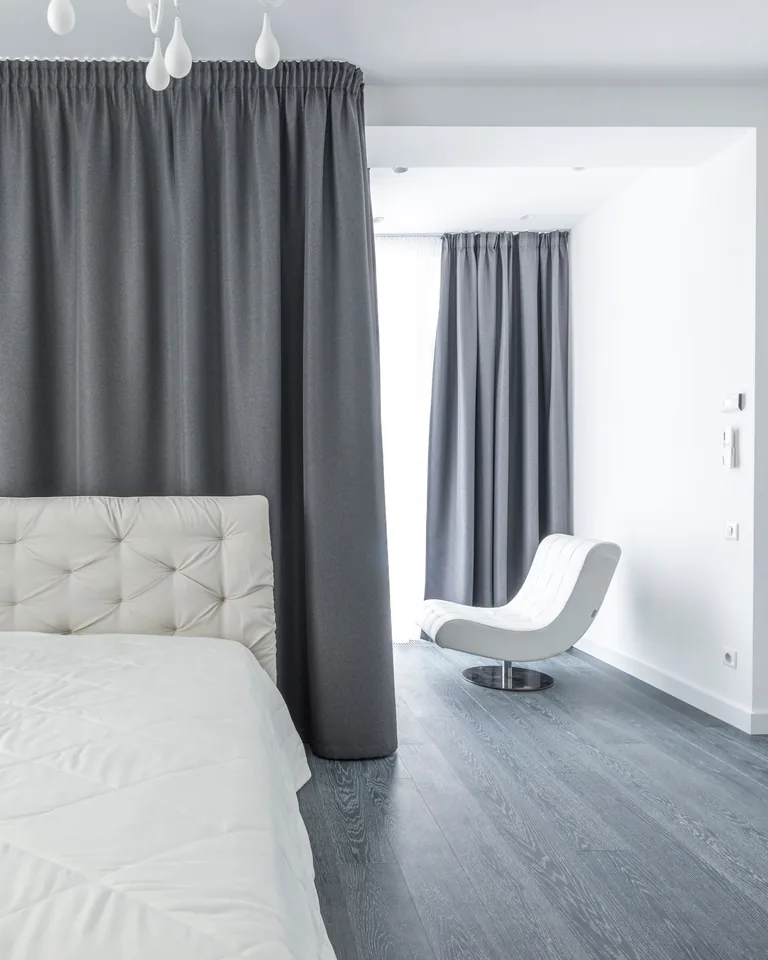
Pure black against pure white is maximum contrast, and maximum contrast all over is exhausting. Gray is the diplomat: charcoal throw pillows, a gray area rug, or soft gray curtains step the eye down gradually from black to white. The room keeps its monochrome identity but loses the harshness.
Tip: use warm grays (greige-leaning) rather than blue-grays in a bedroom. Warm gray softens; cool gray can push the room back toward stark.
Style Matching Nightstands for Symmetry
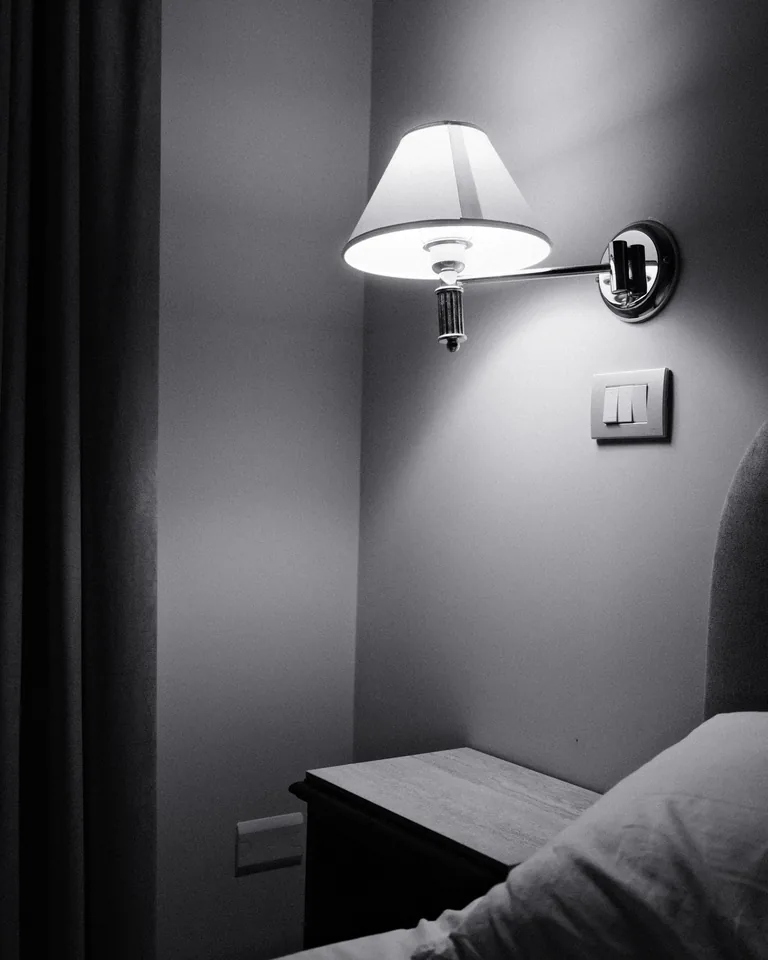
Symmetry reads as calm, and calm is what keeps high-contrast rooms restful. Matching nightstands with matching lamps — or at least matching lamp heights — frame the bed like bookends. Style the tops differently for personality (books on one side, a carafe on the other), but keep the silhouettes paired. Tuck clutter into drawers or under-bed storage so the symmetry stays clean.
Tip: the lampshades should match even if the bases do not. Mismatched shades at different heights are what make nightstands look accidental.
Frequently Asked Questions
How do I prevent a black and white bedroom from feeling cold?
Layer tactile natural textures — washed linen, chunky wool throws, bouclé cushions — and add warm materials like timber furniture, brushed brass lighting, and a green plant. Warm 2700–3000K bulbs instead of cool white also make an immediate difference.
What is the ideal color ratio for a black and white bedroom?
Follow the 60-30-10 formula: about 60% white as the dominant base (walls, ceilings, large furniture), 30% black as the secondary weight (bed frame, accent wall, textiles), and 10% accent (wood, brass, or greenery). Smaller rooms should lean even more white-dominant.
What lighting works best in a black and white bedroom?
Layer ambient, task, and accent lighting, all in warm temperatures (2700K–3000K). Cool white bulbs make the contrast feel clinical. Dimmers on bedside lamps let you soften the black-white contrast in the evening.
Can black furniture make a bedroom feel smaller?
Large blocks of black can close a room in, but scale matters more than color. One black focal piece — a bed frame, an accent wall — usually works better than several small black items scattered around. Balance it with plenty of white and mid-tone textures.
Are patterns okay in a black and white bedroom?
Yes, but use them sparingly. One patterned element — a striped duvet, a geometric rug — anchors the room without overwhelming it. Keep the second pattern out; in monochrome, two competing patterns clash faster than they would in color.
A black and white bedroom never needed more color — it needed more dimension. Pick a ratio, layer your textures, mix your finishes, light it warm, and add one organic element like wood or greenery. For a broader look at monochrome styling beyond the anti-flat playbook, see these black and white bedroom ideas, and the room will hold its crisp graphic edge while feeling like somewhere you actually want to sleep.