
13 Small Green Bathroom Ideas That Complete Your Bedroom Retreat
A small bathroom is the hardest room to decorate and the easiest room to overdo, but green is one of the safest colors you can commit to. It reads calm instead of small, works with the white fixtures you already have, and — most importantly — it flows beautifully into the bedroom right next door. If your en-suite or hallway bath opens off your bedroom, a green bathroom makes the two rooms feel like one intentional retreat instead of two mismatched boxes.
The short answer: in a small bathroom, go lighter on the walls (sage, mint, celadon) and save the deep greens (emerald, forest) for one contained surface — a vanity, a single wall, or the floor. Pair green with warm white, natural wood, and one warm metal like brass, and the room will feel larger, not darker. Here are 13 small green bathroom ideas that actually work in tight spaces.
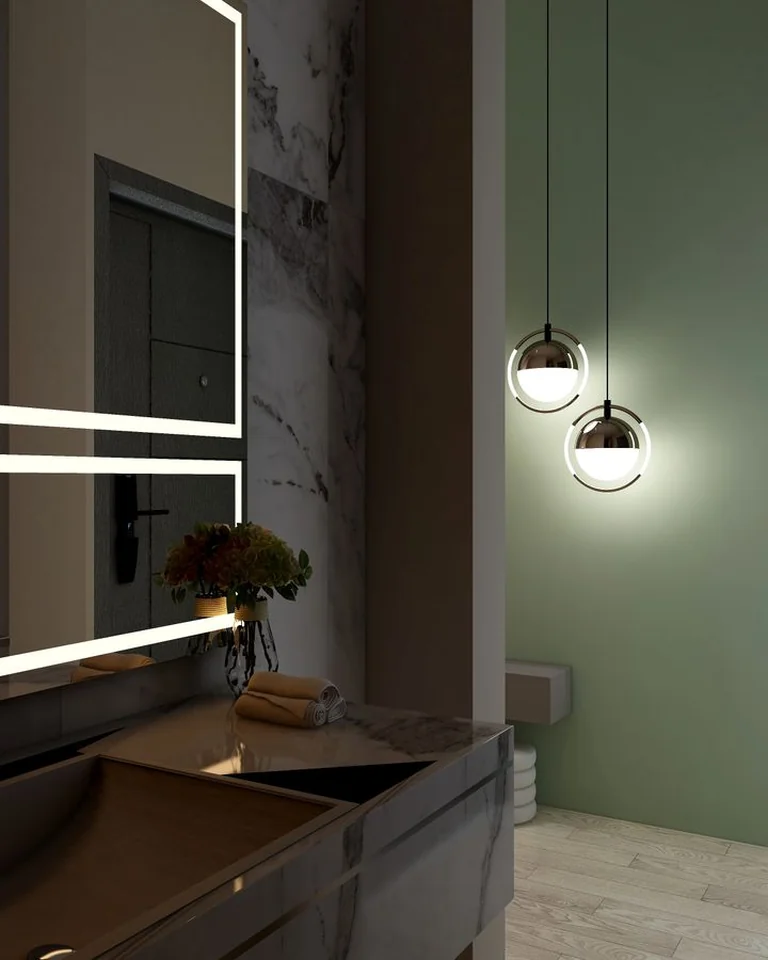
Paint the Walls Sage and Keep Everything Else Light
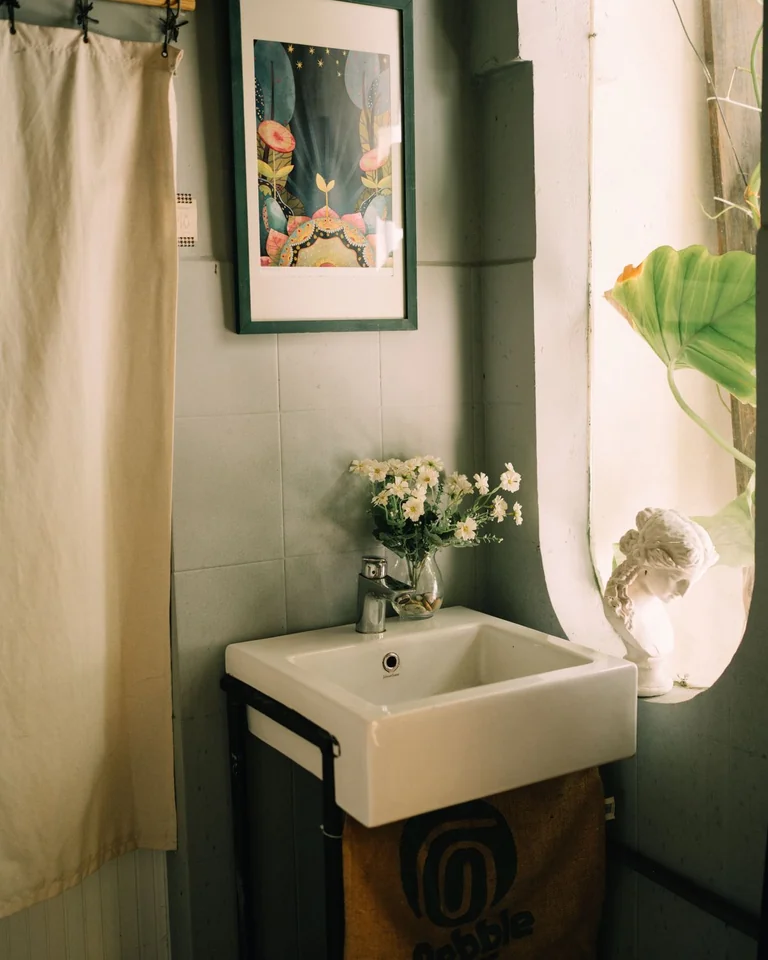
Sage is the beginner-friendly way into a green bathroom. It’s gray enough to act like a neutral and green enough to make the room feel fresh instead of plain. In a small bathroom, paint all four walls sage, then keep the toilet, sink, and tub white so the green reads as a background wash rather than a box closing in on you.
Watch your lighting: sage looks silver under cool bulbs and warm under 2700K warm-white bulbs. Swap in warm bulbs before you judge the color. A mirror above the sink does the rest of the work — the same tricks that stretch space in our small bedroom ideas apply here, where every reflection counts double.
Put a Deep Emerald Accent Wall Behind the Vanity
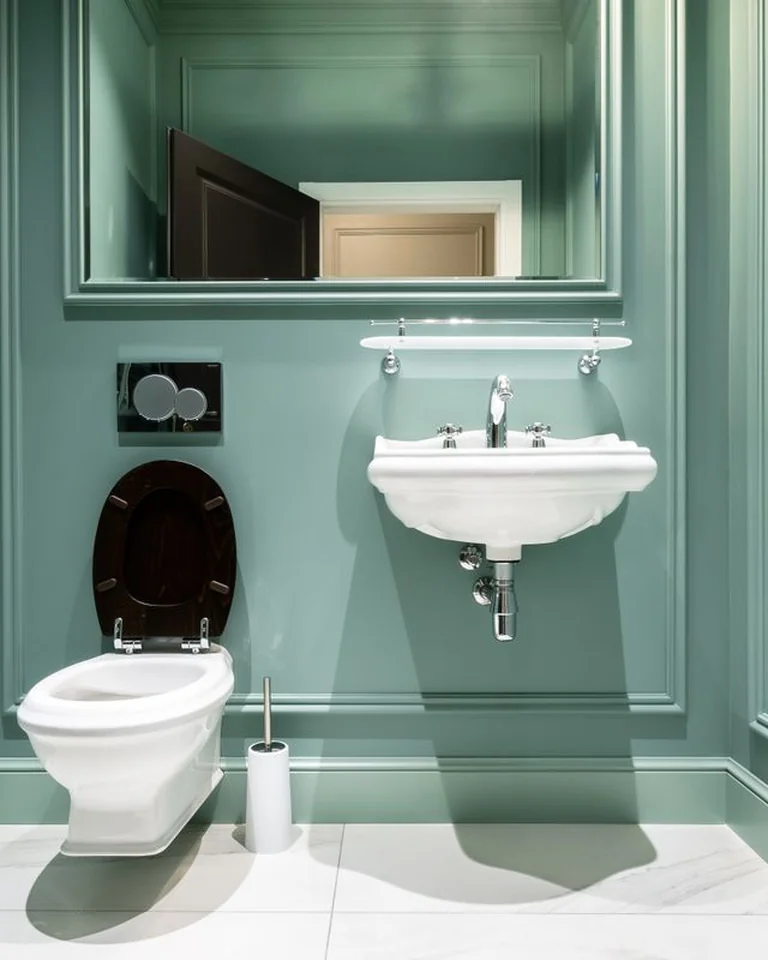
If one wall in the room gets the deepest green, make it the wall behind the mirror. Your eye goes there first, so the color reads as a deliberate focal point instead of a dark cave. Keep the other three walls warm white or pale cream, and the contrast actually makes the room feel bigger — dark recedes, light advances.
This is also the move if you love dramatic color but worry about overdoing it in a tight space. Our moody half bathroom ideas use the same principle: one bold surface, everything else quiet, and the room ends up feeling bigger than its measurements.
Tile Only the Shower in Green Subway Tile
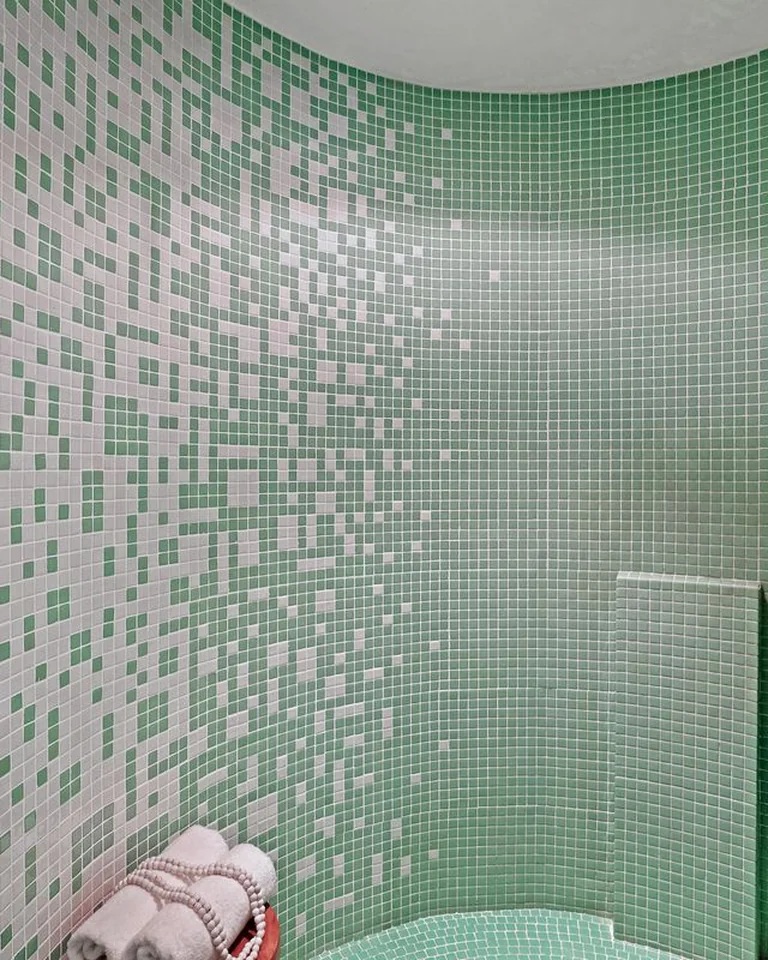
You don’t have to commit the whole room to color. Running green subway tile up just the shower walls gives you a saturated hit of green behind glass, while the rest of the bathroom stays bright. Glossy tile bounces light around, which helps a windowless bath enormously.
Pick a grout one shade darker than the tile so the grid reads softly instead of checkerboarding. A mid-green subway tile with warm-gray grout looks timeless; the same tile with bright white grout reads more graphic and modern.
Let a Deep Green Vanity Be the Room’s Jewel
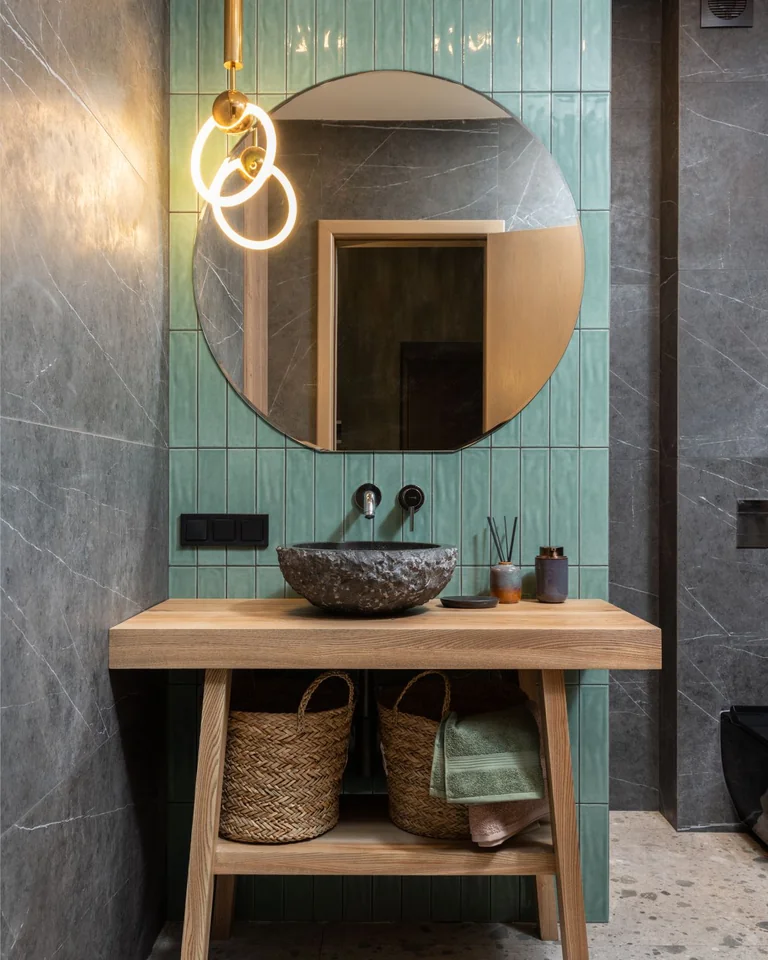
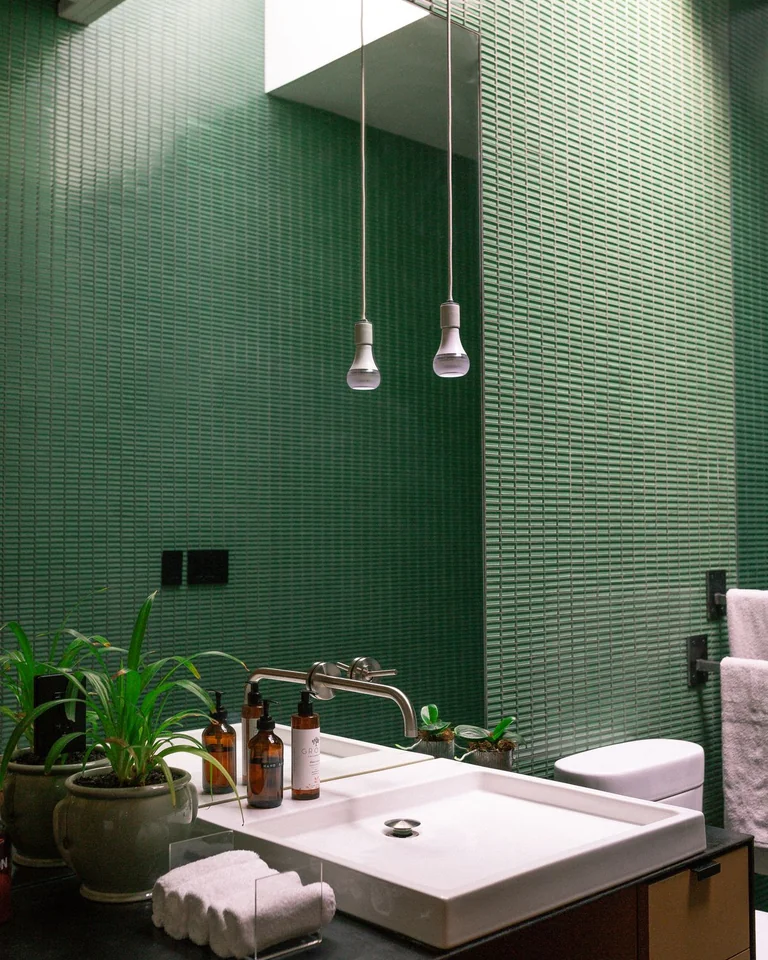
A deep green vanity concentrates all the color into one piece of furniture, which is exactly what a small bathroom wants. If a painted cabinet feels like too much, the same effect comes from a green-tiled wall behind the vanity — like the one above — where the color anchors the sink zone while the rest of the room stays light. Forest, emerald, and bottle green all work; matte finishes look softer, satin finishes wipe clean easier.
Size the vanity honestly: a 24-inch cabinet with one deep drawer holds more than a 30-inch cabinet with fake drawer fronts. The same proportions that make a bedroom vanity comfortable — counter at the right height, mirror at eye level, light at face level — make a bathroom vanity pleasant to use every day.
Run Green Tile Wainscoting with White Above
Tile the lower third of the walls in green and paint the upper walls white, and you get the best of both: color where it counts, brightness where it opens the room. The chair-rail line at 36 to 42 inches gives a small bathroom a tailored, finished look that plain painted walls can’t match.
This is a workhorse combination because the green tile hides scuffs and water spots in the splash zone. Choose a mid-tone gray grout — white grout in a bathroom shows every drip, and dark grout fights with the green.
Hang Botanical Wallpaper on One Wall
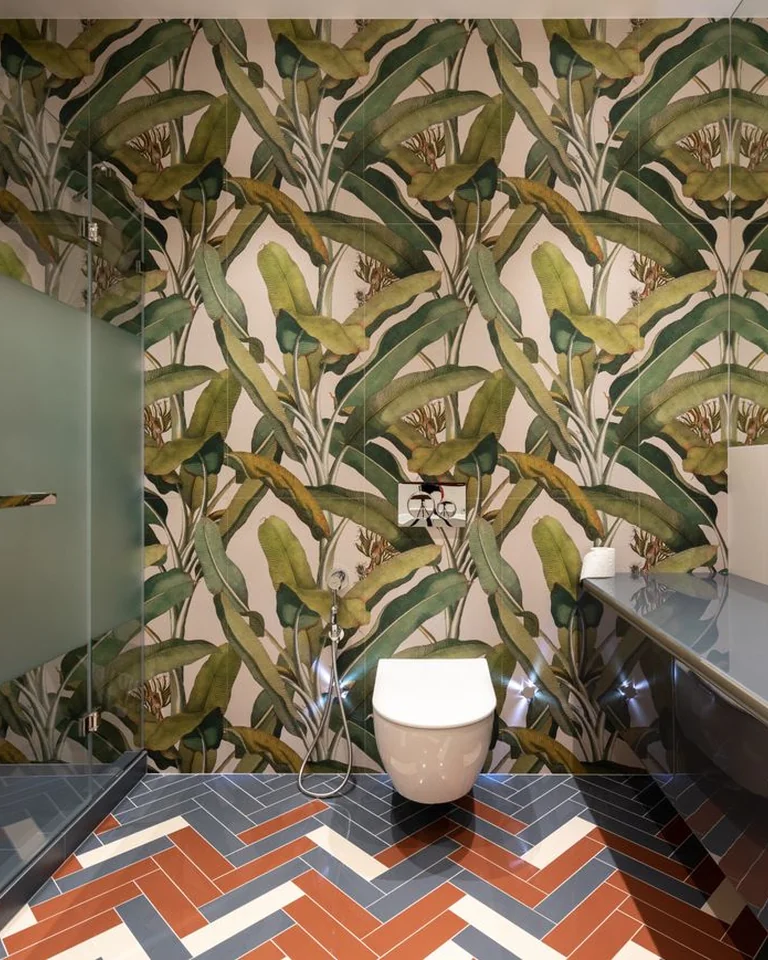
One wall of botanical wallpaper — leaf prints, ferns, trailing vines — adds all the green you need without a single paintbrush. It’s the highest-impact-per-dollar idea on this list, and in a powder room or small bath, one wall means one roll.
Use a vinyl or vinyl-coated paper rated for humid rooms, and keep it off the wall directly inside the shower. A large-scale print suits a small bathroom better than a busy small pattern; one big leaf reads as art, fifty tiny leaves read as noise.
Add Green Through Accessories When Paint Isn’t an Option
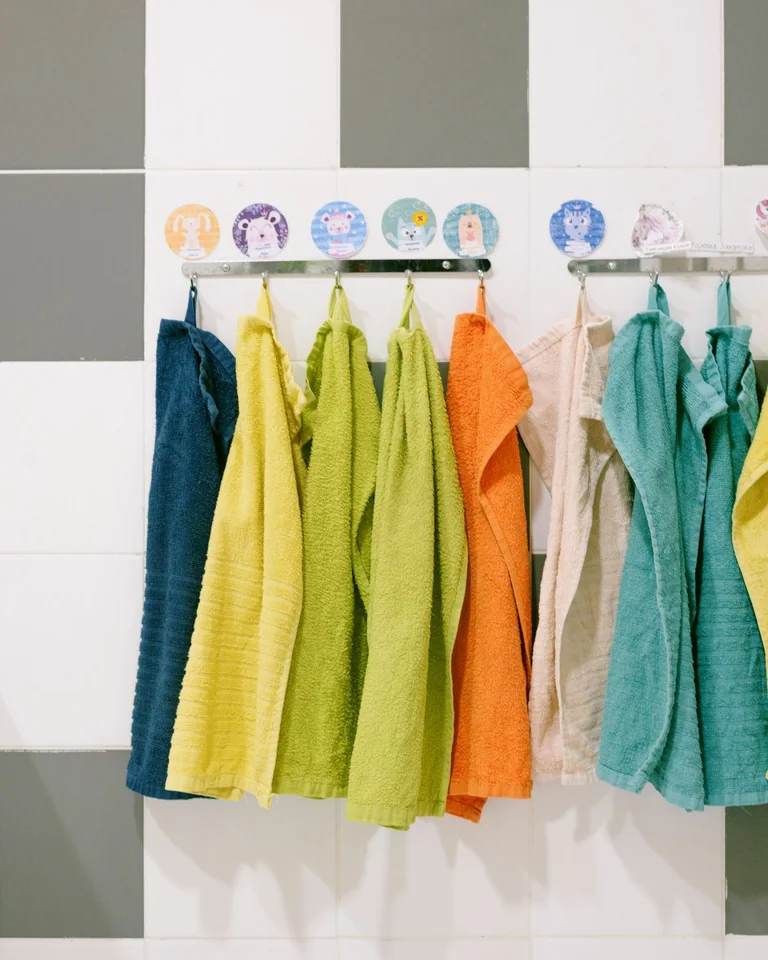
Renters and commitment-phobes, this is your lane: green towels, a green shower curtain, a bath mat, and a couple of ceramic accessories deliver the whole palette with zero paint. Because every piece is removable, you can test how green feels in your bathroom before committing to anything permanent.
Repeat the same green at least three times — curtain, towels, and one small accessory — so it reads as a scheme instead of a stray towel. For more non-permanent wins, our renter-friendly laundry room upgrades follow the same logic: change what you can carry out the door.
Bring In Live Plants That Love Humidity
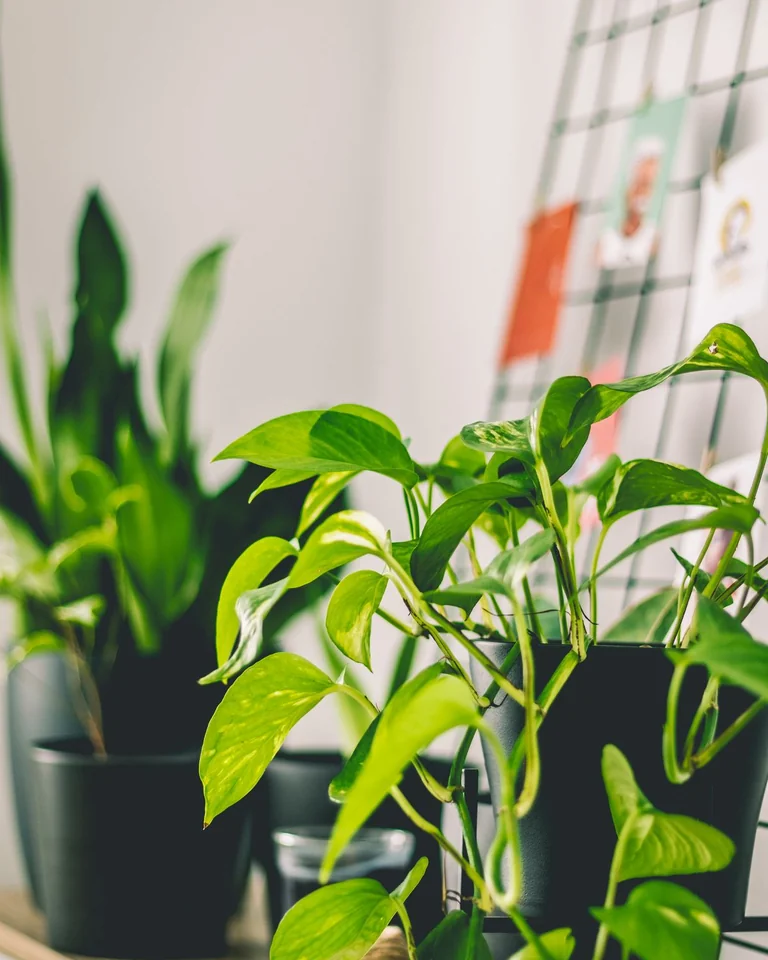
A bathroom is a greenhouse that happens to have plumbing: warm, humid, and often bright. Ferns, pothos, philodendrons, and snake plants thrive here with almost no care. A trailing pothos on a high shelf or a fern on the back of the toilet adds living green for a few dollars.
In a truly tiny bathroom, go vertical — one hanging plant beats three small pots competing for counter space. If the room has no window, swap live plants for a really good preserved-fern arrangement; a dead plant in a green bathroom is the only thing worse than no plant.
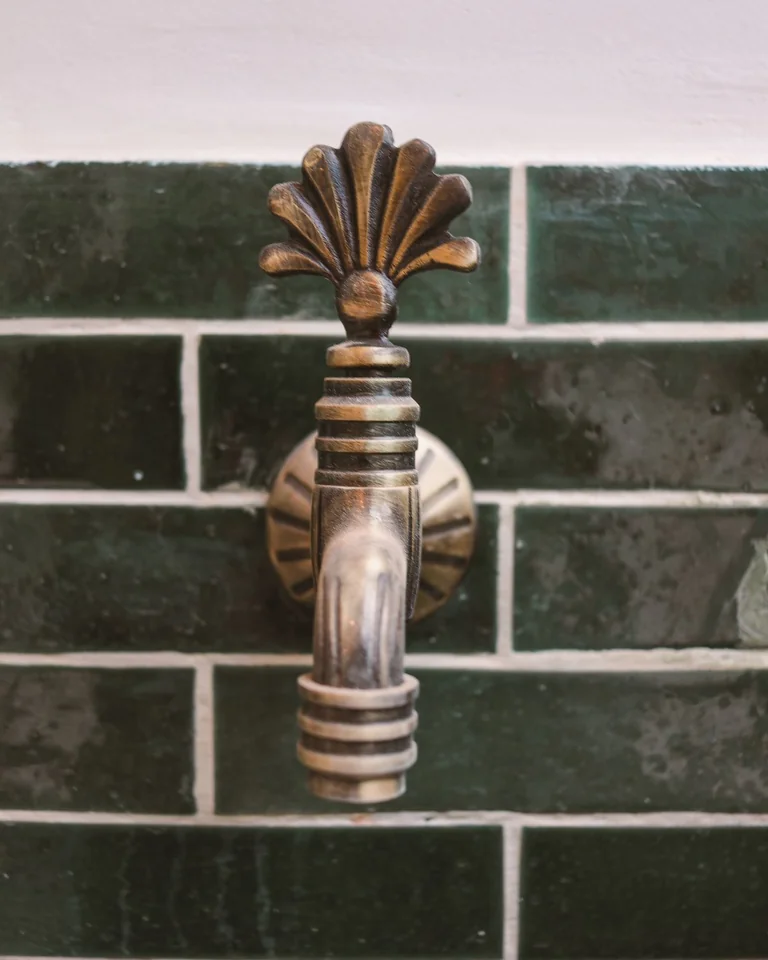
Pair Green with Brass Fixtures for Instant Warmth
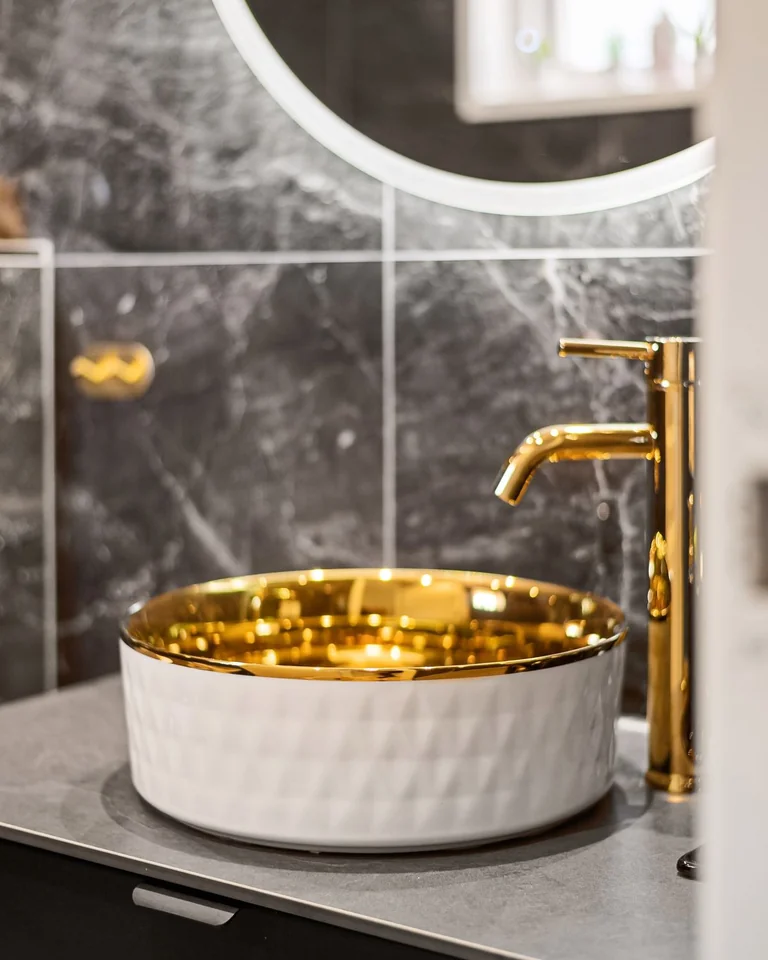
Green and brass are the pairing that makes a small bathroom look expensive. The warm metal glows against green tile or a green vanity the way candlelight glows against leaves — it keeps deep greens from reading cold and flat. You don’t need a full fixture overhaul; a brass faucet, brass mirror frame, or even brass cabinet pulls shift the whole palette.
Stick to one metal throughout the room. Mixed metals in a small bathroom look accidental; one warm metal looks designed. Brushed finishes hide water spots better than polished ones, which matters when every surface is within arm’s reach.
Hang the Biggest Mirror the Wall Will Hold
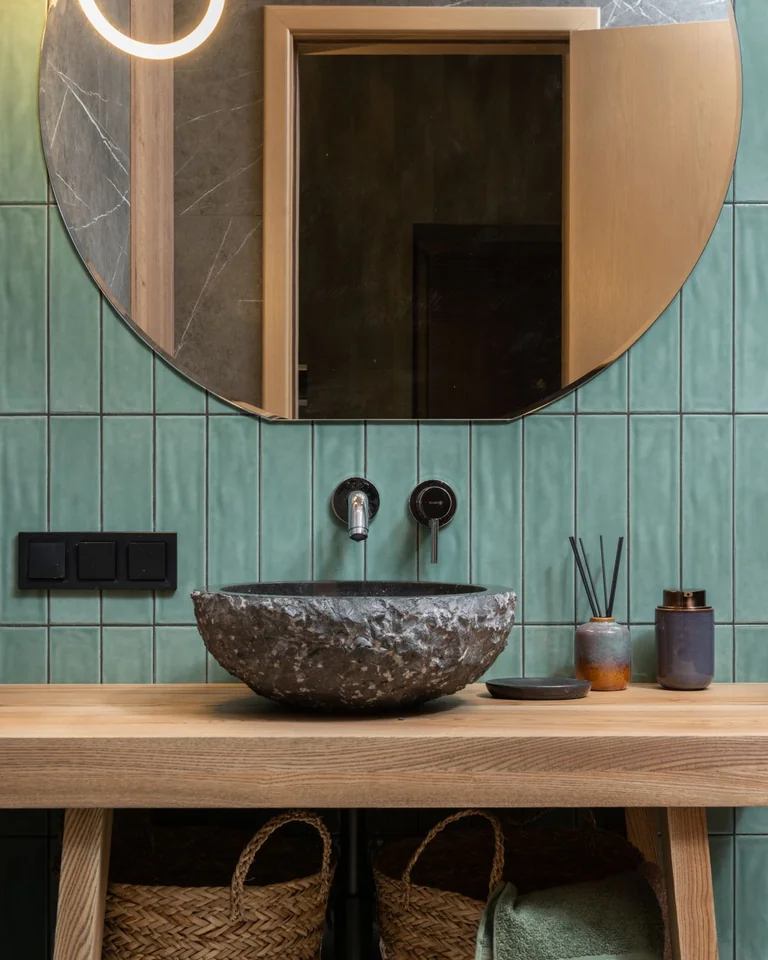
In a small green bathroom, the mirror is doing structural work, not just decorative work. A mirror that spans most of the vanity wall doubles your light and your perceived square footage, and it keeps deep greens from closing the room in. Round mirrors soften all the hard rectangular edges; a frameless mirror disappears entirely.
Hang the mirror to catch the window or the brightest light source, not just centered over the sink. What the mirror reflects matters more than the mirror itself — aim it at tile, plants, or the green wall, not at a blank door.
Dress It in Green-Tinted Textiles
Textiles are where you fine-tune the green. Layer a sage shower curtain with deeper forest towels, or flip it — deep green curtain, pale sage towels. The tonal layering keeps a small bathroom from reading flat, and textiles are the cheapest thing in the room to change when your taste shifts.
Waffle-weave and stonewashed cotton read more modern than terry cloth and don’t shed lint onto dark floors. If the bathroom connects to your bedroom, echo one textile there — a matching throw or pillow — and the two rooms start to feel like one farmhouse bedroom retreat instead of separate projects.
Balance Green Tile with Plenty of White
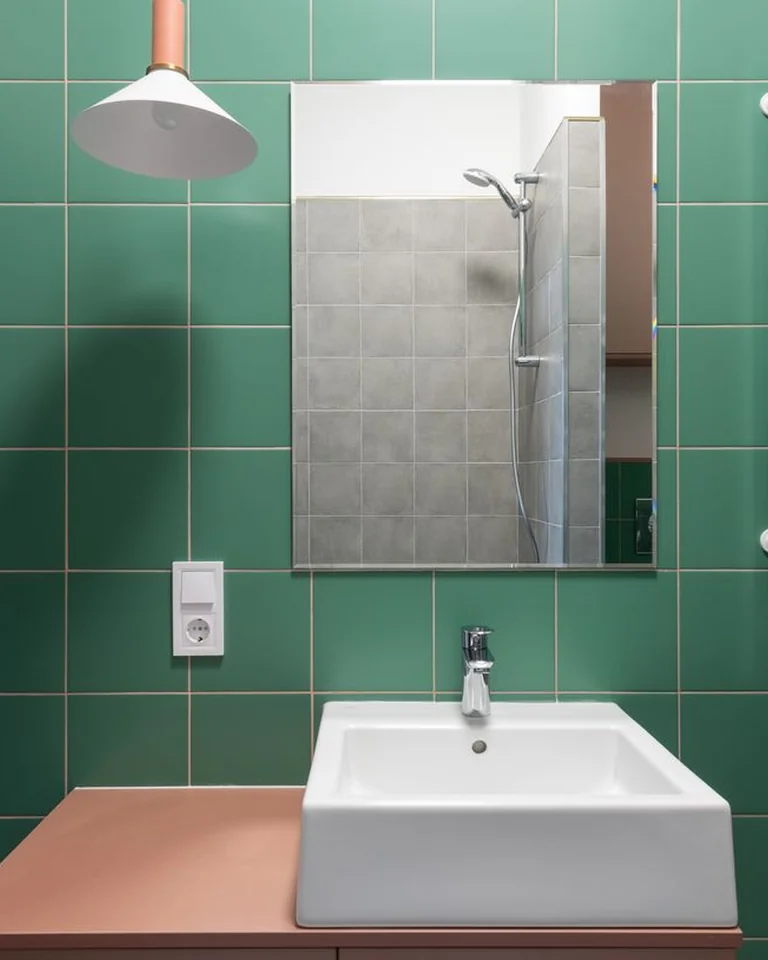
Here’s the ratio that keeps a green bathroom from feeling heavy: let the green cover the tile while every fixture stays white. This bathroom commits to green walls but keeps the sink, toilet, and towels bright, so the color reads as a deliberate design choice instead of a dark cave. The same logic works as a literal two-tone wall — green tile or paint on the lower half, warm white above the chair rail — which grounds the room and hides wear where it matters most.
This balance also answers the bedroom question automatically: warm white is the bridge color. When the bath’s fixtures and upper walls echo the bedroom’s bedding or trim color, the doorway between them disappears. Our beige bedroom color pairings are built on exactly this kind of warm-neutral bridging.
Mix Deep and Pale Greens in Layers
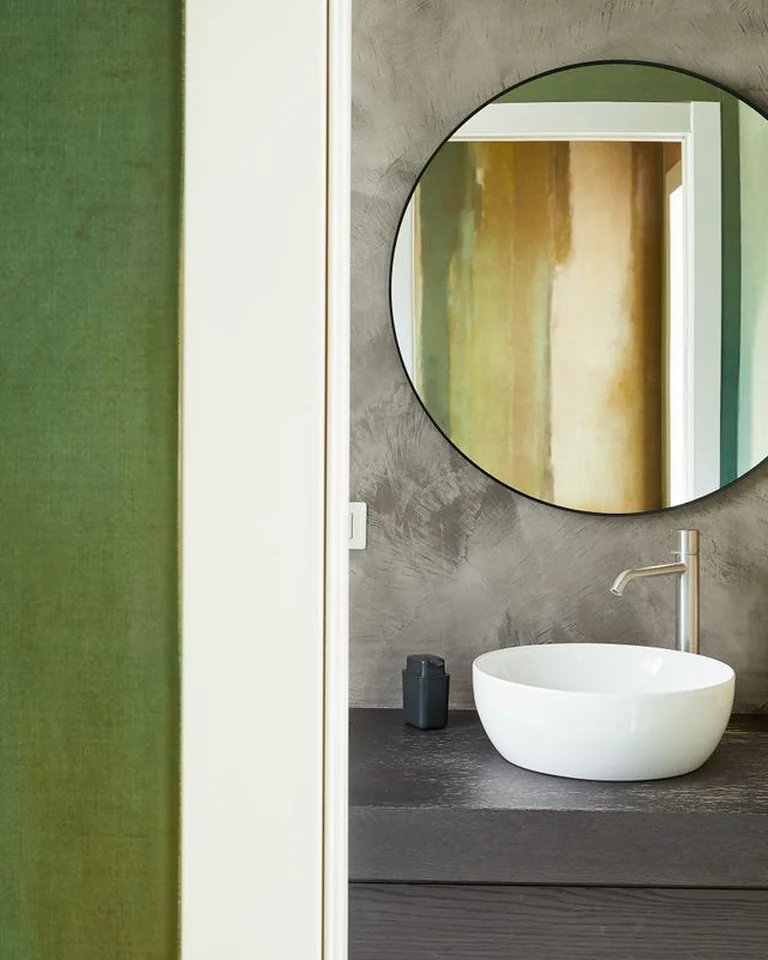
One shade of green can read flat; three shades read designed. Try it as a formula: pale green on the walls (sage or mint), one deep green moment (emerald vanity or accent wall), and a mid-green in the accessories (towels, plants, art). Keep the undertones consistent — all warm-leaning or all cool-leaning — so the layers harmonize instead of clashing.
The final rule for the whole room: green is the color, but light is the ingredient. Every idea on this list works harder with one more light source — a sconce, a brighter bulb, a candle-safe LED. Small green bathrooms don’t fail because of the green; they fail because of the dark.
FAQs
Is green a good color for a small bathroom?
Yes. Green works in small bathrooms because it reads as calm and natural rather than confining, especially in lighter shades like sage, mint, or celadon. The key is balance: keep the green on walls, tile, or one feature like a vanity, and let white fixtures, mirrors, and warm lighting keep the room feeling open.
How can I make a small green bathroom feel more spacious?
Use lighter shades of green such as sage or mint on the walls, hang the largest mirror the wall will hold, and light the room well — warm bulbs around 2700K keep green from looking cold. Keep deep greens to one contained surface (a vanity, one wall, or the floor) rather than wrapping all four walls in a dark shade.
What colors go well with green in a small bathroom?
Warm white is the safest partner — it keeps green bright and clean. Natural wood (a teak bath mat, oak shelf) adds warmth, and brass or gold fixtures glow against green tile or cabinetry. For a softer look, add blush pink or cream textiles; for contrast, matte black hardware gives green a crisp modern edge.
How can I add green to my bathroom without painting?
Repeat green in three places: a shower curtain, a set of towels, and one accessory like a soap dispenser or bath mat. Add one or two humidity-loving plants like pothos or ferns, and consider a removable botanical wallpaper on a single wall. All of it comes down if you move or change your mind.
What shade of green works best in a bathroom?
It depends on the light. Low-light bathrooms do best with soft, reflective greens like sage, mint, or celadon that bounce light around. Bathrooms with a good window can handle deeper shades — emerald, forest, or hunter green — on one wall or the vanity. In both cases, test a sample in the room’s actual lighting before committing.
Image credits: all photography sourced from Pexels under the Pexels License (free to use, no attribution required).