
Narrow Bedroom Ideas: 12 Decor Pieces That Finish a Skinny Room
A narrow bedroom stops feeling like a hallway the moment every inch looks intentional. The fix isn’t a renovation — it’s a set of decor pieces designed for skinny rooms: floating surfaces that free the floor, vertical storage that climbs instead of sprawls, lighting that lives on walls instead of nightstands, and mirrors that double the room’s depth. The 12 ideas below are all pieces you can add this weekend, ordered from the biggest visual impact to the finishing touches.
The strategy is simple: keep the floor as clear as possible, draw the eye upward and outward, and give every piece two jobs. A room that feels “finished” isn’t fuller — it’s more deliberate.

1. Float a Shelf Where a Nightstand Won’t Fit
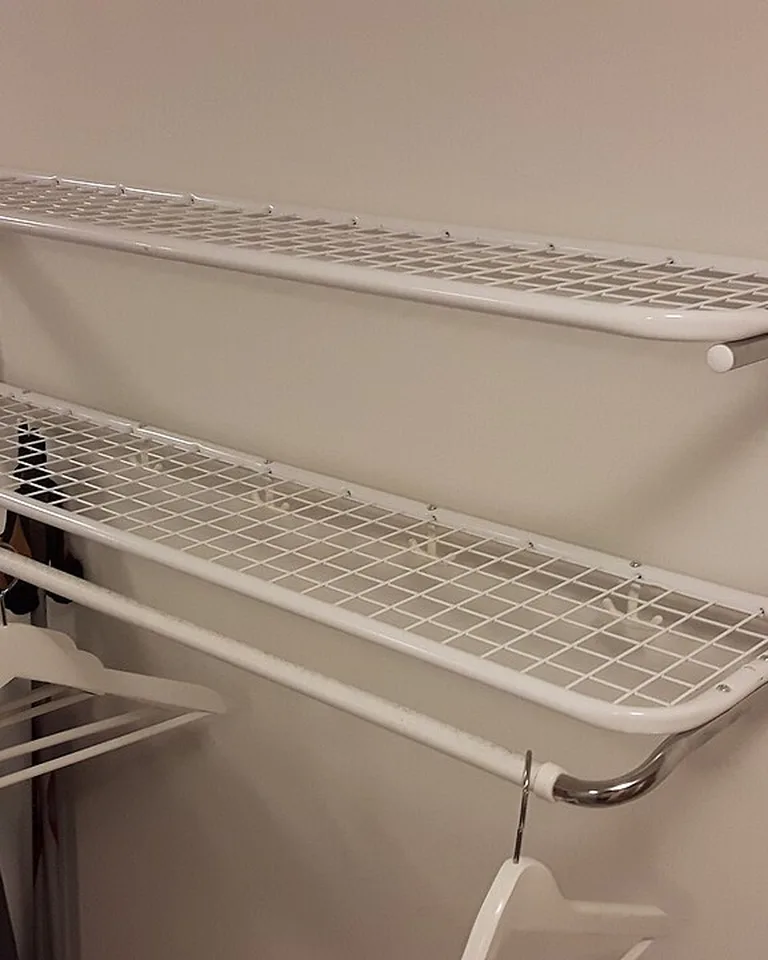
In a truly narrow bedroom there may be six inches between the bed and the wall — not enough for any nightstand. A floating shelf mounted at mattress height gives you a landing spot for a lamp, phone, and book without touching the floor. Choose a shelf at least 12 inches deep so a water glass doesn’t feel precarious, and mount it into studs; a shelf that sags defeats the whole purpose.
Why it works: floor contact is what makes furniture feel bulky. A floating surface keeps the floor line continuous, so the eye reads the room as wider than it is. Tip: mount the shelf an inch or two below mattress height — slightly low reads as deliberate, slightly high looks like a mistake. For more compact-space thinking, these small bedroom ideas cover layouts where every square foot has to earn its keep.
2. Mount a Swing-Arm Lamp Instead of a Table Lamp
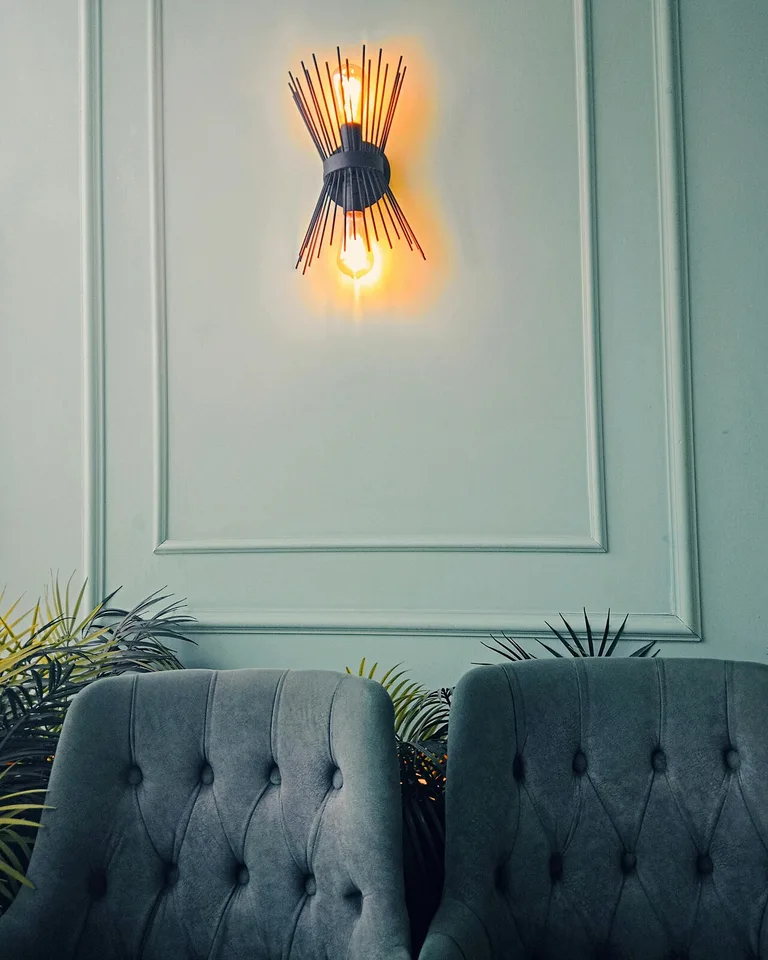
A table lamp eats 8 to 10 inches of your most precious surface — the bedside. A swing-arm wall lamp folds flat against the wall when you don’t need it and pulls out over the bed for reading, freeing the entire shelf or nightstand below. Hardwire it if you can; otherwise a plug-in model with a cord cover looks nearly as clean.
Why it works: lighting on the wall instead of the furniture stack is the classic narrow-room move — it layers light at eye level without consuming a single inch of surface. Tip: mount the lamp so the shade sits about 20 inches above the mattress; any higher and the light glares, any lower and it blocks your sightline. Wall-mounted lighting is a theme across tight spaces — see these hallway lighting ideas for more ways to light long, skinny rooms.
3. Choose a Tall, Slim Dresser That Grows Up, Not Out

When the floor is scarce, the only direction left is up. A tall, narrow dresser — roughly 18 inches wide and 48-plus inches tall — holds as much as a wide double dresser while occupying the footprint of a nightstand. Place it on the short far wall or in the dead zone by the door, and suddenly the room has real clothing storage without a corridor-blocking hulk.
Why it works: vertical storage pulls the eye upward, which makes ceilings feel higher and the room less tunnel-like. One tall piece also reads as architecture rather than clutter. Tip: anchor it to the wall — tall, narrow furniture is tippy, especially with drawers pulled out. And keep the top styled with just one object so it doesn’t become a clutter shelf.
4. Lean a Thin Full-Length Mirror Against the Wall
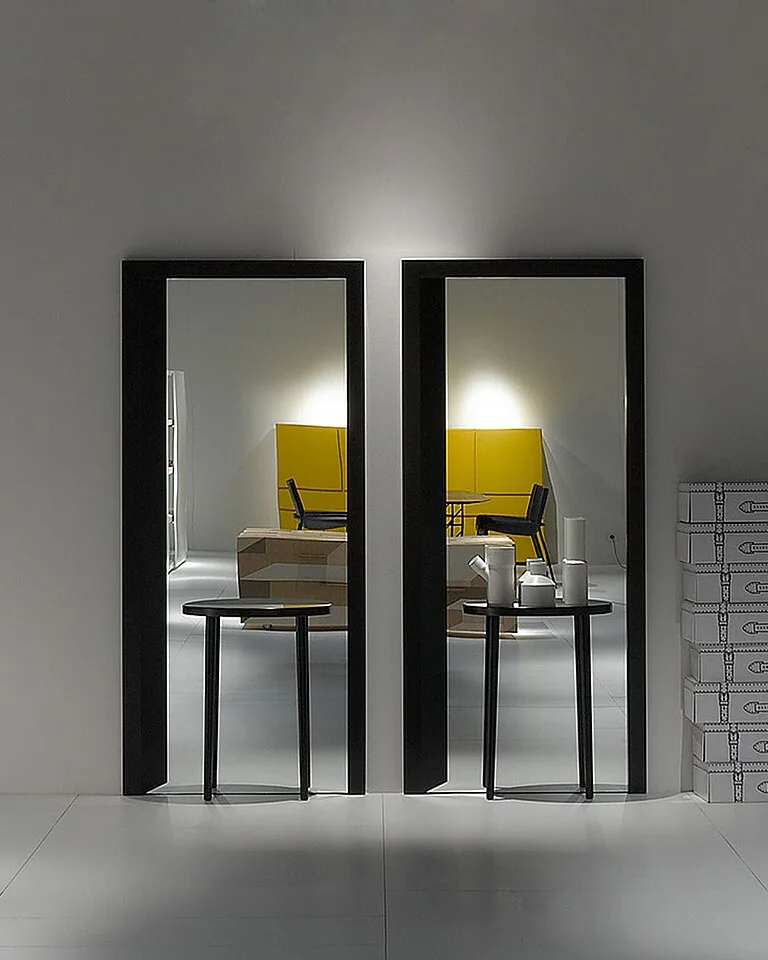
A full-length mirror does double duty in a narrow bedroom: it bounces light from the window to the far end and visually doubles the room’s depth. Leaning it (rather than mounting) lets you angle it slightly to catch the best light, and a slim frame — or no frame — keeps it from reading as furniture. For more on getting mirror placement right, these full-length mirror bedroom ideas cover angles and sizing in detail.
Why it works: a mirror at the far short end of a narrow room reflects the long view back at you, which breaks the tunnel effect more effectively than any paint color. Tip: lean it at a slight angle (top tilted back about 5 degrees) and secure the top to the wall with a discreet bracket — safety first in a room you’ll be squeezing past it.
5. Layer a Runner Over a Low-Pile Base Rug

A runner laid along the length of the room — over a low-pile base rug or straight on the floor — draws the eye down the room’s long axis and makes the space feel intentional rather than leftover. The layered look adds the textile warmth narrow rooms often lack, and the runner’s borders create a “path” that organizes the floor visually.
Why it works: in a skinny room, a rug that runs with the length emphasizes direction instead of fighting it; fighting the room’s proportions is what makes it feel awkward. Layering also lets you add pattern without committing to a huge rug. Tip: keep the runner 6 to 8 inches narrower than the walkable floor on each side — you want a border of floor visible, not a wall-to-wall carpet look.
6. Hang Sheer Curtains That Soften Without Bulk

Heavy drapes in a narrow bedroom eat visual inches and block the light the room desperately needs. Sheer curtains in a light neutral soften the window, diffuse daylight, and add a layer of textile without any bulk. Hang them high and let them just kiss the floor — puddling fabric in a tight room is a tripping hazard and a dust trap.
Why it works: daylight is the cheapest way to make a narrow room feel bigger, and sheers maximize it while still giving you privacy and a finished window. Tip: use a double rod if you need blackout for sleep — sheers in front, blackout roller behind — so you get both softness and darkness without heavy drapes.
7. Run a Gallery Ledge Above the Bed
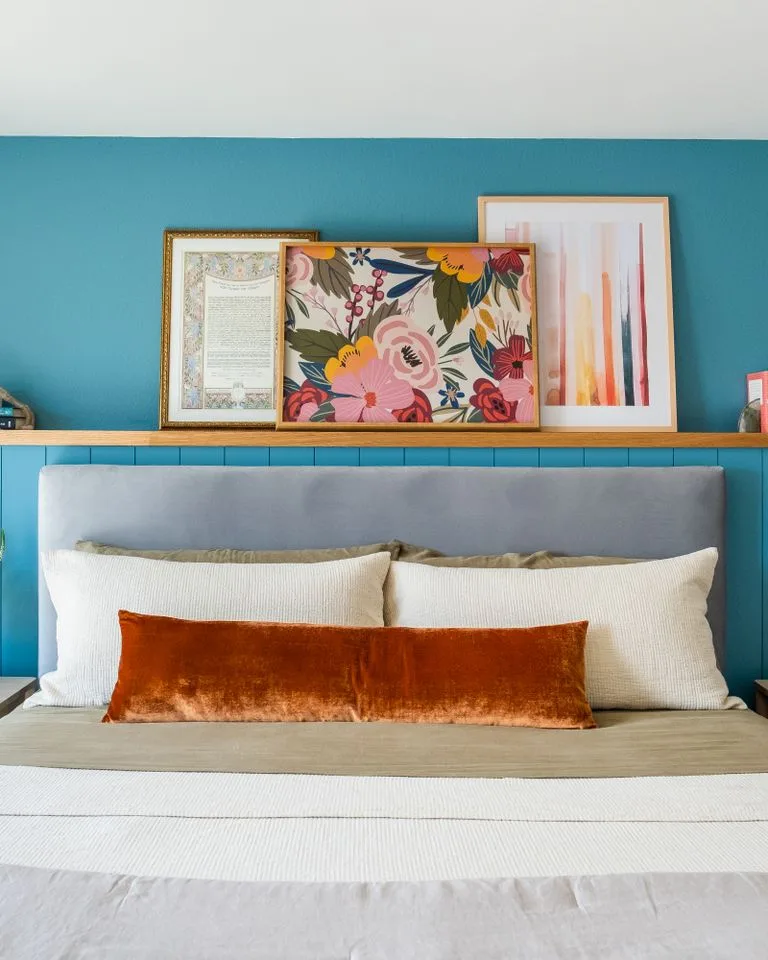
The wall above the bed is prime real estate in a narrow room — it’s the one wide surface the room’s shape actually gives you. A picture ledge (or two, stacked) lets you layer framed art, small prints, and leaning objects without a single nail hole per frame, and you can rearrange the whole display in minutes. Keep the palette tight — three to four frames in similar tones — so it reads as one composition.
Why it works: horizontal art above the bed emphasizes the room’s one generous dimension (its width at the headboard wall) and gives the eye somewhere to rest that isn’t a blank wall or a door. Tip: hang the ledge so its bottom edge sits 6 to 8 inches above the headboard; any higher and it floats disconnected from the bed.
8. Hang a Peg Rail to Turn a Blank Wall Into Storage
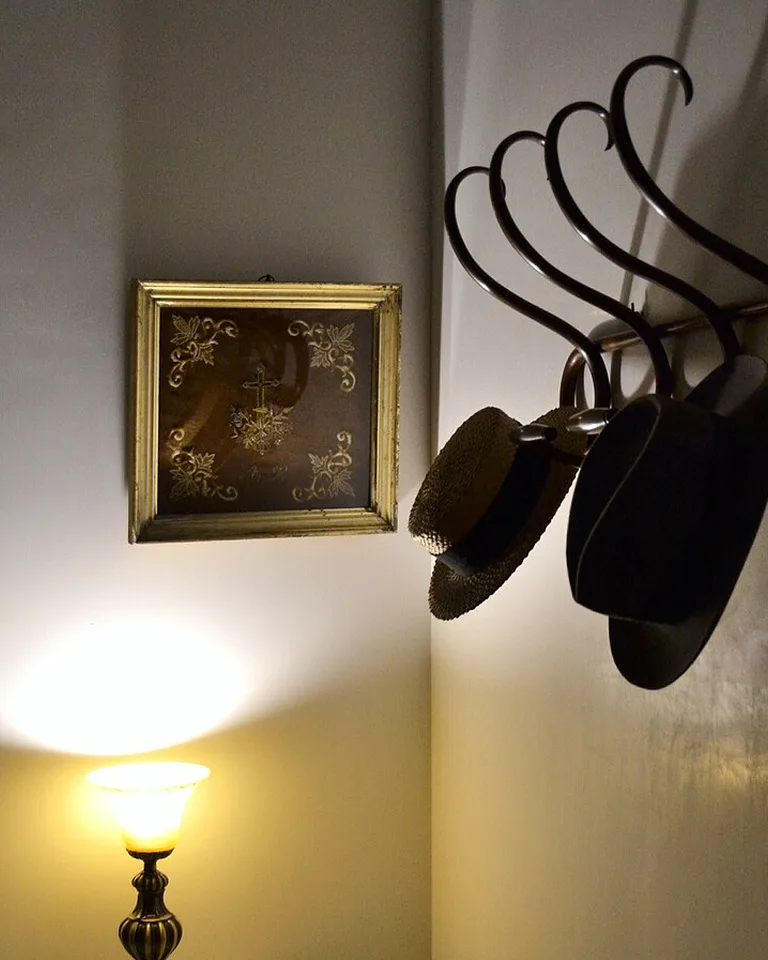
A wooden peg rail — a simple board with shaker pegs — mounted along a blank stretch of wall turns dead space into hanging storage for tomorrow’s clothes, bags, hats, and robes. It protrudes barely 3 inches, costs very little, and looks deliberately designed rather than improvised. Stain or paint it to match your trim and it reads as built-in.
Why it works: narrow bedrooms drown in “stuff with no home,” and a peg rail gives the daily-use items a visible, accessible home that doesn’t consume floor or closet space. Tip: mount it at about 66 inches high — reachable, but high enough that hanging clothes clear the floor and don’t brush you as you pass.

9. Slide a Slim Rolling Cart Into Dead Gaps
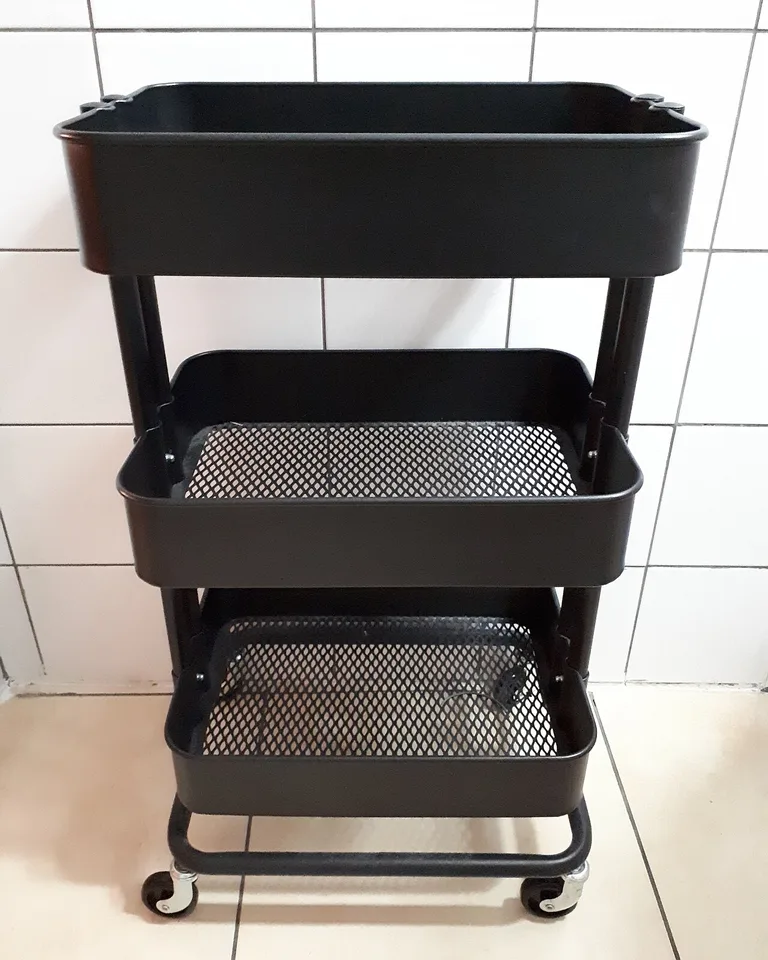
Every narrow bedroom has dead gaps: between the dresser and the wall, beside the bed frame, behind the door swing. A slim rolling cart — 6 to 8 inches wide — turns those gaps into storage for books, chargers, skincare, or craft supplies. Because it rolls, you can pull it out for full access and tuck it away flush when guests come.
Why it works: it monetizes space that was literally unusable, and its mobility means it never blocks cleaning or rearrangement. Tip: measure the gap before you buy — carts come in standard widths and a half-inch too wide means it lives in the hallway instead.
10. Add Over-Door Storage That Never Touches the Floor

The back of the bedroom door is free square footage most people ignore. An over-door organizer — hooks for robes and bags, or a slim rack for shoes and accessories — adds a full layer of storage with zero footprint. Choose one with felt or rubber backing so it doesn’t scar the door, and keep the weight reasonable so the door still closes cleanly.
Why it works: door-back storage is invisible when the door is open against the wall, which is exactly where it should be in a narrow room — out of the sightline entirely. Tip: if the door opens against furniture, mount the organizer on the closet door instead; the principle is the same, the clearance is better. Pair this with under-bed storage ideas and even the narrowest room gains two hidden storage zones.
11. Keep One Tiny Bedside Table for the Essentials
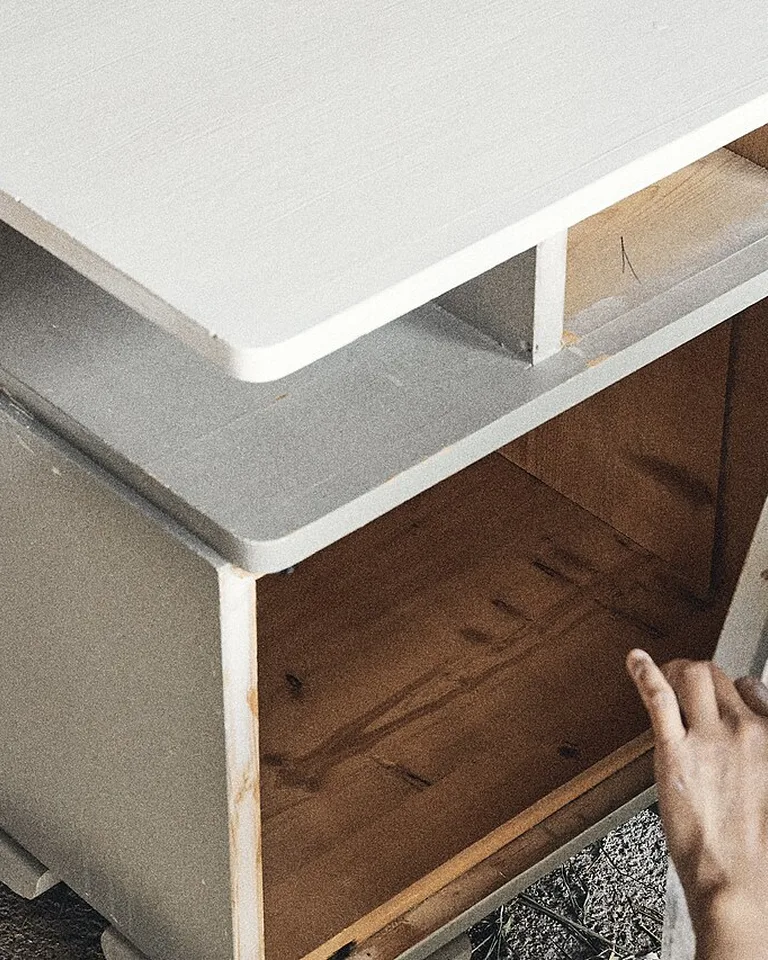
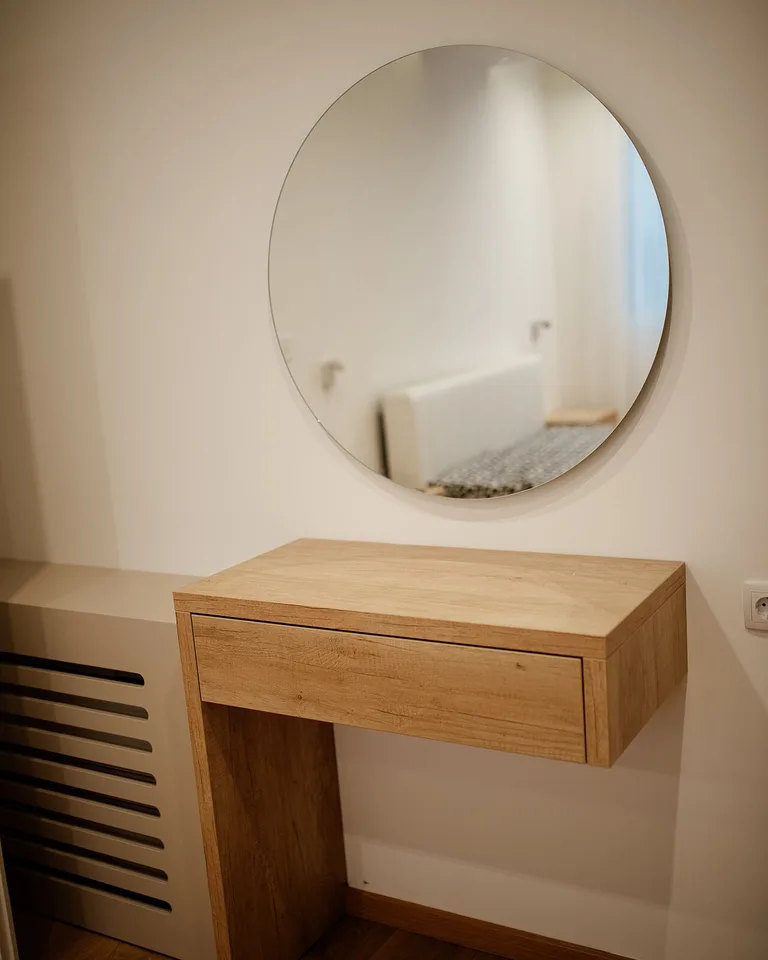
Not every narrow bedroom can go fully floating — sometimes you just want a real table. Choose the smallest one that holds your actual essentials (lamp or book, water, phone) and nothing more; a 12-inch cube or a slim C-table that slides under the bed frame works. One small, honest table beats a cramped full-size nightstand every time. If even that won’t fit, a compact vanity setup can double as a bedside surface — see these bedroom vanity ideas for pieces slim enough to pull double duty.
Why it works: a right-sized table proves the room is furnished, not just survived in — that psychological “finished” feeling is the whole point. The key is editing ruthlessly: if it doesn’t fit on the tiny table, it lives somewhere else. Tip: a table with an open lower shelf beats a closed drawer here; you can see what’s there, and it doesn’t add visual weight.
12. Finish the Far Short Wall With Vertical Paneling
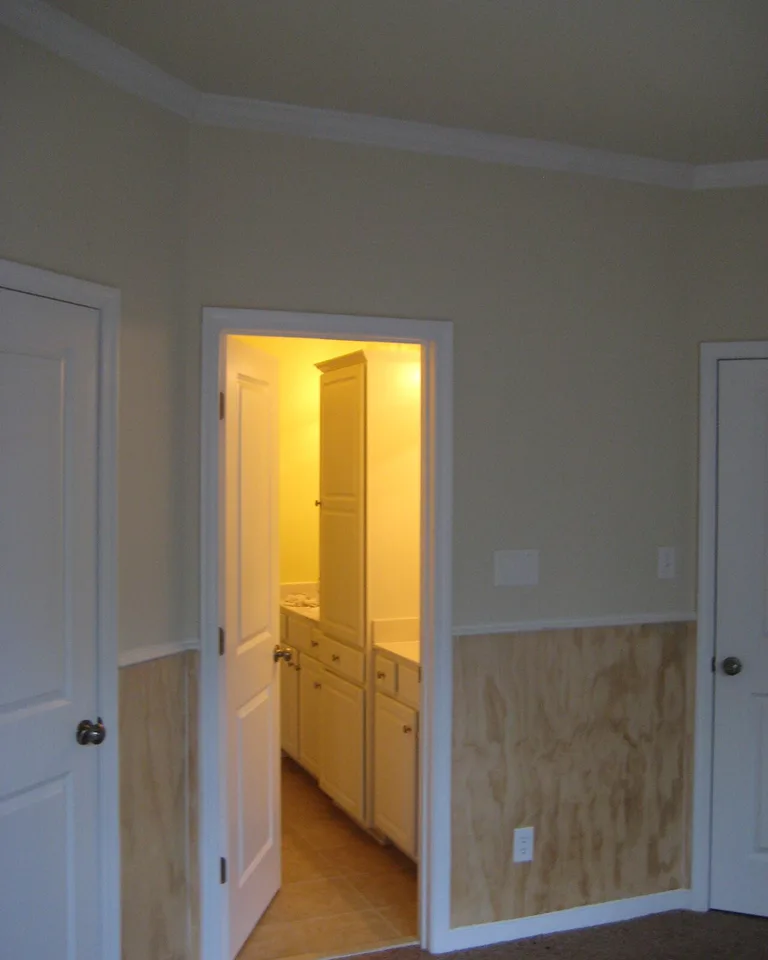
The far short wall of a narrow bedroom is where the tunnel feeling lives — so make it a destination. Peel-and-stick beadboard or batten strips painted the same color as the wall add architectural finish for very little money, and vertical lines draw the eye up instead of down the corridor. It’s renter-friendly if you use removable panels, and it makes the room’s end feel designed rather than leftover.
Why it works: paneling gives the eye texture and shadow lines to land on, which shortens the perceived length of the room — the wall stops being “far away” and starts being “a feature.” Tip: paint the paneling the exact wall color (not a contrast) for a subtle, high-end look; contrast paneling in a narrow room can chop the space visually. If your narrow room opens off a tight hallway, these very small entryway ideas solve the same “skinny space, finished feel” problem at the front door.
Frequently Asked Questions
How can I make a narrow bedroom look bigger without renovating?
Use a light, narrow color palette, place a large mirror opposite the window, and choose low-profile or wall-mounted furniture to keep sightlines open. Decluttering surfaces and moving storage vertical — tall dressers, peg rails, over-door organizers — opens up the floor visually, which is what actually makes the room feel larger.
What bed size works best in a narrow bedroom?
Choose the largest bed that still leaves 24 to 30 inches of clear walking space on at least one side. In many narrow rooms a full or double bed hits the sweet spot between comfort and circulation — squeezing in a queen that blocks the path will make the room feel smaller than a well-placed full.
What colors are best for a narrow bedroom?
Soft neutrals and light tones widen a room visually. A darker accent on the short far wall can actually add depth and make the proportions feel less tunnel-like — just keep the long walls light so they recede.
Can lighting really make a narrow room feel wider?
Yes — layered lighting (ambient, task, and accent) visually expands corners and creates depth instead of one flat overhead wash. Wall sconces, swing-arm lamps, and dimmers are especially effective in narrow bedrooms because they add light without consuming surface or floor space.
Is vertical storage better than floor storage in a narrow bedroom?
Almost always. Tall dressers, wall shelves, peg rails, and over-door organizers store the same volume while leaving the floor clear — and a clear floor is the single biggest factor in a narrow room feeling spacious rather than cramped.
A narrow bedroom feels finished when nothing in it looks like a compromise. Float what you can, send storage upward, let mirrors and light do the widening, and finish the far wall like you mean it — and the skinniest room in the house becomes the one with the most character. For the rooms around it, keep the “small but finished” feeling going right from the front door with the same deliberate approach.