
12 Small Bathroom Ideas on a Budget That Still Feel Designed
Can a small bathroom on a budget actually feel designed? Yes — if you spend on what your eyes notice first. In a bathroom under 50 square feet, every surface is visible at once, which means cheap, targeted changes show up fast. The three moves with the biggest payoff per dollar are: a fresh coat of paint in one enveloping color, one consistent hardware finish (matte black or brass), and a mirror much bigger than the one you have. Together they cost well under $200, take a weekend, and make the room look intentional instead of leftover.
The rule that separates a “designed” cheap bathroom from a cluttered one is restraint: one color direction, one metal finish, one pattern — everything else quiet. Every idea below follows that rule, needs no contractor, and leans renter-friendly where it counts.

1. Color-drench the room instead of just painting the walls
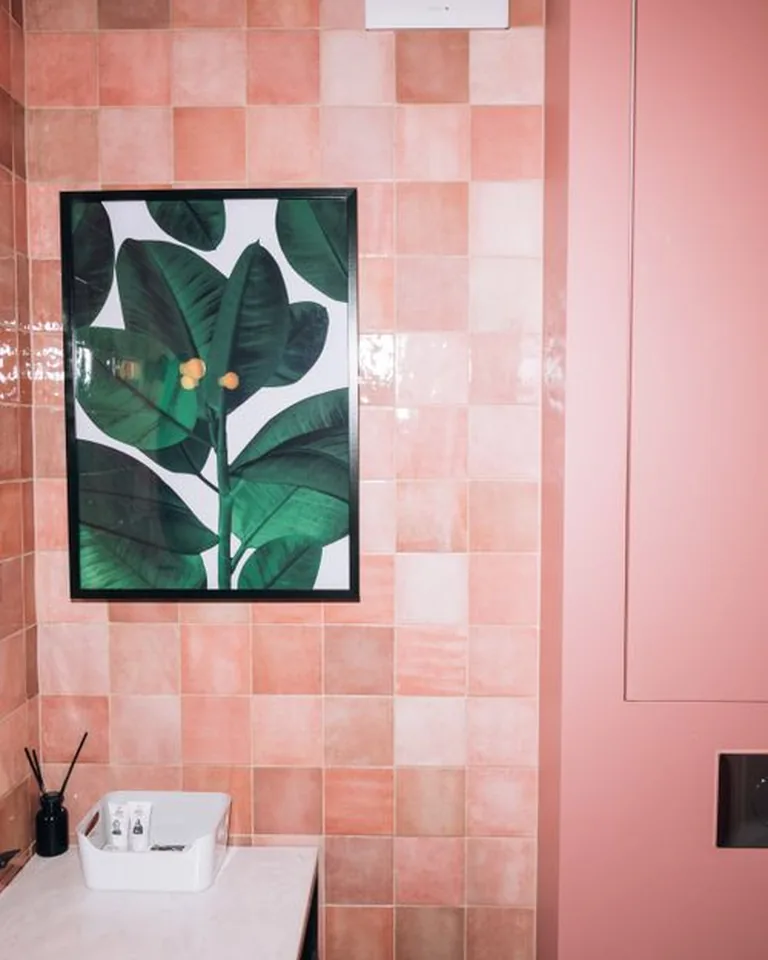
A gallon of paint is still the cheapest square-foot transformation you can buy, and in a tiny bathroom one gallon usually covers everything. But the move that reads “designed” isn’t an accent wall — it’s color drenching: painting the walls, ceiling, and vanity the same tone so the box of the room disappears and the boundaries blur. A saturated color like deep green, warm terracotta, or inky navy turns a small bath into a deliberate jewel-box moment instead of a plain white cell.
Use a bathroom-grade satin or semi-gloss finish so the paint sheds humidity, and don’t skip the primer over old gloss paint. One caution: if your bathroom has no exhaust fan, stick to a mid-tone rather than a near-black — dark paint in a windowless, fanless bath can read gloomy instead of cozy. For more color-direction thinking, see these moody half-bathroom ideas, which use the same enveloping-color trick.
2. Swap every piece of hardware to one matching finish
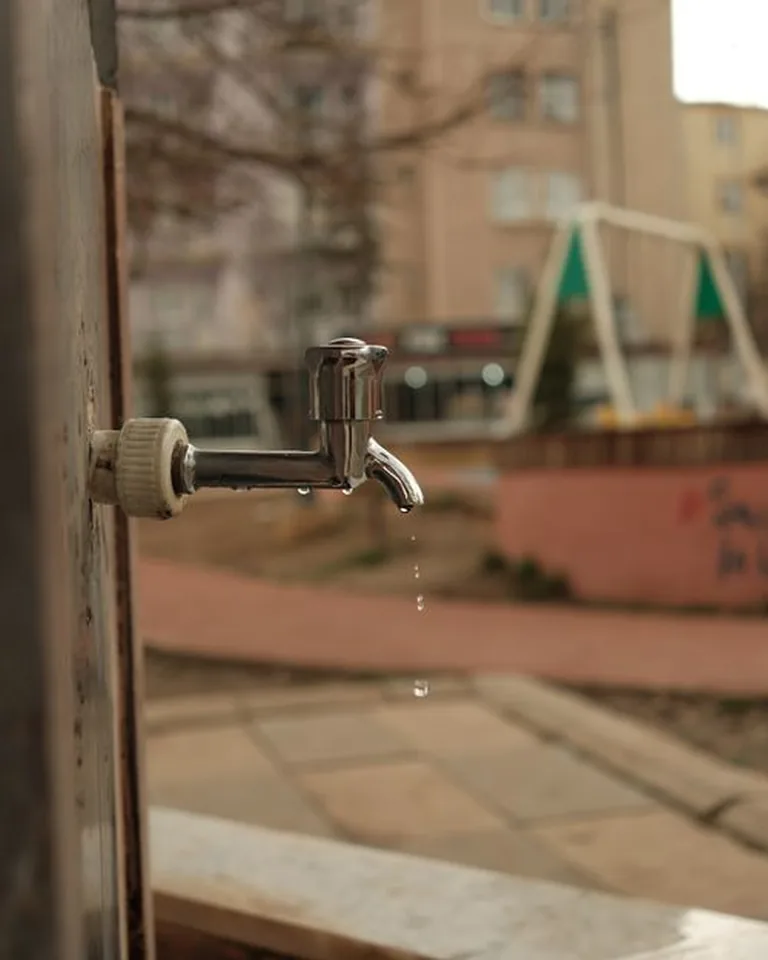
Your bathroom’s hardware is its jewelry, and right now yours probably tells three different stories: chrome faucet, brass doorknob, brushed-nickel towel bar. Unify them — a full set of knobs, a faucet, and a towel ring in matte black or brushed brass runs $40–$80 and installs with a screwdriver in under an hour. Matching finishes signal intention the way matching frames do on a gallery wall.
Choose the finish that flatters your existing fixtures: matte black sharpens white and pale tile; brushed brass warms up beige and wood tones. If replacing the faucet feels ambitious, you can still swap just the knobs and drawer pulls for under $20 and get most of the effect. Vanity hardware is where the transformation starts — these navy blue bathroom vanity ideas show how a strong vanity finish anchors the whole room.
3. Hang the biggest mirror your wall can physically hold
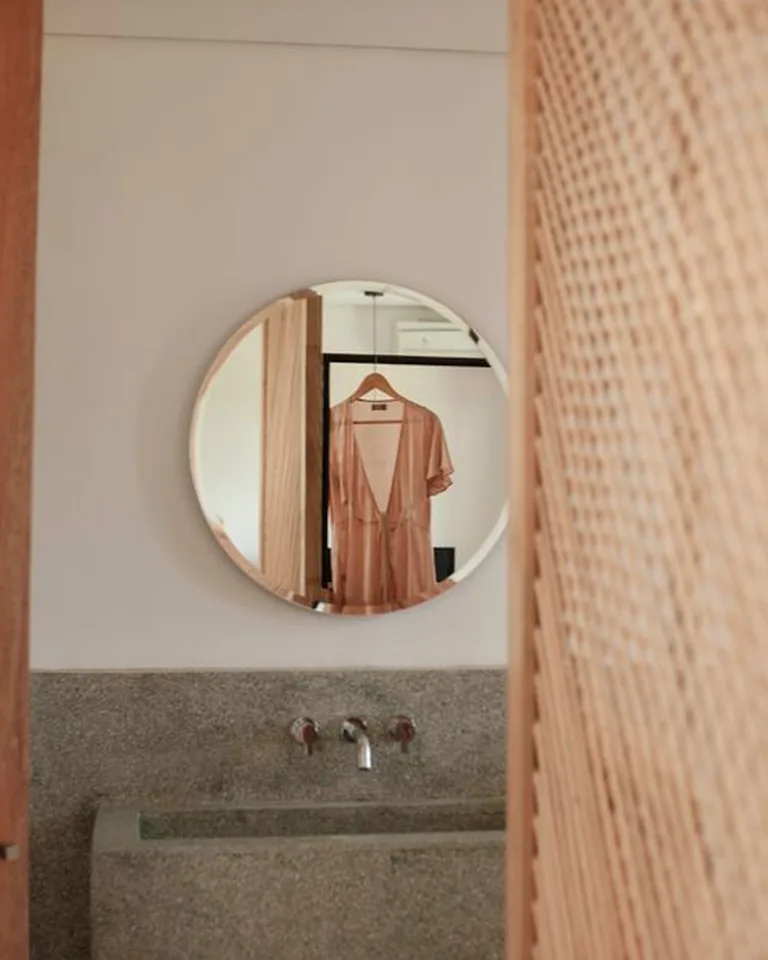
A mirror is the one item that both decorates a small bathroom and literally doubles it. Most rental and builder bathrooms have a mirror barely wider than the faucet. Go oversized — a round or arched mirror that nearly touches the light fixture and fills the wall above the vanity reflects light into every corner and erases the cramped feeling. Big-box stores sell 24- to 30-inch round mirrors for $30–$60.
Renter-friendly route: don’t remove the landlord’s flat plate-glass mirror at all — frame it. Adhesive mirror-frame kits or thin trim cut to size and stuck on with construction adhesive turns a dated slab into a framed piece for about $25, with no holes in the wall. Mirror placement matters too, so browse these bathroom mirror and lighting ideas for how size and light work together.
4. Warm up the lighting — the five-dollar mood fix
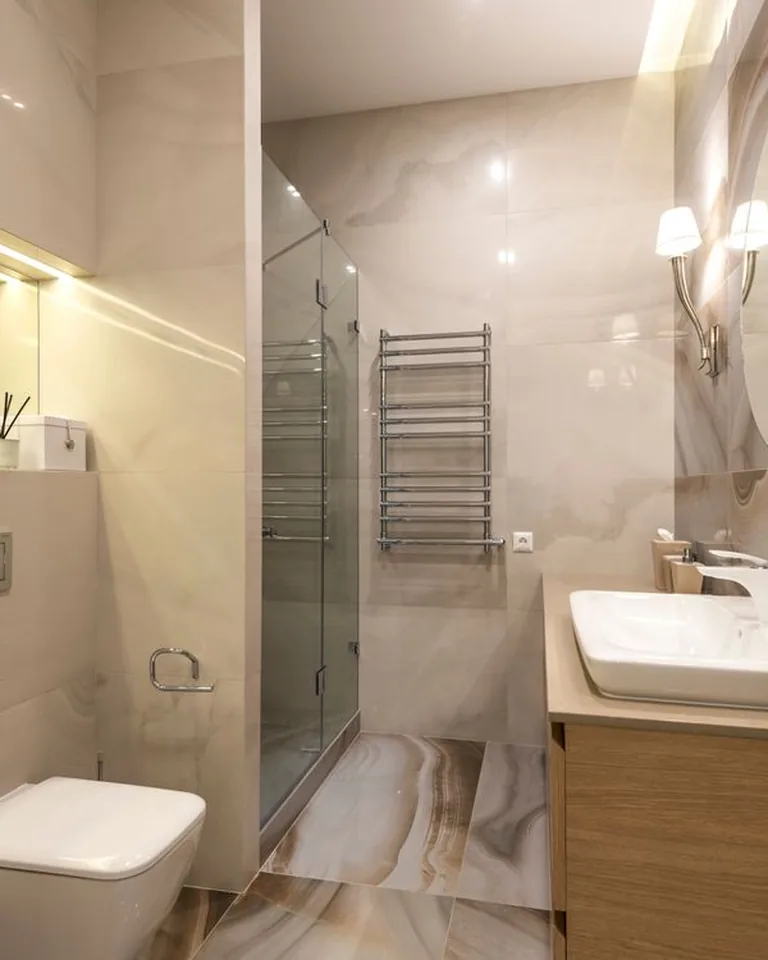
Cool white 5000K bulbs make cheap tile look cheaper. Swap every bulb in the bathroom to warm 2700K LEDs and the room instantly feels richer, calmer, and more expensive. It’s the lowest-effort upgrade on this list and it costs about $5.
Next level, for renters: battery-powered stick-on sconces. Peel-and-stick sconce kits now mimic hardwired fixtures — mount two flanking the mirror and you get the layered, boutique-hotel glow that a single overhead fixture can never produce. No electrician, no holes that matter, and the remote dimmer keeps the mood adjustable. Keep bulbs warm throughout; mixing temperatures is the fastest way to make good lighting look accidental.
5. Add a peel-and-stick backsplash behind the vanity
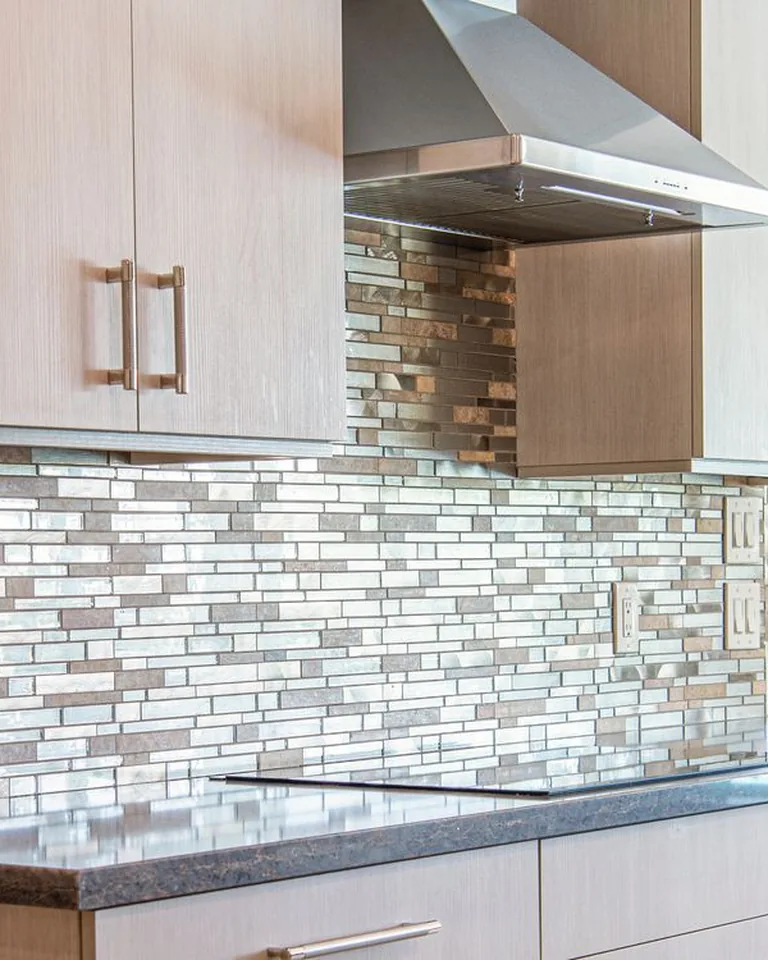
That strip of painted wall behind your vanity collects toothpaste splatter and looks tired — a peel-and-stick backsplash fixes both problems for $15–$30. Use it on one small focal area only, not the whole room; restraint is what makes a stick-on product look like a design choice instead of a compromise. Zellige-look, handmade-look subway, or classic black-and-white encaustic patterns all come in adhesive sheets now.
Check the product rating before you buy: sheets sold for backsplash areas must handle occasional splashes, so choose a moisture-rated vinyl product and press it firmly over clean, dry paint. When you move out, it peels off with a hair dryer and warm water. For more renter-safe strategies, see these renter-friendly laundry room upgrades, which lean on the same no-damage logic.
6. Cover dated flooring with peel-and-stick vinyl tile
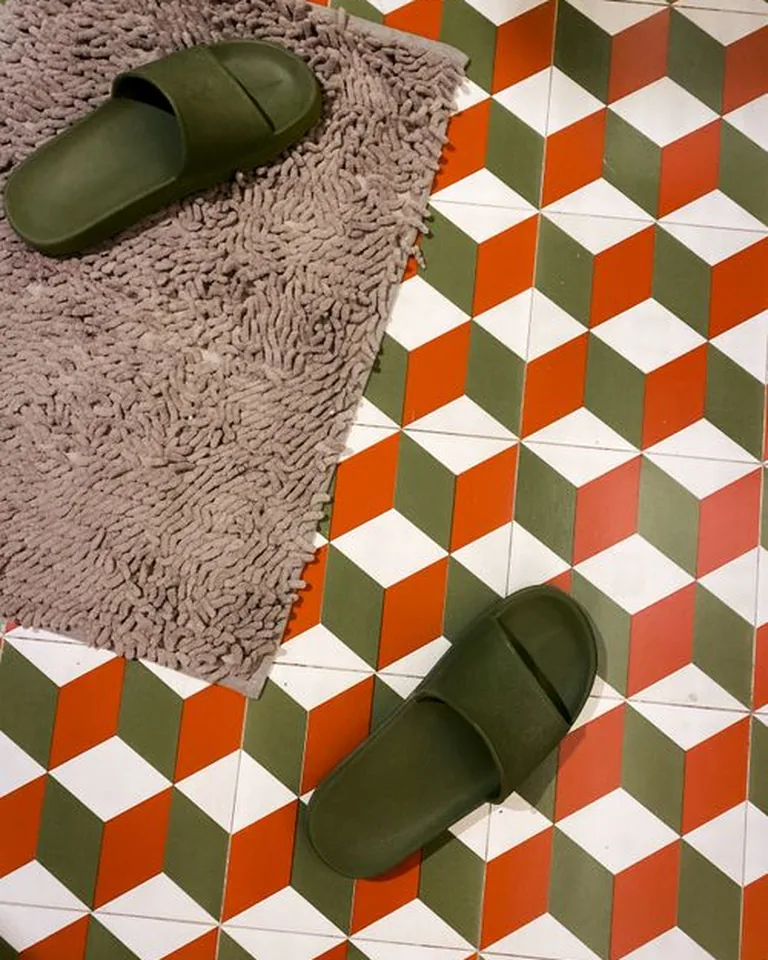
Old flooring sets the tone for the whole room, and you can’t paint over it — but you can stick over it. Peel-and-stick vinyl floor tiles mimic marble, checkerboard, or terrazzo convincingly at $30–$60 for a small bath, and one afternoon of measuring and laying transforms the floor from “grandma’s rental” to deliberate. Use a utility knife, a straight edge, and start from the centerline so the cuts land where they’re least visible.
This is strictly a surface treatment: the tiles sit on top of existing flooring, so it’s ideal for renters and for ugly-but-sound tile you don’t want to demolish. Pick a pattern with some visual movement — solid pale tiles highlight every speck of dust, while marble-veined or patterned ones forgive a less-than-perfect subfloor. Pair the new floor with a simple bath mat in a solid color from your palette, not another competing pattern.
7. Coordinate your textiles to one palette

Shower curtain, towels, bath mat, hand towel — these are the only “fabric” in a bathroom, and when each one is a different color the room reads chaotic no matter what else you’ve done. Choose one palette (cream + sage, or white + black + natural wood, or warm terracotta tones) and replace the textiles to match. A $25 shower curtain in a solid color does more than any decor object, because it covers the largest vertical surface after the walls.
Buy the set together rather than piecemeal so the whites match — “white” towels from three different brands read as three different colors side by side. Wash everything before hanging; fabric shower curtains and cotton rugs soften dramatically after one wash and look far more expensive.
8. Build storage on the wall, not the floor
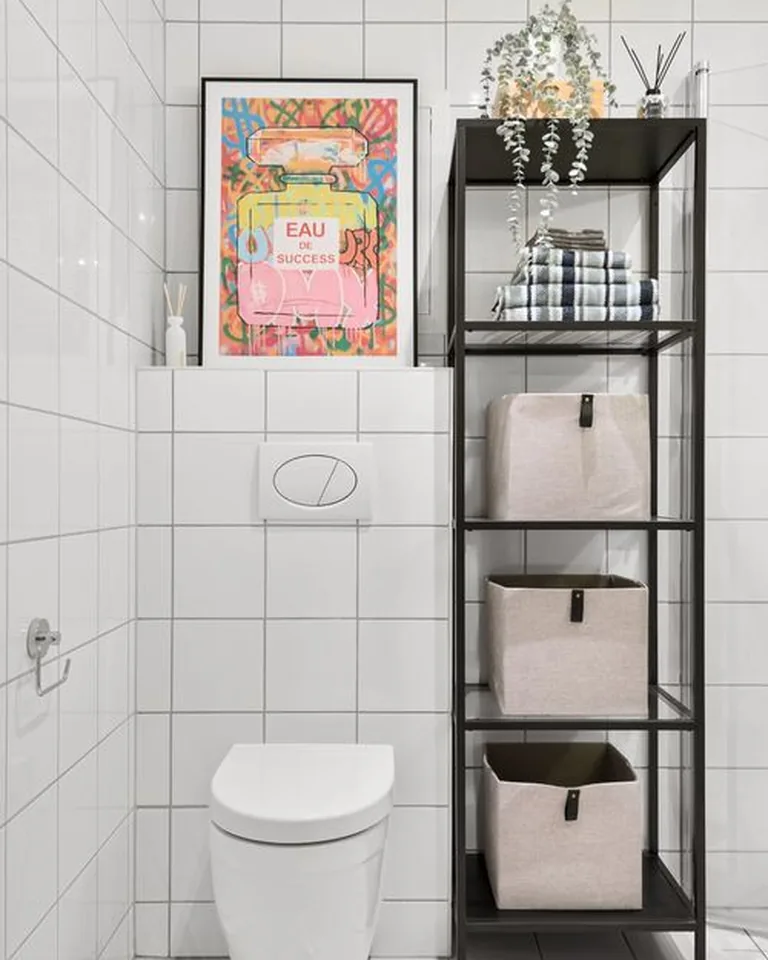
In a small bathroom, floor space is gold and wall space is free. Two floating shelves above the toilet — or one above the door — hold rolled towels, baskets, and everyday toiletries without touching the footprint. A pair of wood shelves with brackets costs $25–$40, and styled with three matching baskets they look like a built-in.
The styling rule: closed storage below, one styled open moment on top. Keep everyday clutter in the baskets and display only two or three things — a plant, a folded towel stack, one bottle that looks good. Overcrowded shelves defeat the purpose and make the bathroom look smaller, so edit hard and leave breathing room between objects.
9. Corral the counter clutter onto one tray

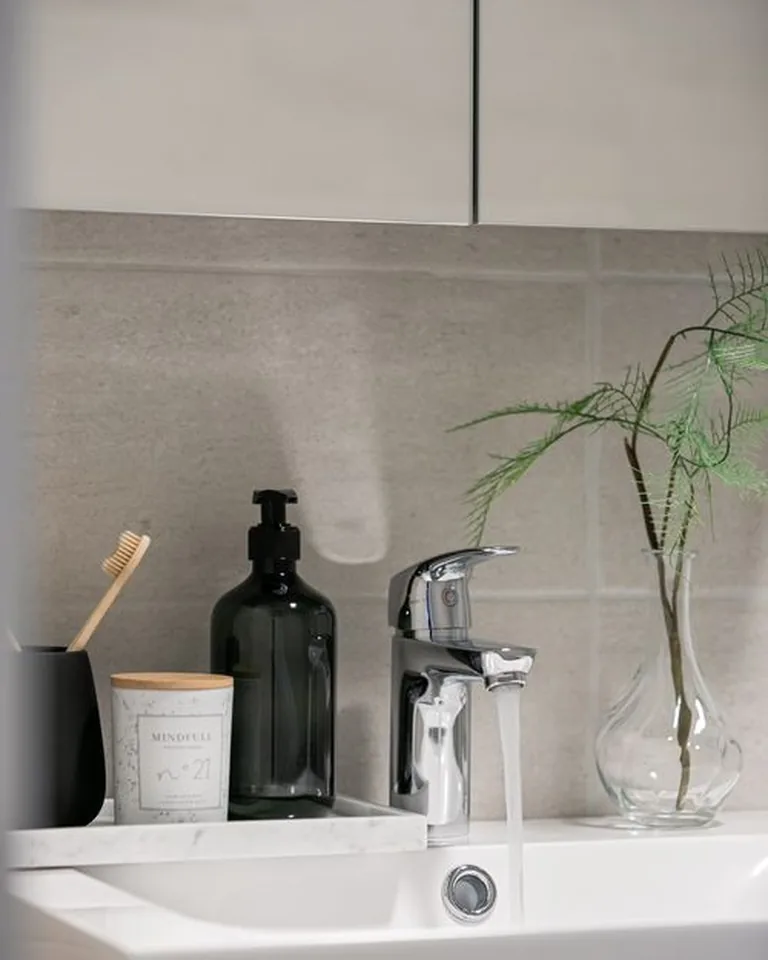
A small vanity covered in bottles looks messy; the same bottles on a single tray look like a styled display. Corral everything — soap dispenser, toothbrush holder, the two products you actually use daily — onto one tray or a small basket. Instantly the counter reads as one intentional arrangement instead of five unrelated objects, and wiping the counter becomes a five-second job.
Match the tray material to your hardware finish from idea 2: black metal tray with matte black hardware, bamboo with brass. Decant the most-used products into matching pump bottles or glass jars for another $10–$15; uniform containers are the cheapest form of visual quiet there is. Store the overflow and the “someday” products out of sight — only the daily lineup earns counter space.
10. Refresh the grout instead of replacing the tile
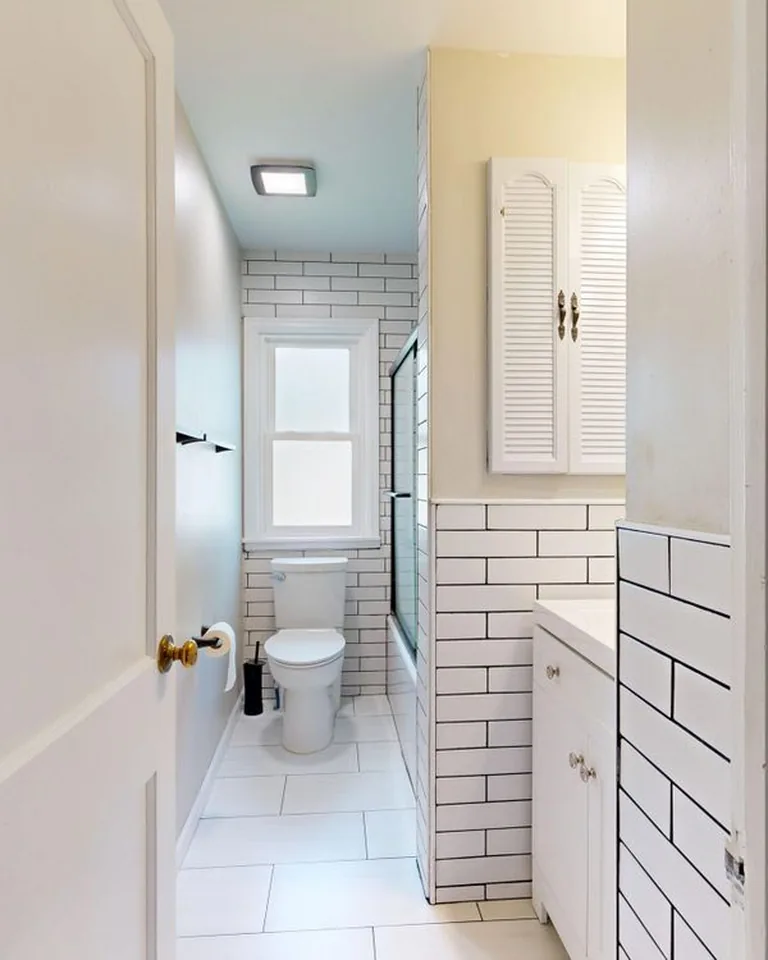
Grimy grout makes even good tile look old, and you don’t need new tile — you need clean grout. Scrub with an oxygen-bleach paste, then seal it, or run a grout pen over the lines for $10 and two patient evenings. Bright grout lines against existing tile are the closest thing to a tile refresh you can buy for pocket change.
Work in small sections and wipe haze off the tile before it dries, or you’ll trade dirty grout for a cloudy film. If your grout is cracked or crumbling, rake out the loose material and re-grout the worst sections first — a pen over failing grout just delays the inevitable. This pairs beautifully with the peel-and-stick backsplash from idea 5: clean real tile on the shower walls, patterned stick-on at the vanity. If you want more ways to make plain tile interesting, these neutral bathroom tile ideas show how texture does the heavy lifting.
11. Trade towel bars for hooks and rings
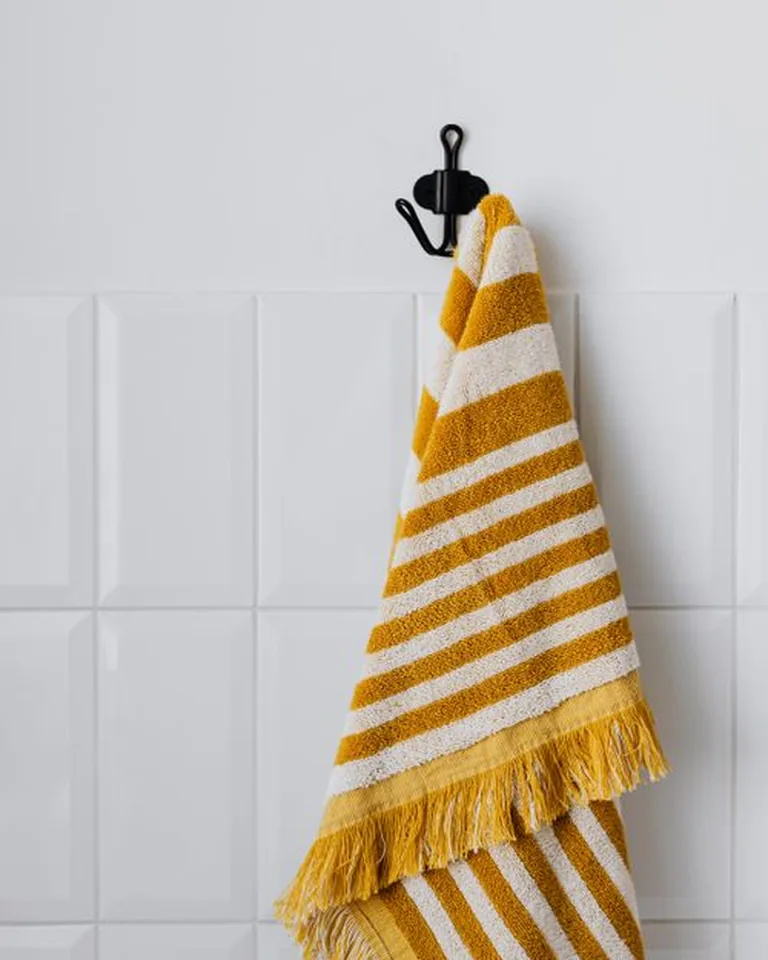
A towel bar jutting 4 inches off the wall eats visual space in a 40-square-foot bath. Swap bars for wall hooks or towel rings: hooks sit nearly flush, cost $5–$10 each, and one hook holds a full bath towel where a bar holds it awkwardly folded. Fewer protrusions means cleaner sightlines, which reads as more space.
Place hooks at staggered heights on the door or an empty wall section, and keep one ring near the sink for the hand towel. For renters, heavy-duty adhesive hooks hold damp towels reliably now — no drilling, and they come off clean with the pull-tab when you leave. Two matching hooks in your chosen finish look far more deliberate than a mismatched bar you inherited.
12. Style the finish line: plant, art, one good dispenser
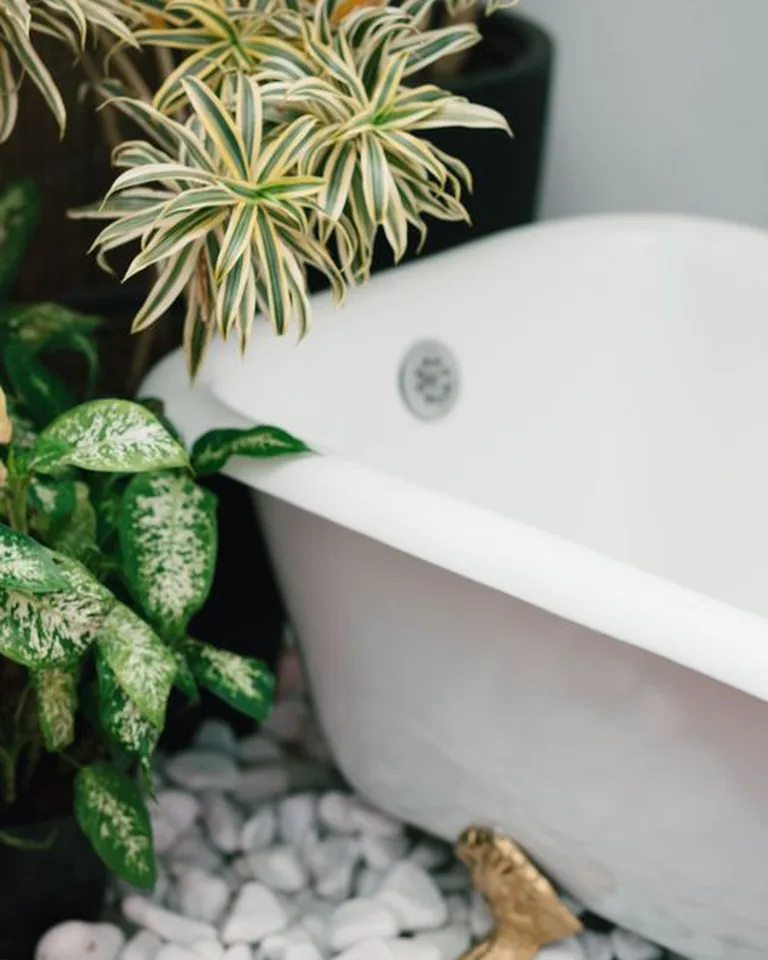
Every designed room has one living thing and one thing chosen purely for looks. A humidity-loving plant — pothos, fern, or snake plant — thrives on a bathroom windowsill or shelf and costs under $10. One framed print in a moisture-safe frame (hung away from direct splashes) adds the personal layer that separates “renovated” from “decorated.” And one genuinely nice soap dispenser, ceramic or stone, replaces the plastic bottle with the label still on.
Stop at three small styling pieces. A small bathroom can hold a plant, one print, and one dispenser — a fourth item is clutter. Can you hang art in a bathroom? Yes, as long as it’s not an irreplaceable piece: use a sealed frame, hang it on the driest wall, and avoid direct shower steam. These small green bathroom ideas show how much life a little greenery adds to a tight footprint.
Where to spend first: a realistic budget order
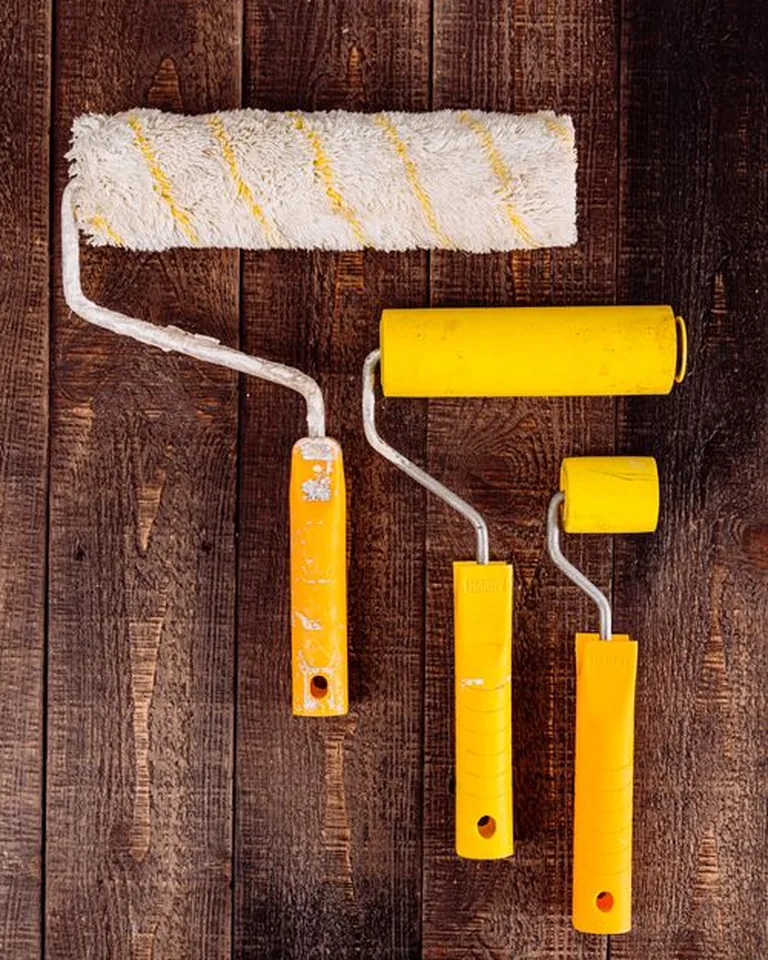
If you can only do three things this weekend, do them in this order: paint ($35), hardware swap ($20–$80), and the mirror upgrade ($30–$60). That’s the trio that changes the room’s bones. Next weekend: lighting warmth ($5 in bulbs, or $30 for stick-on sconces), textiles ($40–$60 for a coordinated set), and the tray-and-decant tidy ($15). The peel-and-stick projects — backsplash ($15–$30), flooring ($30–$60) — are the biggest visual swings, so save them for when you’re ready to commit to a pattern.
Keep one rule through all of it: every new purchase must match the palette and finish you chose at the start. A $300 budget spent on twelve matching $25 decisions looks designed. The same $300 spent on five random bargains looks like a sale rack. Designed isn’t expensive — it’s consistent.
Frequently asked questions
How can I update my bathroom without renovating it?
Change what you can see and touch without touching plumbing or tile: repaint the walls and vanity, swap the cabinet hardware and faucet to one matching finish, hang a bigger mirror, switch to warm 2700K bulbs, and coordinate your textiles. These five updates transform how the room feels and none of them requires a contractor, a permit, or more than a weekend.
What is the cheapest way to refresh a bathroom?
Repainting is the cheapest refresh — about $35 for a gallon that covers a small bath. After that, swapping cabinet knobs ($10–$20), switching bulbs to warm LEDs ($5), and corralling counter clutter onto a single tray ($10–$15) are the lowest-cost moves with real visual impact. Each one takes under an hour.
How do I make a small bathroom look bigger without renovating?
Hang the largest mirror the wall allows, keep the color palette light or enveloping rather than busy, and move storage onto the walls instead of the floor. Replacing a towel bar with slim hooks and clearing the vanity down to a single tray also opens up sightlines, which is what makes a small room feel larger — less visual interruption, not more square footage.
Can I hang artwork in a bathroom?
Yes, with two precautions: choose a moisture-safe frame (sealed wood, metal, or acrylic) and hang it away from direct splashes and shower steam. Avoid hanging anything irreplaceable or delicate in a bathroom — a print you can replace costs little and adds the personal layer that makes the room feel finished rather than merely renovated.