
12 Floating Shelf Ideas for Every Room, Styled the Right Way
Floating shelves earn their place when they do two jobs at once: hold the things you actually use and look like they were always part of the wall. Most of the shelves that fail do so for boring, fixable reasons — mounted at the wrong height, spaced too tightly, or loaded with more stuff than the bracket can hold. Get the spacing, anchoring, and styling right once, and floating shelves work in the living room, kitchen, bedroom, bathroom, entryway, and home office. This guide gives you twelve room-by-room ideas with exact placement rules, what to put on each shelf, and the mistakes to skip.
1. One Long Shelf Over the Sofa
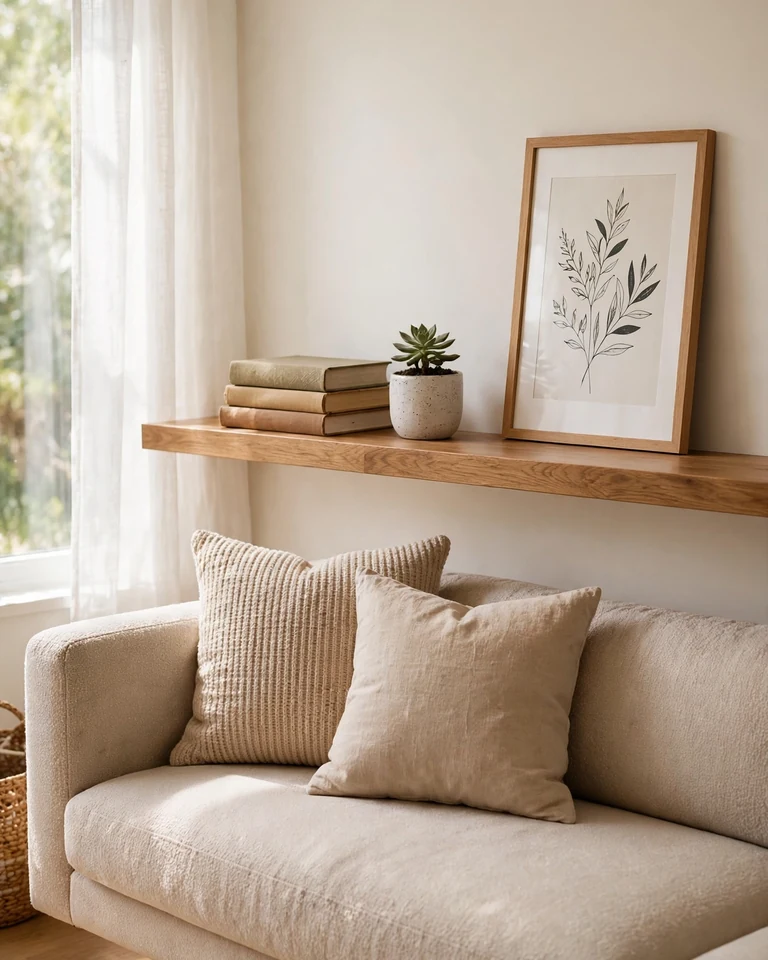
Above a sofa is the single easiest place to start. Hang one shelf roughly 8 to 10 inches above the sofa back — high enough that nobody bumps a frame standing up, low enough that the shelf reads as connected to the furniture rather than floating in nowhere. Keep it mostly empty: a short stack of books, one small plant, a framed print leaned against the wall. This restrained look pairs beautifully with warm brown-sofa living rooms, where one horizontal wood line calms a busy seating area.
Style tip: the shelf should not be wider than the sofa. About two-thirds to full sofa width looks intentional; a shelf that overhangs the armrests looks like an afterthought.
2. A Reading-Corner Stack of Two or Three

A dead corner becomes a reading corner with two or three shelves stacked vertically beside a chair. Put the lowest shelf at arm’s reach when seated — that’s the working shelf, home to the book you’re actually reading, your glasses, and a coaster. Higher shelves hold things you only look at: small art, a candle, a trailing pothos. Give each shelf one-third empty space so the stack feels airy rather than tower-like.
Design the corner as a whole: a soft lamp, a throw on the chair, and the shelves form the reading nook around it. Keep the tallest item on the top shelf so the eye travels up naturally.
3. A Coffee-Station Shelf in the Kitchen
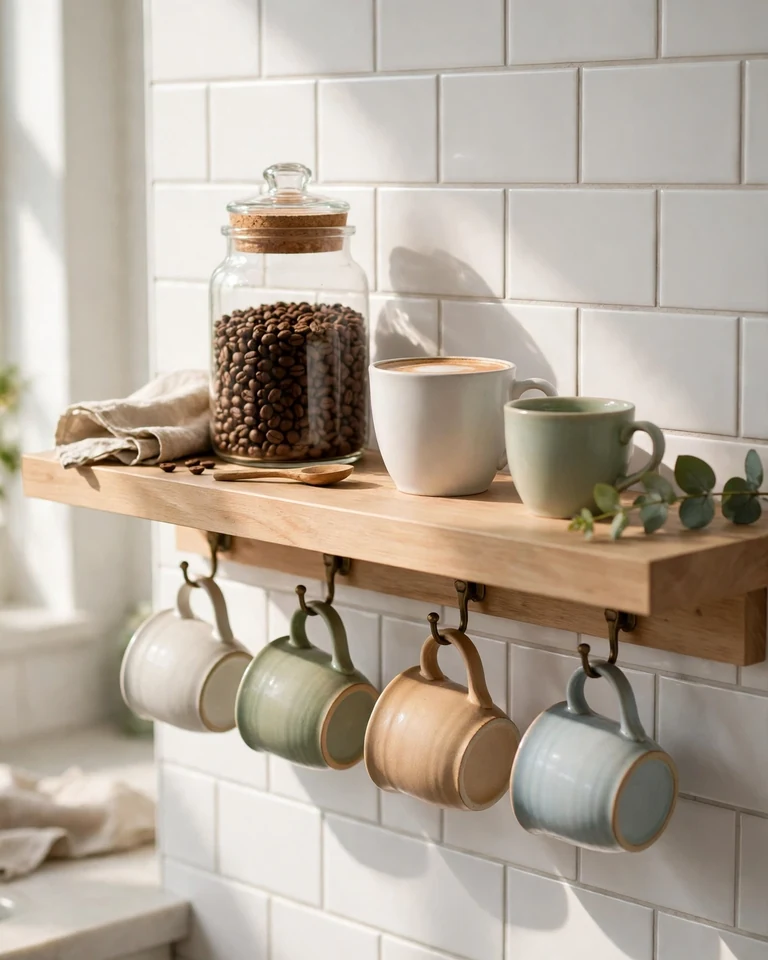
Dedicate one kitchen shelf to a single ritual and it earns its keep every morning. Hang it near your coffee maker at 16 to 20 inches above the counter, then arrange mugs on hooks underneath, a small jar of beans, and your two favorite cups. Grouping by ritual instead of by object type is what keeps an open kitchen shelf from drifting into clutter.
Hang mugs on small S-hooks under the shelf rather than setting them on top — it doubles capacity and reads as deliberate design, not crowding.
4. A Spice-and-Oil Strip Near the Stove
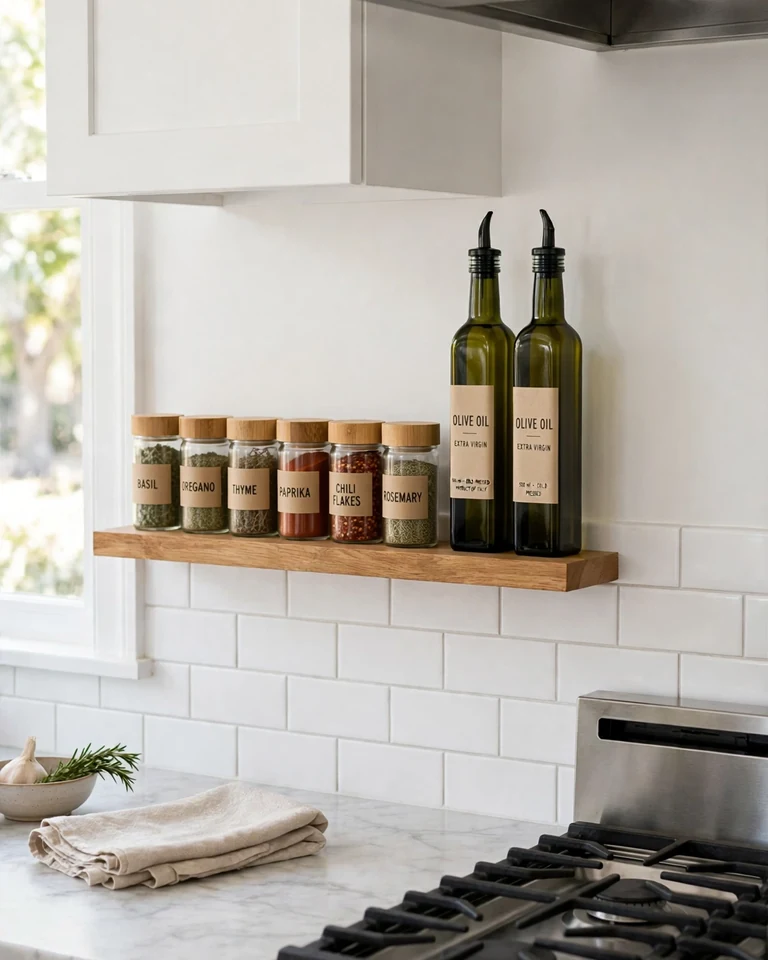
A single narrow shelf beside the cooktop keeps daily spices and cooking oils within arm’s reach without surrendering counter space. Mount it at least 12 inches to the side of the stove — never directly above it, where rising heat warps wood and cooks your olive oil. Small jars with labels in one row, tallest bottles at the back, nothing deeper than a single layer so nothing hides.
This works best as a warm accent in a white kitchen: a natural wood shelf with matching wood-look jar lids softens all that cabinetry.
5. A Bedside Shelf Instead of a Nightstand

In a small bedroom, a floating shelf mounted 24 to 30 inches off the floor beside the bed replaces a nightstand entirely and frees the floor — which makes the whole room feel bigger. Keep it genuinely useful: phone, one book, a small lamp or candle, a glass of water. That’s it. A nightstand shelf is the one shelf where practicality beats styling, because you reach for it in the dark.
Choose a shelf at least 6 inches deep so a phone lying flat can’t slide off, and mount it on a stud or with a toggle anchor — it takes more daily abuse than any other shelf in the house.
6. A Ledge Above the Headboard
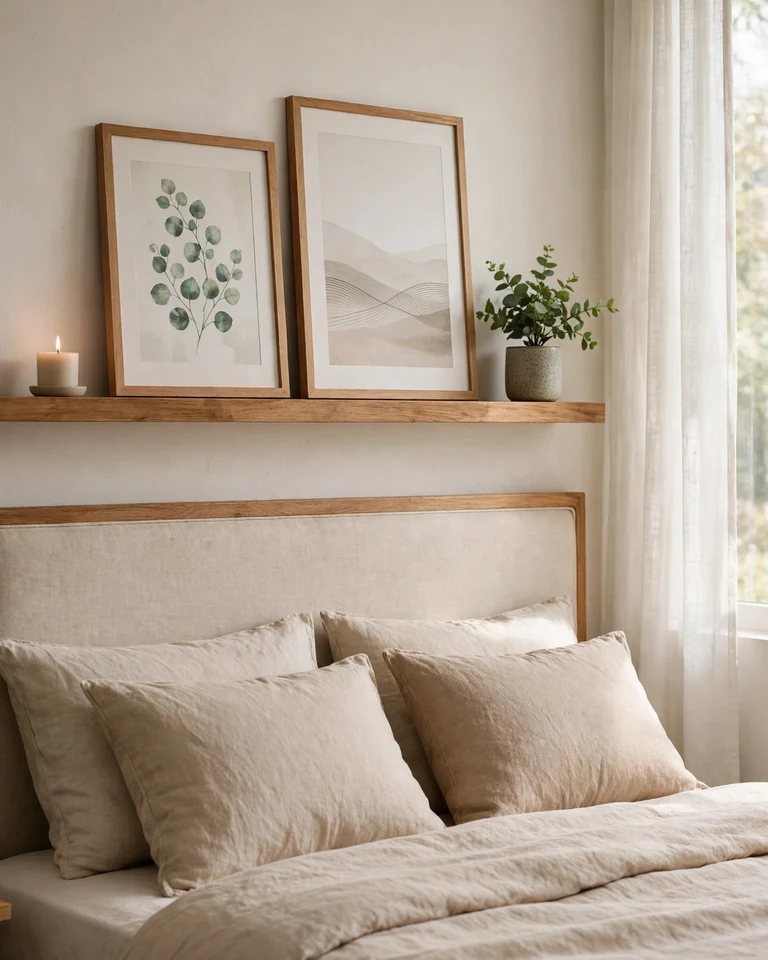
No headboard? A floating shelf above the bed acts like one. Mount it 6 to 8 inches above the top of the mattress line, and style it flat and calm: two leaned frames, a small plant, a candle. This is a look-don’t-touch shelf — nothing here should need reaching for, because anything you grab from above the bed eventually falls on the bed.
Keep the display shallow and lightweight. Heavy frames above your head are a bad idea in earthquake country and a dusty chore everywhere else. This ledge also pairs well with styled bedroom vanity setups in the same room — repeat one color between the two so the room feels planned.
7. An Above-the-Toilet Towel Stack
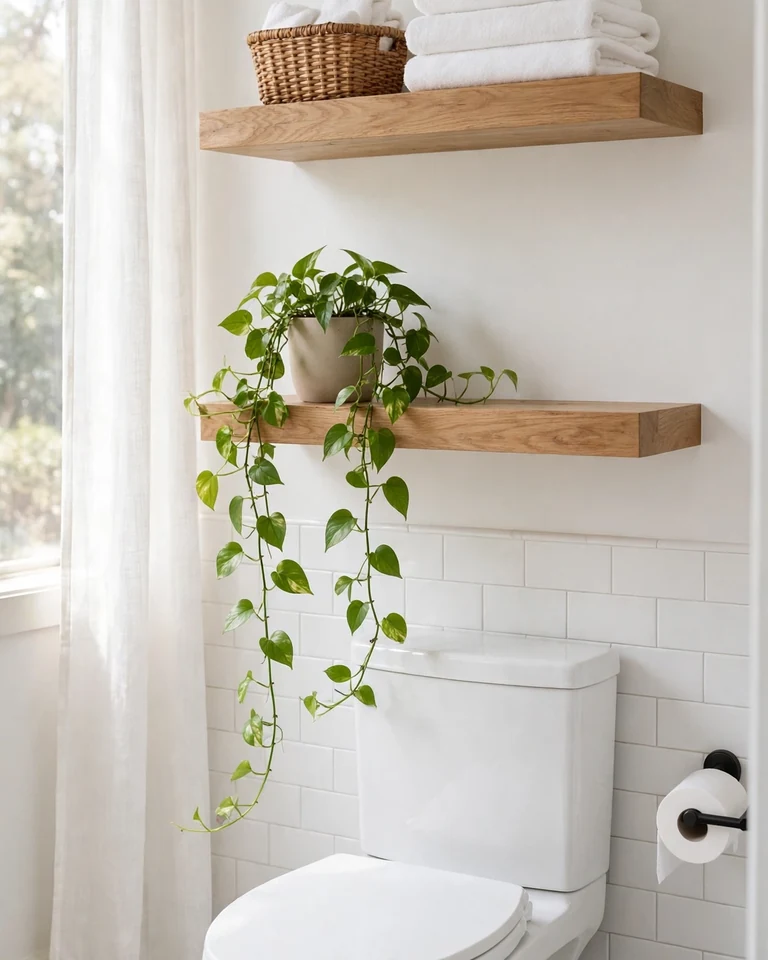
The wall above the toilet is dead space in almost every bathroom, and two stacked floating shelves turn it into real storage. Mount the lower shelf at least 6 inches above the tank lid so the lid can open freely. Style with rolled or folded towels, a small basket for spare toiletries, and one trailing plant like a pothos that tolerates humidity.
Bathroom shelves must be moisture-resistant — sealed wood, metal, or stone. Raw pine swells and warps in steamy bathrooms, and paint on a cheap shelf will bubble within a year.
8. A Skincare Ledge by the Bathroom Mirror
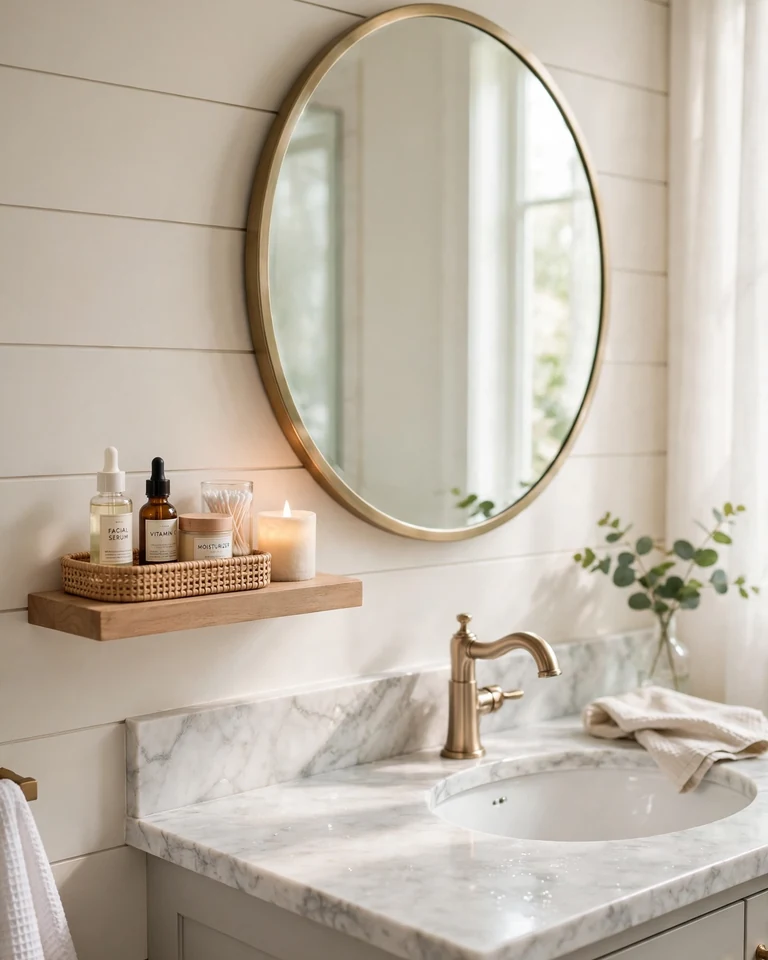
A single short shelf beside the mirror, at counter height plus a few inches, turns your skincare routine into a setup that never lives in a puddle on the counter. Use a small tray to corral bottles so the shelf wipes clean in one pass, and keep only the daily-use items here — backup stock belongs in a cabinet.
Pair the ledge with thoughtful mirror lighting and the whole sink zone feels like a hotel bathroom. Keep candles battery-operated here; an open flame next to cotton pads and spray bottles is asking for trouble.
9. A Key-and-Mail Catch-All by the Door

Every entryway needs a landing strip: one shallow shelf near the door at about 48 to 52 inches high, with a tray or small bowl for keys, sunglasses, and the mail you haven’t opened yet. Add a tiny shelf above for hats or a small plant. The rule that makes this work is brutal edit discipline — the tray gets emptied weekly, or the landing strip becomes a clutter museum.
This kind of small, hardworking detail is what separates great small entryways from ones that just collect coats and chaos.
10. A Mirror-Topped Entry Shelf

Take the catch-all idea one step further: a shelf with a round mirror hung 4 to 6 inches above it. The mirror bounces light into dark entryways and gives you the last-second check on the way out. Style the shelf sparingly underneath — a small dish for keys, one sculptural object, nothing that fights the mirror for attention.
In narrow hallways, keep the shelf shallow (4 to 5 inches deep) so shoulders and bags don’t sweep it. This is the one spot where a thinner, more elegant shelf outperforms a chunky one.
11. A Reference Strip Above the Desk

Mount two shelves above your desk at 20 to 24 inches above the desktop — high enough to see over, low enough to reach without standing. The lower shelf is for working supplies: reference books, a small box of pens, headphones on a stand. The upper shelf is for the human stuff: a plant, a framed photo, one award or memento. Separating the shelves by function keeps the work zone calm even when the desk below is busy.
Never stack shelves directly over a monitor wall if they block sightlines or catch monitor glare; offset them slightly to one side if the desk faces a wall straight-on.
12. A Plant-and-Mood Column in the Home Office
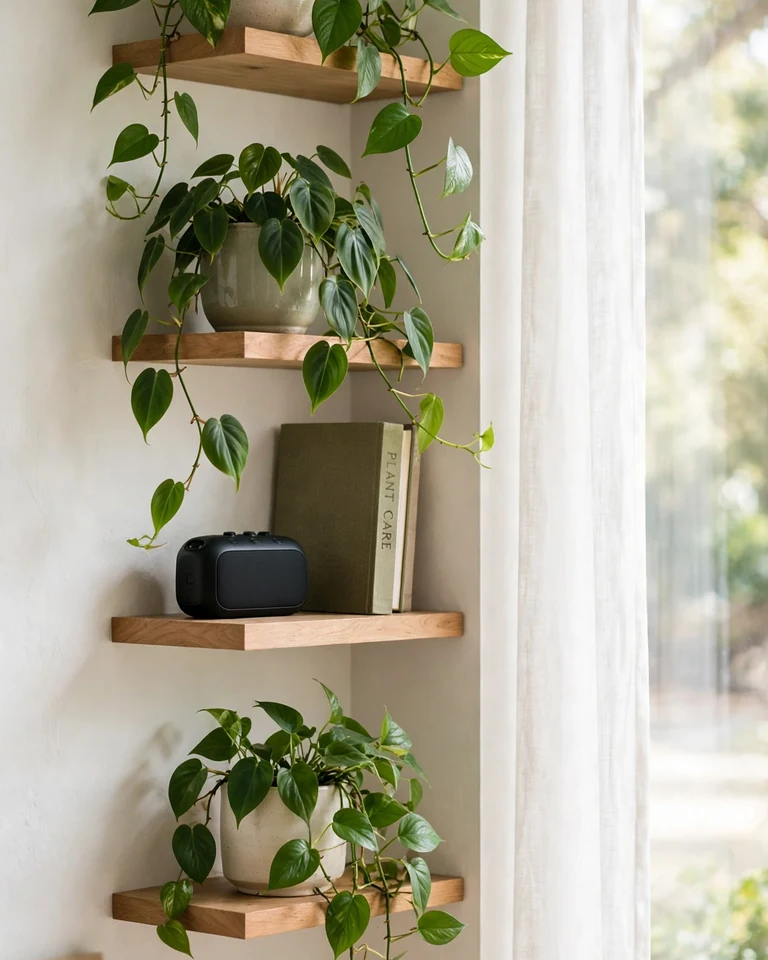
A vertical column of three to four shelves in a home-office corner does something no desk accessory can: it brings life into your eyeline during video calls and long workdays. Mix trailing plants on the top shelf, a small speaker and a book or two in the middle, and a candle or diffuser at the bottom where you can reach it. Plants that tolerate indirect light — pothos, philodendron, snake plants — are the reliable choices.
Space the column shelves 14 to 16 inches apart so plants have room to trail without swallowing the shelf below, and use saucers under every pot. Water damage on a painted shelf shows up as a permanent ring.
How to Style Floating Shelves So They Look Designed, Not Random

Every good shelf display follows the same loose formula. Give each shelf three to five objects with different jobs: something tall (a vase, a leaning frame), a short stack of books, something personal (a photo, a souvenir), something textural (a woven basket, a plant), and optionally a little light (a battery candle or puck light). Group small items on a tray so they read as one unit, repeat two or three colors across the shelf, and leave about a third of each shelf empty — the empty space is what makes the objects look curated.
The final test is the honest one: style the shelves, then live with them for a week. Anything you keep nudging out of the way — a candle that blocks a book, a frame that tips when you grab the remote — is the piece to remove.
Floating Shelf Spacing and Height Rules

Numbers matter more than taste for the actual installation. Use these as starting points, then adjust for what the shelf holds:
- Vertical gap between stacked shelves: 12 to 14 inches as a default. Stretch to 16 to 18 inches when tall vases or plants will sit on the lower shelf; shrink to 10 to 12 inches for bathroom stacks where items are small.
- Lowest shelf height (living room decor): about 56 inches from the floor — roughly eye level for an average adult.
- Above a sofa or desk: 8 to 10 inches above the furniture top.
- Above a kitchen counter: 16 to 24 inches above the counter, depending on shelf depth and what you store there.
- Above the toilet tank: at least 6 inches above the lid.
Anchoring is the part people skip and regret. Shelves over 24 inches long or holding more than 15 pounds should catch at least one wall stud; two studs for anything 36 inches or longer. Drywall anchors are fine for light, short shelves — use toggle-style anchors, not the cheap plastic expanding kind, which loosen under constant load. Check the bracket’s rated weight per foot, not just the shelf’s; a pretty shelf on weak brackets is the classic failure.
Mistakes That Ruin Floating Shelves

- Overloading one shelf with books. Books are heavy. A 36-inch shelf of paperbacks can exceed 30 pounds — spread them across shelves or keep one short stack per shelf.
- Mounting too high or too low. A decor shelf nobody can see properly is decoration nobody enjoys. Eye level for display, reach height for storage.
- Skipping the level. An unlevel shelf is visible from across the room and objects slowly migrate to one end. Level every shelf, twice.
- Ignoring scale. Tiny objects on a long shelf look lost; one oversized vase on a 12-inch shelf looks like a hat. Match object size to shelf length.
- Putting wood shelves above heat. Over a stove or radiator, heat dries and warps wood shelves and cooks anything stored on them.
- Using raw wood in the bathroom. Humidity is the fastest killer of floating shelves — seal them or choose moisture-proof materials.
Floating Shelf FAQs
How far apart should floating shelves be?
A 12-to-14-inch vertical gap is the standard starting point. Go wider (16 to 18 inches) if you plan to display tall vases or plants on the lower shelf, and tighter (10 to 12 inches) for bathroom stacks where items are small. Measure your tallest intended object first, then set the gap.
How much weight can floating shelves hold?
It depends on the shelf, brackets, and how it’s mounted. A standard floating shelf on proper anchors or studs typically holds 15 to 30 pounds, and heavy-duty models with strong brackets can hold more. The bracket rating per foot is the number to check — books are heavier than they look, so when in doubt, spread the load across two shelves.
Can I install floating shelves on drywall?
Yes, using the right anchors. For light, short shelves, heavy-duty toggle anchors work well. For shelves over 24 inches long or anything holding more than about 15 pounds, anchor into at least one stud with long wood screws. Toggle bolts alone can fail under sustained weight, so match the method to the load.
What should I put on floating shelves in the living room?
Give each shelf three to five items with different jobs: something tall (a vase or leaning art), a short stack of books, something personal, a natural texture like a plant or basket, and optionally a small light like a battery candle. Repeat two or three colors from your room and leave about a third of each shelf empty.
How do I keep floating shelves from looking cluttered?
Limit each shelf to three to five objects, group small items on a tray so they read as one piece, repeat a short color palette, and leave roughly a third of every shelf empty. Then live with the arrangement for a week and remove anything you keep bumping or shuffling aside.
Floating shelves are one of the few upgrades that cost little, take an afternoon, and genuinely change how a room feels — as long as you respect the numbers: right height, right gap, anchored into something solid, and styled with restraint. Pick one idea from above, install it this weekend, and let that first well-done shelf convince you to do the rest.