
Design Maintenance: Edit Your Home Before You Buy New Storage
Before you buy a bigger cabinet, another set of matching bins, or a new organizer, try editing what you already own. Design maintenance — the habit of editing a storage space before replacing or expanding it — usually reveals that the storage you have was never the problem. What was inside it was.
This is the short version: empty the space completely, keep only what earns its spot, relocate what lives elsewhere, donate what someone else could use, and toss what is expired or broken. Only after that honest edit should you decide whether you need to buy anything at all. Nine times out of ten, you won’t.
Professional organizers say the same thing in different words. Declutter first, then choose storage based on what remains — because containers bought before the edit are almost always the wrong size, the wrong shape, or solving the wrong problem. Storage should respond to how you actually live, not to the clutter you were avoiding. The guide below walks you through the habit room by room, so every storage decision you make from here on starts from a clear, honest inventory.
A design solution — a shelf, a cart, a closet — is only as good as what is inside it. When my own three-tier rolling cart started overflowing with makeup, hair products, and skincare, my first instinct was the usual one: buy a bigger cart. Instead, I emptied it completely and worked through what was actually in there. Expired samples went in the trash. Shower items went back to the shower, where they belonged. Unused products went into a donation bag. Travel-sized items I actually wanted were gathered into one small box stored elsewhere. The cart itself was fine — it just needed maintenance. That’s design maintenance in a single afternoon.

Why Buying Storage First Almost Always Backfires
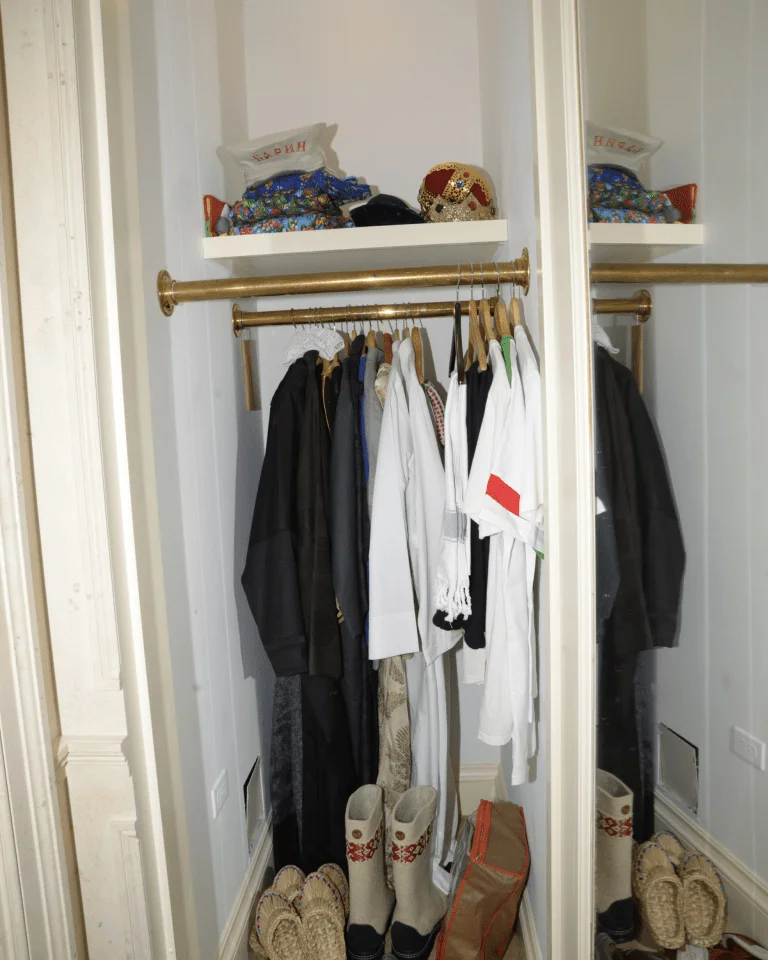
The pattern is familiar: a cluttered cabinet, a trip to the store, a cart full of bins. Everything gets “organized.” The clutter comes back. The bins get blamed. But the bins were not the problem — buying them first was.
When you buy storage before editing, you are designing a system around a number you haven’t calculated yet. You don’t know how much you are keeping, what sizes those things are, or where they will actually live. So you guess — and guesses produce containers that don’t fit the shelf, don’t match your habits, and quietly become one more place to keep things you don’t need.
There is a second, subtler cost. A new bin makes clutter feel handled when it isn’t. Tucking things into an attractive container is not organizing; it’s postponing decisions. Editing is the decision part — and it is the part that actually changes the room. As one professional organizer puts it, decluttering gives you the biggest bang for your buck; only then should you organize.
None of this means storage products are worthless. It means the sequence matters. A good container answers a specific problem: a shallow tray that keeps small items from vanishing in a deep drawer, a clear bin that shows when supplies run low, a basket near the stairs that catches things headed upstairs. You can only identify those problems after you know exactly what you are keeping.
The 4-Question Edit Filter
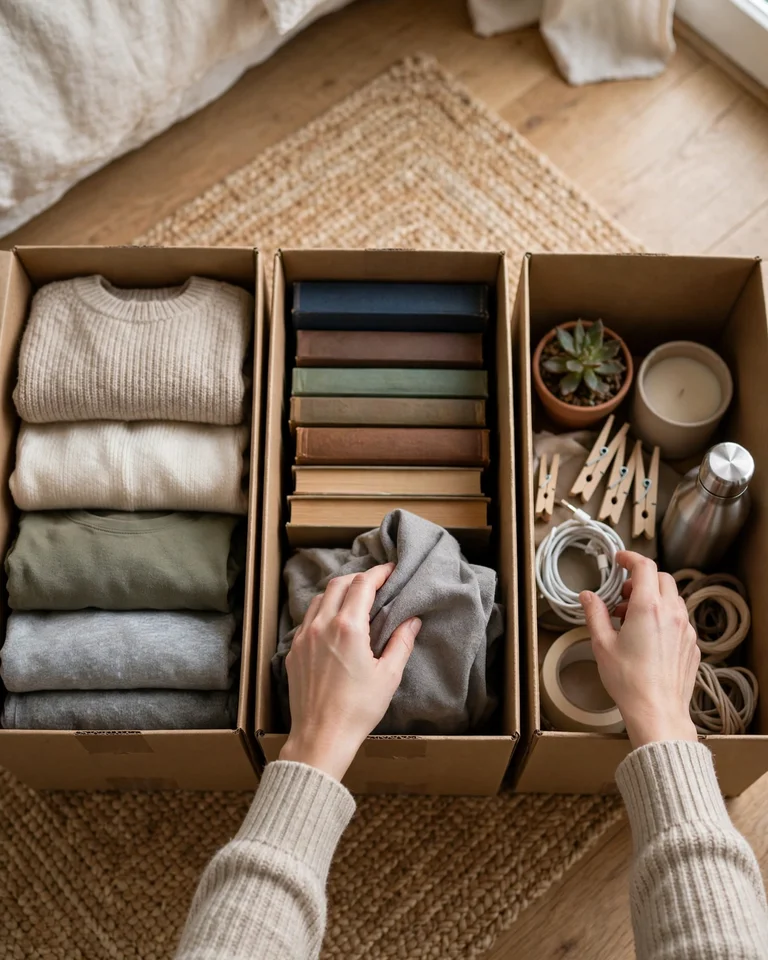
You don’t need a complicated method. When you empty any storage space — a cart, a drawer, a closet shelf — run every item through these four questions:
- Do I use this? If it has been a year since you touched it, it is a candidate to leave — unless it is genuinely seasonal or sentimental, which are their own small categories.
- Does it have a home here? If the honest answer is “not really,” the item probably belongs in a different room. Relocating it counts as editing, not failure.
- Is it expired, broken, or used up? Beauty products, sunscreen, and medicines all expire. Half-finished bottles of things you dislike are clutter with a label.
- Would I buy this again today? If not, you are storing someone else’s taste or an old version of yourself. Let it go.
Sort into four piles as you go: keep, relocate, donate, toss. The “relocate” pile matters more than most people expect — a surprising share of overflowing storage is just things living in the wrong room. And don’t start with sentimental items; save those for last, when you have built confidence on easier decisions.
One more rule that keeps the edit honest: when you are unsure about something, try the limbo box. Put the maybes in a dated box somewhere out of the way. If you haven’t opened it in six months, you have your answer — donate the whole box unopened.
Kitchen: Edit the Pantry Before You Buy Canisters
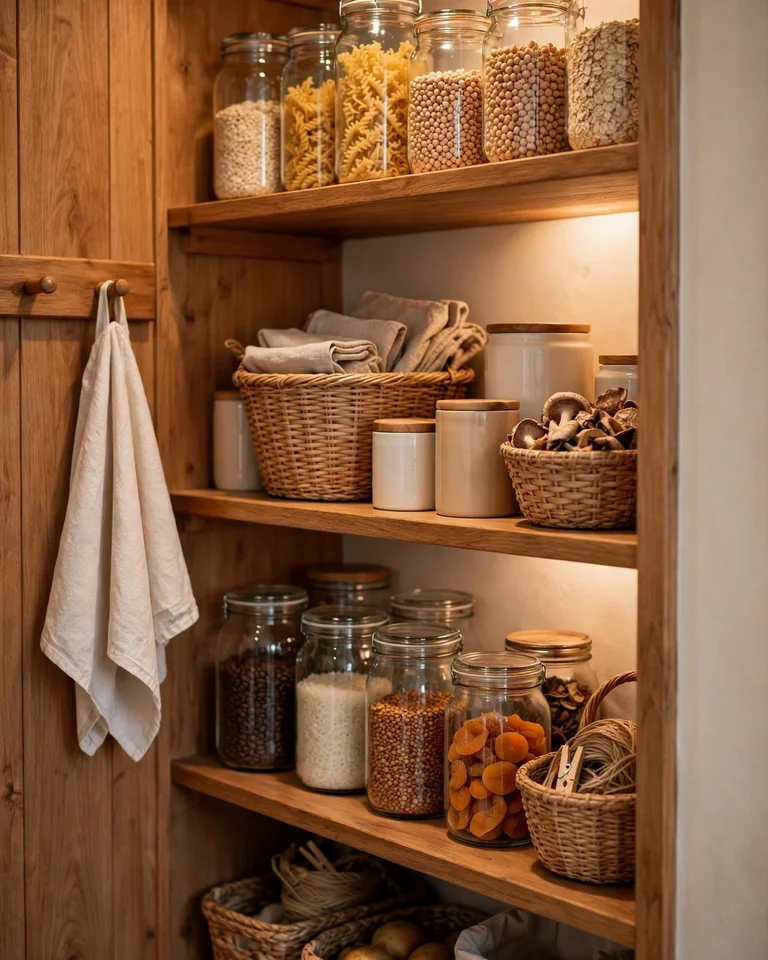
The kitchen pantry is where the buy-storage-first mistake hits hardest. Matching canisters look beautiful on a shelf — but if you decant into them before editing, you are just relocating expired spices and duplicate condiments into prettier packaging.
Empty one shelf or cabinet at a time and check dates. Food expires, spices lose potency (ground spices fade within a year or so), and half-used condiments multiply quietly. Pull out the three mustard bottles and the gadget drawer you never open. That smoothie maker or bread machine you used twice deserves an honest look, not a bigger cabinet.
After the edit, measure the shelves and count what remains — then decide whether you need anything. You may find you need one container instead of four, which saves money and shelf space. When you do buy, match the container to the job: clear bins that show when staples run low, a lazy Susan for deep corners, slim risers so nothing hides at the back.
If the kitchen still feels chaotic after editing, the problem may be placement rather than quantity. Everyday items should live where they are used — coffee supplies near the maker, cooking oils near the stove. A simple kitchen drop zone for mail and keys can also absorb the small daily clutter that otherwise migrates to the counters.
Bedroom and Closet: Edit Clothes Before You Buy Organizers
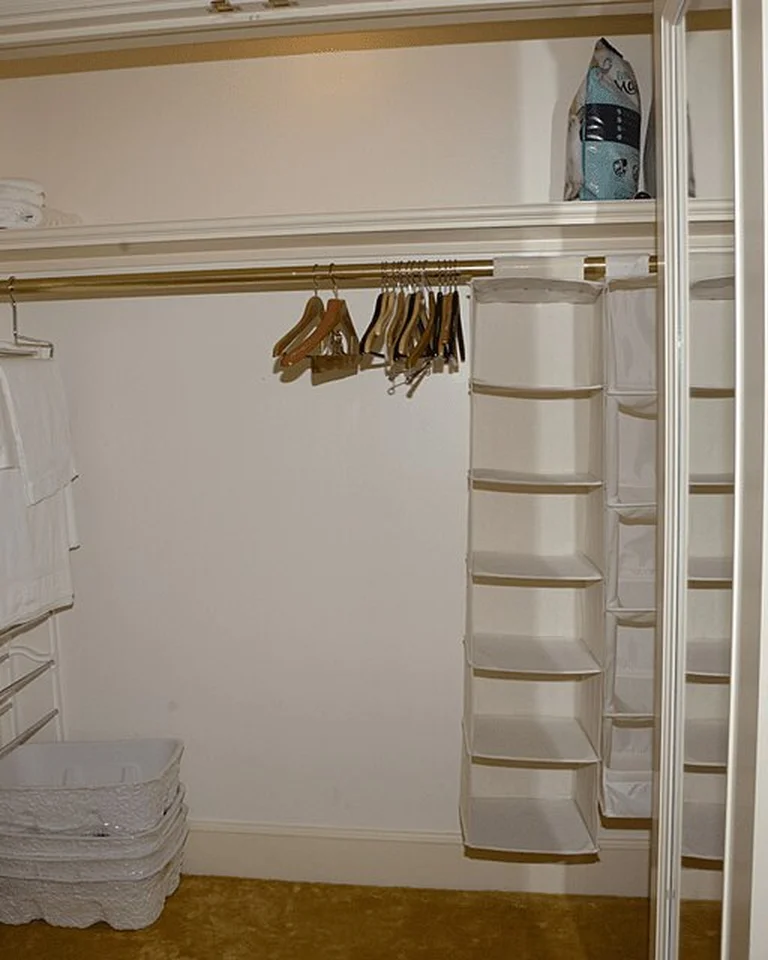
Closets are the classic case of storage bought to avoid editing. Matching hangers, drawer dividers, and shoe racks are all useful — but none of them fixes a closet holding clothes you don’t wear. Edit first.
Work category by category rather than emptying the whole closet at once: tops, then pants, then shoes. The category view is what reveals the truth — eleven black t-shirts, four pairs of jeans that fit the same way, shoes you haven’t worn since last spring. Keep what you actually wear and love; donate the rest while it still has value for someone else.
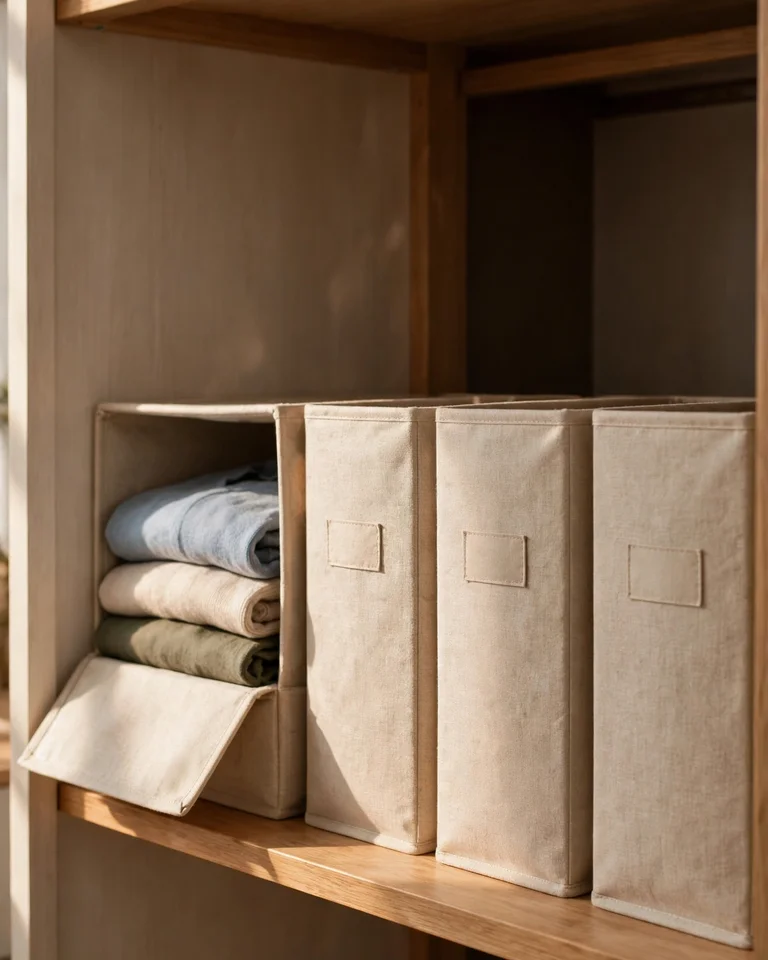
Only after the edit should you look at what the closet needs. Common real needs after a good edit: more hanging space for one category, a single slim drawer for accessories, better lighting so you can see what you own. Notice how modest that list is. Small bedroom closets often don’t need more storage furniture at all — they need fewer things and smarter placement, like under-bed storage ideas for off-season items and small-bedroom storage tricks that hide clutter without new furniture.
Bathroom: Toss the Expired, Then Decide What Fits

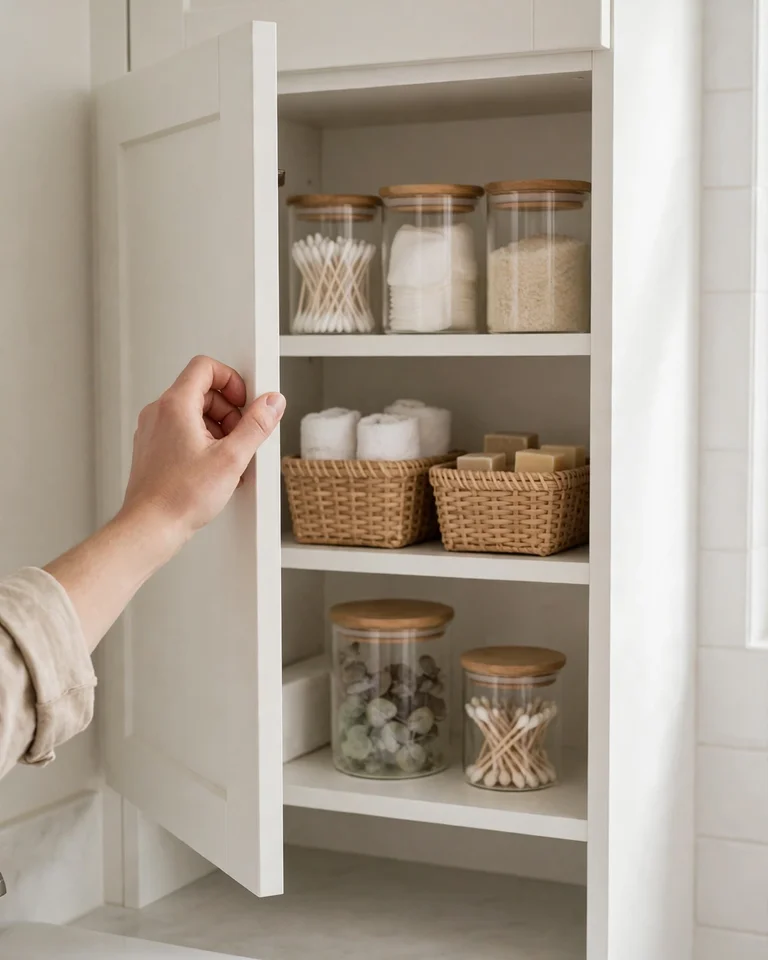
Bathrooms collect products the way junk drawers collect batteries. Half-finished bottles linger for years, sample packets expire, and “backup” shampoo crowds the space you use every morning. This is the room where the edit pays off fastest, because the expired-product question does half the work for you.
Pull everything out and check dates and period-after-opening symbols (the little open-jar icon on the label). Set aside anything no longer suitable for use and dispose of it properly. For products you like, finish one open bottle before starting another. Unopened items you won’t use can be offered to someone who wants them.
Then apply the relocation rule: keep everyday essentials within easy reach, and store backups separately — in a linen closet, under-sink bin, or hall cabinet — so they don’t crowd your morning routine. A rolling cart you already own, edited down to daily items, often works better than a new vanity organizer. If the vanity itself is the constraint, look at bathroom vanity ideas only after you know what actually needs to fit inside it.
Living Room and Entryway: Clear Surfaces Before Adding Bins
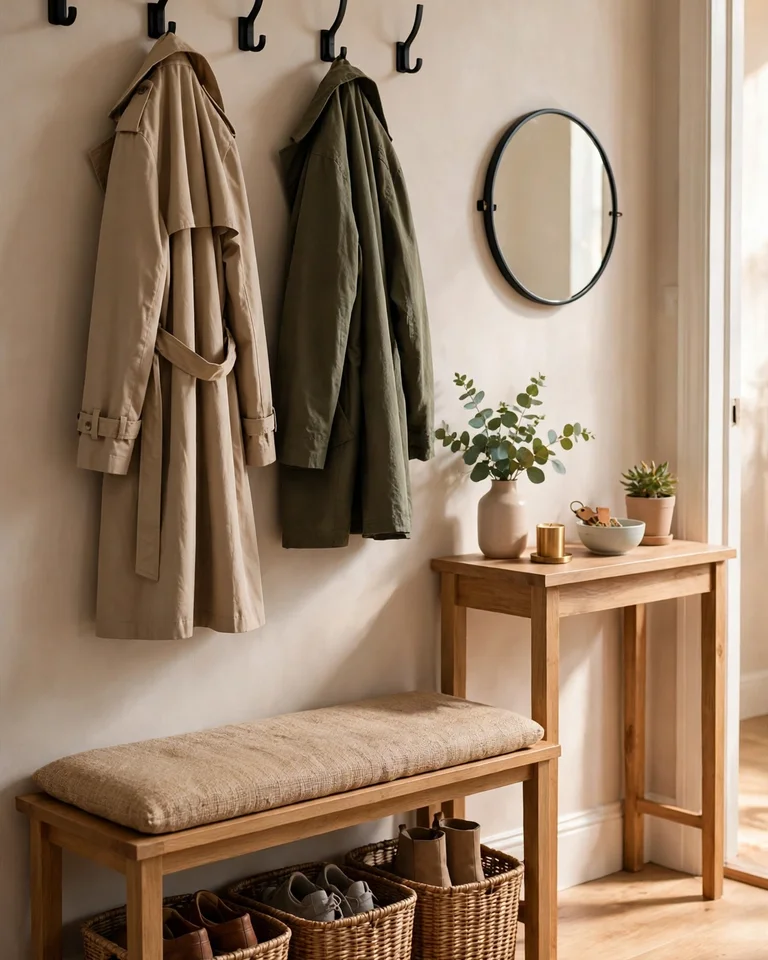
Living rooms and entryways don’t usually suffer from too little storage — they suffer from too many things with no home. Start with flat surfaces: coffee tables, consoles, the entryway table. Clear each one completely, then put back only what belongs there. Old magazines, remotes, stray cables, decor that makes the space feel crowded — be honest about all of it.
The entryway deserves special attention because it is the room that greets you daily. Out-of-season coats, shoes nobody wears, and accessories that migrated there over months create the visual noise that makes the whole house feel cluttered. Edit ruthlessly: this season’s coats and daily shoes only. A bench you already own, edited down to current-season items, solves most entryway problems — and if you are considering new furniture, browse entryway bench ideas with storage with a clear list of what the bench actually needs to hold.
styled with breathing room, or a warm minimalist living room approach with one edited display per surface, keeps visual calm without a single new bin. You can explore floating shelf ideas for every room once you know what the shelves actually need to hold.
How to Keep It Edited: A Simple Maintenance Rhythm
Editing is not a one-time event. Homes refill quietly — samples arrive, gifts accumulate, kids outgrow things, seasons change. Design maintenance works because it is a rhythm, not a project. Keep it small and it will stick:
- The daily reset: ten minutes at night returning things to their homes. A storage system works best when putting an item away is quick and obvious.
- The one-in, one-out rule: when something new comes in, something old leaves. This single habit prevents the slow refill that undoes every big edit.
- The seasonal edit: once per season, pick one storage space — the rolling cart, the pantry, the coat closet — and run the 4-question filter again. Forty-five minutes, four times a year.
- The permanent donation box: keep a bag or box in a closet for things to donate. When it is full, drop it off the same day, before it gets picked through and refilled.
Notice what none of this requires: a shopping trip. The most sustainable storage system is the one you already own, edited regularly. When you do eventually buy a container, you’ll know its exact job — what it holds, where it lives, and why the old setup wasn’t enough. That is the whole difference between storage that works and storage that just hides the problem.
Start today with one crowded space — the cart, the junk drawer, the top bathroom shelf. Empty it, edit it, put back only what earns its spot. You might just find that what you already have is exactly what you need.
Frequently Asked Questions
Should I buy storage organizers before decluttering?
No. Declutter and edit first so you know what remains, where each item will live, and what size or type of container will actually make the space easier to use. Containers bought first are almost always the wrong size because you don’t yet know what you’re keeping.
Do I really need more storage, or do I need to own less?
Most households need to own less. A container solves a storage problem, but it doesn’t solve an excess problem — if your shelves are already full, a new bin just hides the overflow for a while. Try this test: empty the area, sort into keep, donate, and discard, then count what remains. You may find you need one container instead of four.
How do I know if I have too much in a storage space?
If items are hard to see, retrieve, or put away, the space is overfilled or poorly arranged. The fix is to remove unused items before adding another container — if a container must be packed perfectly to fit, it holds too much.
How often should I declutter my home?
A small daily reset plus a more thorough edit every few months works well for most households. On top of that, run one seasonal maintenance session per storage space — about 45 minutes, four times a year — to keep systems from slowly refilling.
What makes a storage system easy to maintain?
Three things: items live near where they’re used, returning an item to its home is quick and obvious, and there’s enough open space that ordinary changes don’t overwhelm the system. Storage should make the next action easier — it can’t create the habit by itself.
How can I create more storage without renovating?
Start by editing, then use overlooked space: unused walls, doors, corners, under-bed areas, cabinet interiors, and narrow gaps. Vertical shelves, slim rolling carts, door organizers, and furniture with hidden storage add capacity without construction — but only buy them after the edit tells you exactly what’s needed.