
12 Shared Sibling Bedroom Storage Ideas That Don’t Eat Floor Space
Two kids sharing one bedroom don’t need more square footage — they need a storage system that gives each child their own zones without touching a single inch of floor space. The 12 shared sibling bedroom storage ideas below are all built on that rule: everything lives under beds, on walls, behind doors, or inside furniture the room already needs. Each idea ends the real conflict — “that’s mine, not yours” — by giving both kids clearly labeled, equal territory.
The approach is simple: zones first, storage second. Before buying a single bin, decide which side of the room belongs to which child and which pieces are shared. When every item has an owner and a home, the daily cleanup mostly runs itself. Our shared sibling bedroom ideas guide covers the layout and design side of the room — this article goes deep on the storage systems that keep it livable. For more small-footprint thinking, these small bedroom storage ideas that hide clutter apply the same hidden-inches logic.
1. Split the Closet Into Two Exact Halves

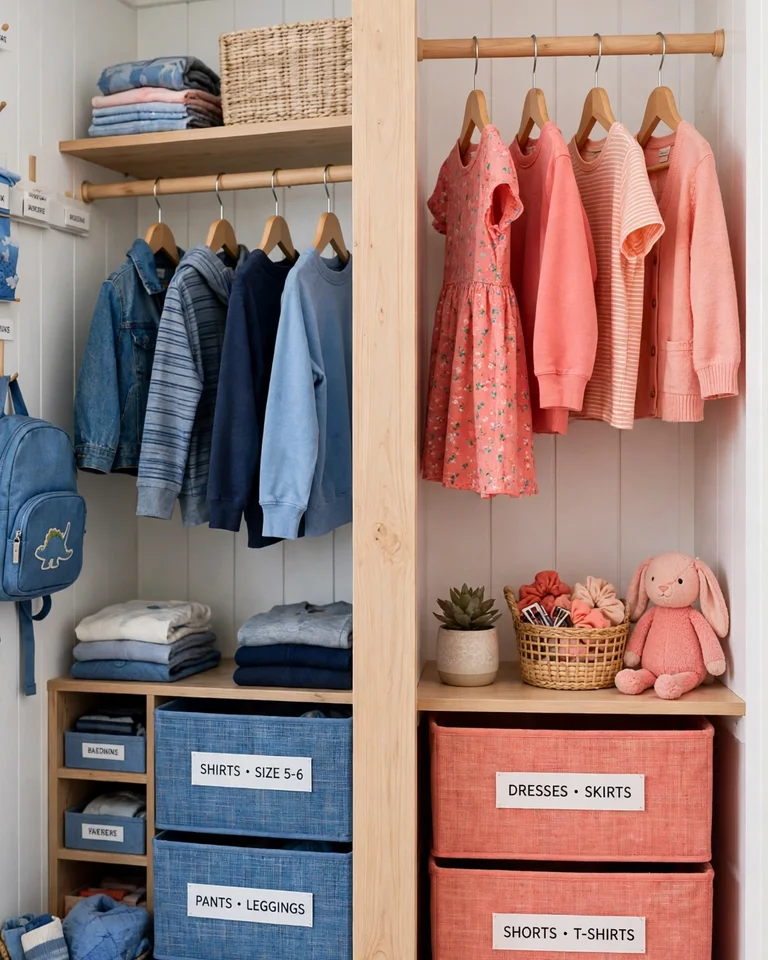
If one closet serves both kids, the first move is a visible, non-negotiable split: half the rod, half the shelf space, per child. Install a second (lower) rod — kids’ clothes are short, so two rods fit in the height one adult rod would take — and let each child hang on their side. A strip of colored tape down the middle of the shelf, or a slim vertical divider, makes the boundary obvious at a glance.
Why it works: most closet fights start because the boundary was invisible. An exact, visible split removes the daily “you’re on my side” argument. Tip: let the younger child take the lower rod. It matches their reach, and the older child gets the “grown-up” top rod as the trade.
2. Color-Code Everything So “Whose Is Whose” Is Instant

Give each child a color and apply it ruthlessly: bins, labels, hangers, even laundry baskets. One kid is blue, one is coral, and there’s never a question about whose bin is whose. Use picture labels for kids who can’t read yet (a shoe drawn on the shoe bin beats a word they’ll ignore) and word labels for older kids. A shared color system also makes the room look coordinated instead of chaotic.
Why it works: color is faster than reading and survives the toddler years. Tip: avoid clear bins for mixed kid stuff — visible jumble looks messy fast; solid colored bins hide the chaos while the label explains the contents.
3. Give Each Child Their Own Under-Bed Roll-Out Drawers
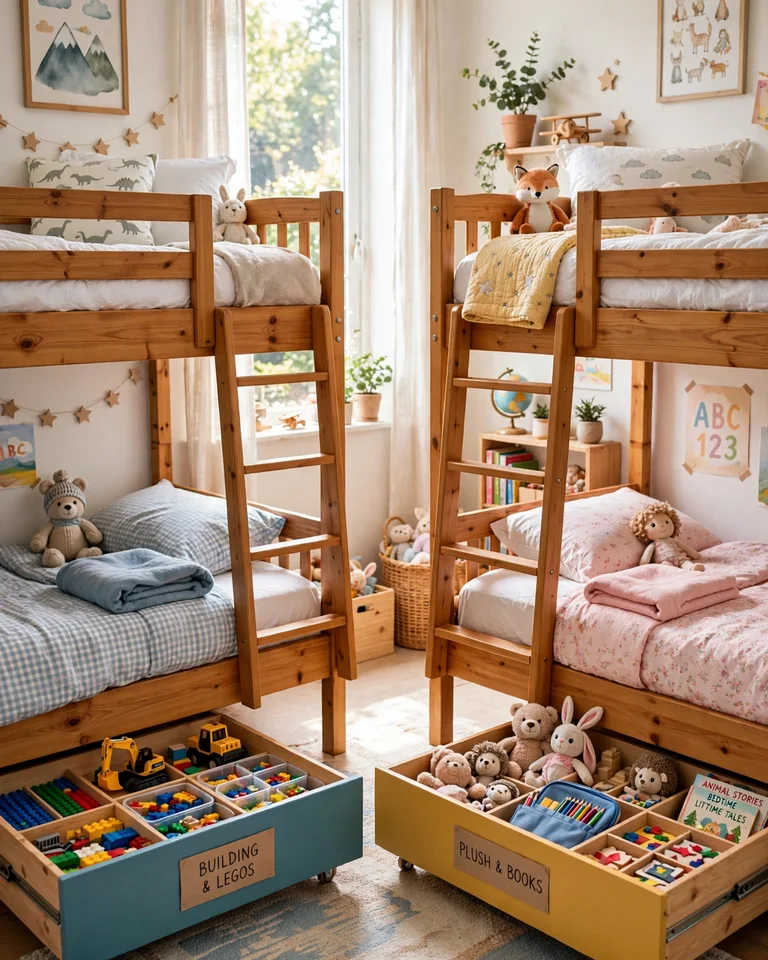
The space under each bed is the room’s biggest hidden asset, and in a shared room it should be divided exactly like the closet: one drawer unit per child, labeled with their color. Low drawers on casters work even under bunk beds with modest clearance — measure first (clearance minus wheel height), then buy or build to fit. One drawer holds folded clothes, the other holds toys, and neither kid’s things ever migrate into the other’s space.
Why it works: under-bed storage adds a whole dresser’s worth of capacity with zero footprint, and the one-unit-per-child rule keeps it fair. Tip: if your beds have very low clearance, flat fabric boxes on furniture sliders achieve the same thing. For more ways to use this space, see our under-bed storage ideas.
4. Fill the Dead Space Between the Beds With a Slim Tower
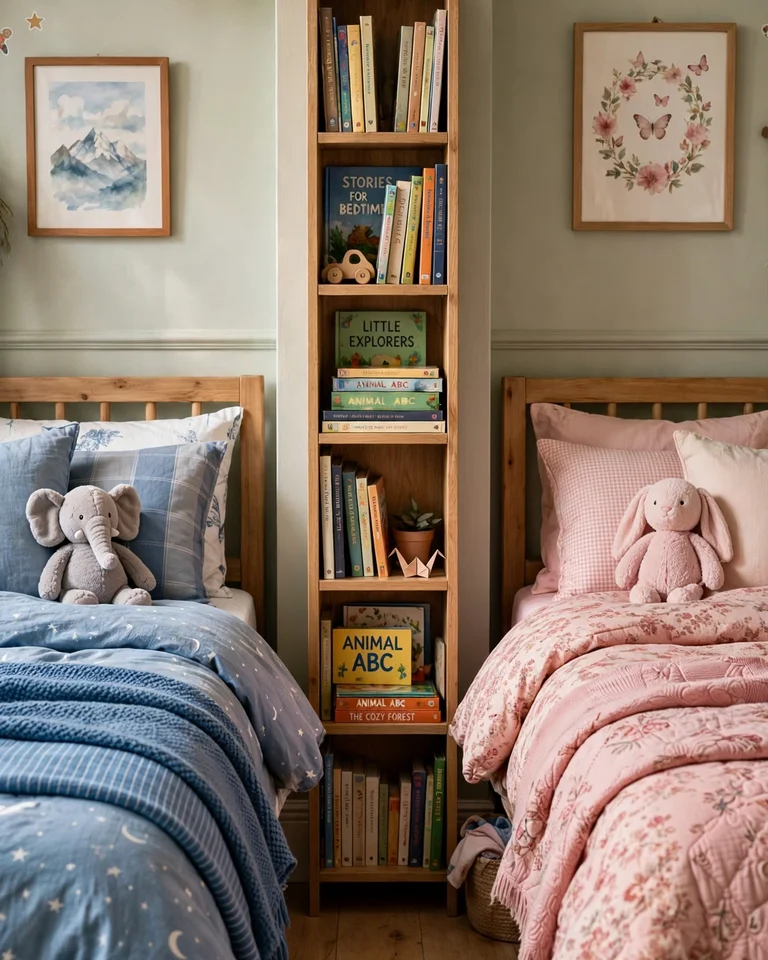
The gap between two beds is almost always wasted space. A slim vertical shelf — 6 to 10 inches deep, 40 to 60 inches tall — turns it into the room’s most-used spot: each child gets their own shelf level for bedtime books, a water bottle, and a lamp on top. It doubles as a shared nightstand and a soft boundary between the beds.
Why it works: dead space becomes personal storage, and the tower subtly defines each child’s side. Tip: anchor it to the wall — a tall, slim shelf in a kids’ room is a tipping risk. These narrow bedroom ideas for skinny rooms use the same dead-space-first logic.
5. Hang an Over-the-Door Organizer Behind Each Door
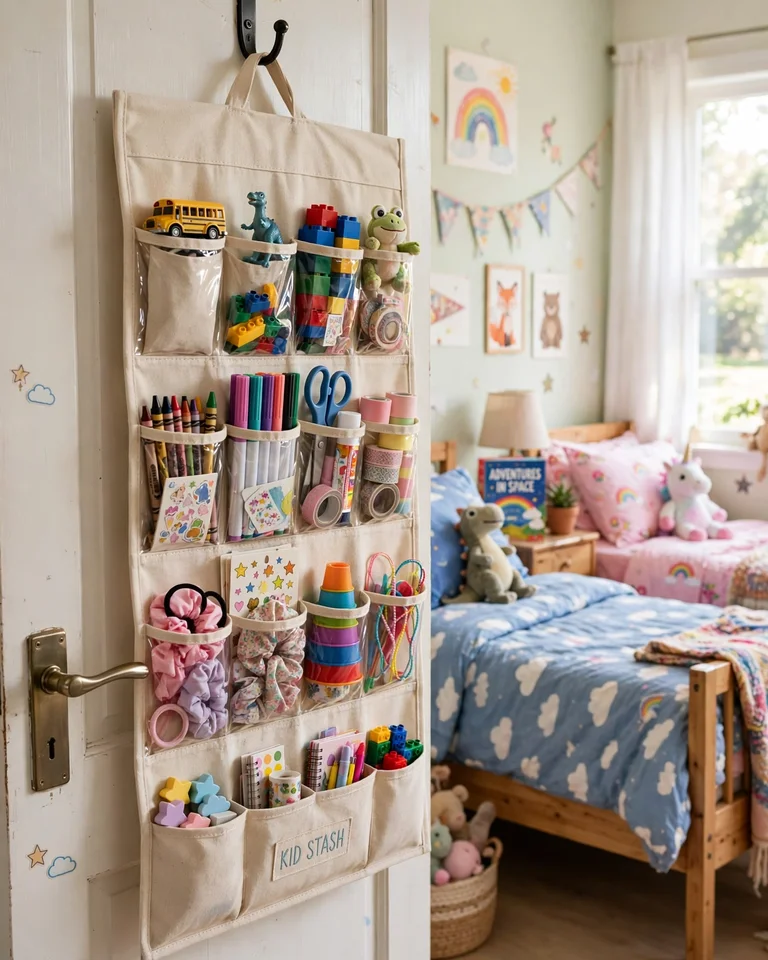
The back of the bedroom door (and the closet door) is free vertical storage most families ignore. A fabric organizer with clear or labeled pockets swallows small toys, art supplies, hair accessories, and the hundred tiny things that otherwise live on the floor. Assign one organizer per child so small belongings stay separated — or give each child half the pockets in their color.
Why it works: door-back storage is invisible from inside the room, so the room reads clean even when the pockets are full. Tip: choose organizers with reinforced stitching and padded hooks — cheap vinyl tears at the pockets within months and scratches the door.
6. Turn Each Headboard Into a Mini Storage Wall

A headboard with built-in shelves, cubbies, or a bookcase-style panel gives each sleeper their own bedside real estate without a nightstand eating floor space. Books, a nightlight, headphones, and the bedtime essentials live in the headboard; the floor beside the bed stays clear for play. If buying new headboards isn’t in the budget, a narrow wall shelf mounted at headboard height achieves the same thing.
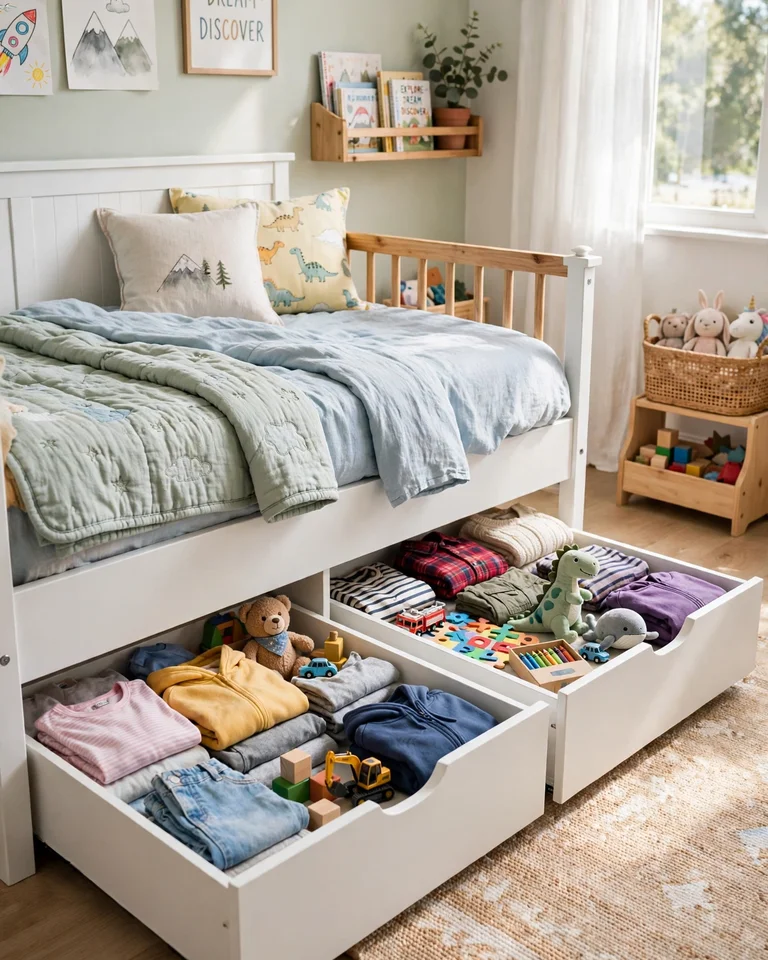
Why it works: the headboard wall is already furniture — making it storage is pure bonus capacity. Tip: add a small rail or lip to shelf edges so books and bottles don’t migrate off during the night.
7. Add a Hanging Closet Organizer With One Column Per Child

When the closet has no built-ins and you can’t renovate (hello, rentals), a dual-column hanging organizer does the work of a dresser: two vertical stacks of canvas bins, one per child, hanging from the single rod. Folded clothes, underwear, and socks get their own labeled cubby; shoes line the bottom. Choose canvas over thin polyester — it won’t sag into a mess after a month.
Why it works: it creates per-child drawer space in minutes with zero drilling. Tip: put the reinforced hang loop version on your must-list — that’s where cheap organizers fail first.
8. Mount Floating Cubbies at Each Child’s Own Height

Wall-mounted cube shelves give each child a display-and-storage zone that costs zero floor space — and mounting them at different heights is a quiet fairness win: the younger kid’s cubbies sit lower, the older kid’s higher, so each one can actually reach and use their own shelves. Paint the cubes to match the wall trim and cheap MDF starts reading like a built-in.
Why it works: height-matched storage is storage kids will actually use (and put back into). Tip: for rooms with low ceilings, keep shelves shallow — deep shelves overhead make a small room feel like it’s closing in. Our low-ceiling bedroom storage ideas go deeper on this.
9. Put a Divided Storage Bench at the Foot of the Beds

A storage bench at the foot of the beds (or one per bed, if space allows) is a triple win: seating, a step up for little kids, and a deep compartment for bulky toys, costumes, or bedding. Divide the inside with a simple panel — one side per child — and label the lid halves in each child’s color. Top it with a cushion and it becomes the room’s reading spot too.
Why it works: one piece of furniture does three jobs and holds the stuff that never fit in drawers. Tip: choose a bench with a slow-close or soft-close lid — slammed lids and small fingers are a bad combination. These modern farmhouse bedroom storage ideas show how to style a bench so it looks like decor, not just a box.
10. Shrink Off-Season Clothes With Under-Bed Vacuum Bags
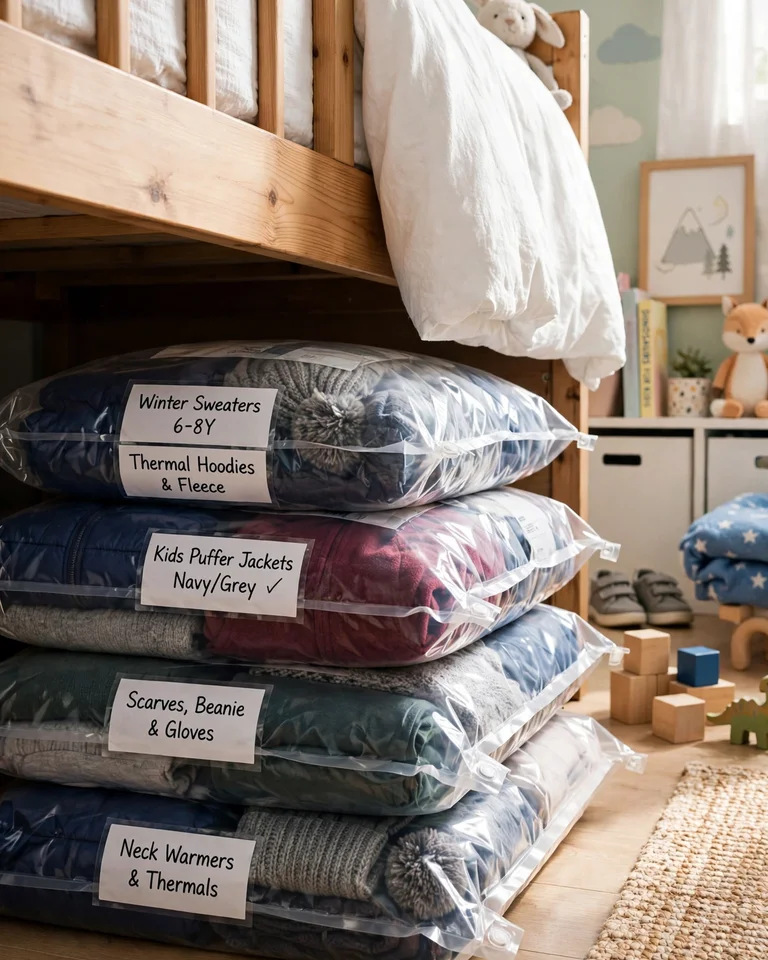
Two kids’ winter coats, sweaters, and boots will swallow a shared closet whole. Vacuum compression bags flatten an entire season’s worth of bulky clothes into a stack a few inches thick that slides under either bed. Use clear bags so you can see what’s inside, label each by season and child, and keep the current season’s clothes in the closet where they’re reachable.
Why it works: it removes the single biggest space-eater — bulky off-season clothes — from the active storage zones. Tip: buy thick, double-zippered bags; cheap ones lose their seal by month two and re-inflate under the bed.
11. Run a Toy Rotation System, Not a Toy Avalanche
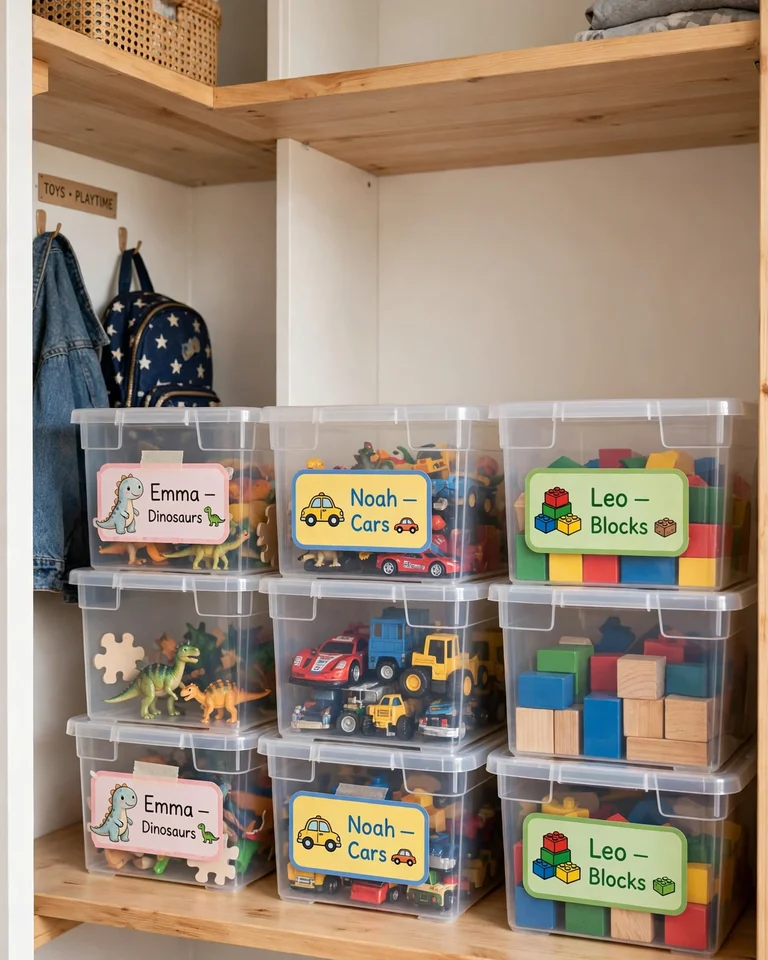
Here’s the hard truth from families who’ve tried everything: unlimited toy storage just fills with clutter. The system that actually works is rotation — keep one bin of toys out per child and store the rest in labeled, stackable bins on a closet shelf or under the bed. Every few weeks, swap a stored bin in and an active one out. The room stays manageable, and the “new” toys get genuine excitement.
Why it works: less visible stuff means less to clean, less to fight over, and faster cleanups. Tip: let each child choose which bin comes out next — controlled choice makes the system feel like theirs, not a rule imposed on them. More clutter-hiding strategies live in our small bedroom storage ideas.
12. Create a School-Paper Command Center Per Child
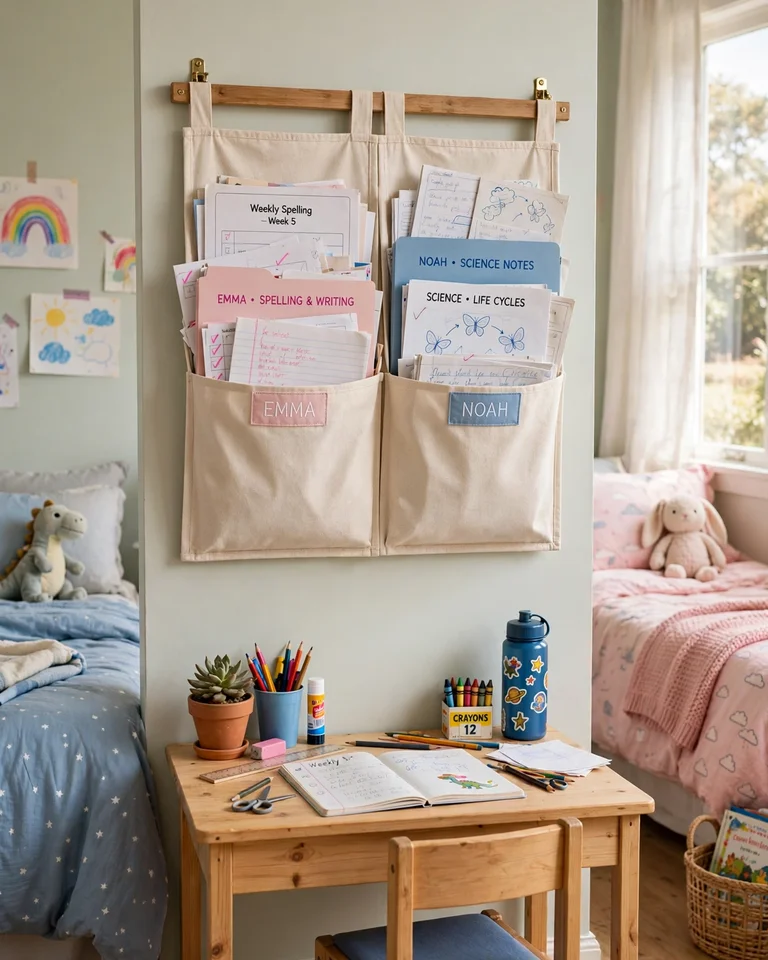
School papers, permission slips, and art projects are the invisible clutter that buries shared rooms. A slim wall-mounted file holder with one pocket per child — mounted near the desk or by the door — gives every paper a landing spot the day it comes home. One pocket per kid, labeled, and a simple rule: papers live in the pocket or they leave the house (recycle bin, fridge, grandma’s).

Why it works: it stops paper sprawl at the source instead of requiring a weekly purge. Tip: do a 5-minute pocket clear-out together every Sunday — it becomes a routine, not a chore.
Frequently Asked Questions
What are the best storage solutions for small shared bedrooms?
The highest-impact moves are under-bed roll-out drawers (one unit per child), wall-mounted cube shelves at each child’s height, over-the-door organizers for small items, and a split closet with a visible per-child boundary. Vertical and hidden storage — not more floor furniture — is what keeps a small shared room livable.
How do you keep two kids’ belongings separate in one shared closet?
Divide the closet into two exact halves with a visible boundary (tape line or divider), install a lower rod so each child has reachable hanging space, and give each child their own labeled bins or drawers in their assigned color. Shared drawers cause most of the conflict — per-child zones with labels end it.
How do you organize a shared kids’ room so it actually stays tidy?
Color-code everything per child, label every bin (picture labels for pre-readers), run a toy rotation instead of storing everything at once, and give each child one piece of storage that is entirely theirs. Involve the kids in setting up the system — rooms they helped organize stay organized far longer.