
12 Two-Tone Kitchen Hardware and Lighting Pairings That Actually Work
Yes — mixing your kitchen’s hardware and lighting finishes works, and it’s one of the fastest ways to make a kitchen look custom instead of builder-grade. The rule is simple: give every finish a job. Let the hardware anchor (it repeats across every cabinet door) and let the lighting accent (it pulls the eye upward). Repeat each finish at least twice so it reads intentional, cap it at two or three metals total, and match undertones — warm with warm, cool with cool. Below are 12 pairings that follow those rules and look right in real kitchens.
Before you buy anything, hold finish samples against your cabinets in your own kitchen light. Undertones shift dramatically between showroom fluorescents and 2700K evening light, and a “brass” that looked perfect in the store can skew orange at home. If you’re refreshing on a budget, new hardware and one statement light are the highest-impact swap in a budget kitchen remodel — far cheaper than new cabinets.

1. Brushed Brass Knobs + Matte Black Cone Pendants

The classic for a reason: brass knobs warm up white or cream cabinetry, while cone pendants in matte black ground the island and keep the look from going too sweet. Echo the brass once more with the faucet so the pendants don’t look like an afterthought. This pairing is especially forgiving in white kitchens that need to feel warm, not sterile.
2. Matte Black Bar Pulls + Antique Brass Bridge Faucet

Flip the ratio: let matte black do the heavy lifting on every drawer and door, then make the faucet the jewelry. A bridge faucet in antique brass becomes the focal point of the whole wall, and a pair of brass-shaded pendants repeats the metal so it reads deliberate. Black hides fingerprints; brass adds the soul.
3. Polished Nickel Cup Pulls + Black Seeded-Glass Pendants
Polished nickel reads crisp and cool, which makes it the right partner for navy, forest green, or charcoal cabinets — see how it behaves on dark green cabinetry before you commit. The black seeded-glass pendants add texture and contrast without introducing a third undertone, since nickel and black are both cool-leaning.
4. Champagne Bronze Hardware + Matte Black Gooseneck Sconces

Champagne bronze is brass’s softer, less yellow sibling — it flatters shaker cabinets and warm whites without shouting. Flank the range or the sink window with matte black gooseneck sconces for a modern-farmhouse feel. Keep the sconce shades small; oversized black fixtures can visually lower an 8-foot ceiling.
5. Satin Brass Knobs + Black Metal Dome Pendants

Dome pendants are workhorses over islands because they throw focused task light straight down. In black, they anchor a long island; satin brass knobs on the perimeter cabinets keep the lower sightline warm. Match the dome interior to the brass if you can — a brass-lined shade bounces warm light onto the countertop.
6. Gunmetal Pulls + Brushed Brass Globe Pendants
Gunmetal is black’s softer cousin — same grounding effect, less stark against light cabinets. Brushed brass globes warm it right back up, and the pairing sings next to walnut or white oak, as in many natural wood kitchen cabinets. This is the pairing to choose when straight black feels too harsh for your palette.
7. Matte Black Knobs + Polished Chrome Linear Pendant

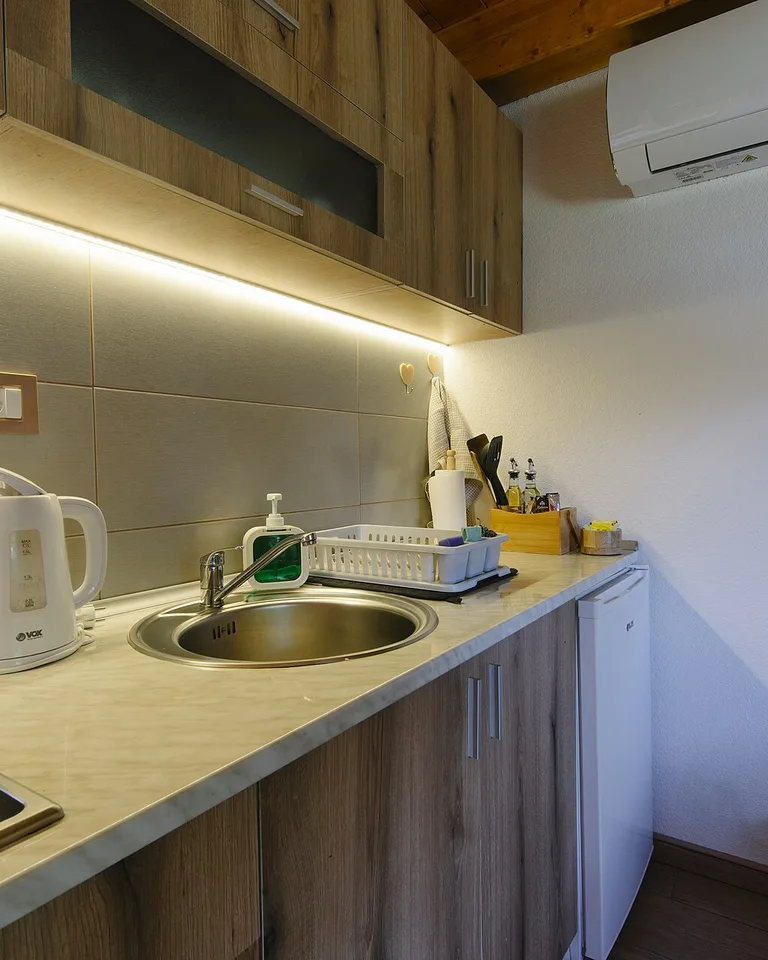
For a long, narrow island, one linear pendant beats three small ones — fewer visual interruptions. Polished chrome’s cool shine pops against matte black knobs, and the whole combo leans modern without feeling cold, provided the cabinets are a warm white rather than blue-white. In one-wall kitchens, a linear fixture also reinforces the room’s long sightline.
8. Oil-Rubbed Bronze Hardware + Aged Brass Schoolhouse Pendants

Oil-rubbed bronze carries brown undertones that pull in brass’s warmth, so the two finishes feel related rather than competing. If black-and-brass reads too high-contrast for you, this is the softer route to the same layered look. Aged brass schoolhouse pendants add a vintage note that suits traditional and transitional kitchens.
9. Brushed Gold Bar Pulls + Matte Black Lantern Pendants

Brushed gold bar pulls on white shaker cabinets are a timeless combination — the gold keeps the white from feeling flat. Matte black lantern pendants add shape and a hint of geometry over the island. Keep the lantern scale generous (roughly one-third the island’s width per pendant) so they read as intentional, not lost.
10. Polished Chrome Pulls + Black Cage Pendants
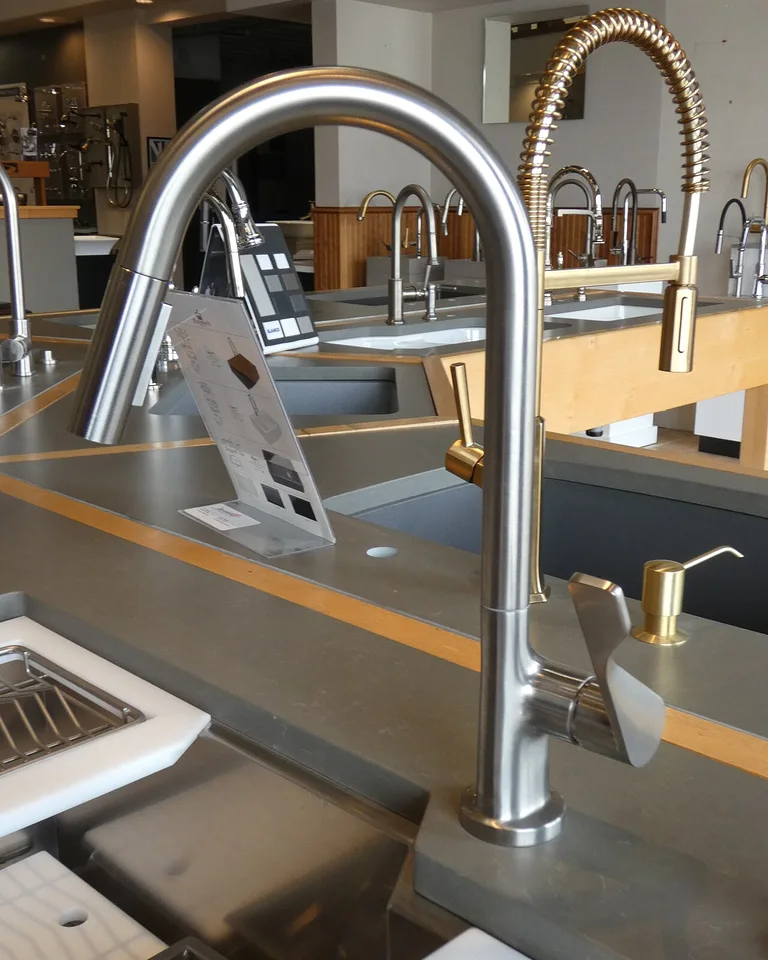
Chrome keeps an industrial-leaning kitchen bright and reflective; black cage pendants add texture and edge without darkening the room, since the open cage lets light through. This pairing works best with flat-panel cabinets and concrete or butcher-block counters — ornament elsewhere would fight the cage geometry.
11. Aged Brass Latches + Black Track Lighting

On glass-front uppers, skip knobs entirely and use aged brass latches — they read as furniture, not cabinetry. Overhead, black track lighting gives a gallery feel and lets you aim light exactly where glassware needs it. This is a strong solution for galley kitchens where pendants would crowd the walkway.
12. Copper Cup Pulls + Matte Black Dome Pendants

Copper’s pink-orange warmth is unmistakable, so give it room: use it on cup pulls and one more touch (a copper pot rail, say), then let matte black domes handle the lighting. The artisan feel pairs naturally with butcher-block counters and handmade-look tile. Seal unlacquered copper if you want the shine to stay; let it patina if you like the lived-in look.

The 3 Rules That Make Any Pairing Work
Repeat each finish at least twice. One brass faucet in an otherwise all-black kitchen looks like a mistake; a brass faucet plus brass pendants looks like a plan. Don’t mix near-twins. Nickel and chrome, or brass and gold, are too close — side by side they read as a mismatch rather than a mix. Match the design language, not just the metal. A minimalist brass faucet wants sleek, simple black hardware, not ornate bronze pulls; the silhouette matters as much as the finish. These same principles carry into open-concept kitchen upgrades, where the kitchen’s metals need to converse with the living area’s finishes too.
Frequently Asked Questions
Can you mix different metal finishes in a kitchen?
Absolutely — mixed metals are a hallmark of current kitchen design. The key is intention: stick to two, or at most three, finishes, and repeat each one at least twice (hardware, faucet, lighting) so every finish looks chosen rather than accidental.
Should my cabinet hardware match my faucet?
It doesn’t have to match, but it should coordinate. Treat the faucet as the jewelry of the kitchen — it’s the best place to introduce your accent metal. If your hardware is matte black, a brushed brass or gold faucet makes a beautiful focal point without clashing.
What is the most forgiving hardware finish?
Matte black. It works with virtually any cabinet color and appliance finish, hides fingerprints well, and suits modern, industrial, and transitional kitchens alike. It’s the safest anchor finish when you’re mixing in a second metal.
What hardware finish goes with two-tone cabinets?
Use one hardware finish across both cabinet colors — that’s what ties the two tones together. Brass or gold suits navy, green, and wood pairings; matte black works with white-and-wood or white-and-grey; brushed nickel or chrome suits cooler pairings like white and grey.