
12 Natural Wood Kitchen Cabinet Ideas That Look Fresh, Not Dated
Natural wood kitchen cabinets are back in a big way — but the version winning in 2026 looks nothing like the honey-oak kitchens of the early 2000s. Today’s take is lighter, flatter, and quieter: white oak and walnut in slab or simple shaker fronts, matte finishes, and slim, modern hardware. If you’re wondering how to make wood cabinets feel current, the short answer is this: keep the wood tone light and honest, pair it with one strong contrast (black hardware, pale stone, or painted uppers), and let the grain do the talking.
The reason wood keeps coming back is simple. It ages well — developing patina instead of just wearing out — and its natural grain adds texture that keeps even a minimalist kitchen from feeling flat. Unlike a painted finish that shows every chip, a natural wood finish forgives daily life. Below are twelve ideas that show how to use natural wood kitchen cabinets so they read fresh and modern, never dated.
1. White Oak Slab-Front Cabinets With Slim Brass Pulls
Flat-panel white oak doors are the backbone of the modern wood kitchen. The grain is fine and calm, the color is a pale honey that brightens the room, and the slab profile keeps sightlines clean. Slim brass pulls add just enough jewelry without interrupting the wood’s quiet rhythm.
Why it works: White oak sits in the sweet spot between warm and neutral. It reads warmer than painted white cabinets but lighter than walnut, so it pairs with almost any countertop and floor.
Tip: Keep pulls long and horizontal on drawers, short and vertical on doors. Mixed orientations make slab fronts look intentional rather than bare.
2. Rift-Sawn Oak in a Natural Matte Finish
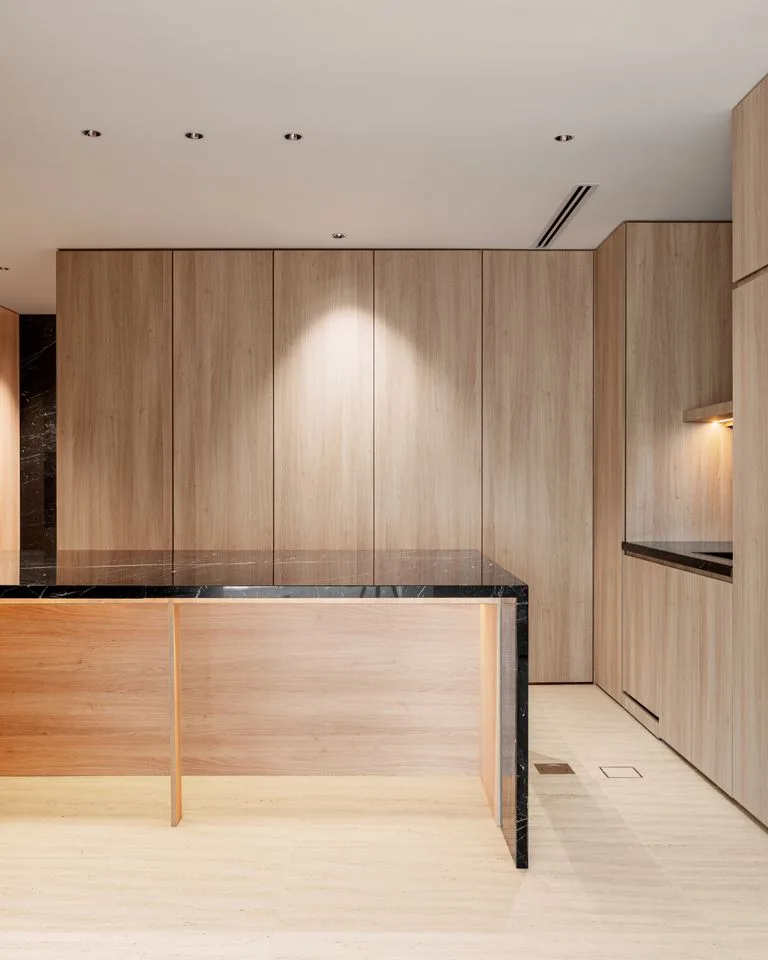
Rift-sawn oak is cut so the grain runs in straight, vertical lines — no cathedral arches, no busy patterns. In a matte oil finish, it looks almost like a fine wood panel wall, which is exactly why designers love it for contemporary kitchens. The effect is tailored, architectural, and calm.
Why it works: Straight grain reads as modern; the matte finish absorbs light instead of reflecting it, so the cabinets feel soft rather than shiny.
Tip: Matte finishes show fewer fingerprints than gloss, but they need periodic re-oiling. Ask your cabinet maker about a hardwax oil — it’s easy to spot-repair.
3. Walnut Slab-Front Cabinets With Brass Bar Pulls
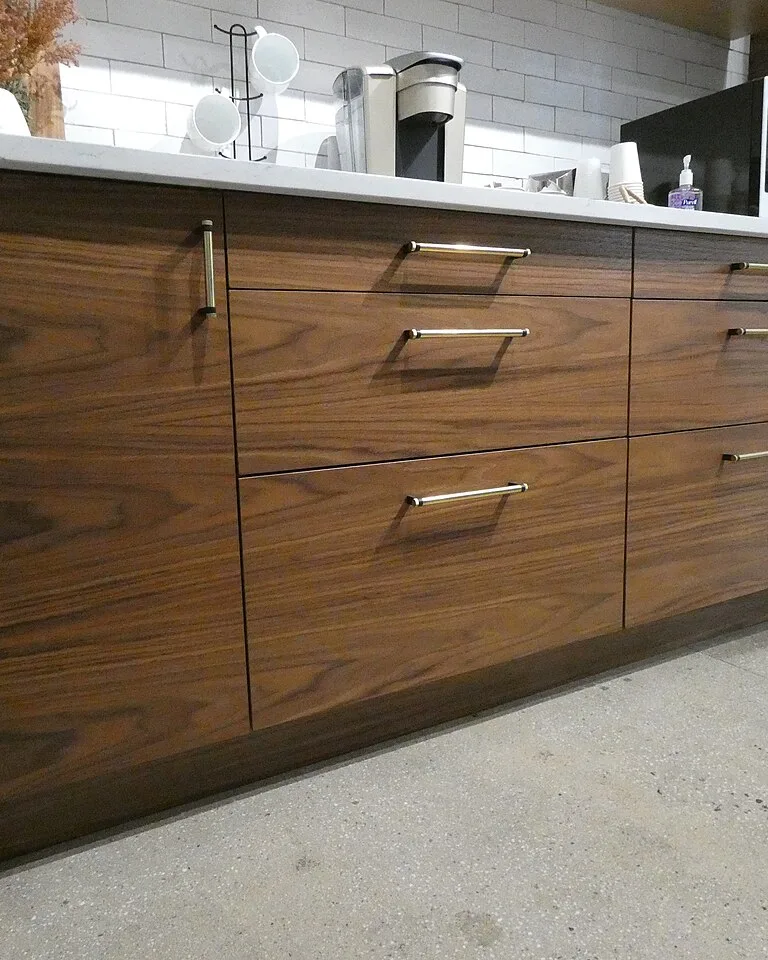
Seen up close, walnut is all about the grain — deep chocolate browns with long, straight figuring that looks almost like slow-moving water. In flat slab fronts, that grain becomes the entire design statement; no panel molding or fussy detailing needed. Brass bar pulls warm it up and keep the dark wood from reading cold or corporate. If you’re planning open-concept kitchen upgrades, a walnut run like this anchors the kitchen side of the room without introducing a painted color that could date the space.
Why it works: Dark wood plus warm metal is a classic pairing because brass picks up the amber undertones in the walnut, and the long horizontal pulls echo the grain’s direction.
Tip: Match the faucet finish to the pulls. Repeating the brass at the sink ties the whole run together.
4. Light Oak Cabinets With Matte Black Hardware
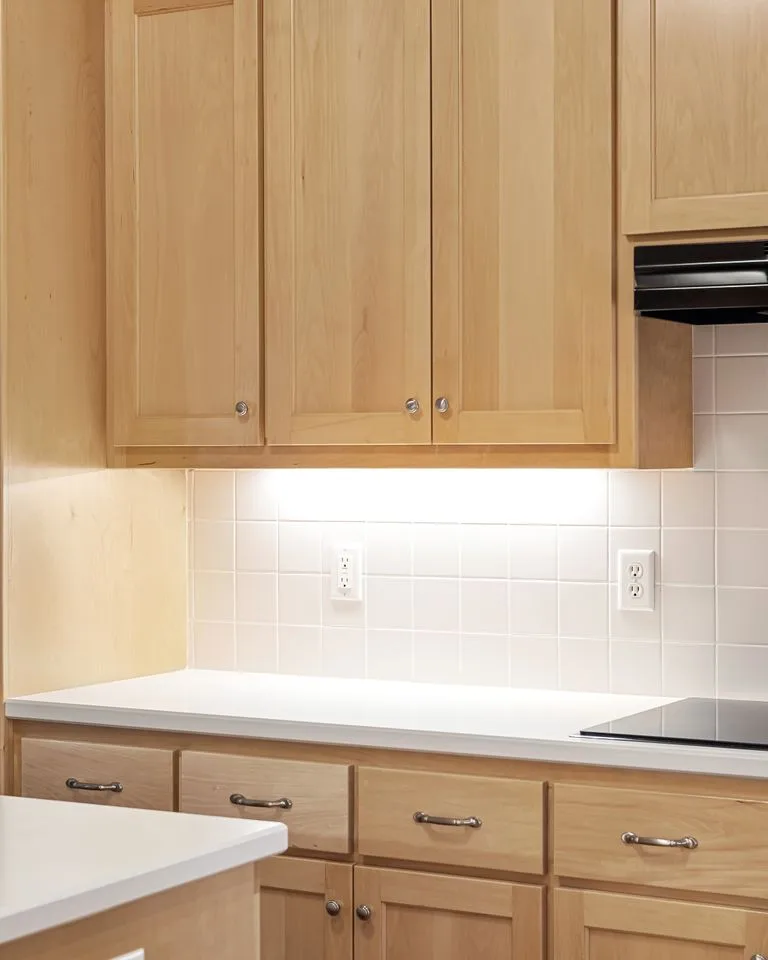
Light oak plus matte black is the fastest way to drag wood cabinets into the present. The black pulls and faucet act like punctuation marks against the pale wood — crisp, graphic, and modern. This is the combination to choose if your existing oak cabinets feel dated: new black hardware alone can change the whole read of the room.
Why it works: High contrast between hardware and wood makes the grain look more deliberate and the whole kitchen more tailored.
Tip: Repeat the black at least three times (hardware, faucet, pendant or light fixture) so it reads as a scheme, not an afterthought.
5. Natural Maple Cabinets With Warm White Walls
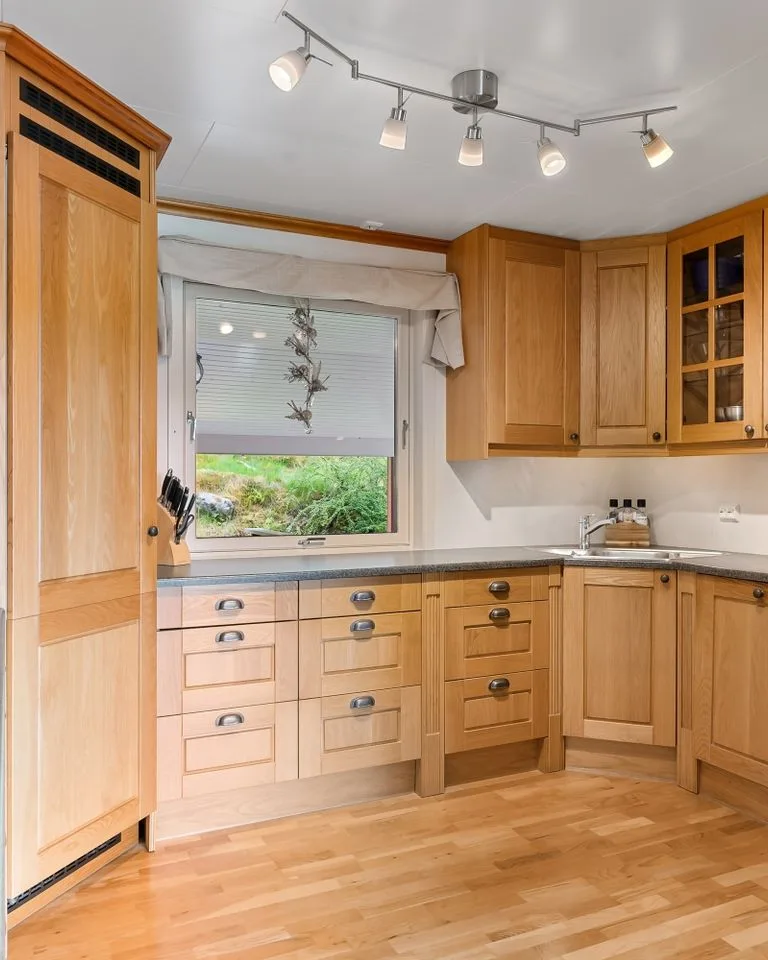
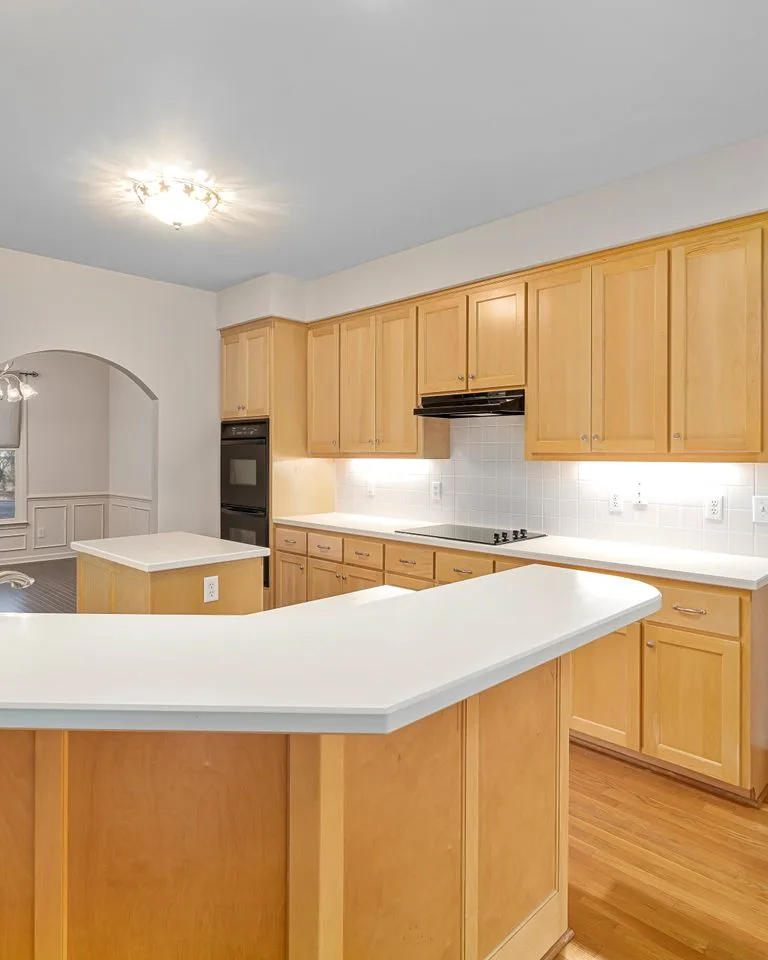
Maple is the quietest of the cabinet woods — fine, even grain in a pale, creamy tone. Against warm white walls, it creates a kitchen that feels bright without the starkness of an all-white space. This is a good choice for north-facing kitchens or smaller rooms where dark wood would swallow the light.
Why it works: Maple’s subtle grain won’t compete with a busy backsplash or stone with heavy veining, so it gives you freedom elsewhere in the design.
Tip: Maple can amber slightly under oil-based finishes. Use a water-based polyurethane to hold the pale tone over time.
6. Vertical-Grain Oak for Subtle Texture
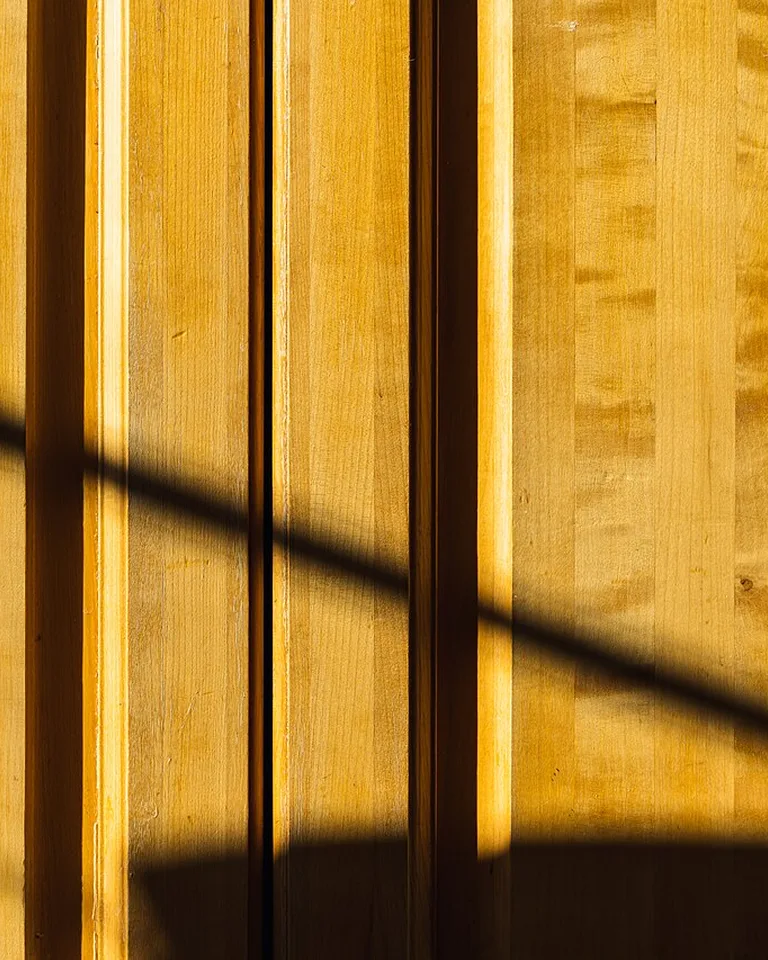
Running the grain vertically on tall cabinet doors and pantry fronts adds a sense of height and a subtle striped texture that changes as light moves across it. It’s a detail most people won’t consciously notice, but it makes the kitchen feel considered and custom.
Why it works: Vertical lines draw the eye upward, which makes ceilings feel taller — a useful trick in kitchens with standard 8-foot ceilings.
Tip: Ask for book-matched panels on tall doors so the vertical grain mirrors symmetrically. It reads as craftsmanship, not coincidence.
7. Wood Lowers With Painted Uppers
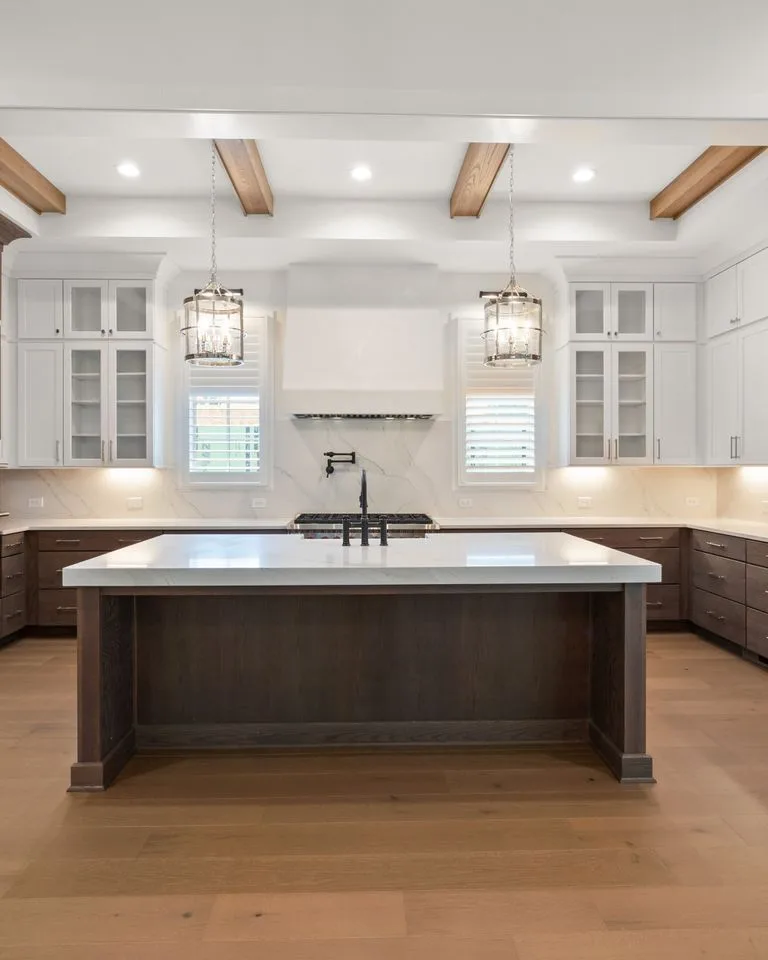
Two-tone cabinetry with wood on the bottom and paint on top is one of the most practical ways to use natural wood. The wood grounds the room and hides scuffs at kid-and-dog height, while painted uppers keep the upper walls feeling light. Sage green, warm white, and deep charcoal are the most forgiving partners — all of them let the wood stay the star. If you’re working with a tight budget, this approach also appears in our roundup of budget kitchen remodel ideas as a way to use less of the expensive material where it counts most.
Why it works: The eye reads the painted uppers as “wall,” so the kitchen feels airier, while the wood lowers deliver all the warmth.
Tip: Match the paint undertone to the wood — warm greens and creams with oak and walnut, cooler grays with ash or maple.
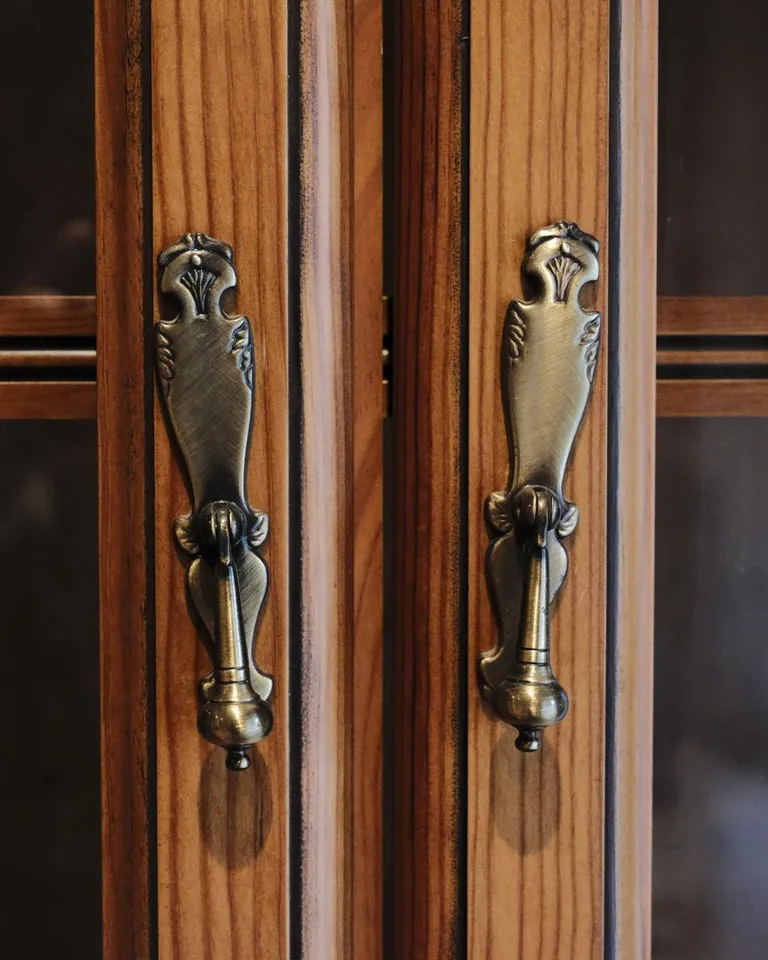
8. Fluted Wood Panels on the Island
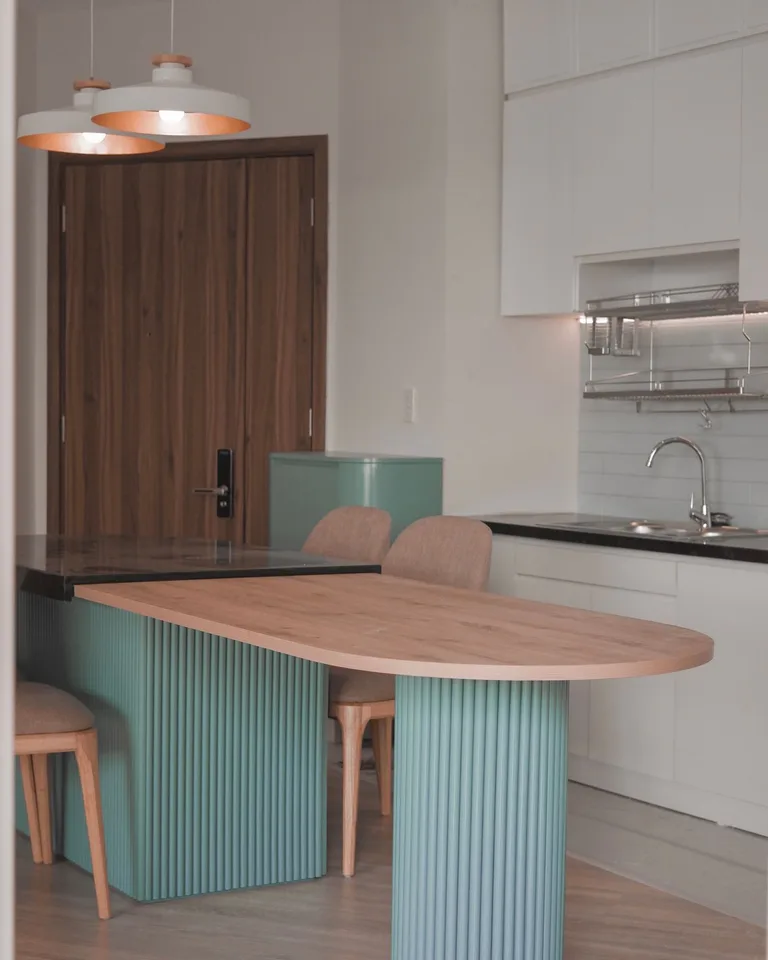
Fluted (reeded) wood on an island front is the detail that turns a basic box into a piece of furniture. The vertical grooves catch light and shadow all day, giving the island presence without adding color or pattern. It works in walnut for drama or white oak for a softer take.
Why it works: Texture at the island creates a focal point, so the rest of the kitchen can stay quiet — fewer competing elements, calmer room.
Tip: Keep fluting to the island only. Repeating it on every cabinet turns a focal detail into visual noise.
9. Natural Wood Cabinets With Open Shelving Accents
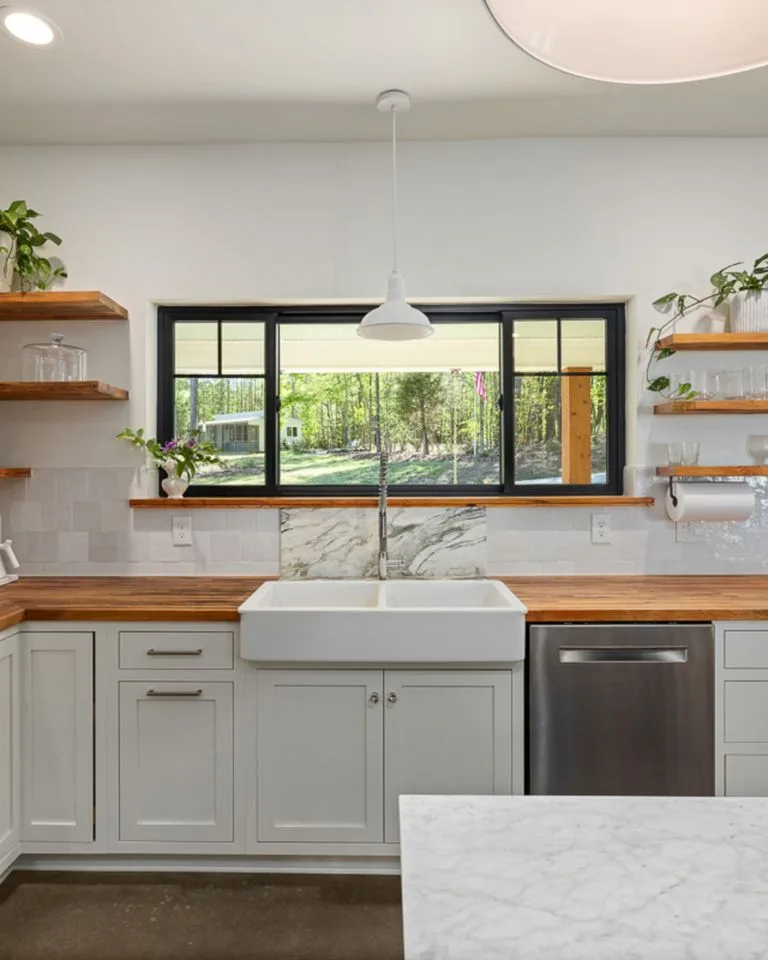
Replacing a run of upper cabinets with open wood shelving lightens a wood-heavy kitchen instantly. The shelves give you a place to display everyday dishes and break up long stretches of cabinetry. It also cuts the cabinet budget — a real consideration covered in our guide to one-wall kitchen layouts, where every linear foot of cabinetry matters.
Why it works: Open shelves add air between masses of wood, so the kitchen reads as styled rather than storage-heavy.
Tip: Limit open shelving to items you use weekly. Dust settles fast in kitchens, and rarely used pieces become a chore.
10. Oak Cabinets With a Handmade-Look Tile Backsplash
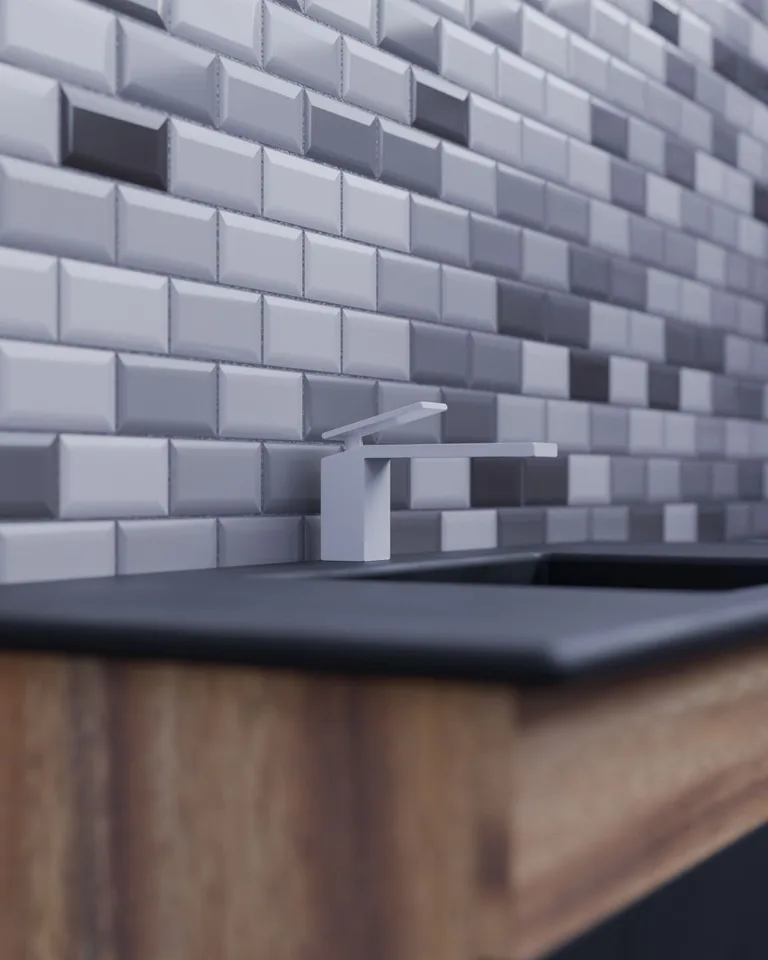
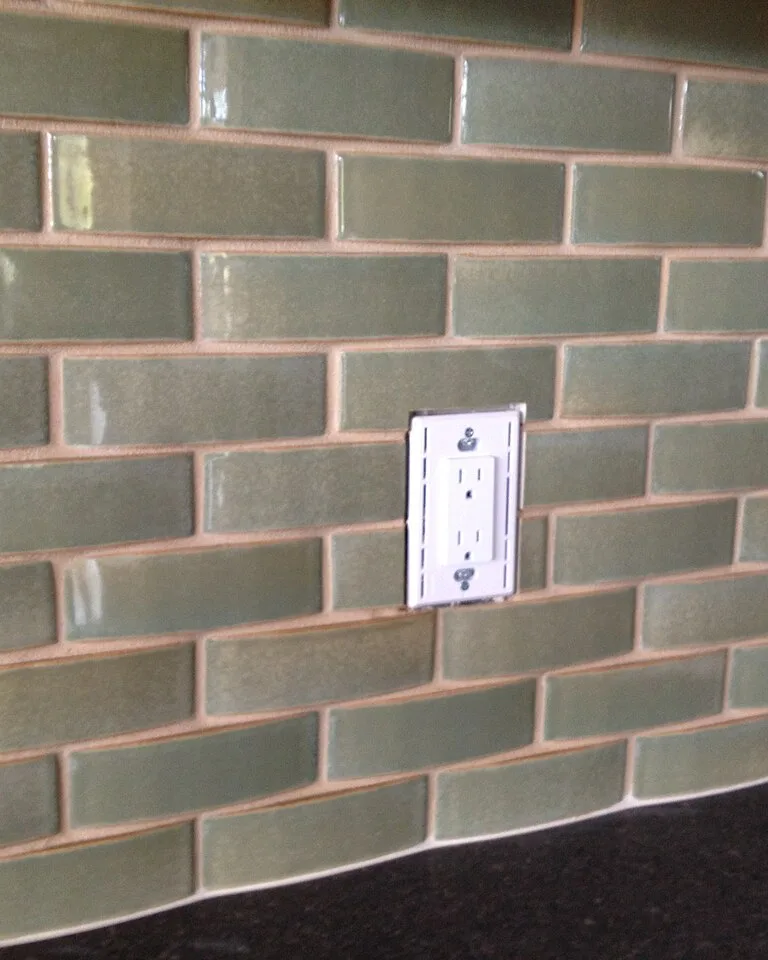
Zellige-style or handmade-look tiles pair beautifully with oak because both materials celebrate imperfection — the tile’s uneven glaze and the wood’s natural grain speak the same language. A soft white or pale sage tile keeps the palette calm while adding the handmade texture that flat cabinets lack.
Why it works: Two natural, slightly irregular materials together feel collected and timeless rather than showroom-perfect.
Tip: Take the backsplash all the way to the ceiling behind the range. The full-height tile makes wood cabinets look more expensive.
11. Integrated Appliances Behind Wood Fronts
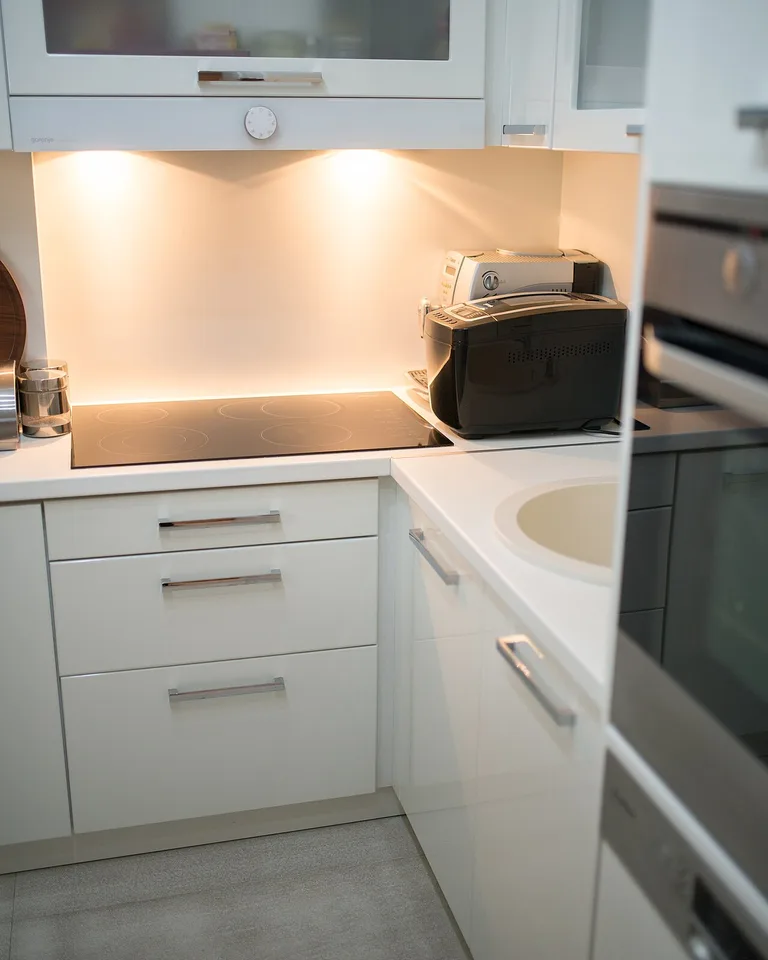
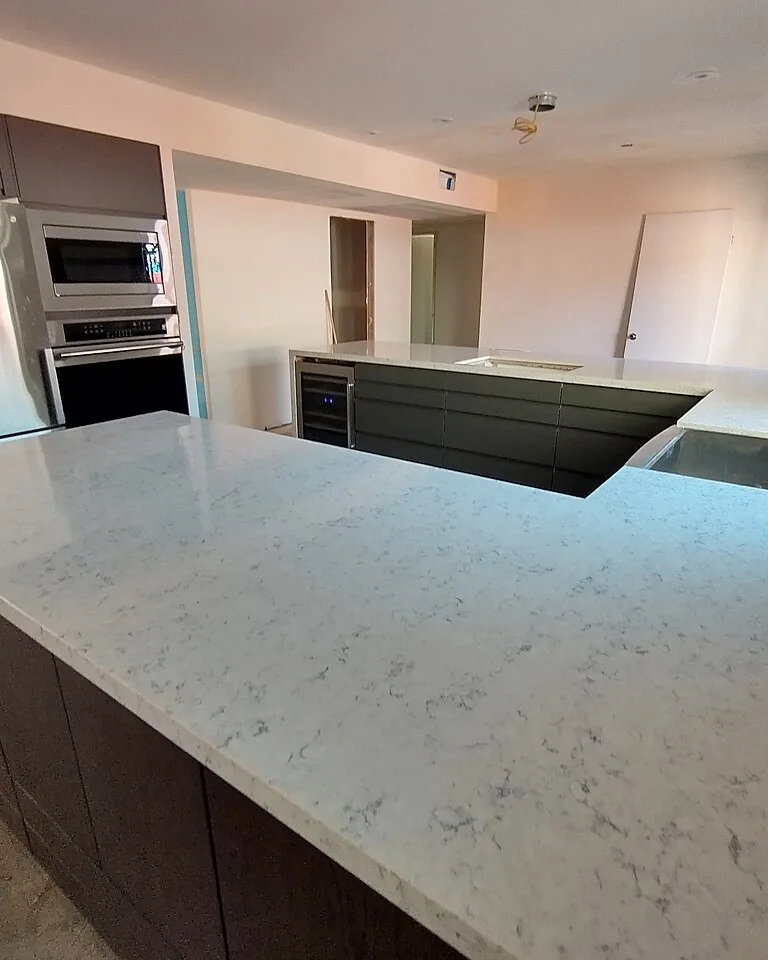
Panel-ready dishwashers and refrigerators disappear behind matching cabinet fronts (shown here in a white kitchen — the effect is even stronger with wood, where the unbroken grain becomes the pattern of the room), leaving clean, uninterrupted lines. The result is a kitchen that reads as furniture rather than appliances — especially powerful in open plans where the kitchen is always visible from the living space.
Why it works: Fewer visual interruptions mean the wood grain becomes the pattern of the room, which is exactly what makes these kitchens feel serene.
Tip: Budget for the panel-ready upcharge on the dishwasher at minimum — it’s the appliance most visible at eye level.
12. Walnut Pantry Wall With Streamlined Oak Cabinets
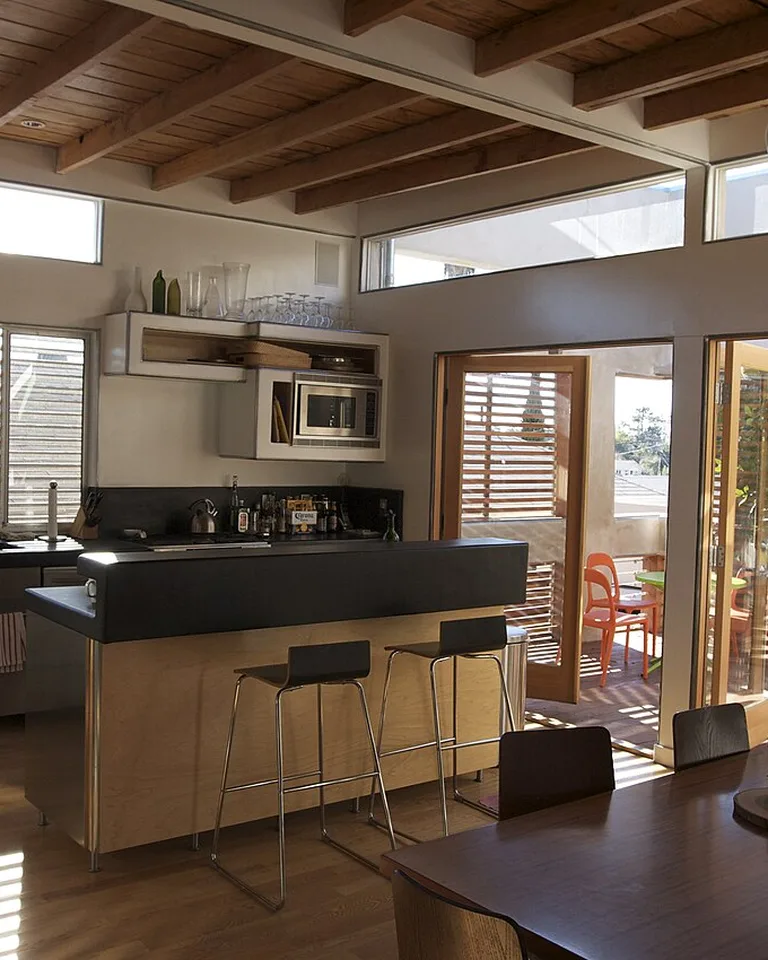
A full-height walnut pantry wall — floor to ceiling, handleless — gives you enormous storage and a dramatic dark moment, while the surrounding oak cabinets stay light and simple. The contrast makes both woods look better: the walnut richer, the oak brighter.
Why it works: Concentrating the dark wood in one tall plane keeps it from overwhelming the room, and floor-to-ceiling storage is the most efficient kind.
Tip: Use touch-latch or edge-pull hardware on the pantry wall. Visible handles on a full-height dark plane break up the monolithic effect you’re paying for.
Frequently Asked Questions
Are natural wood kitchen cabinets back in style?
Yes — natural wood cabinets are firmly back in style, but the look has changed. Instead of the ornate, honey-toned cabinets of the early 2000s, current kitchens favor lighter woods like white oak and walnut in simple slab or shaker fronts with matte finishes. The trend is toward honest, visible grain rather than heavy stain.
How do you make wood cabinets look modern?
Keep everything around them clean and minimal: flat or simple shaker door profiles, matte black or brass hardware, pale stone countertops, and fresh wall color. Avoid ornate moldings and heavy decor near the cabinets. Swapping dated hardware for slim modern pulls is the single fastest update.
What color countertops go with natural wood cabinets?
Light stones like white or pale gray quartz brighten warm woods and create contrast, while dark stones like black granite add drama against light oak. The key is balancing the wood’s warmth with the stone’s coolness — pair warm woods with cooler stones and vice versa. For inspiration on the lighter side, browse our white kitchen ideas that stay warm, not sterile.
Can I mix wood cabinet tones with wood floors?
Yes, as long as the tones aren’t identical. Choose a floor that’s at least one or two shades darker or lighter than your cabinets, or add a large rug between them to create separation. Two to three wood tones in one room is usually the sweet spot — more than that starts to feel chaotic.
The Takeaway
Natural wood kitchen cabinets work in 2026 because the styling around them changed: lighter species, simpler profiles, matte finishes, and one strong contrast material. Pick the wood that suits your light — oak and maple for bright rooms, walnut for drama — and keep the surrounding palette quiet. And if your kitchen flows into an eating area, the same warm-wood logic extends beautifully into breakfast nook upgrades, where wood tones make a small corner feel intentional.