
No Closet Bedroom Ideas: 10 Wardrobe Alternatives That Actually Work
A bedroom without a closet does not need a built-in wardrobe to stay organized. The fix is to replace the closet with a combination of pieces that cover the same three jobs: hanging space, folded storage, and a closed spot for the things you do not want on display. A freestanding wardrobe handles hanging clothes, a dresser or under-bed drawers handle folded items, and a curtain or closed cabinet hides the visual clutter. Below are 10 wardrobe alternatives that do exactly that, so you can pick the combination that fits your room, your budget, and how much open storage you can realistically keep tidy.
Before you buy anything, count what you own. Hang the clothes that crease, fold the knits and denim, and move off-season pieces out of the daily rotation. Most no-closet bedrooms fail not for lack of furniture but because every item is fighting for the same visible rail. Once you know your hanging-to-folded ratio, the right setup below becomes obvious.
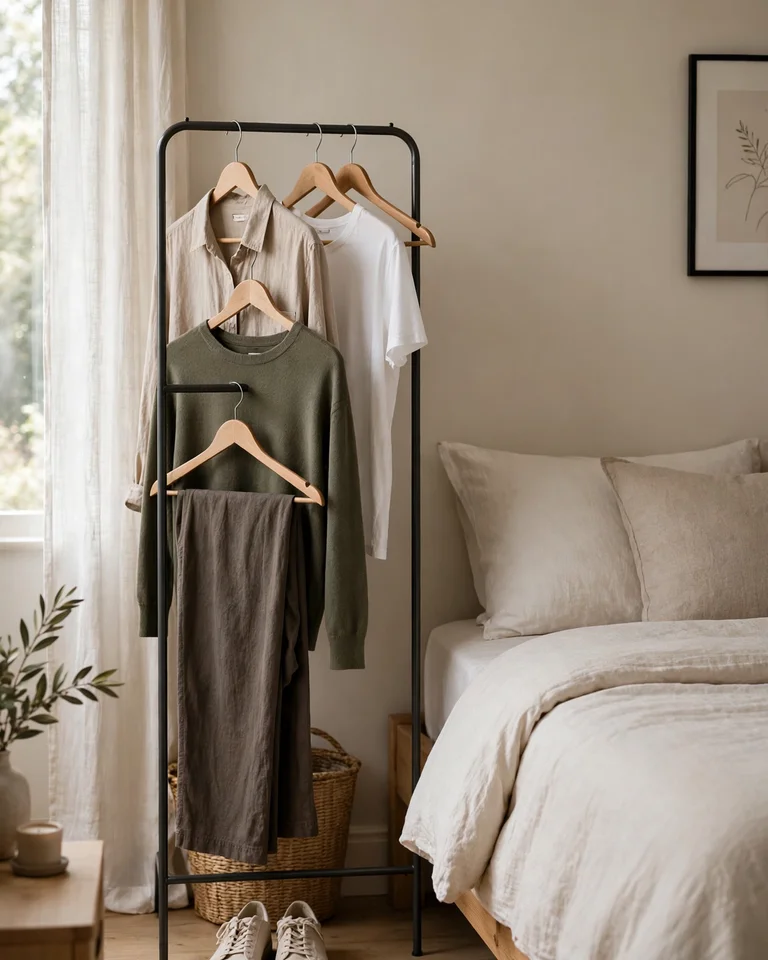
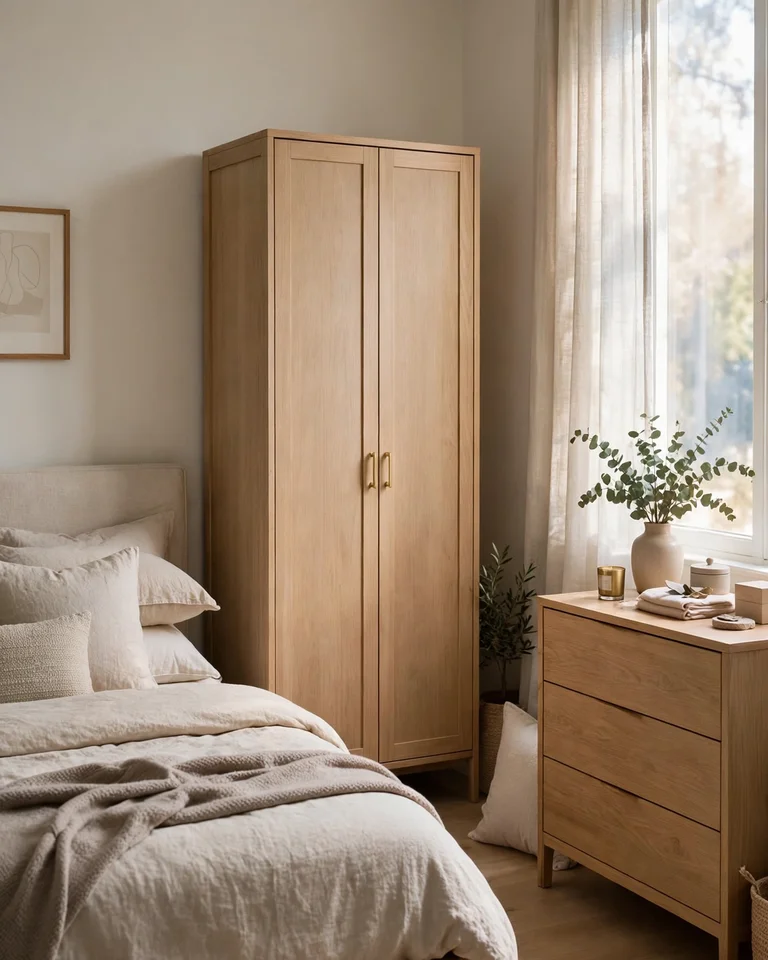
1. Build a One-Wall Freestanding Wardrobe Zone
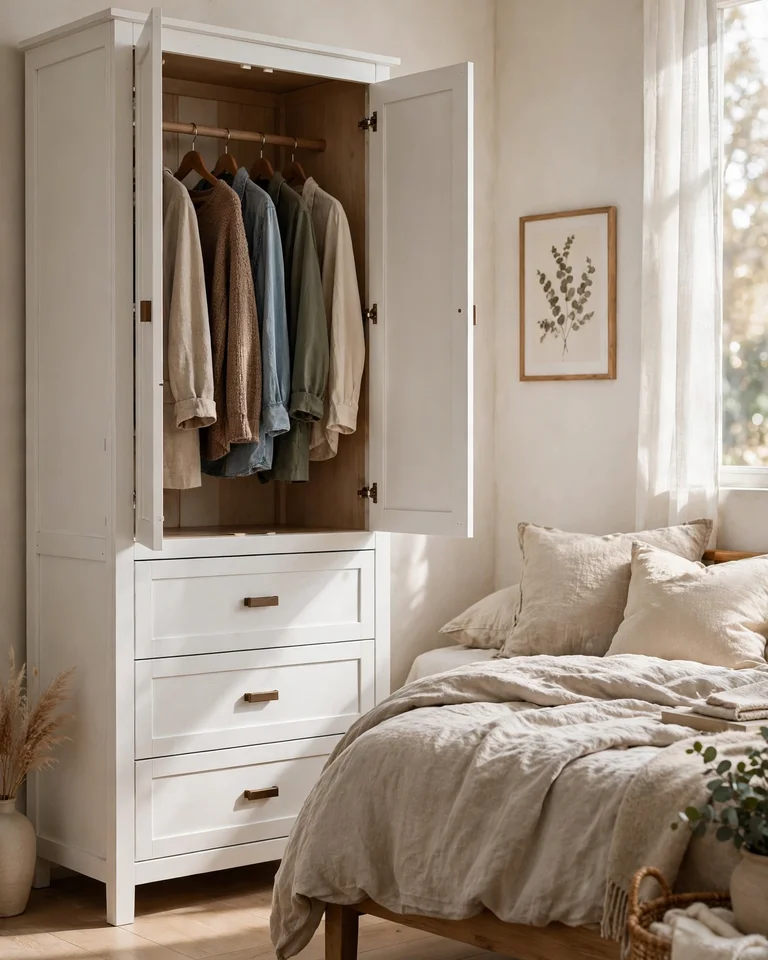
A freestanding wardrobe is the closest thing to a real closet, and it works best when you commit a full wall to it rather than scattering storage around the room. Choose one uninterrupted wall and place a wardrobe with both a hanging rail and drawers or shelves, so shirts and coats hang on one side while folded items and shoes sit behind the doors. Keeping everything on one wall leaves the rest of the room calm and easy to move through, which matters more in a small bedroom than any single piece of furniture. Measure the wall first, including baseboards and door swing, and leave a few inches of breathing room on each side so the unit does not look wedged in. If you need more capacity, flank the wardrobe with a slim drawer unit instead of adding a second rack elsewhere; one controlled clothing wall always looks more intentional than storage spread across five corners.
Tip: Sliding doors save swing space in narrow rooms, while hinged doors give you full access to the interior at once. Pick based on the clearance in front of the unit, not on looks alone.
2. Hide a Clothing Wall Behind a Curtain
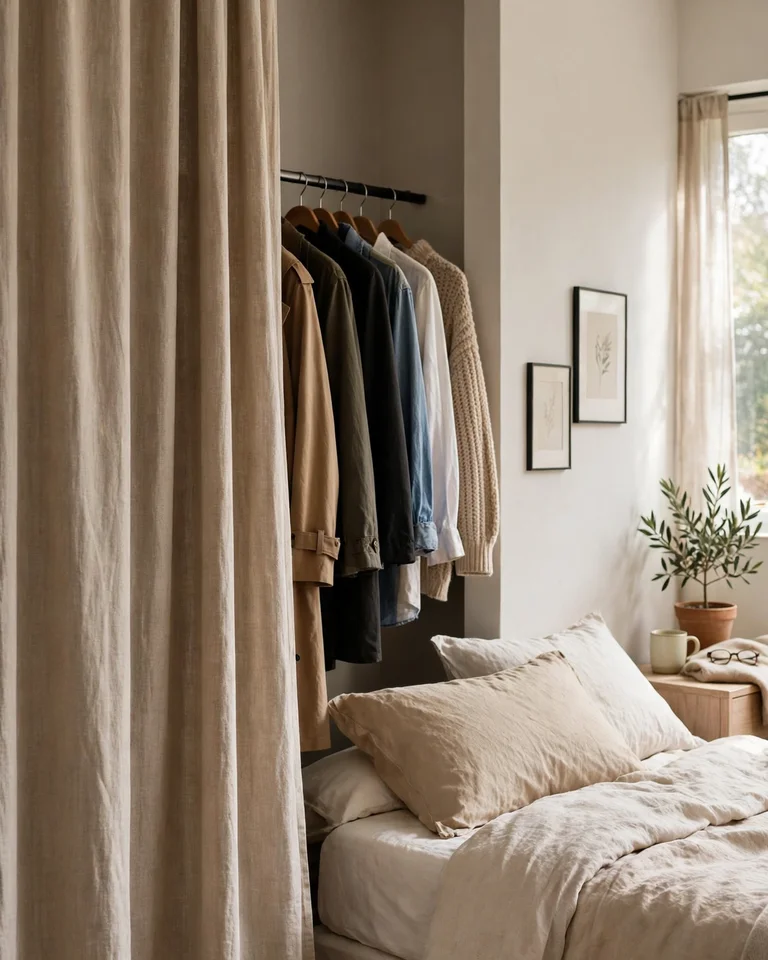
If you have an alcove, a recessed wall, or even a bare stretch of wall, a ceiling-mounted curtain track turns it into a closet for the price of fabric and a rod. Hang a rail or a simple garment rack inside the zone, then close it off with a heavy linen or cotton curtain that reaches the floor. The curtain hides mismatched hangers, laundry-day piles, and the visual noise that makes open storage feel messy, and it softens the room in a way doors cannot. This is one of the best small-apartment decor ideas for renters, because a ceiling track usually needs only a few small screw holes and comes down cleanly when you move. Choose a solid, opaque fabric in a color close to your walls so the curtained wall reads as architecture rather than a cover-up.
Tip: Mount the track on the ceiling, not the wall, so the curtain hangs straight and clears the floor. A curtain that pools slightly looks deliberate; one that stops mid-wall looks temporary.
3. Style a Curated Open Garment Rack
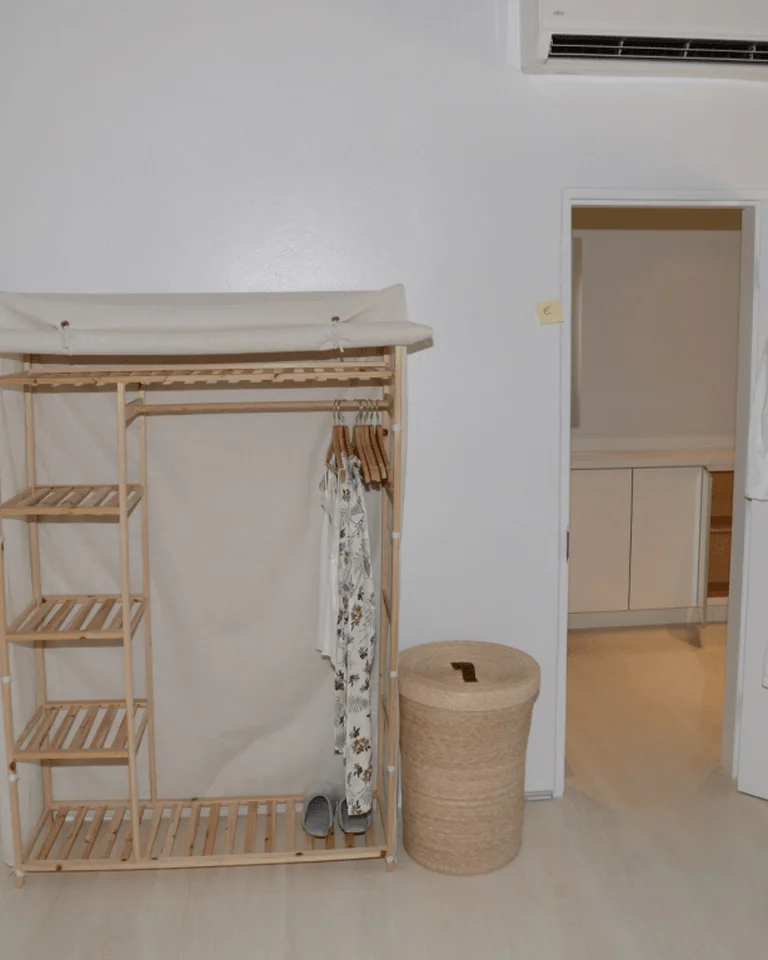
An open garment rack only looks good when it holds a curated selection, not your entire wardrobe. Keep your most-worn, best-looking pieces on it — a rotating capsule of 20 to 30 items for the current season — and store everything else behind doors or under the bed. Matching hangers are non-negotiable here: a row of identical wood or velvet hangers turns a rack of clothes into a display, while mixed wire and plastic hangers turn it into clutter. Group clothes by type or color, leave space between garments so each piece is visible, and place a small shoe tray or basket underneath for the pairs you reach for daily. The rack works hardest in the spot where you actually get dressed, usually near a mirror and natural light, not crammed into a dark corner.
Tip: Do a weekly reset: return anything unworn for a week to closed storage and pull forward what you actually reach for. Open storage rewards editing more than buying.
4. Pair a Dresser With Floating Shelves
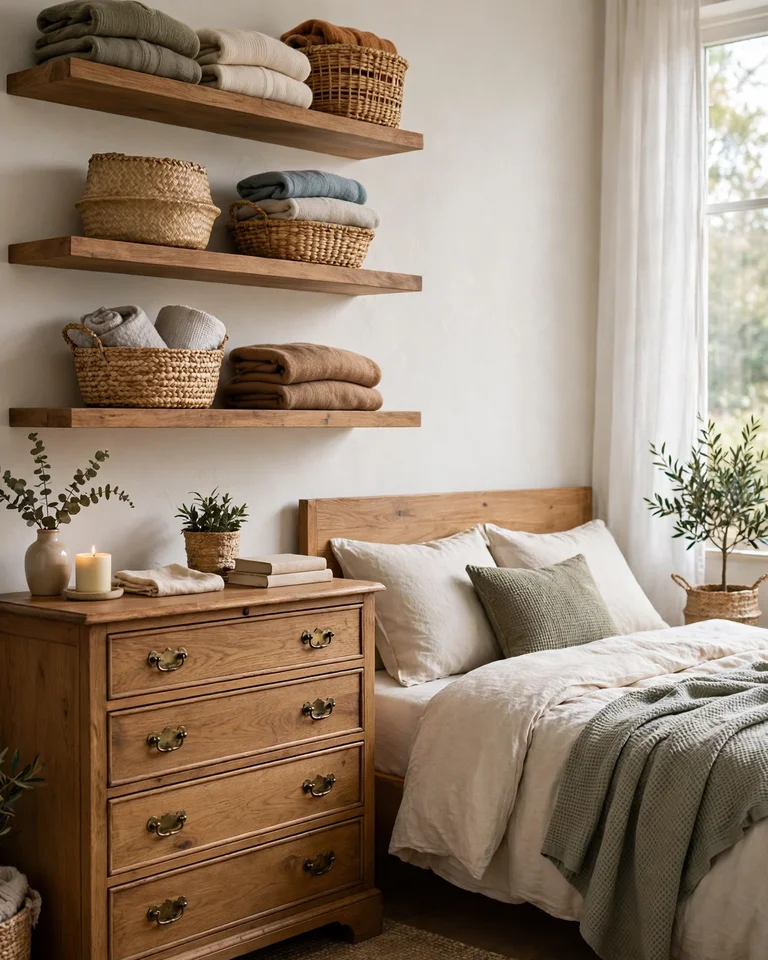
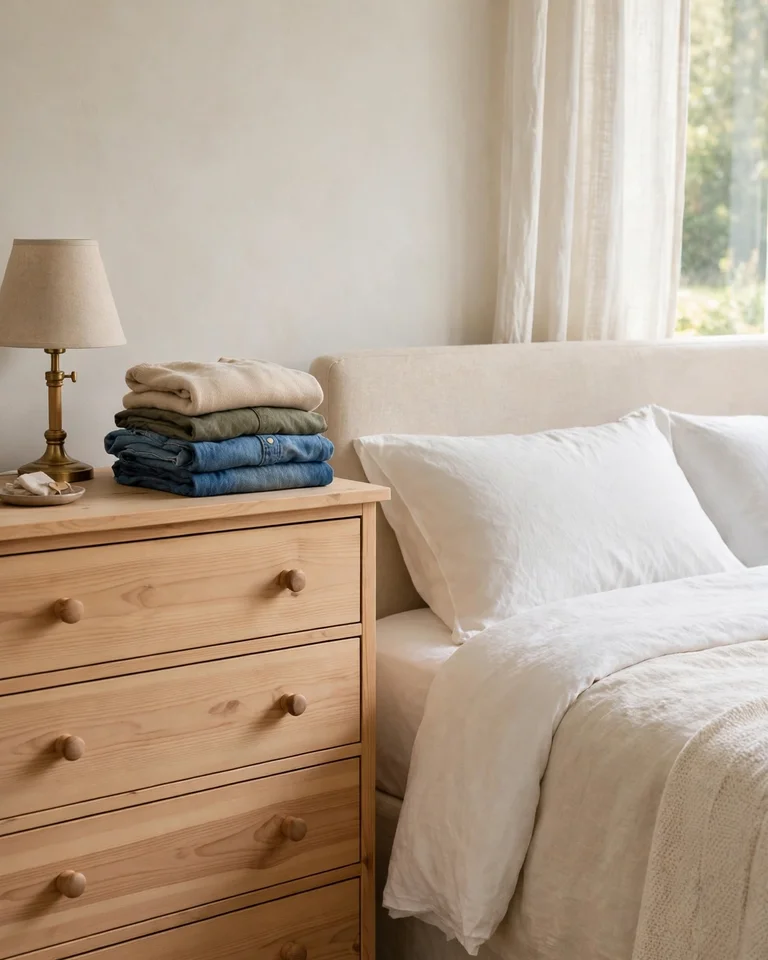
When most of your wardrobe folds rather than hangs, a wide dresser plus floating shelves above it replaces a closet without any hanging rail at all. The dresser drawers take folded tees, denim, and undergarments — assign the top drawer to daily smalls, the middle to tees and knits, and the bottom to heavier items — while the shelves above hold folded sweaters, bags, and hats in matching baskets. This is where styling a dresser with what you have pays off: keep the top surface nearly clear except for a lamp and one or two useful items, so the whole unit reads as furniture rather than storage. Mount the shelves into studs if you plan to load them with denim or books, and keep everyday items at arm’s reach with only decorative or off-season pieces up high.
Tip: Drawer dividers or small fabric boxes inside each drawer stop folded stacks from collapsing into a pile after laundry day, which is the moment most dresser systems fall apart.
5. Turn the Space Under Your Bed Into a Seasonal Closet
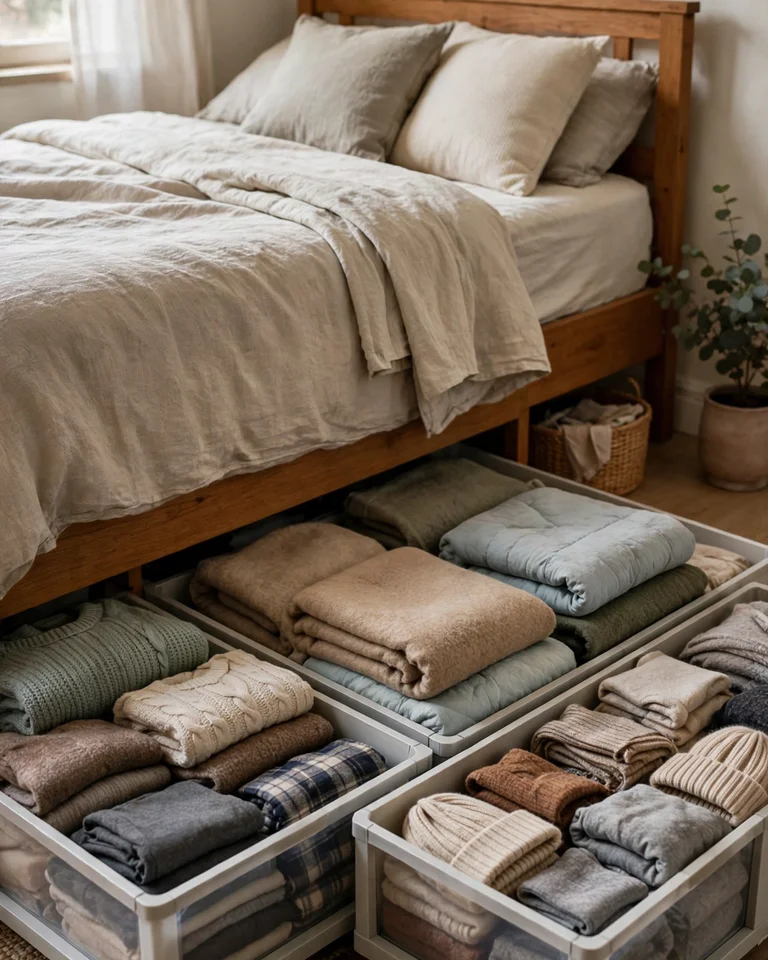
The space under your bed is the largest hidden volume in most bedrooms, and it is the natural home for everything you do not wear this season. Low rolling drawers or lidded bins slide out easily, hold bulky sweaters and spare bedding, and free your wardrobe or rack for current clothes only. Measure your clearance before buying — most frames give 7 to 12 inches — and choose wheeled drawers over open bins if you will pull them out often. For more ideas on using this space well, see these under-bed storage ideas. Label each drawer by season or category so you are not opening all of them to find one sweater, and rotate the contents twice a year when the weather changes. The seasonal swap is also the easiest moment to edit: anything you did not wear last season probably does not need to come back.
Tip: Vacuum bags inside the drawers compress bulky winter knits and leave room for an extra set of bedding, but skip them for items you grab weekly — the resealing gets old fast.
6. Mount a Wall Rail and Hook System
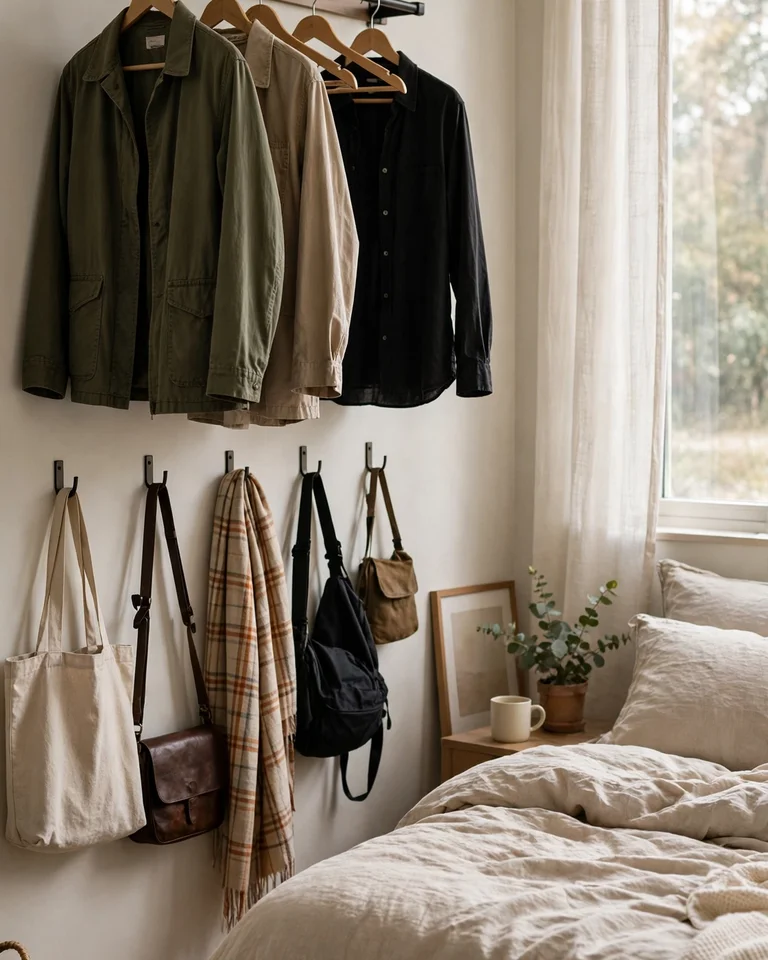
A wall-mounted rail and a row of sturdy hooks give you hanging space without taking a single inch of floor, which makes this the best option for very narrow bedrooms. Mount a rail at about 60 inches high for shirts and jackets, add a second lower rail or a set of hooks beneath it for bags, scarves, and tomorrow’s outfit, and keep the arrangement to one wall so it reads as a deliberate dressing station. This setup suits renters if you use a freestanding or tension-mounted version, but a screwed-in rail into studs holds far more weight and looks far more permanent. Reserve wall rails for the clothes you wear constantly — coats, work outfits, bags — and keep the bulk of your wardrobe in closed storage, or the wall quickly becomes a crowded display. In an awkward bedroom layout, a wall rail is especially useful because it fits walls that are too short or too broken up for a full wardrobe.
Tip: Use matching hooks and hangers and leave a gap between garments. A wall rail packed edge to edge looks like a closet door left open; one with breathing room looks like a boutique.
7. Claim an Empty Corner as a Clothing Nook
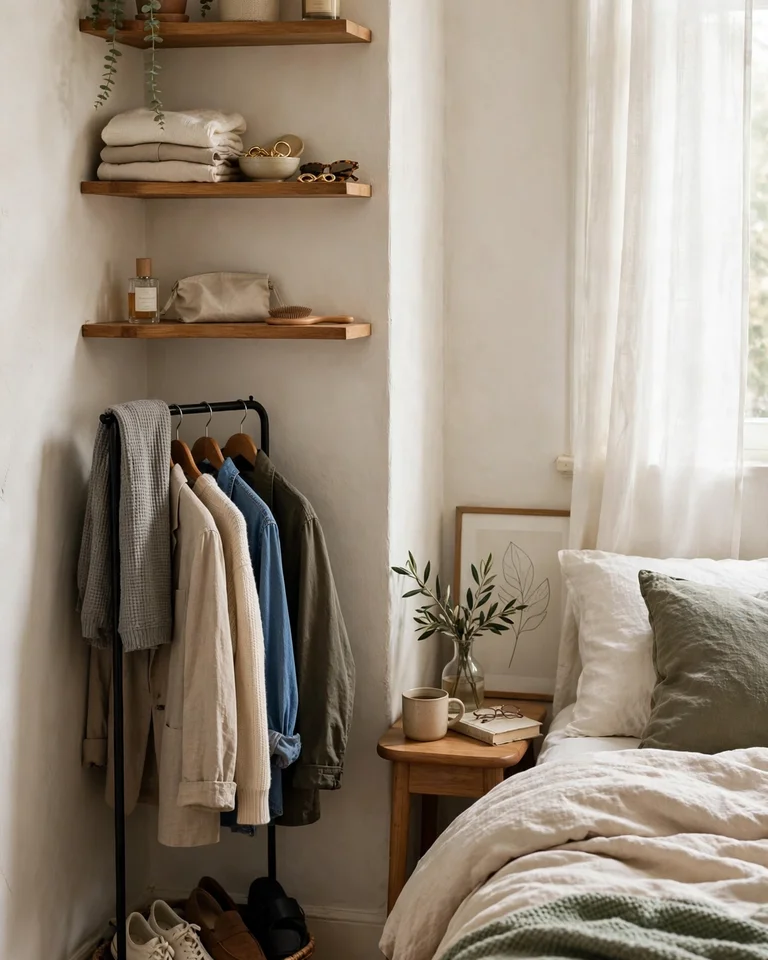
Corners are the most underused storage real estate in a bedroom, and a corner clothing nook turns dead space into a compact dressing area. Place a corner garment rack or two short rails meeting at the corner, add a small shelf or drawer unit at the base for shoes and folded items, and flank the setup with a hook or two on each adjoining wall for bags and hats. The nook works because it concentrates everything in one spot: you dress in one place instead of crossing the room between a rack, a dresser, and a chair piled with clothes. It also keeps the main walls free for the bed and art, so the room still feels like a bedroom rather than a walk-in closet. If the corner sits near a window, hang a light curtain on one side to soften the nook and keep morning light off delicate fabrics.
Tip: A small rug or runner under the nook marks it as its own zone and stops shoes and bags from drifting across the rest of the floor.
8. Add a Storage Bench at the Foot of the Bed
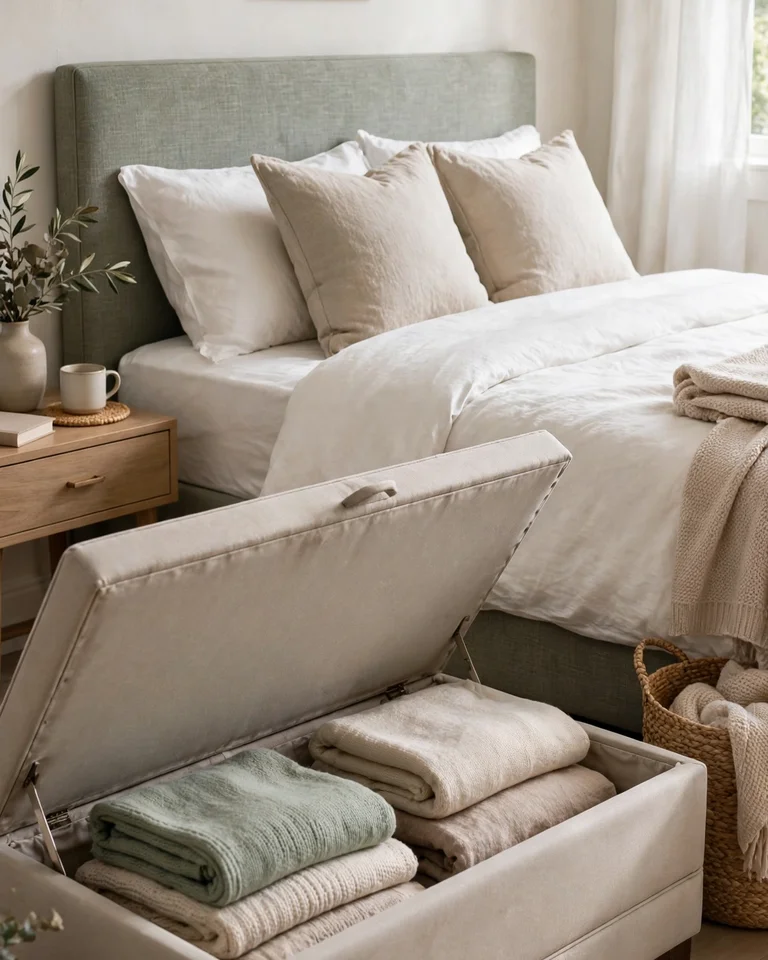
A storage bench at the foot of the bed solves two no-closet problems at once: it gives you a place to lay out tomorrow’s outfit and a hidden compartment for shoes, bags, or spare linens. Choose a bench close to the width of your bed so it does not stick out into the walkway, and pick a lift-up lid over open cubbies if you want the contents truly hidden. This is also the piece that stops the chair pile: when clothes have a bench to land on, they stop landing on the chair, the floor, or the bed itself. If you need more ideas for keeping a small room tidy, these small bedroom storage ideas to hide clutter pair well with a bench, since both rely on closed storage doing the quiet work. A bench in a woven or upholstered finish also adds texture, so it earns its place as furniture rather than looking like an extra storage box.
Tip: Keep only one category in the bench — spare bedding, for example — so you always know what is inside without opening it to check.
9. Choose a Mirrored Armoire to Double the Room
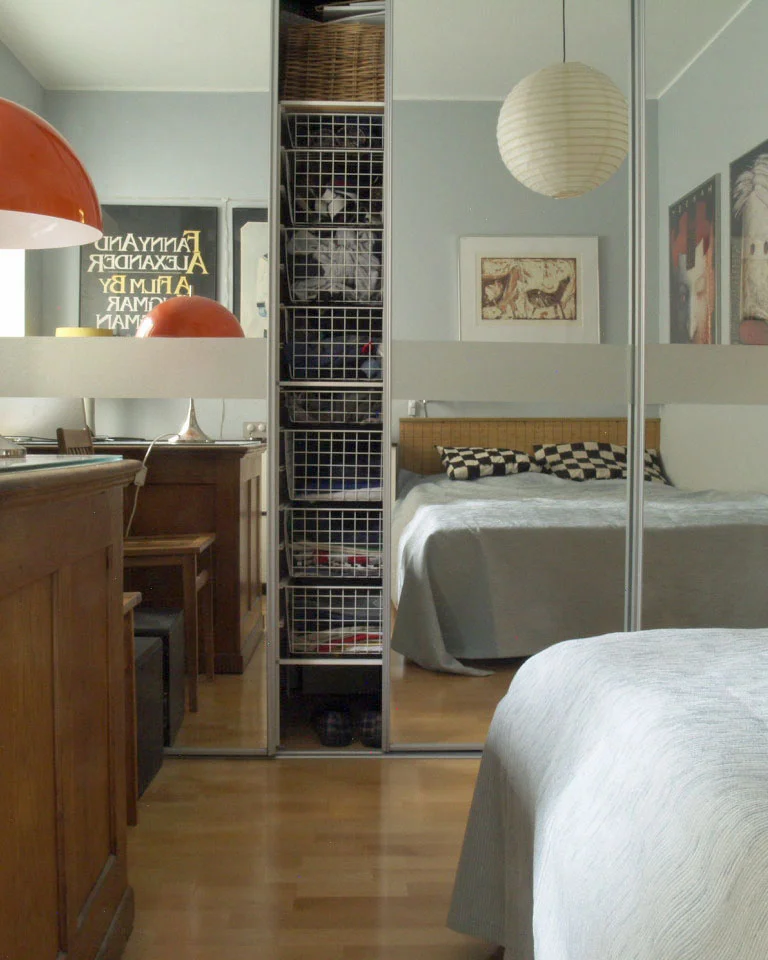
A tall armoire is the most furniture-like closet replacement, and mirrored doors solve the one real drawback: a big closed box can make a small room feel smaller. Mirrors bounce daylight around the room and reflect the opposite wall, which visually doubles the depth of the space while keeping every garment hidden. Inside, look for a mix of hanging space and shelves rather than a single rail, so coats, folded knits, and shoes each have a zone. A mirrored armoire also replaces a separate full-length mirror, which frees the wall space that a leaning mirror would have taken. Position it where it catches window light but does not face the bed directly, so morning glare does not become a daily annoyance. In a period or traditional room, a wood armoire in a warm finish can carry the whole design — see these modern farmhouse bedroom storage ideas for how a substantial wood piece anchors a room.
Tip: Keep the mirrored doors clean and the top of the armoire empty. Dust and clutter on a mirrored surface show up twice, literally.
10. Convert a Tall Bookcase Into a Folded-Clothes Wall
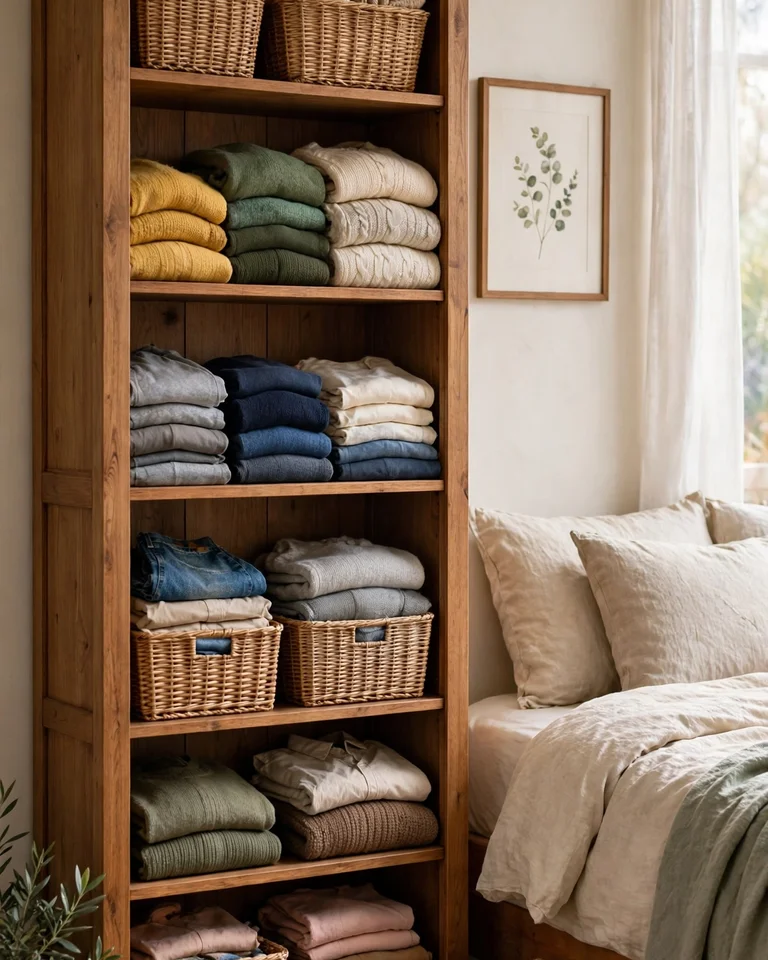
Standard bookcases are often cheaper than wardrobes, and a tall, narrow bookcase converts easily into a folded-clothes wall. Use the lower shelves for shoes, the middle shelves at eye level for folded denim and sweaters, and the top shelves for baskets holding accessories and off-season items. The trick is uniformity: identical baskets or fabric boxes on every shelf turn a wall of clothes into a wall of texture, while mixed containers turn it back into clutter. Fold clothes upright, file-style, so you can see every item without pulling a stack apart, and leave one shelf partly empty so the unit has room to breathe. Lining up two or three matching bookcases along one wall gives you a full wardrobe wall for less than a single fitted unit, and you can rearrange or move them whenever the room changes.
Tip: Add a small label or a consistent basket color per category — knits, denim, workout — so anyone in the household can put laundry away in the right place without thinking.
Frequently Asked Questions
How do you store clothes without a closet?
Split clothes by type rather than storing everything one way. Hang what creases on a rail or in a wardrobe, fold knitwear and denim in drawers or on shelves, and move off-season items under the bed. A combination of one hanging solution plus one closed drawer solution covers nearly every wardrobe without a built-in closet.
How do you store clothes without a closet or dresser?
Start with a freestanding garment rack for hanging clothes, add labeled bins under the bed for folded and off-season items, and use wall hooks for jackets and bags. A small shelf for folded items completes the setup, and every piece of it works for renters who cannot drill into walls.
Is it better to fold or hang clothes?
Hang items that crease easily, such as suits, dresses, and lightweight work shirts. Fold casual items like sweatshirts, knitwear, and jeans — hanging heavy knits can stretch them out of shape, and folded stacks keep them in better condition. Most no-closet setups need both, which is why a wardrobe plus a dresser or shelf unit works better than either alone.
Should bedroom storage be open or closed?
Use both, split by content. Closed storage low down hides packaging, spare bedding, and anything unattractive, while open storage at eye level suits items worth seeing, like a curated row of clothes or matching baskets. Open storage only stays tidy if what sits on it is uniform, so use matching hangers and consistent baskets before adding more open shelves.
How do you double your closet space?
Add a second hanging tier below the first rail, which nearly doubles hanging capacity in the same footprint. Pair it with hanging shelves for folded items and an over-the-door organizer for shoes and accessories, and move off-season clothes under the bed so the daily rotation has room to breathe.
Conclusion
A bedroom without a closet is a layout problem with a straightforward answer: one hanging solution, one closed storage solution, and one hidden spot for off-season clothes. Pick the combination that fits your room — a freestanding wardrobe, a curtained wall, a curated rack, or a dresser-and-shelf stack — keep it to one wall or one zone, and edit what stays visible. Done that way, a no-closet bedroom does not just work; it looks like it was designed that way on purpose.