
10 Decor Pieces That Finish an Awkward-Layout Bedroom
An awkward bedroom does not usually need more furniture. It needs a few well-chosen pieces that give the eye somewhere to rest, balance an odd angle, and make the room look decidedly finished instead of half-arranged. The pieces below do that work: one strong mirror, one large artwork, soft curves, warm light, and texture at bed height. Choose pieces that share a finish or a color family, keep their scale generous rather than fussy, and leave breathing room around each one. That restraint is what turns a strange footprint into a room that feels considered.
Before you buy anything, stand in the doorway and notice where your eye stops. In most awkward rooms it stops at the oddest feature: a jut-out, a low slope, or a long blank wall. Each piece in this list is chosen to redirect that first glance toward something beautiful, and to repeat a shape, material, or color often enough that the room reads as one design rather than a collection of compromises. For more on the overall approach, see awkward-layout bedroom makeover ideas, and for where the bed itself should go, see bed placement in awkward bedroom layouts.
1. An Oversized Arched Leaning Mirror
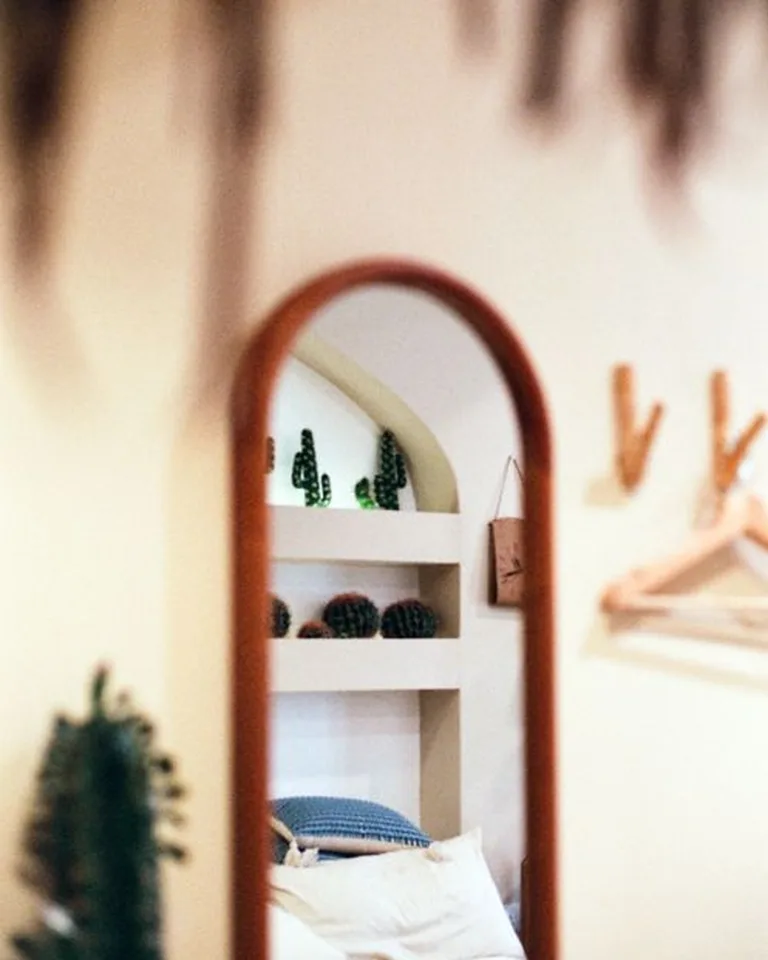
A tall arched mirror does two jobs at once: its curve softens a room full of sharp corners, and its reflection doubles the light and the sense of depth. Lean it, rather than hanging a small mirror high on the wall, so it reads as furniture instead of an afterthought. Choose a frame that echoes something else in the room — black metal with black lamp bases, or warm wood with a wooden bench — so the mirror feels tied in rather than dropped in. Keep the floor in front of it clear; a mirror crowded with baskets and shoes loses its airy effect. For more mirror styling, see full-length mirror bedroom ideas.
Choose it well: go at least 60 inches tall in a standard room. Anything smaller reads as a dressing mirror, not a finishing piece.
2. One Large Abstract Artwork, Not a Gallery Wall

In a room that already has a lot going on architecturally, a cluster of small frames usually adds visual noise. One large artwork does the opposite: it gives the wall a single focal point and lets the rest of the room calm down. Pick a piece with two or three colors already present in your bedding or rug, and hang it where you see it first when you walk in. A wide canvas over a dresser, or a tall vertical piece on a narrow wall, can carry a whole wall on its own. If you love a gallery look, save it for a hallway and let the bedroom breathe.
Choose it well: the artwork should be roughly two-thirds the width of the furniture beneath it. Too small, and the wall still looks unfinished.
3. A Rounded Upholstered Accent Chair
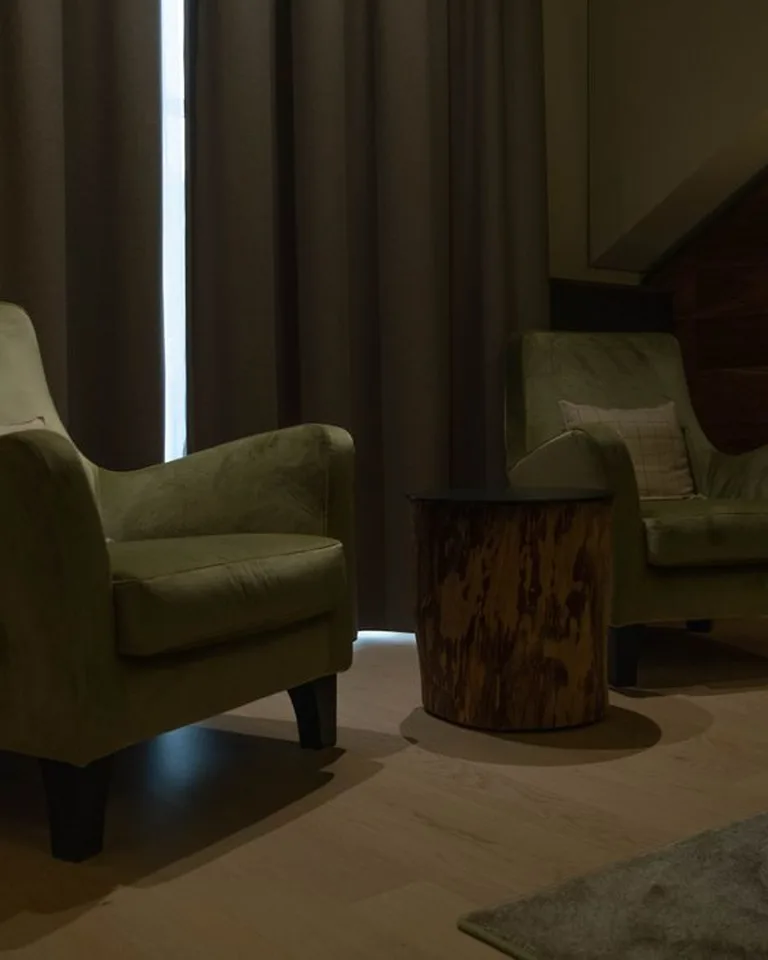
Sharp angles are the signature problem of an awkward room, and a rounded chair is the simplest counterweight. A compact upholstered chair with curved arms breaks up a boxy corner without demanding much floor space, and it gives the room a second place to sit that is not the bed. Keep the chair’s footprint small — a swivel base helps in a tight spot — and add a single throw rather than a pile of cushions. The goal is a soft shape, not another bulky object competing with the bed.
Choose it well: sage green, cream, or oatmeal upholstery works with almost any palette and keeps a small room feeling light — see decorate a sage green bedroom for a full green palette.
4. A Round Woven Area Rug
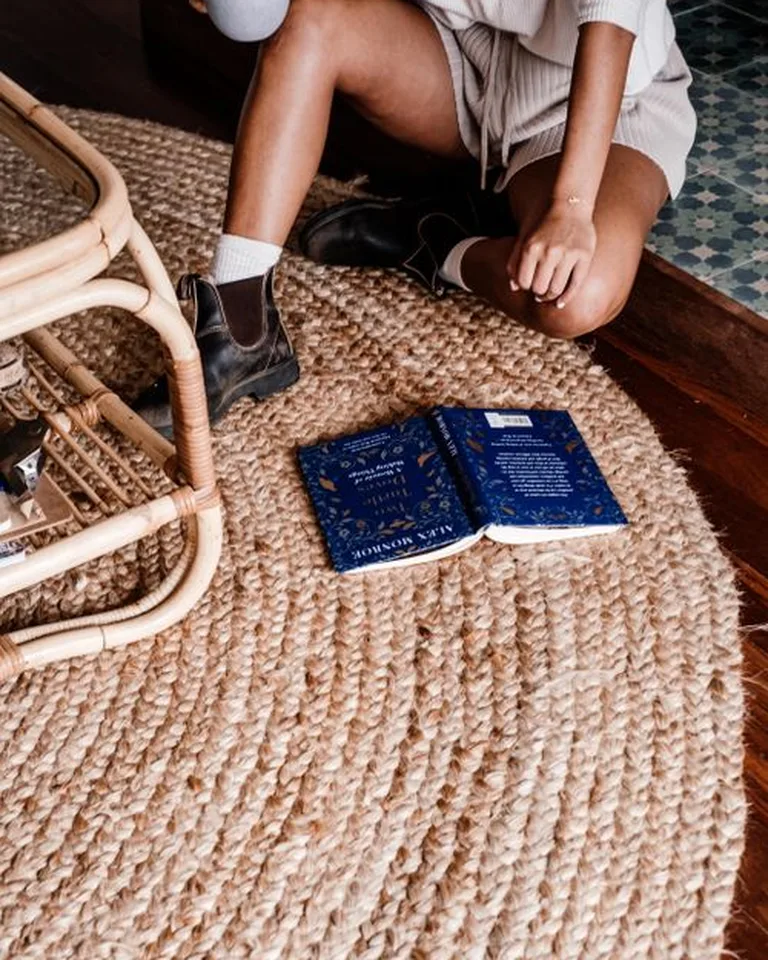
Rectangular rugs reinforce rectangular rooms. A round rug interrupts that geometry, draws the eye in a curve, and creates a natural gathering spot under a chair or at the foot of the bed. Natural fibers — jute, wool, or a cotton blend — add texture underfoot without a loud pattern fighting the rest of the room. In a room with angled walls, a round rug also forgives imperfect placement: it does not need to sit parallel to anything to look right. Just make sure it is large enough that at least the front legs of the chair or the foot of the bed rest on it.
Choose it well: a 5- to 6-foot round rug suits a chair corner; go larger if it is anchoring the bed.
5. A Pair of Plug-In Wall Sconces
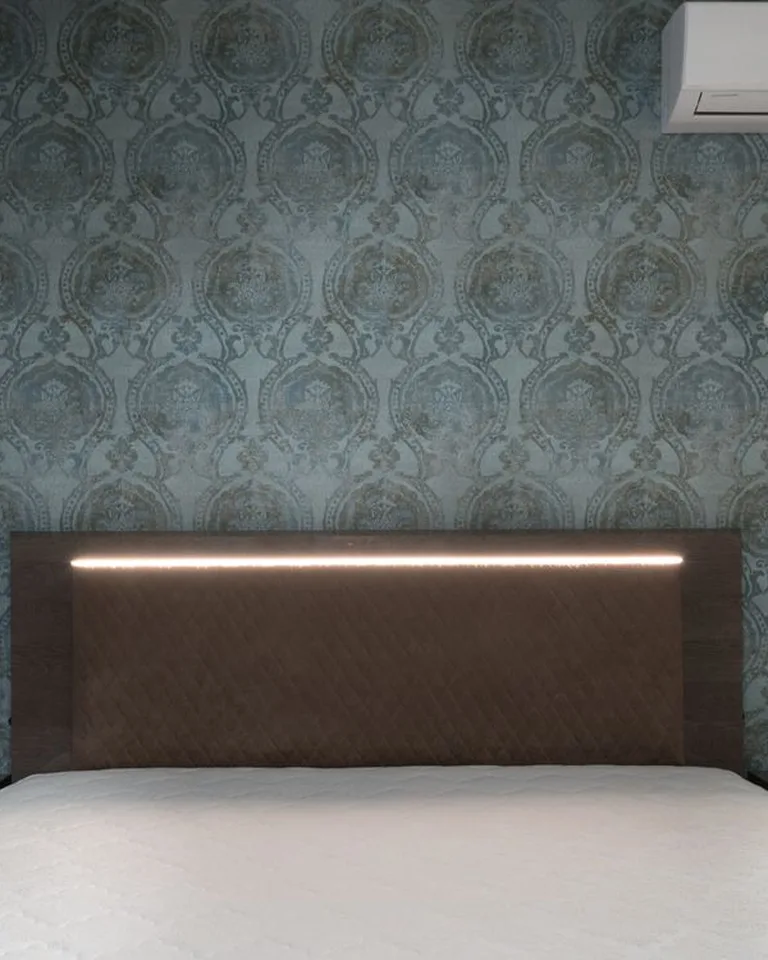
Matching sconces are a finishing touch that also solves a practical problem: they put warm light exactly where you read, without a lamp hogging a narrow nightstand. Because they plug in, there is no rewiring, and because they sit on the wall, they draw the eye upward and make a low or sloped ceiling feel less pressing. Choose a shade that glows rather than glares — linen or frosted glass — and keep both sconces at the same height for a calm, symmetrical note in an otherwise irregular room. For styling ideas around a small dresser, see styling a dresser with what you have.
Choose it well: warm bulbs around 2700K flatter skin tones and bedding far better than cool white in a bedroom.
6. A Sculptural Arc Floor Lamp
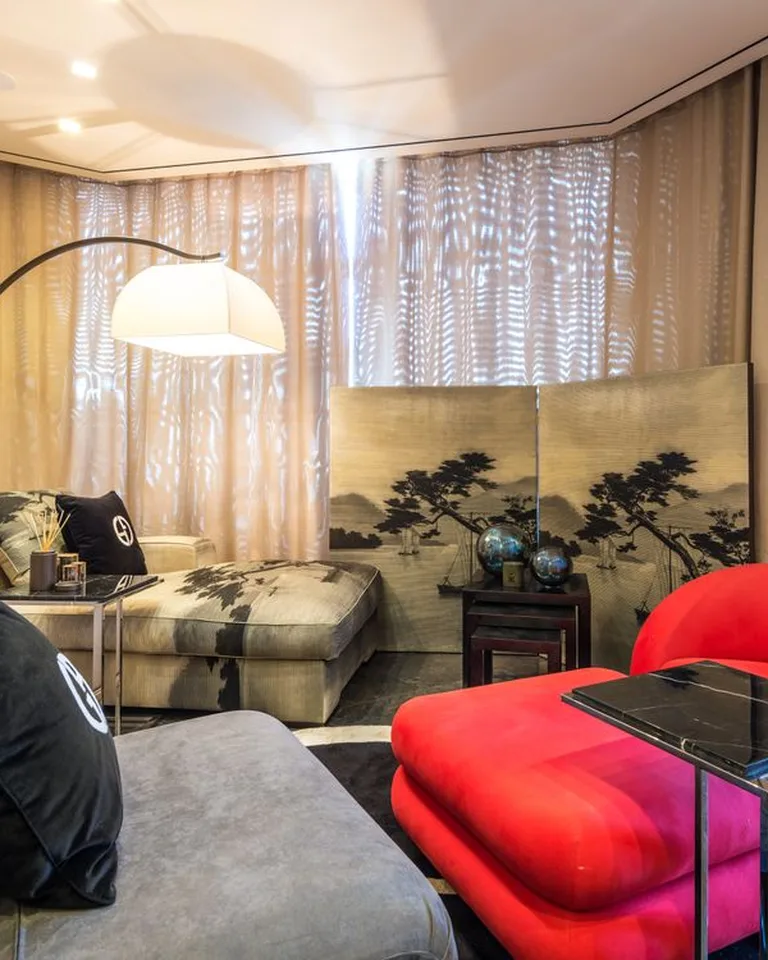
An arc lamp is part lighting, part sculpture. Its curving arm reaches over a chair or a corner that a table lamp cannot serve, and its silhouette echoes the curves of the mirror and the chair, repeating the room’s soft shapes. In a tall or oddly shaped corner, a floor lamp also fills vertical space that would otherwise sit empty and draw attention to the awkward angle. Pick a base heavy enough to be stable on rugs, and a shade that directs light downward for reading rather than scattering it across the ceiling.
Choose it well: a marble or matte black base grounds the piece; a spindly base will look lost in a large corner.

7. A Potted Tree

Nothing finishes a bare corner faster than height with life in it. A potted olive tree, fiddle-leaf fig, or large monstera in a simple pot adds organic shape, softens a hard corner, and pulls the eye upward — exactly what an awkward room needs. One large plant beats three small ones, which tend to read as clutter in a room that is already busy. Keep the pot simple and oversized: a small pot under a tall plant looks top-heavy and temporary, while a generous pot makes the whole arrangement look planted, in every sense.
Choose it well: if natural light is limited, choose a realistic faux tree over a struggling real one. A healthy-looking plant is the point.
8. A Slim Open Shelf
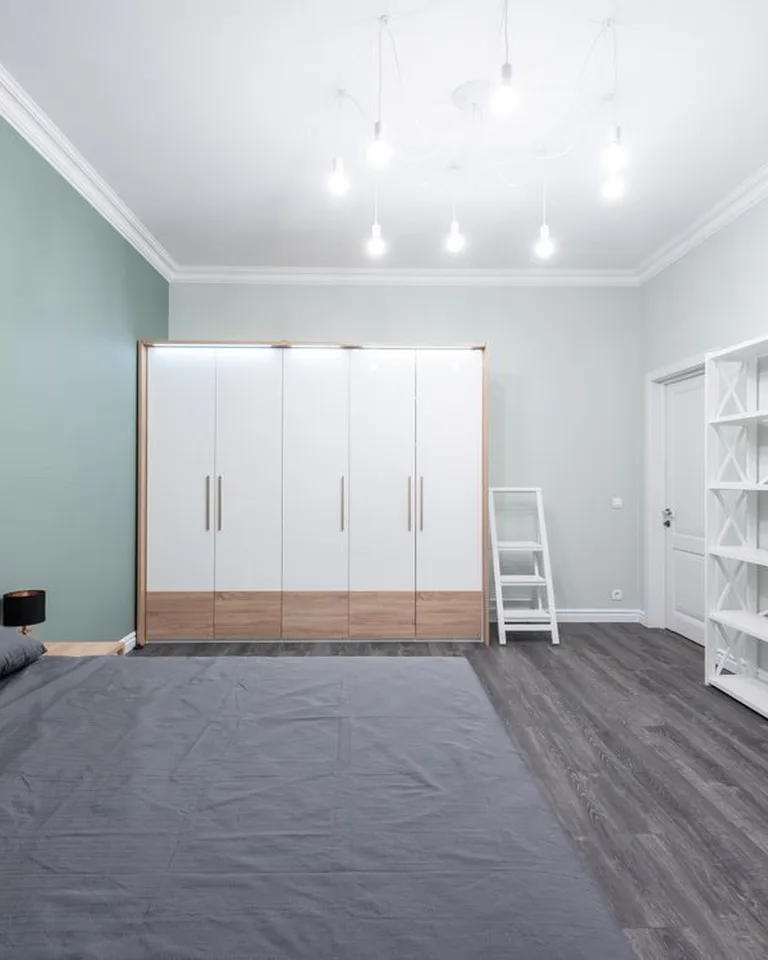
A slim open shelf does not demand a perfectly flat, perfectly wide wall — an advantage in a room full of angles. Its open frame keeps the display feeling light, and its shelves let you style from large at the bottom to small at the top, which naturally draws the eye upward. Style it sparingly: books, one plant, one framed print, and empty space on at least one shelf. A shelf crammed edge to edge becomes storage, and this list is about finishing pieces, not about awkward-layout bedroom storage ideas, which deserve their own plan.
Choose it well: match the shelf finish to your bed frame or dresser so it reads as part of the set, not a stray.
9. Layered Linen Bedding With a Chunky Throw

The bed is the largest object in the room, so its dressing is a decor piece in its own right. Linen or washed cotton in a soft neutral, layered with a chunky knit throw across the foot and two sleeping pillows plus two Euro shams, gives the bed a finished, hotel-like presence without a fussy bedspread. Texture is doing the work here: the contrast between smooth linen, nubby knit, and a velvet cushion stops the bed from looking flat against an odd wall. Keep the palette to two or three tones so the bedding calms the room instead of competing with it.
Choose it well: wash and soften new linen before styling it; stiff, shiny bedding photographs and feels unfinished.
10. A Small Ceramic Cluster on the Dresser
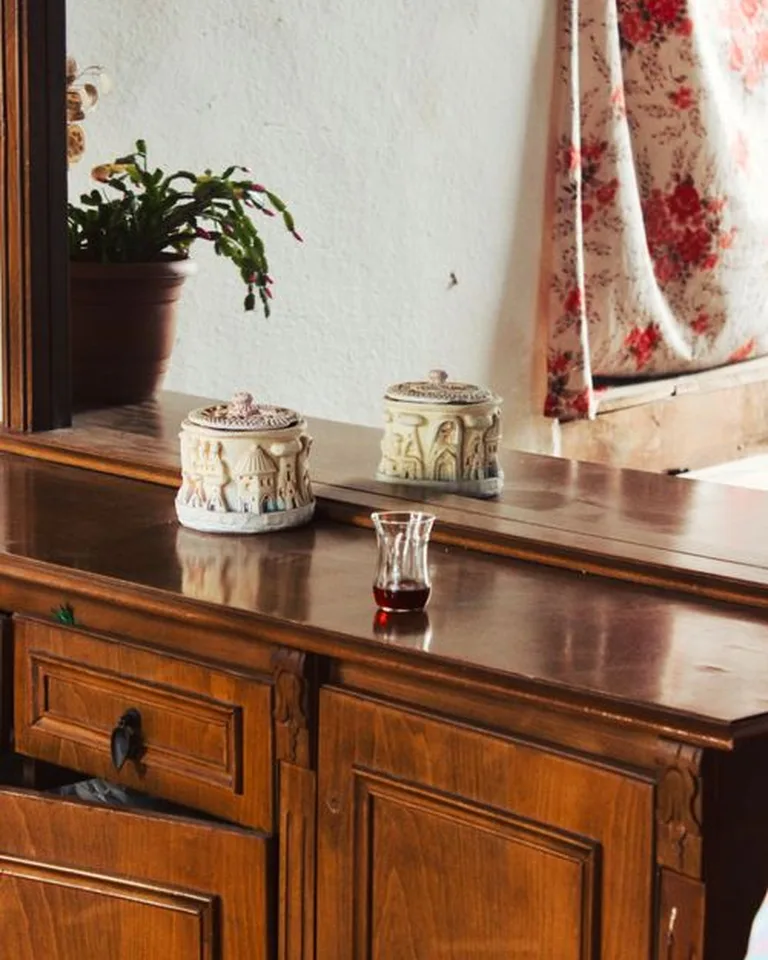
Every finished room needs a small, intentional grouping — the detail that says someone styled this on purpose. A few ceramic containers in different heights gives a dresser top a focal point without adding furniture. Vary the heights, repeat one material or color elsewhere in the room, and leave empty space around the group so it reads as a vignette, not a collection. This is the last layer, added after the big pieces are in place, and it is often the layer that makes the whole room click.
Choose it well: group in odd numbers — three pieces, not two or four — and keep at least one piece empty rather than filling every vessel.
How to Pull the Pieces Together
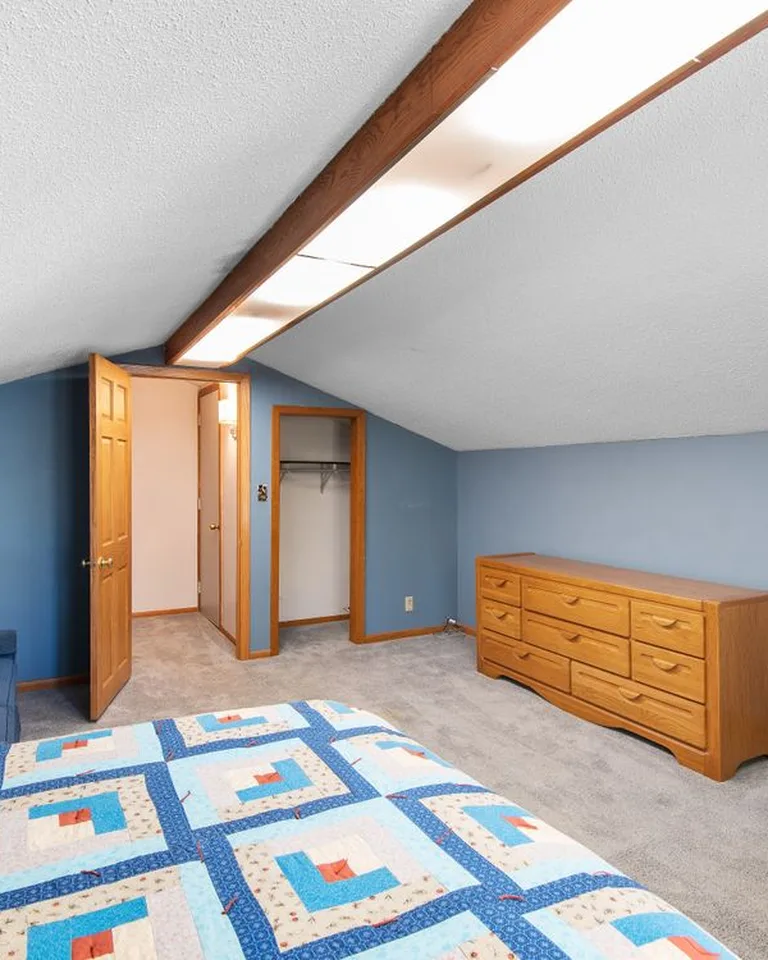
Buy the mirror and the artwork first, then the chair and the rug, then light and plants, and finish with bedding and the small cluster. At each step, check that the new piece repeats a shape, finish, or color you already have; repetition is what makes unrelated pieces look like a room. If a piece fights the room — too tall for the slope, too dark for a dim corner, too busy for an already patterned rug — swap it rather than forcing it. A finished awkward bedroom is not a room with every problem hidden. It is a room where the eye lands on beautiful things first, and the quirks become character.
Frequently Asked Questions
How can I decorate an awkward bedroom corner?
Start by judging the corner’s size and what it needs to do. A tall plant, a floor lamp, or a leaning mirror suits a narrow corner, while a larger corner can hold a rounded accent chair with a small rug beneath it. One generous piece usually settles a corner better than several small objects, which tend to emphasize the awkward angle.
What furniture works best for small bedroom corners?
Compact, well-scaled pieces work best: a ladder shelf, a slim accent chair, or a small round rug with a chair. Choose pieces sized to the corner so they feel intentional rather than squeezed in, and keep the floor around them clear so the corner reads as designed, not filled by default.
How do I make a bedroom corner cozy?
Layer soft texture and warm light: a cushioned chair, a throw, and a small rug define the spot, while a floor lamp or wall sconce adds warmth. A plant or a single piece of art gives the corner a finishing touch without crowding it.
Should furniture go against the walls in a small, awkward bedroom?
Not automatically. In rooms with uneven or angled walls, pulling a chair or a shelf even slightly away from the perimeter often reads better than lining everything up against walls that were never straight to begin with. Let the piece’s own shape, not the wall, decide its position.
What is the easiest fix for a bedroom with a sloped ceiling?
Painting the ceiling the same color as the walls removes the visual seam where they meet, and it costs little beyond paint. Pair that with low, soft pieces — a low bed, a low chair, a leaning mirror — so the room’s proportions feel deliberate rather than cramped.
Conclusion
Awkward bedrooms reward a different shopping list than square ones: fewer, larger, softer pieces, chosen for their shape and finish as much as their function. Start with the mirror and one large artwork, add curves and warm light, and finish with texture and a small styled cluster. The angles will still be there — they will just stop being the first thing anyone notices.