
Studio Bedroom Storage Ideas That Let One Room Do It All
In a studio, the bedroom is also the living room, the office, and sometimes the dining room — so storage has to do more than hold things. It has to keep the sleeping zone calm, the living zone usable, and the whole room from looking like a storage unit. The trick is to give every category of stuff a home that matches how often you use it: daily items within arm’s reach, weekly items in furniture, and seasonal items tucked away where you won’t trip over them. The ten studio bedroom storage ideas below are built around that rule, and each one works in a single room where sleeping and living share the same floor.
Before you buy anything, walk your studio and sort what you own into three piles: daily, weekly, and seasonal. Daily items — your current clothes, phone charger, work gear — need open, easy access. Weekly items — extra bedding, books, hobby supplies — belong inside furniture. Seasonal items — winter coats, holiday decor, luggage — can live high, deep, or under the bed. Once you know the piles, the right storage almost picks itself. If your place is short on square footage in general, these ideas pair well with small apartment decor ideas that make a tight floor plan feel intentional rather than cramped.
1. A Loft Bed That Frees the Floor for Living
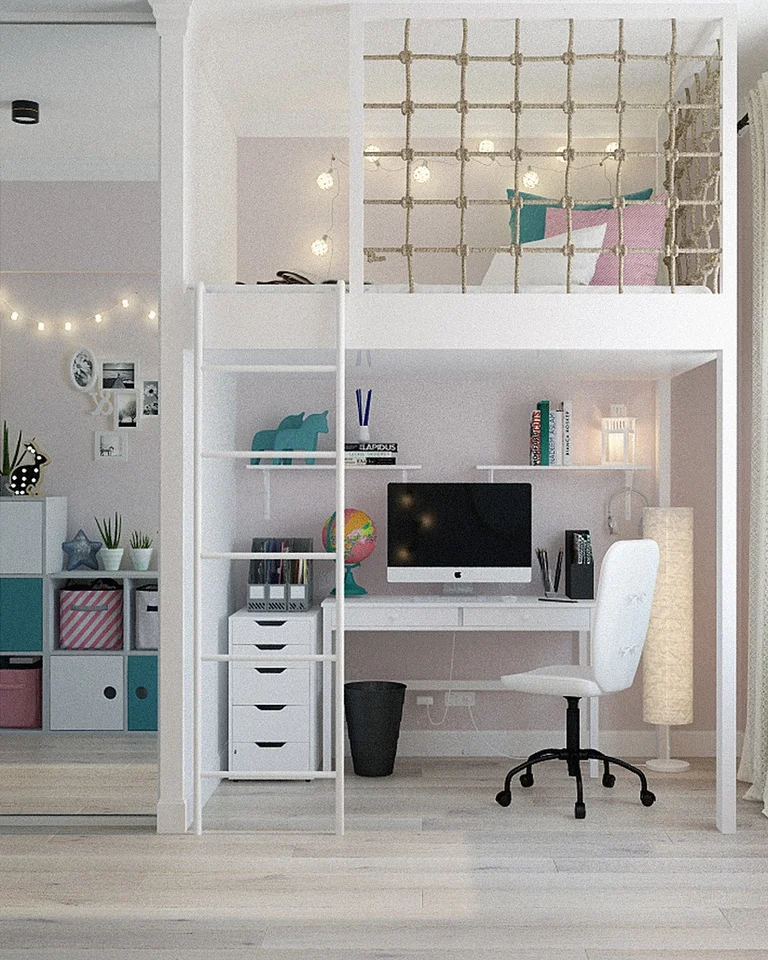
A loft bed is the single biggest storage win a studio can offer, because it doesn’t add storage — it adds floor. Raising the bed to roughly chest height or higher frees the footprint underneath for a desk, a reading chair, or a compact sofa, which means the living zone no longer has to fight the bed for space. This works best when your ceilings are at least 8.5 feet high; sit up in bed before you commit, and leave enough headroom to get in and out without ducking. Look for a loft frame with a built-in ladder and a guard rail, and use the space below for the activity you do most — a work setup if you work from home, or a lounge corner if you mostly relax. Keep bulky storage out from under the loft, since the point is open, usable floor, not a second closet.
2. A Murphy Bed With Cabinets on Both Sides
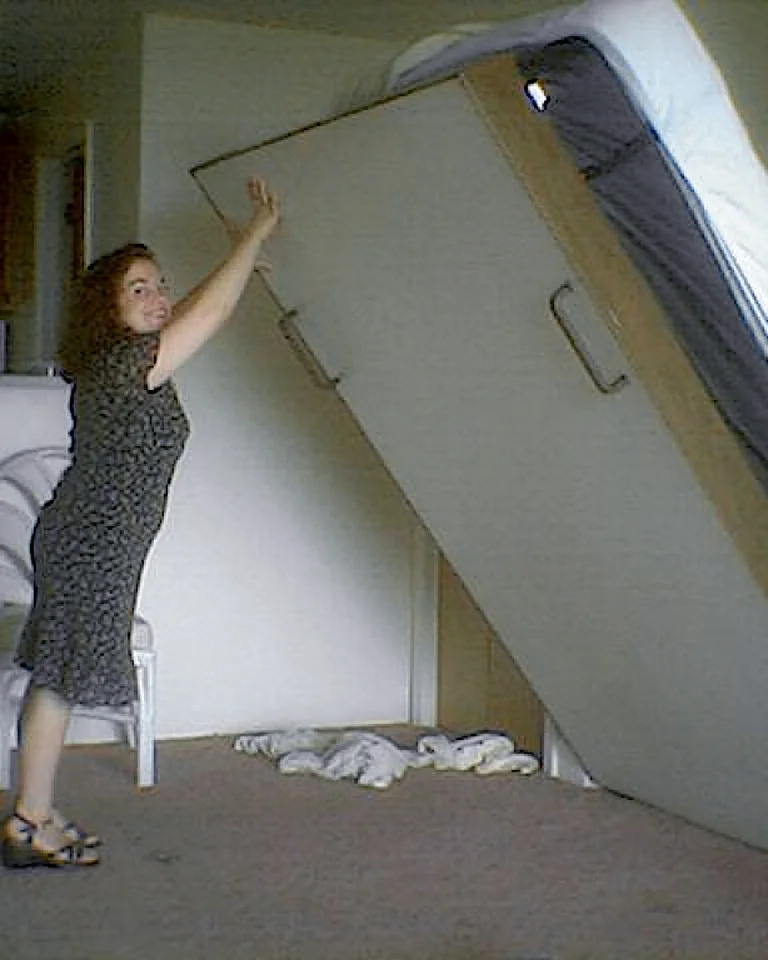
A wall bed folds up in the morning and hands your living room back for the day, which is exactly what a studio needs. The version that works best pairs the bed with cabinets on both sides: one side holds daily clothes and the other holds bedding, so making the bed in the morning is a two-minute job rather than a reshuffling project. Measure carefully — you need clear floor space in front of the cabinet equal to the bed’s length, and the mechanism must be anchored into studs, not just drywall. If a full wall bed is out of budget, a good middle ground is a daybed with deep drawers, which reads as a sofa by day and a bed by night. For more ways to make a bed pull double duty, see these under-bed storage ideas.
3. A Storage Divider That Separates Sleep From Living
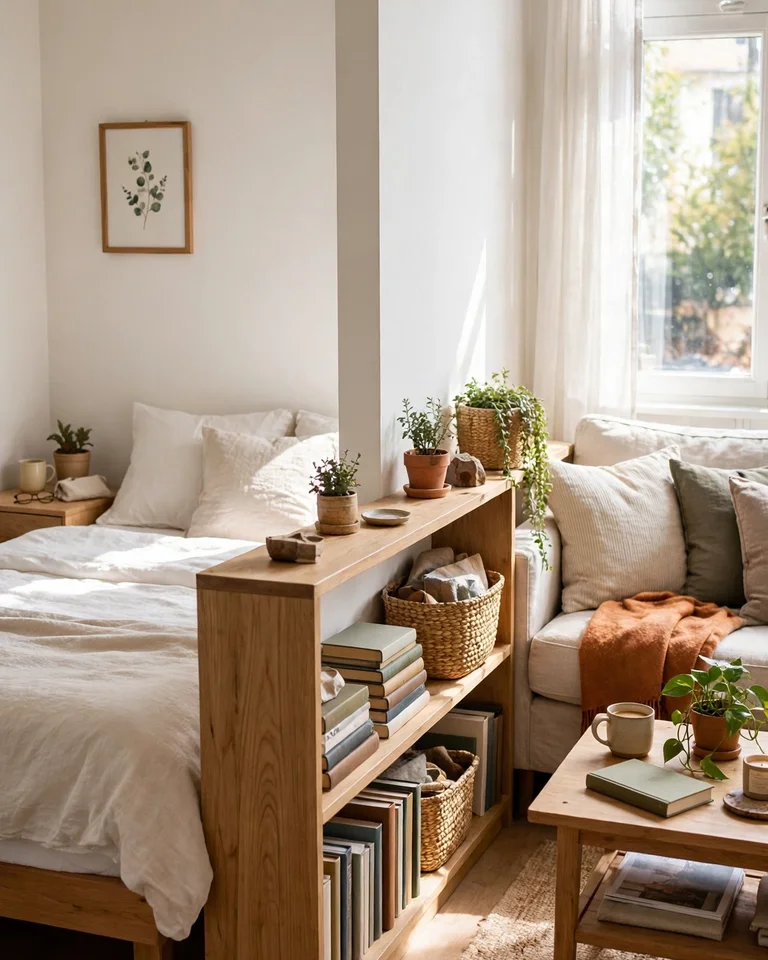
In a studio, the hardest problem isn’t always space — it’s that the bed is always visible from the sofa, so the room never feels like it changes purpose. A storage divider solves both problems at once: an open shelving unit or a low bookcase placed perpendicular to the wall creates a visual boundary between the sleeping zone and the living zone while adding shelves for books, baskets, and daily gear. Keep it open-backed rather than solid so light still travels through the room, and cap the height around four to five feet so the space doesn’t feel boxed in. Put the prettiest, calmest items on the living-room side and the practical stuff — chargers, notebooks, folded throws — on the bedroom side. If you like the open-shelf look, these floating shelf ideas room by room show how to carry the same approach onto the walls.
4. A Platform Bed With Deep Drawers
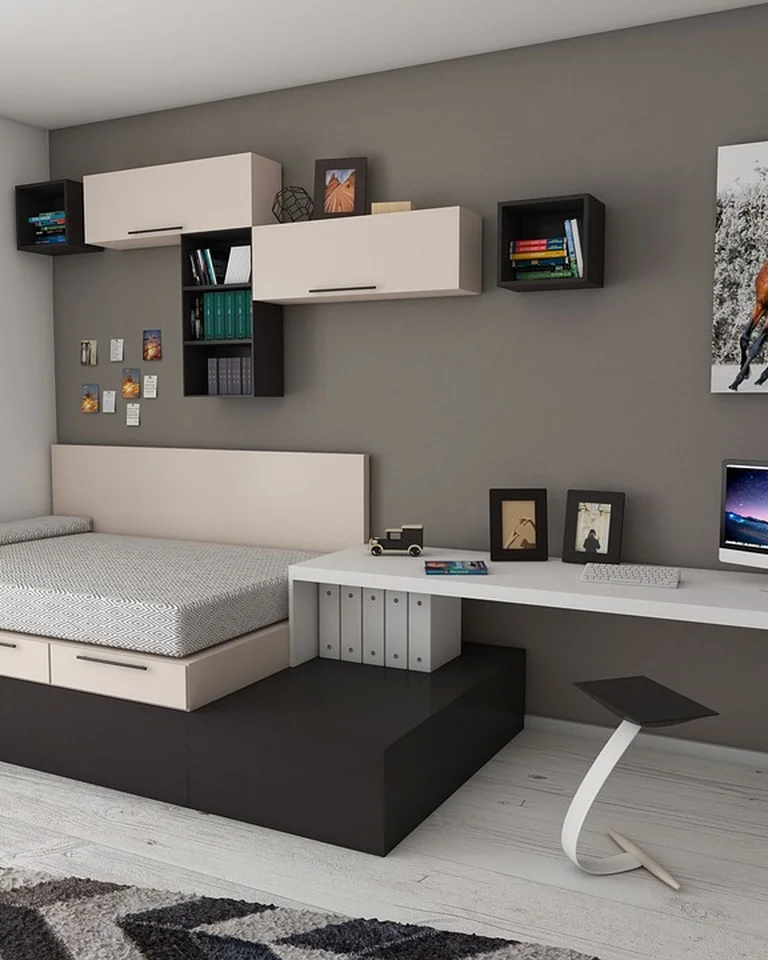
The space under a bed is the largest unused storage area in most studios, and a platform bed with built-in drawers turns it into a dresser. Deep drawers beat bins here because you can pull them open and see everything without dragging a box out from under the frame. Use the drawers closest to your pillow for daily clothes and the far ones for off-season items, and keep a simple rule: if a drawer won’t close easily, something in it needs to go. This single piece can replace a whole dresser, which frees a wall for a desk or a reading chair. When drawers aren’t an option, shallow rolling bins on casters are the next best thing — just label them, or you’ll forget what’s inside within a month.
5. Over-Bed Bridge Shelving for Books and Bedding
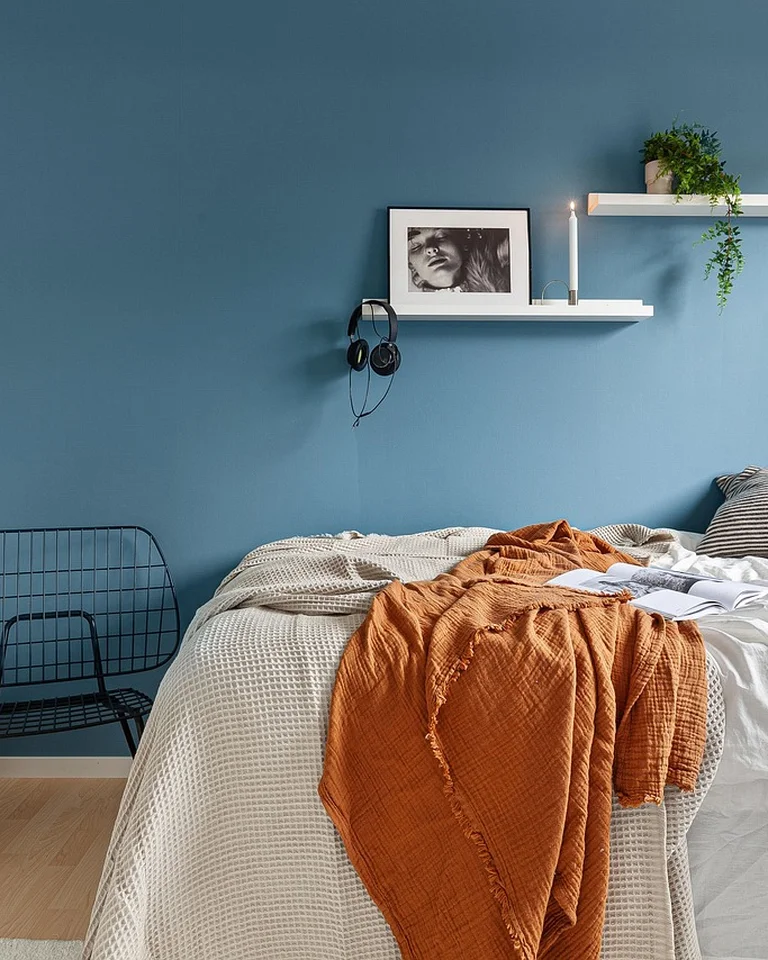
The wall above and around the head of the bed is usually empty, and a bridge of shelves there adds a surprising amount of storage without touching the floor. A shelf running across the top of the bed holds books and display pieces, while short side cabinets or cubbies handle chargers, a reading light, and nighttime essentials. Keep heavy items low and light items high, and anchor everything into studs — shelves above a bed are no place for adhesive strips. Leave the center of the bridge open or shallow so you never bump your head sitting up. This approach pairs well with a storage headboard, and it keeps the nightstand footprint small, which matters when the bed sits close to the living area.
6. Slim Rolling Carts for the Gaps Between Furniture
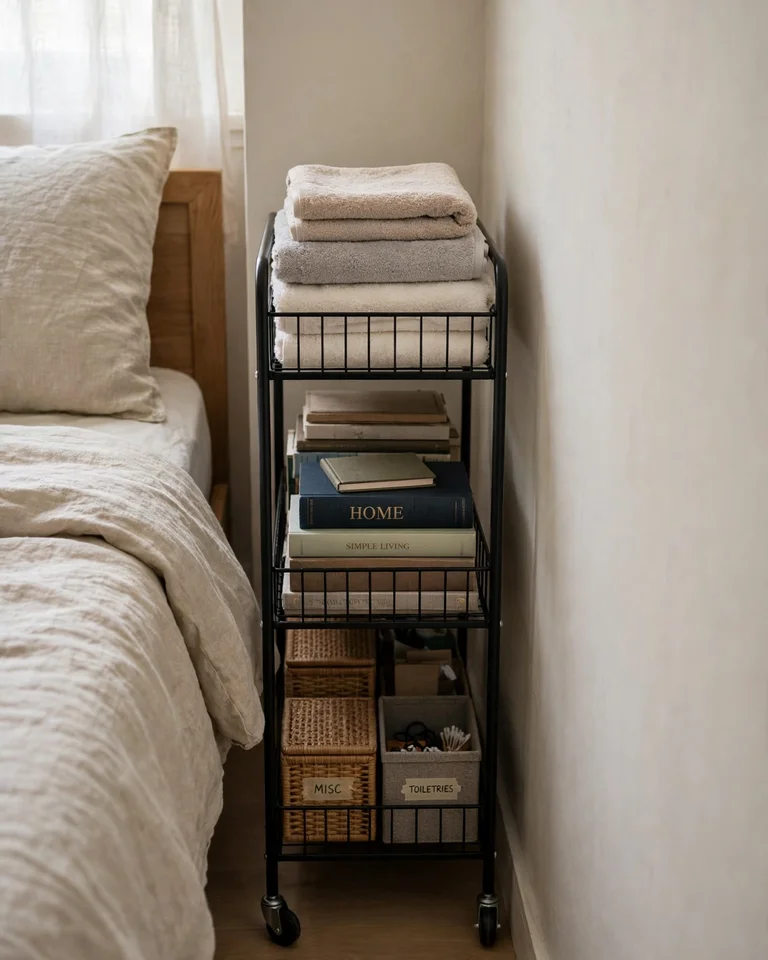
Every studio has gaps: between the bed and the wall, beside the fridge, between the dresser and the door frame. A slim rolling cart — usually 6 to 10 inches wide — slides into those gaps and holds exactly the kind of small stuff that otherwise lands on every flat surface: cleaning supplies, art materials, pantry overflow, or shoes. Because it rolls out, nothing gets lost at the back of a deep shelf, and because it’s narrow, it doesn’t steal usable floor. Buy one with a handle or a lip on top so items don’t slide off when you pull it out, and measure the gap before ordering — a cart that’s half an inch too wide is useless. Keep one cart per zone rather than one giant cart for the whole apartment, so each zone’s supplies live where they’re used.
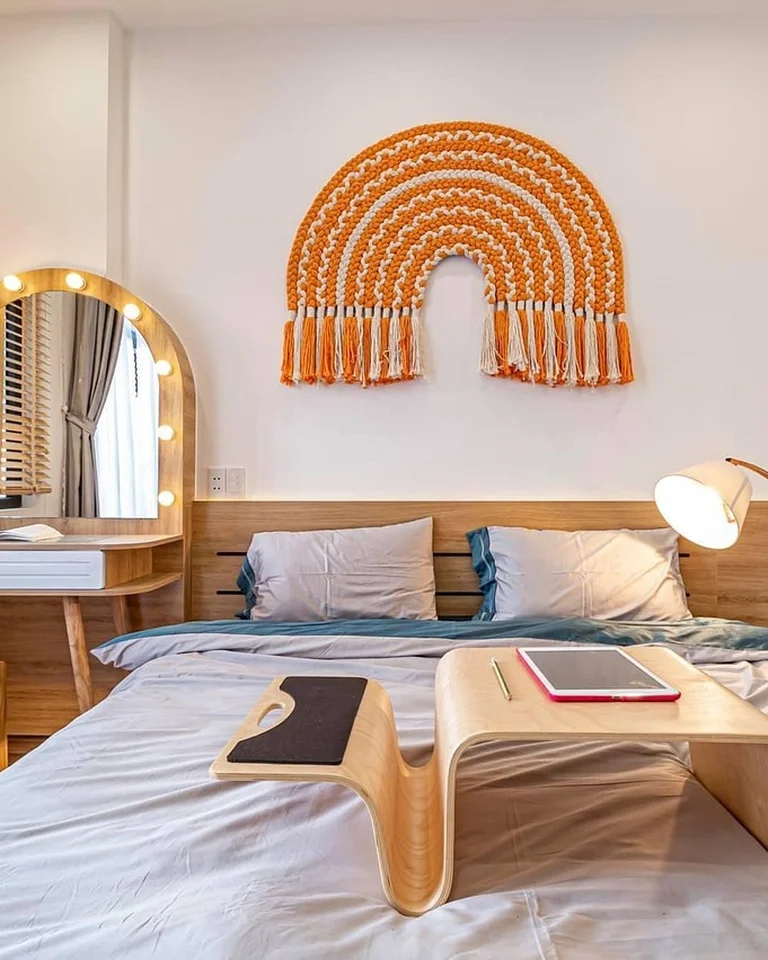
7. A Fold-Down Wall Desk That Disappears After Work
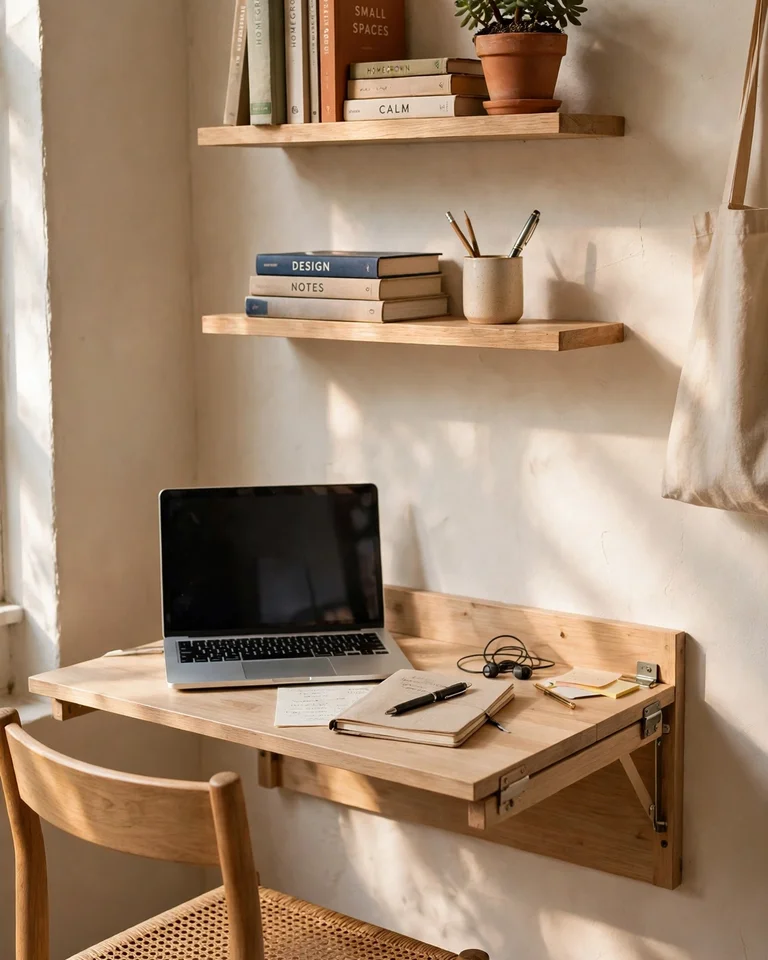
Working from a studio usually means the desk never leaves, even when the workday ends. A fold-down wall desk fixes that: it drops down for work and folds flat against the wall when you’re done, leaving the wall free and the floor clear. The best setups mount a shallow shelf or a couple of small cubbies above the desk for notebooks and supplies, so nothing has to live on the desk surface itself. Choose a model rated for your laptop plus a monitor if you use one, and anchor it into studs. A fold-down desk works best when it’s paired with a strict rule — when the desk folds up, the work supplies go in their cubby, not on the dining table. For more on making shared spaces work harder, see these shared desk space ideas (useful even when the second person is just future-you).
8. Storage Ottomans and a Bench at the Foot of the Bed
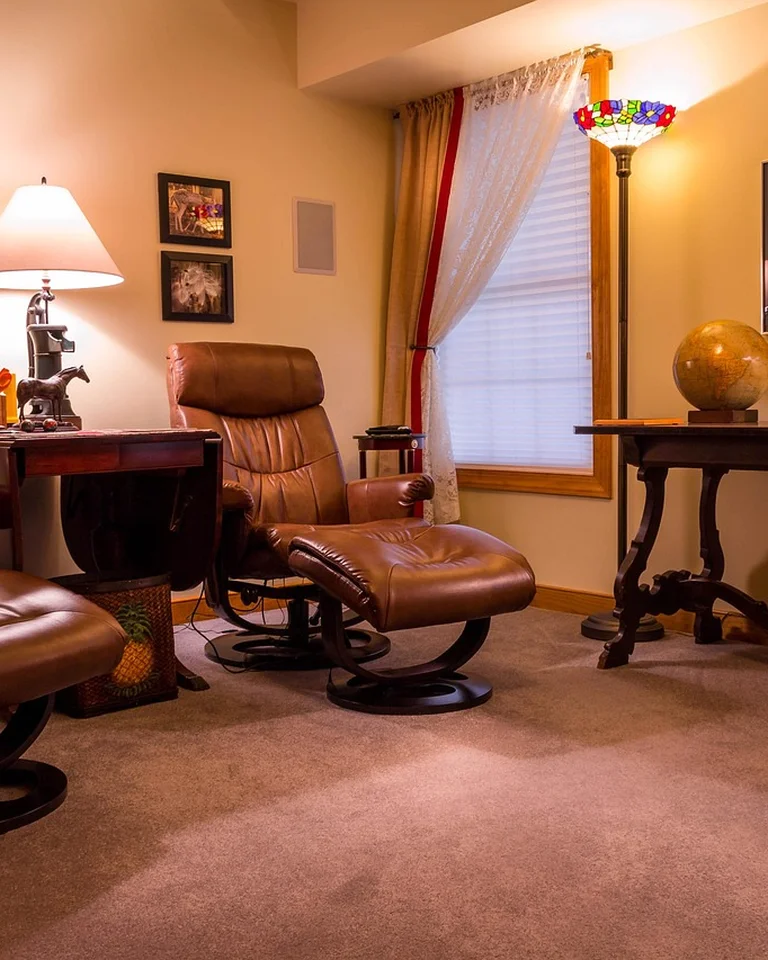
Seating is one of the easiest storage wins in a studio because every seat can hide something. A storage ottoman holds throws, board games, or extra pillows and doubles as a coffee table or extra seat when friends visit. A bench at the foot of the bed does the same job at a larger scale — seasonal bedding, luggage, or shoes — while giving you a place to sit while getting dressed. Choose pieces with lids that lift fully off or stay open on hinges, so you can actually use them one-handed, and pick a fabric or finish that matches the living side of the room, since these pieces sit in full view. If your entry area needs the same treatment, an entryway bench with storage by the door keeps shoes and bags from migrating into the bedroom zone.
9. Tall, Narrow Tower Shelves in Dead Corners
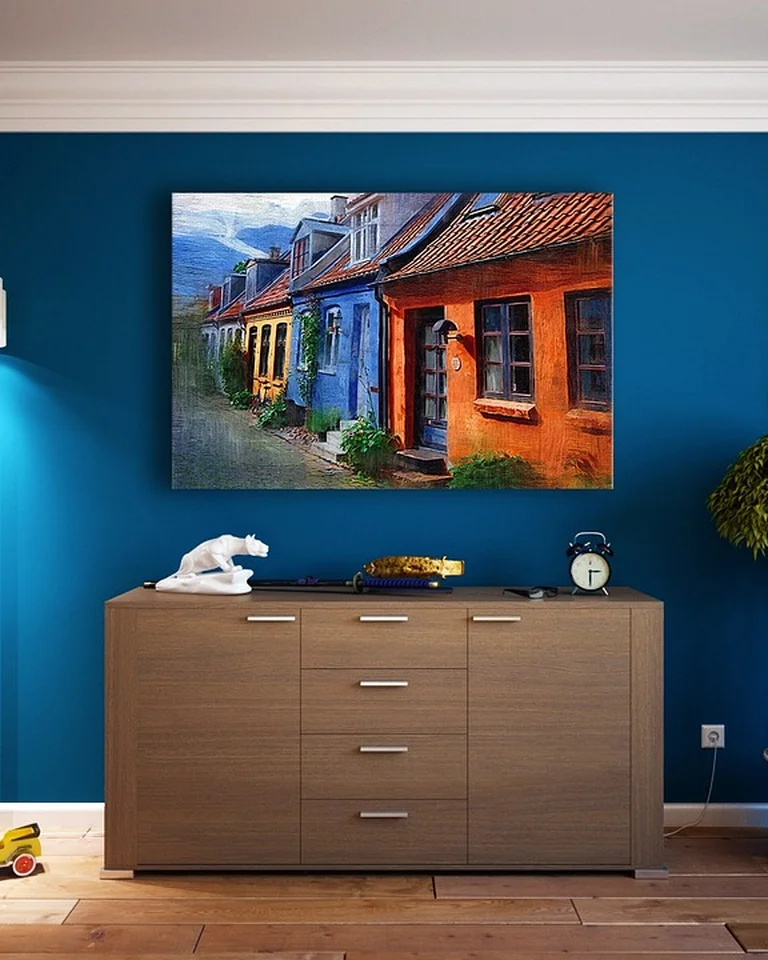
Corners are the most wasted space in a studio, and a tall, narrow tower shelf turns one into a full storage column without eating floor. A unit 12 to 16 inches wide and six feet tall holds folded clothes, shoes, baskets, and books in a footprint smaller than a dining chair. The trick is zoning the shelves by height: daily items between knee and eye level, weekly items above, and rarely used items at the very top in a closed basket. Put the tower in the corner nearest the activity it serves — near the bed for clothes and books, near the desk for supplies — and anchor it to the wall so it can’t tip. Two matching towers flanking a window or a desk can frame the room and double the storage without making it feel like a warehouse.
10. A Window-Seat Bench With Storage Underneath

If your studio has a decent window, the space beneath it is prime real estate. A window-seat bench with drawers or a lift-up lid underneath gives you a reading spot, a place for guests to perch, and hidden storage for bedding, board games, or off-season clothes in one piece. A cushion and a couple of pillows make it feel like a destination rather than a storage box, and it pairs beautifully with a small bookshelf on the adjacent wall to complete a reading corner. If building one isn’t an option, a low storage bench pushed under the window achieves nearly the same effect. Finish the corner with soft lighting and a throw, and it becomes the coziest seat in the apartment — which is exactly why it earns its floor space. For the full cozy-corner treatment, these cozy reading nook ideas show how to style it.
Frequently Asked Questions
What is the most space-efficient storage solution for a studio apartment?
A combination, not a single product: wall-mounted rails or shelves for daily items, a bed with drawers or under-bed bins for bulky items, and one piece of furniture that hides storage — like a storage ottoman or a bench — for everything in between. Studios fail when storage is scattered, so pick one system per zone and stick to it.
How do I store clothes in a studio apartment without a closet?
Build a small clothing zone instead of hunting for one big solution: a freestanding garment rack or wall rail for the clothes you wear this week, folded items on shelves or in a tower unit, and off-season clothes in under-bed bins or vacuum bags. Keep only the current season within easy reach, and rotate the rest out of the way.
Should I use vacuum bags for my entire wardrobe?
No — vacuum bags are for seasonal items you won’t touch for months, like winter coats and heavy bedding. Using them for everyday clothes wastes bags and wrinkles everything. Reserve them for the off-season rotation, and keep daily clothes on hangers or in drawers where you can reach them.
Can I use tension rods in a rental apartment?
Yes. Tension rods need no drilling, no damage, and no landlord permission, which makes them one of the most renter-friendly options. Use them inside a window frame for a curtain, across an alcove for hanging clothes, or inside a cabinet to create a second tier of storage.
How can I use hidden and under-bed storage effectively?
Choose drawers or rolling bins over stacked boxes so you can reach things without unpacking everything, label every container, and put only seasonal or rarely used items in the hardest-to-reach spots. Measure your bed’s clearance first — low-profile bins work under most frames, but a bed that sits nearly on the floor leaves no room at all.
Conclusion
Studio bedroom storage works when every item has a zone and every piece of furniture earns its floor space. Start with the biggest wins — the bed, the walls, and the corners — then add smaller pieces only where a specific pile of stuff still has no home. A studio that stores well doesn’t just look tidier; it feels larger, because the sleeping zone and the living zone finally stop competing for the same square feet.