
12 Apartment Bedroom Storage Ideas That Don’t Eat Your Floor Space
Most apartment bedrooms do not have a storage shortage. They have a floor shortage. The bed, the dresser, and the nightstand already claim the walkable space, so every new bin or basket just makes the room feel smaller. The fix is to store things where you do not walk: on the walls, above doors, under the bed, and in furniture that already has to be there. These 12 apartment bedroom storage ideas add real capacity without taking a single extra square foot of floor.
Start with a quick audit before you buy anything. Measure the clearance under your bed, the width of the gap between your bed and the wall, and the empty wall above your door and headboard. Those four measurements decide which ideas below will actually work in your room, and they stop you from buying bins that do not slide under the frame or shelves that do not fit the wall.
1. Run a Shelf Across the Headboard Wall
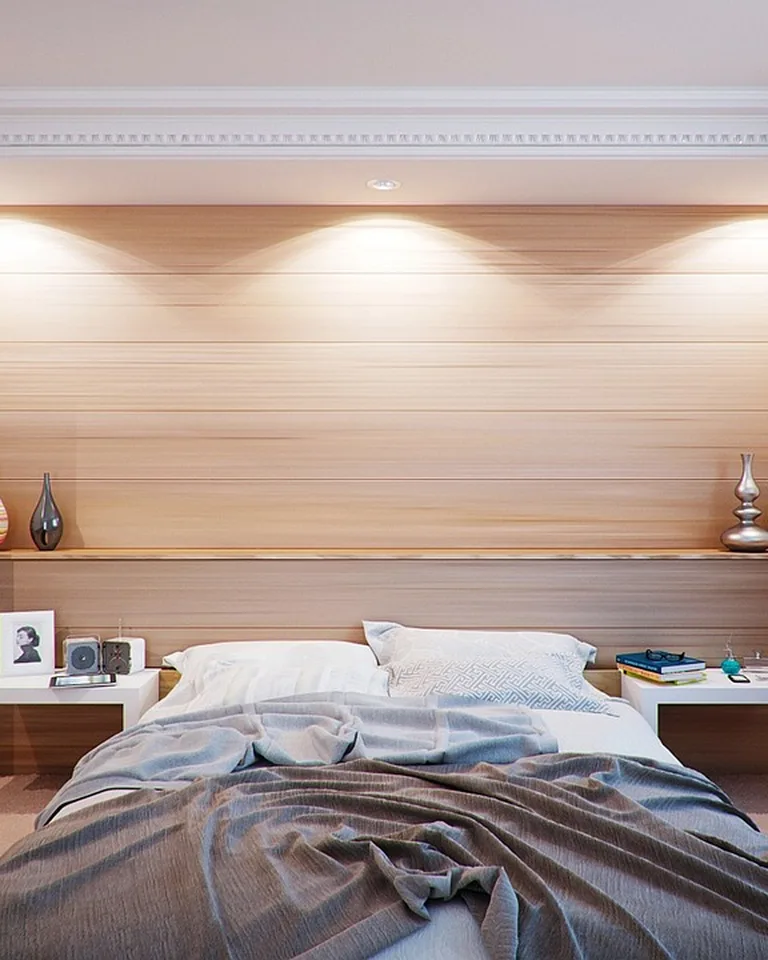
The wall above your headboard is usually blank, and it is the easiest vertical storage in the room. One long shelf, mounted at a height you can reach while standing on the bed, holds books, a clock, and a small basket for chargers. Keep the shelf shallow, around 8 to 10 inches deep, so nothing hangs over your pillow. If you want more capacity, run a second shelf higher up for things you rarely grab, like photo boxes and spare blankets in matching bins.
2. Use the Shelf Space Above the Door
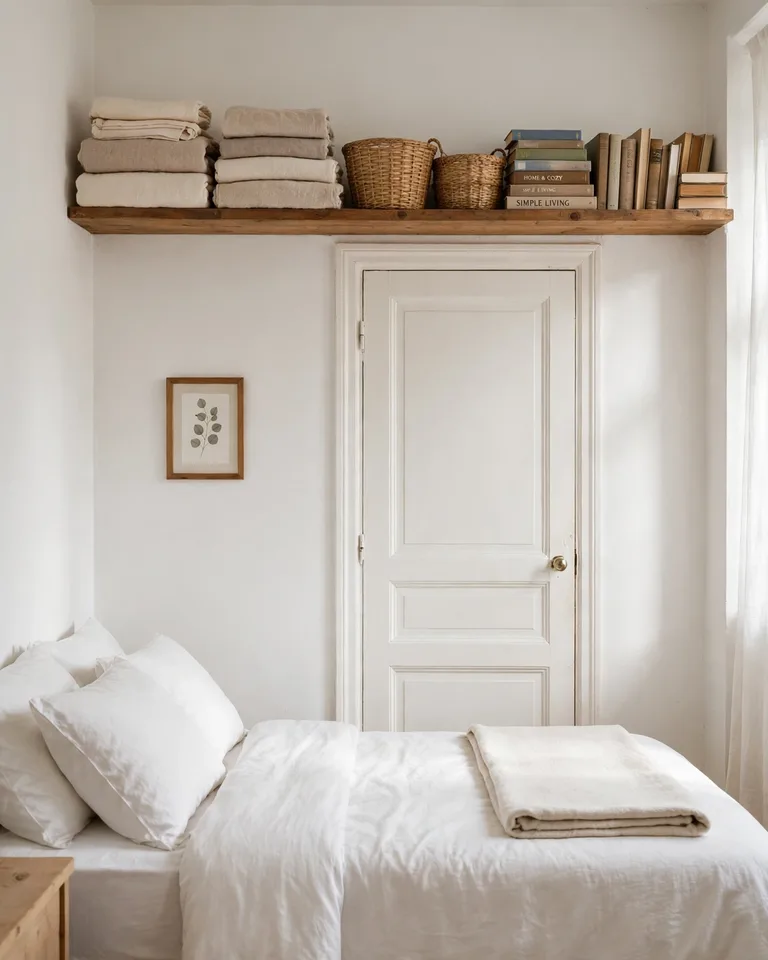
The strip of wall above the bedroom door is dead space in almost every apartment, yet it is deep enough for a full shelf of folded linens, off-season clothes in labeled boxes, or board games. Mount the shelf a few inches above the door frame and keep the items in uniform boxes so the row reads as intentional rather than cluttered. Because you need a step stool to reach it, reserve this shelf for things you touch once a season, not daily essentials.
3. Switch to a Storage Bed and Drop the Dresser
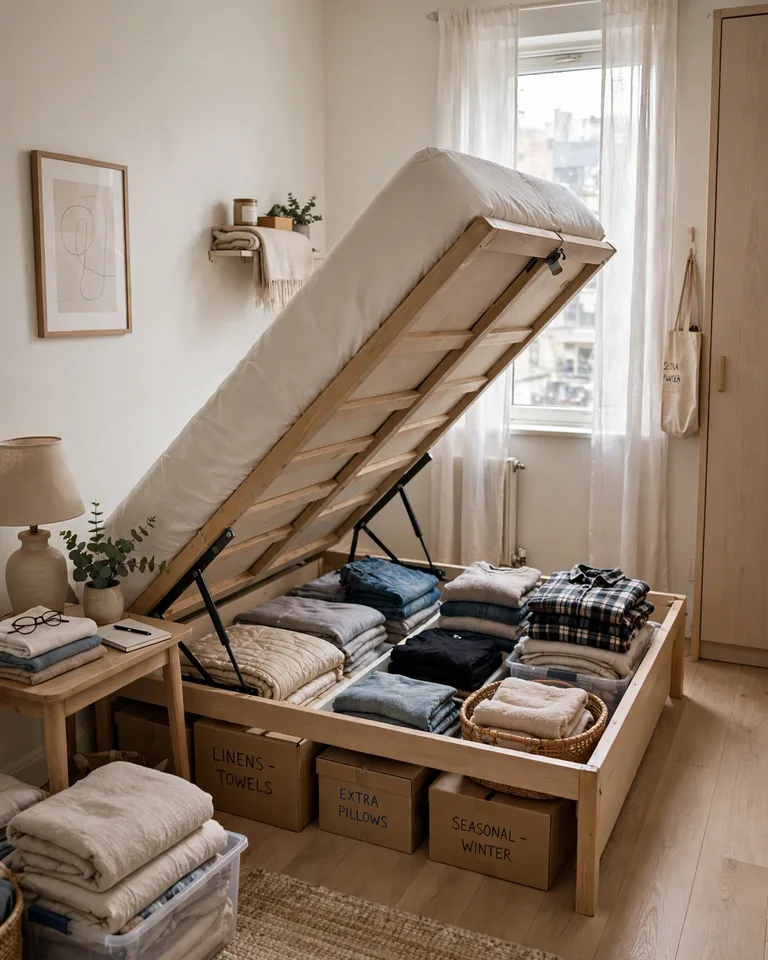
A lift-up storage bed or a frame with deep drawers holds roughly as much as a standard dresser, and it uses space the bed already occupies. That trade is what frees the wall where the dresser stood, which is often enough room for a desk, a reading chair, or simply open floor. When you shop, check the drawer or compartment depth and the weight rating of the lift mechanism, and skip frames with shallow drawers that only fit a few t-shirts. For more under-bed strategies, see these under-bed storage ideas that work with almost any frame.
4. Put Under-Bed Bins on a Seasonal Rotation
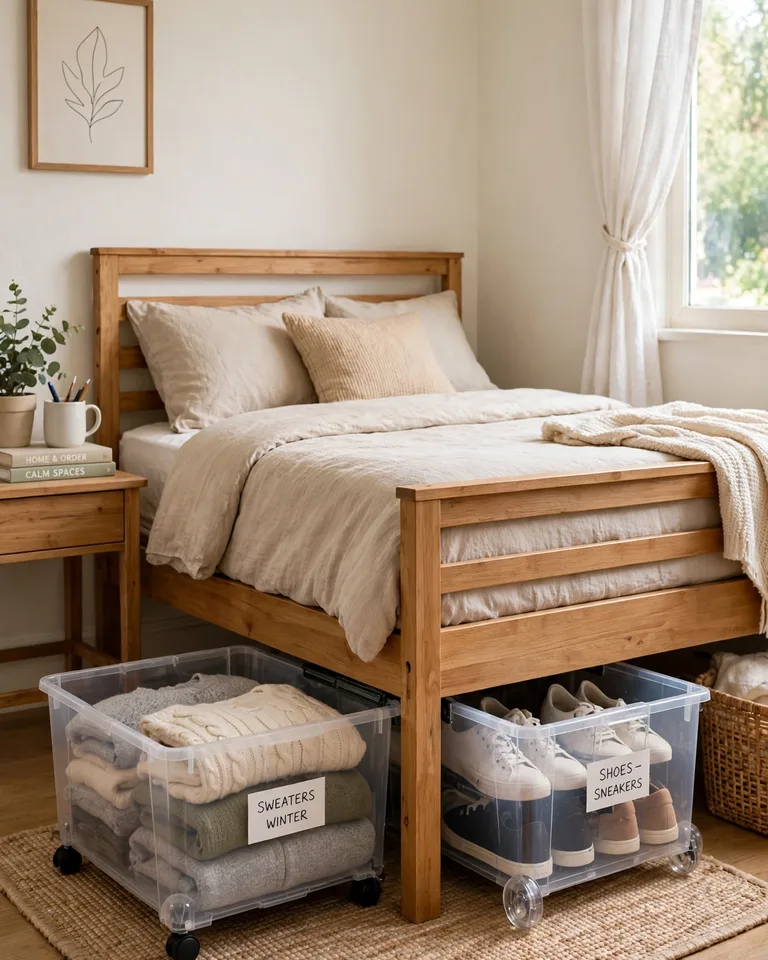
Under-bed storage fails when it becomes a junk drawer you never open. The rotation system fixes that: one bin holds the current season, one holds the next season, and a swap happens twice a year. Label each bin by season and category, use clear or lidded bins so dust stays out, and keep a small list on your phone of what is inside each one. Rolling bins with low profiles fit standard frames, and if your clearance is under 6 inches, flat fabric bags work better than rigid boxes. Pair this with the closet plan in these small bedroom storage ideas that hide clutter.
5. Slide a Slim Rolling Cart Into the Bed-to-Wall Gap
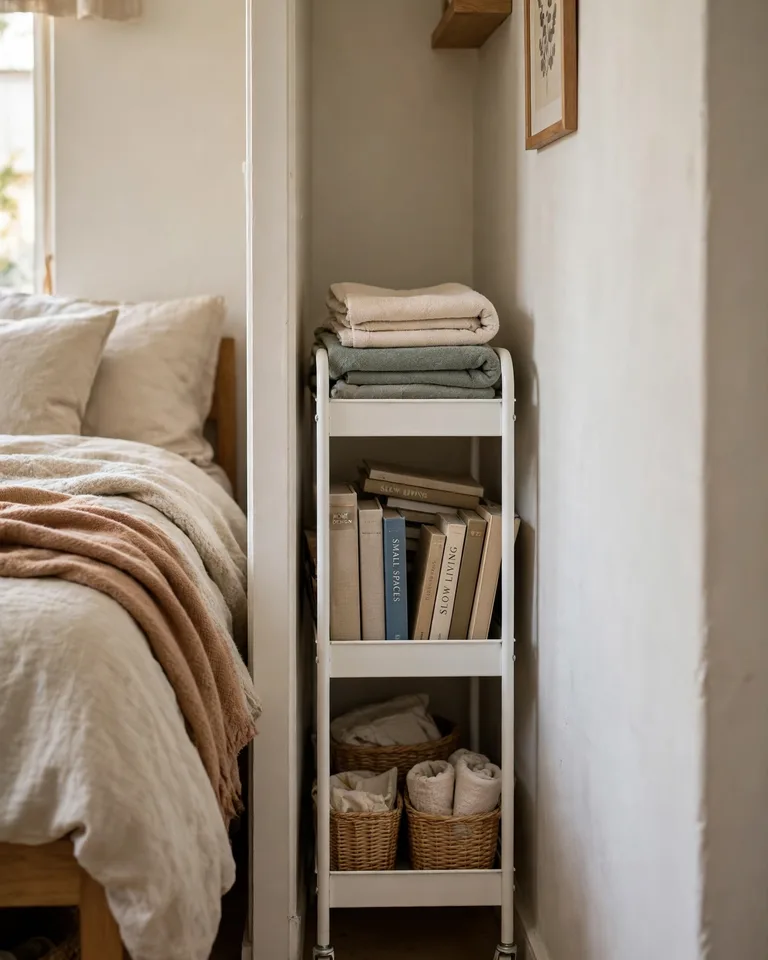
Most bedrooms have a gap of 8 to 12 inches between the bed and the wall, too narrow for furniture and too wide to ignore. A slim rolling cart turns that slot into storage for chargers, skincare, paperbacks, and a water bottle, and it pulls out when you need something from the bottom shelf. Choose a cart narrower than your gap by at least an inch, and put the heaviest items on the bottom shelf so it does not tip when you roll it out.
6. Build a Wardrobe Wall With an Open Rail
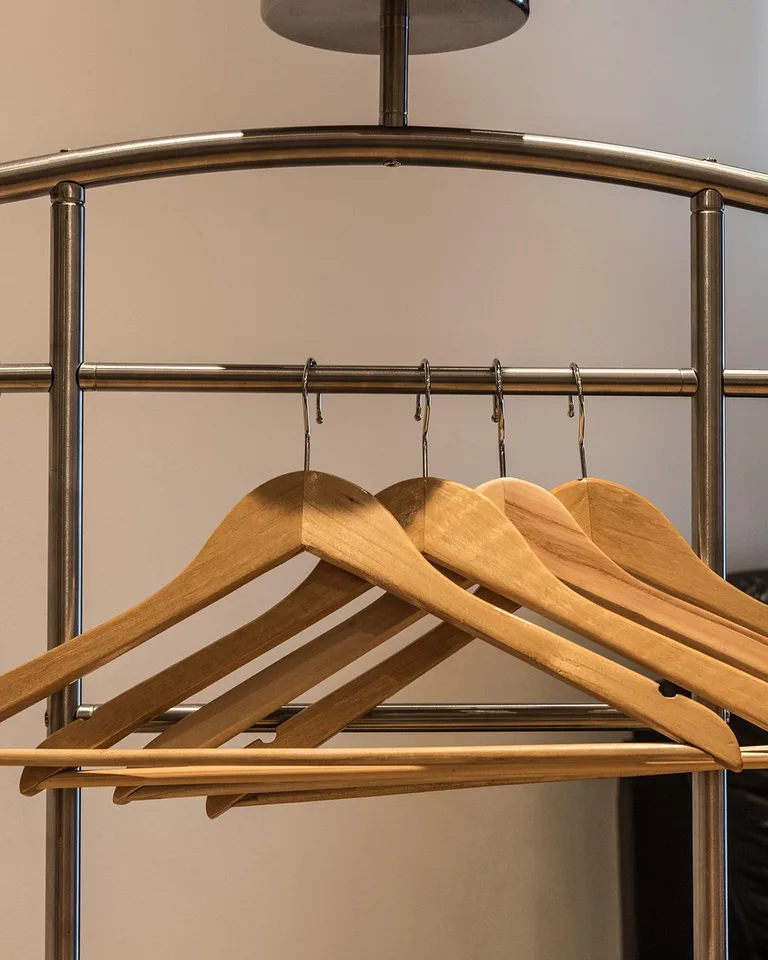
If your apartment has no closet, or the closet is tiny, one wall can become the wardrobe. A sturdy freestanding rail for hanging clothes, a low shelf or basket row underneath for shoes, and a couple of hooks for tomorrow’s outfit cover most of what a closet does, without any drilling. Keep the rail to the clothes you actually wear this season and store the rest under the bed, or the rail will look like a clothing store. These no-closet bedroom wardrobe alternatives show how to make an open rail look deliberate instead of temporary.
7. Choose a Storage Bench for the Foot of the Bed

A bench at the foot of the bed does three jobs: a seat for putting on shoes, a surface for laying out tomorrow’s clothes, and hidden storage for spare bedding, throws, and out-of-season pillows. Pick a bench no wider than your bed frame so it does not jut into the walking path, and favor a lift-off or hinged top over an open basket bench, which collects dust. If your room is too tight for a full bench, a storage ottoman in the same spot gives you most of the same capacity in a smaller footprint.
8. Turn the Back of the Door Into a Shoe and Accessory Station
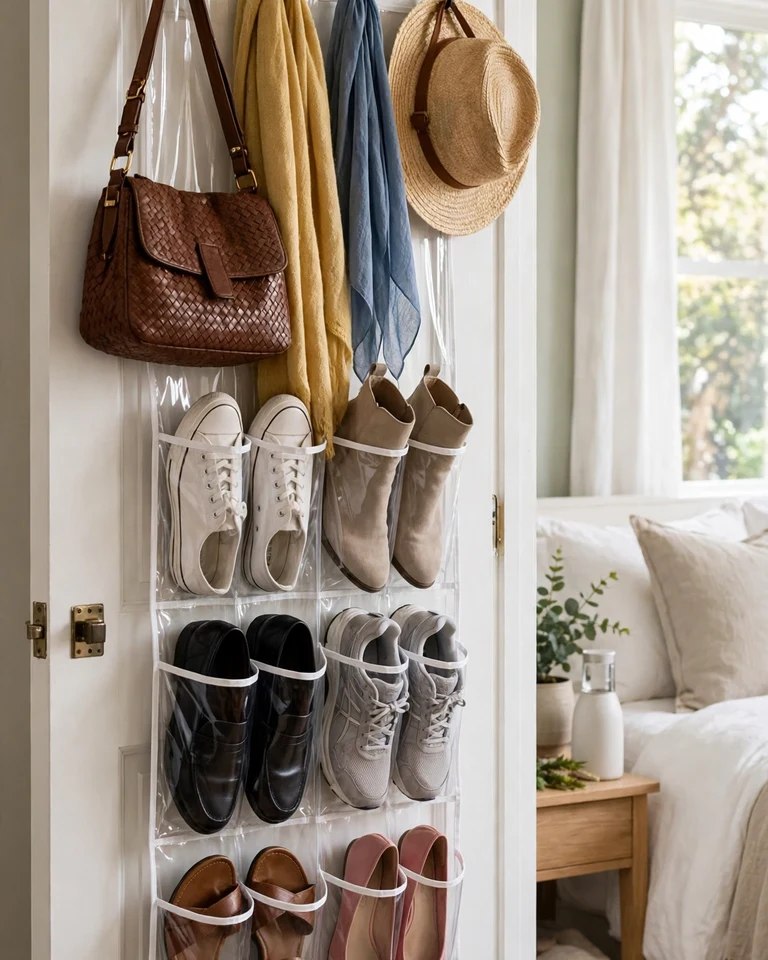
The back of the bedroom door holds a surprising amount: clear-pocket organizers for shoes, scarves, belts, and small accessories, plus a row of hooks above them for bags and hats. Metal hooks grip better than plastic on a door that opens and closes daily, and clear pockets beat fabric ones because you can see everything at a glance. Keep the organizer on the door that swings into the room least often, or the pockets will swing and rattle every time someone walks in. For a full no-closet plan, these no-closet bedroom storage ideas cover the rest of the room.
9. Flank the Window With Shelves
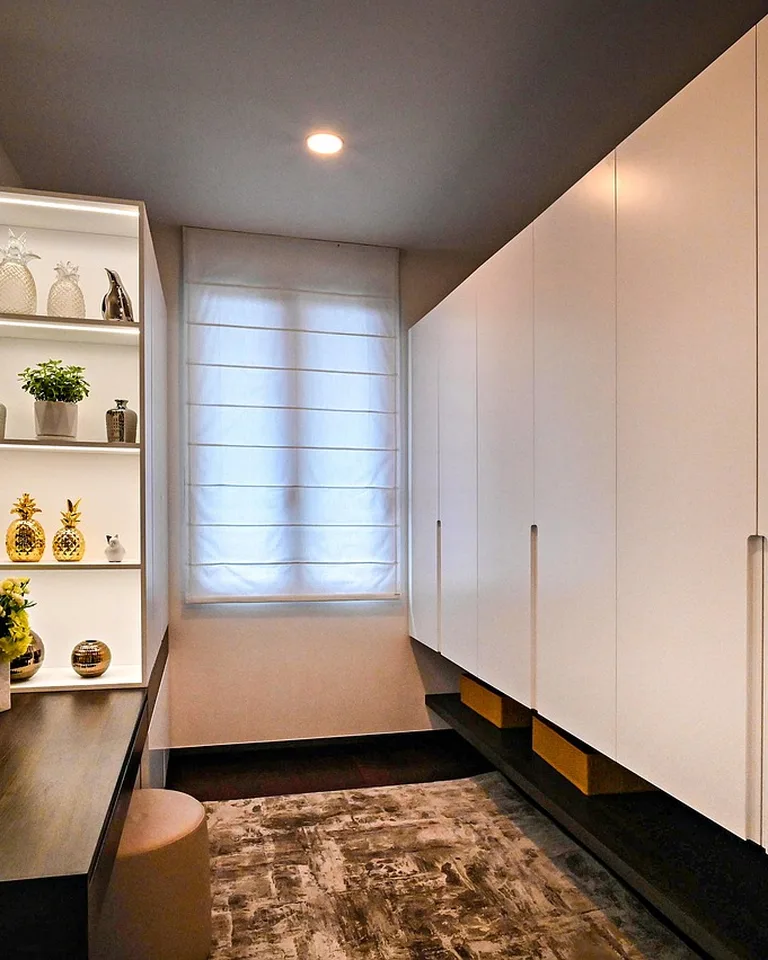
The wall on either side of a window is usually wasted, yet two matching shelves or a pair of narrow bookcases there frame the window and add storage for books, plants, and baskets. Keep the shelves the same height and finish so the window stays the focal point, and leave the middle of the window wall clear so daylight still reaches the room. In a rental, freestanding narrow bookcases do the same job with no holes in the wall.
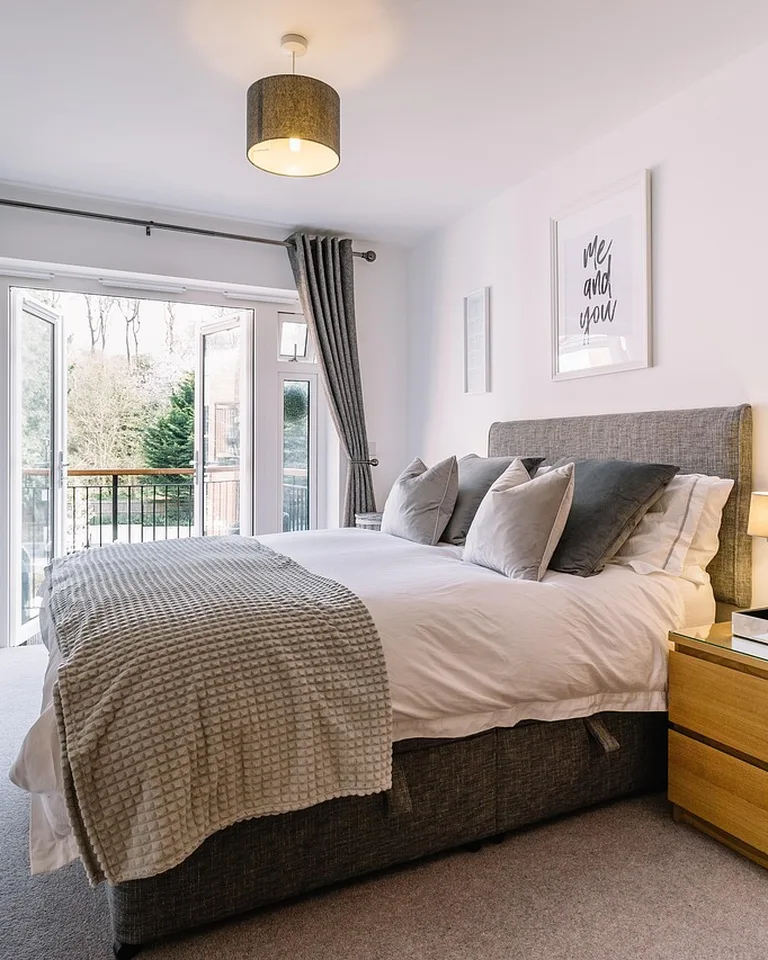
10. Stand a Tall, Narrow Tower in the Dead Corner
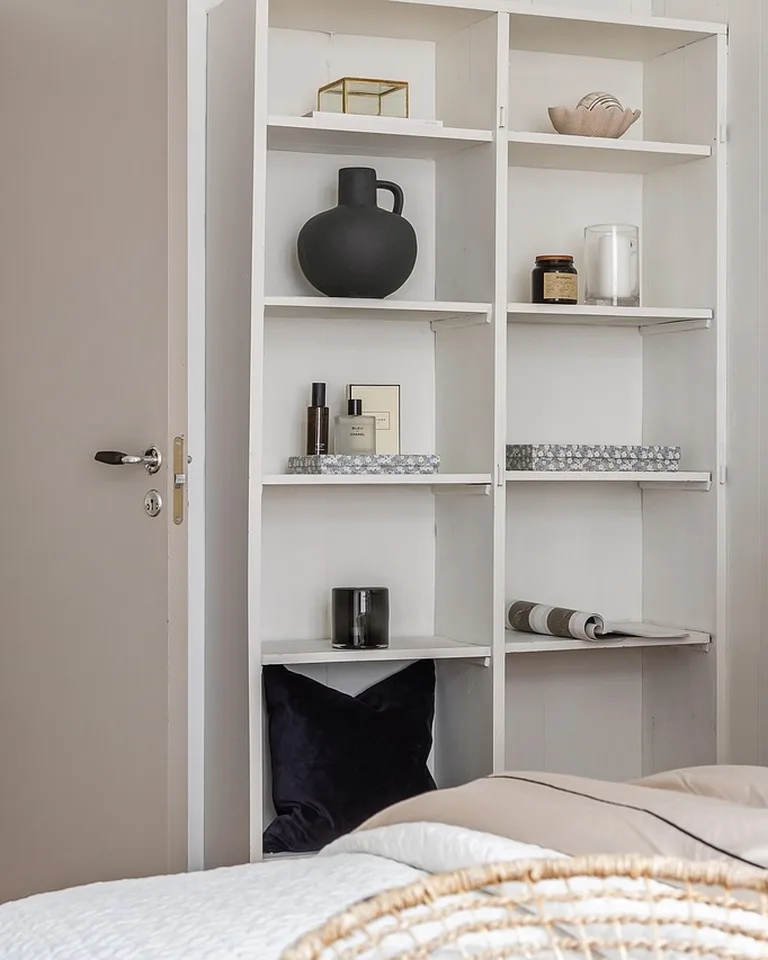
Every bedroom has a corner that is too small for a dresser and too awkward for a chair. A tall, narrow shelf tower, 12 to 16 inches wide and up to ceiling height, fits that corner and holds folded clothes, baskets, and books in the same footprint as a floor lamp. Put daily items at waist height, heavier items low, and rarely used boxes up top. Anchor the tower to the wall if you have kids or pets, since tall narrow furniture tips more easily than wide pieces.
11. Hang a Bedside Caddy Instead of a Nightstand
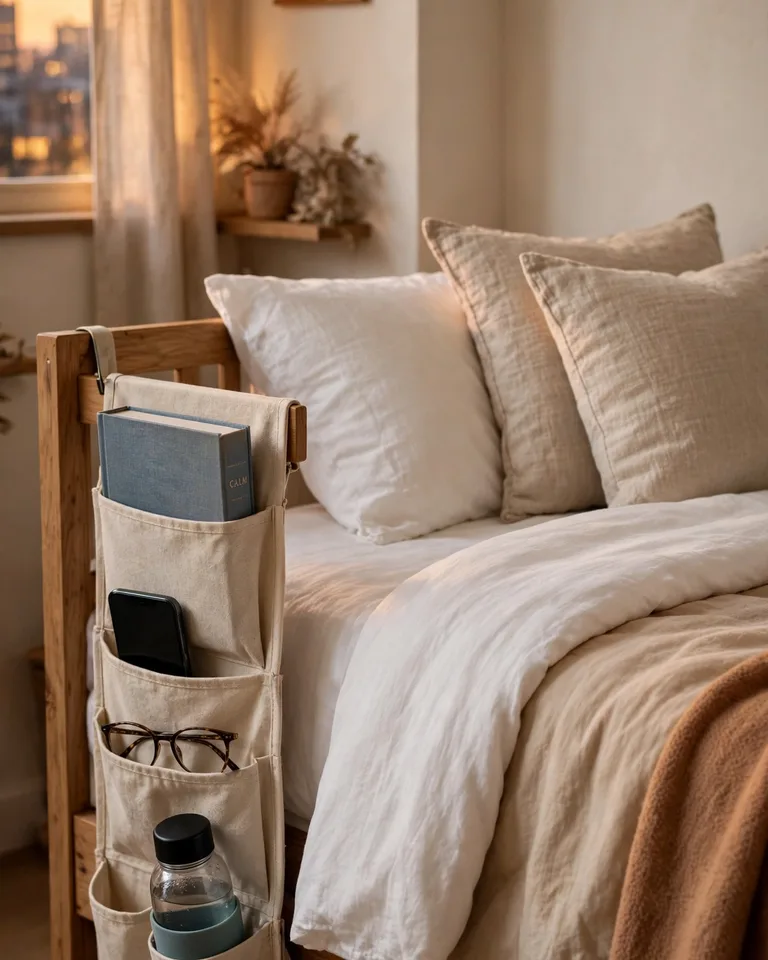
A traditional nightstand eats about four square feet of floor, which is a lot in a small apartment bedroom. A bedside caddy that slips under the mattress or hangs on the bed frame holds the same nightly essentials, phone, book, glasses, water bottle, and charger, and leaves the floor completely clear. It also works on the side of the bed that faces the wall, where a nightstand would never fit. If you still want a surface for a lamp, a clamp-on or wall-mounted light pairs with the caddy and keeps the floor open.
12. Run a High Shelf Near the Ceiling for Rarely Used Things
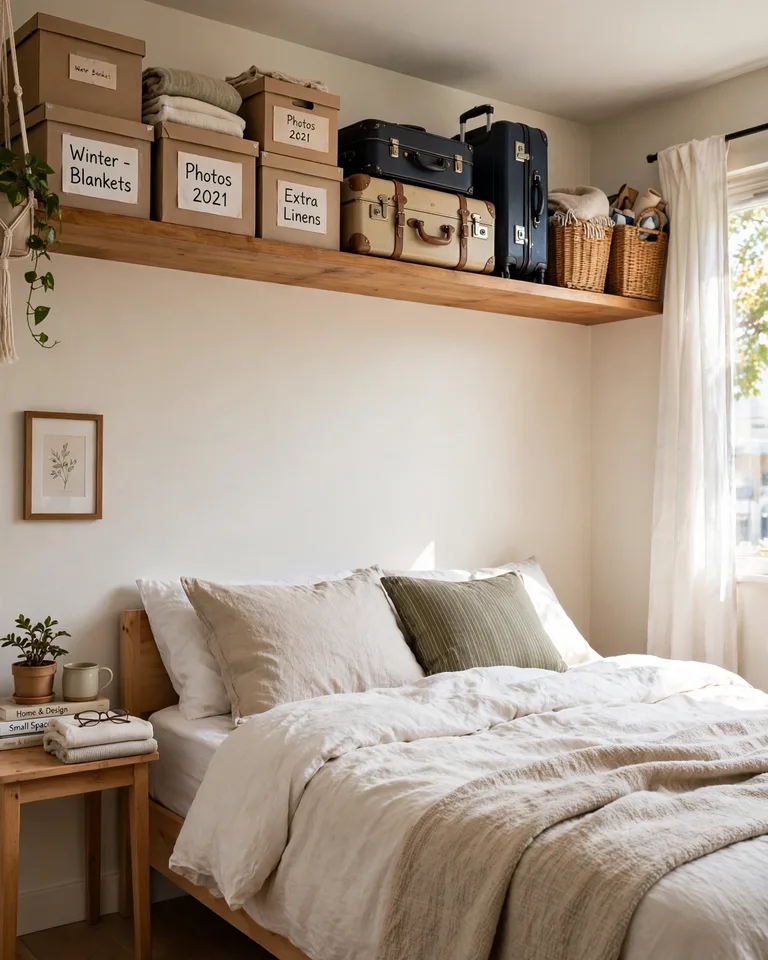
A single long shelf mounted 12 to 18 inches below the ceiling, running the length of one wall, is the best home for suitcases, memory boxes, and seasonal decor you touch once or twice a year. Use matching lidded boxes so the row looks tidy from below, and keep a folding step stool in the closet so reaching it is a two-minute job, not a production. Do not store anything heavy or fragile up here, and skip this idea on walls with sloped ceilings where the clearance gets tight. For a studio layout where every wall has to multitask, these studio bedroom storage ideas apply the same high-shelf logic across the whole room.
The pattern across all 12 ideas is simple: store up, store under, and make furniture do double duty. Pick the three that match your measurements, install them in one weekend, and the room will feel bigger without moving a single wall. If you are starting from scratch, these modern farmhouse bedroom storage ideas show how the same principles look in a finished room.
Frequently Asked Questions
What are the best bedroom storage ideas for a small apartment?
Start with the bed: under-bed bins or a storage bed frame add a dresser’s worth of space without new furniture. Then add vertical storage with shelves above the headboard or door, and finish with a storage bench at the foot of the bed. Those three moves roughly double a small bedroom’s capacity without changing its footprint.
How do you store clothes in a small bedroom?
Maximize the closet you have with a double-hang rod and hanging shelves, move off-season clothes under the bed in labeled bins, and keep only the current season’s clothes on an open rail or in the closet. If there is no closet at all, a freestanding rail plus a slim dresser or shelf tower covers hanging and folded clothes in one wall.
What can I use instead of a nightstand in a small bedroom?
A wall-mounted floating shelf, a slim rolling cart, or a bedside caddy that hangs on the bed frame all give you a spot for a phone, book, and water without the floor footprint of a nightstand. Floating shelves also clear the walkway around the bed, which matters more than the surface itself in a tight room.
How do you double your closet space?
Add a second hanging rod below the existing one for shirts and folded pants, hang shelves on the side wall for sweaters, and put an organizer on the inside of the closet door for shoes and accessories. Together these can take a small closet from about 24 garments to 60 or more, plus the door organizer’s pockets.
How do I organize a small apartment bedroom without a big closet?
Use under-bed storage for seasonal items, a closet doubler rod if you have even a small closet, and floor-to-ceiling shelving for folded items and overflow. An over-door organizer handles shoes and accessories, and if the closet is deep enough, tucking a small dresser inside frees an entire bedroom wall.