
10 Apartment Bedroom Decor Pieces That Make the Room Look Finished
A bedroom looks finished when four things are in place: the bed is anchored, the window is dressed, the light comes from more than one warm source, and every surface holds one intentional piece instead of clutter. You do not need new furniture or a renovation to get there. The ten apartment bedroom decor pieces below are the finishing layer — the pieces that turn a room with a bed and a dresser into a room that feels designed, even in a rental with plain walls and landlord blinds.
Work through the list in order if you are starting from scratch, or jump straight to the gap in your room. Most renters find that just three or four of these pieces — usually curtains, a rug, and better lighting — change the whole feel of the space. If your room feels small as well as unfinished, start with the pieces that add height and light before you add anything else; our guide to small apartment decor ideas covers the same space-stretching logic room by room.

1. Floor-to-Ceiling Curtains That Hide Renter Blinds
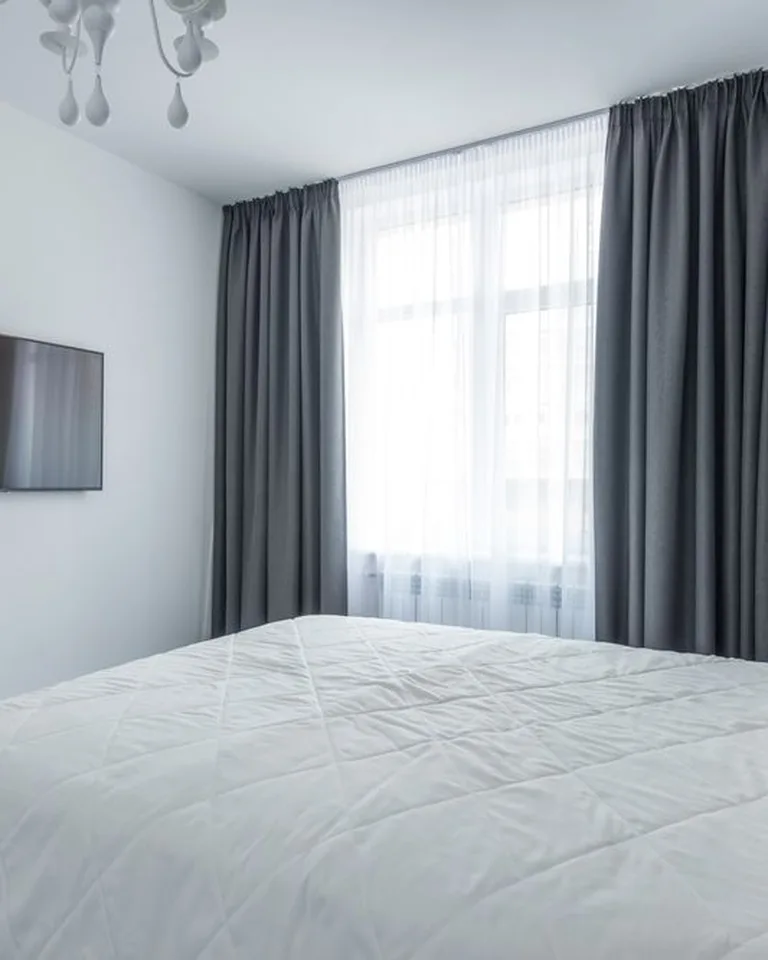
Standard apartment blinds are functional and forgettable, and they are usually the first thing that makes a bedroom read as temporary. Floor-to-ceiling curtains fix that in one move. Mount the rod close to the ceiling and extend it 6 to 10 inches past the window frame on each side, so the window looks taller and wider than it really is. A sheer inner layer keeps daytime privacy while the heavier outer panels add the softness the room is missing.
Choose a fabric that matches your bedding rather than a bold new color — linen-look panels in white, oatmeal, or soft gray disappear into the room in the best way and let the rest of your decor do the talking. If your ceilings feel low, this is the single highest-impact piece on the list; the same vertical trick is a core move in our low-ceiling bedroom weekend makeover. Use a tension rod inside the frame only if your lease forbids drilling, and skip short curtains that stop at the sill — they chop the wall in half and undo the effect.
2. A Rug Big Enough to Anchor the Bed
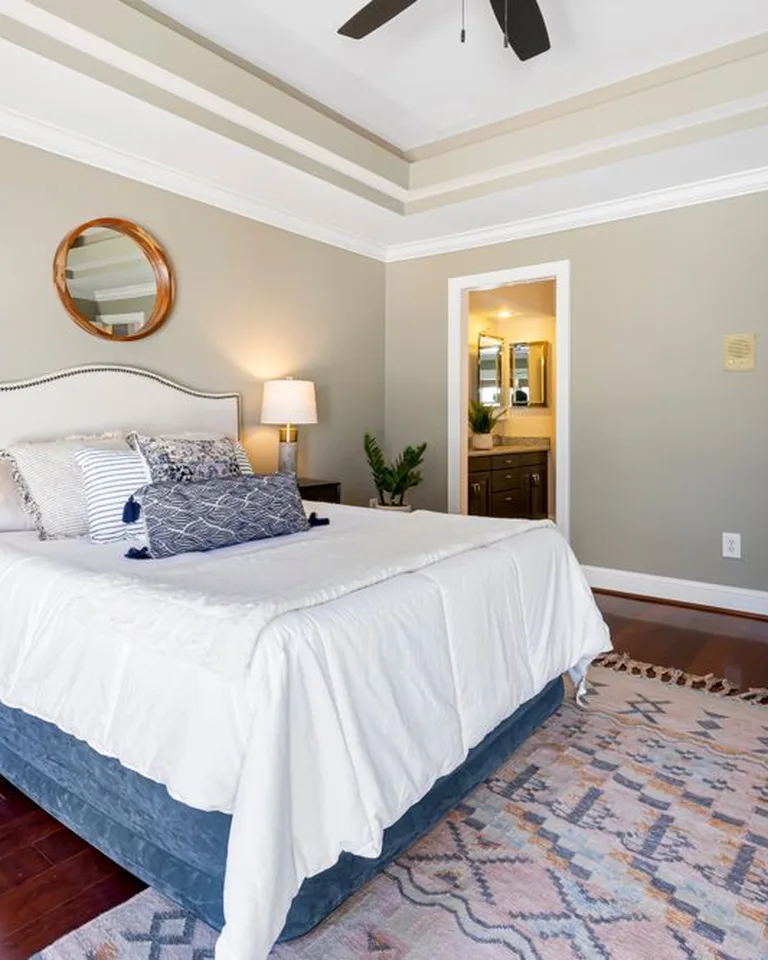
A rug that is too small floats in the middle of the room and makes everything else look scattered. The right one sits under the front two-thirds of the bed and extends at least 18 inches past each side, so your feet land on softness in the morning and the bed reads as one grounded zone. This works even over wall-to-wall carpet — the rug adds pattern and definition that flat carpet cannot.
Flat-weave or low-pile rugs are the practical pick for bedrooms, since they sit flat under the bed legs and are easy to vacuum. Pick one color from your bedding for the rug’s main tone and let the pattern carry a second accent color you repeat in pillows or art. If budget is tight, buy the rug before any other piece on this list: it covers more visual area than anything else you will add.
3. A Real Headboard, Even a Renter-Friendly One
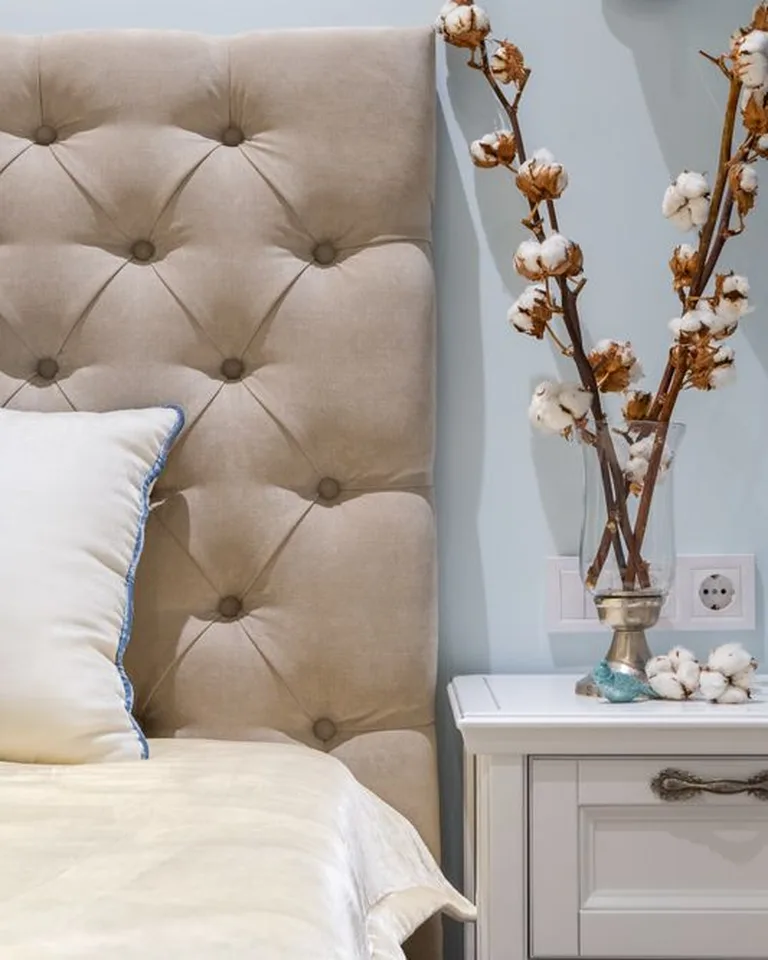
A mattress pushed against a bare wall is the clearest sign of an unfinished bedroom. A headboard gives the bed a back, a focal point, and a reason for the eye to stop. Upholstered headboards in linen or velvet soften the room instantly, while wood or cane versions add structure if the rest of your decor leans natural or coastal.
Renters who cannot bolt anything to the wall have good options: freestanding headboards that slot behind the bed frame, peel-and-stick upholstered panels, or a painted or wallpaper arch applied directly to the wall and removed at move-out. Whatever style you choose, aim for a headboard roughly the width of the bed or a few inches wider — a narrow headboard looks like an afterthought, while one that matches the bed’s width makes the whole bed wall feel deliberate.
4. Nightstands That Match in Height, Not Necessarily in Style
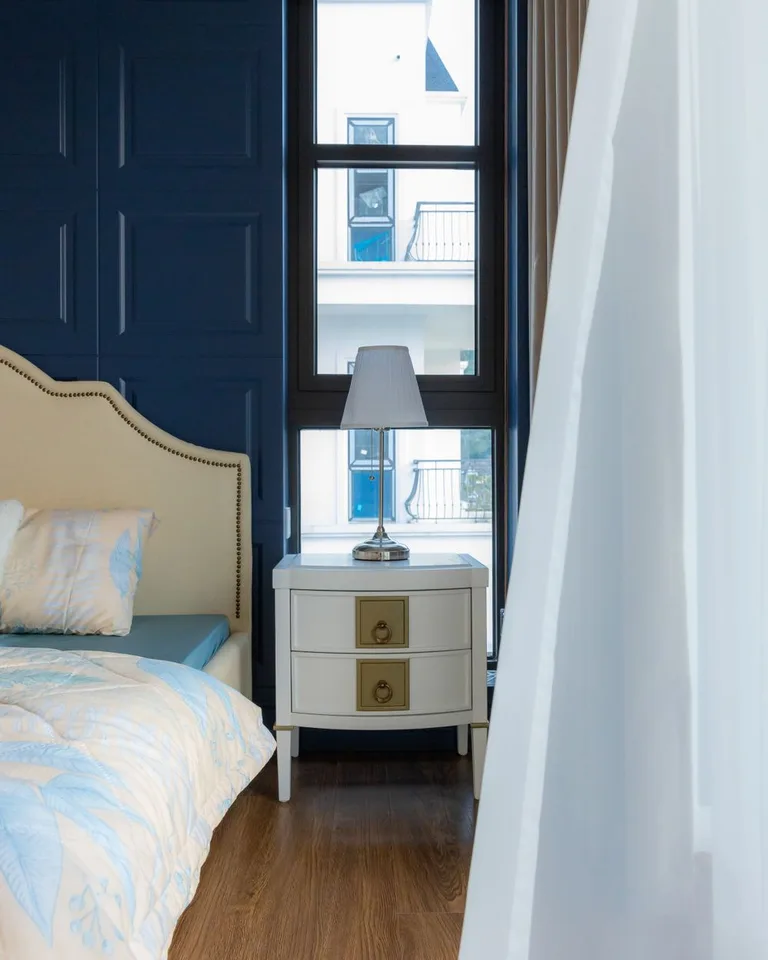
Symmetry beside the bed is what makes a bedroom feel calm, and it does not require two identical nightstands. What matters is height: both surfaces should sit within an inch or two of each other and roughly level with the top of your mattress, so lamps and books land at a natural reach from the bed. Mismatched styles — a wood table on one side, a painted one on the other — look collected rather than chaotic as long as the heights agree and one finish or color repeats somewhere else in the room.
Keep the tops edited. A lamp, a book, and one small personal object are enough; everything else belongs in the drawer. If you only have room for one nightstand, balance the other side with a wall-mounted shelf at the same height. For styling the rest of the room’s storage furniture the same way, see styling a dresser with what you have — the same rule applies: one repeated finish, edited surfaces, nothing piled.
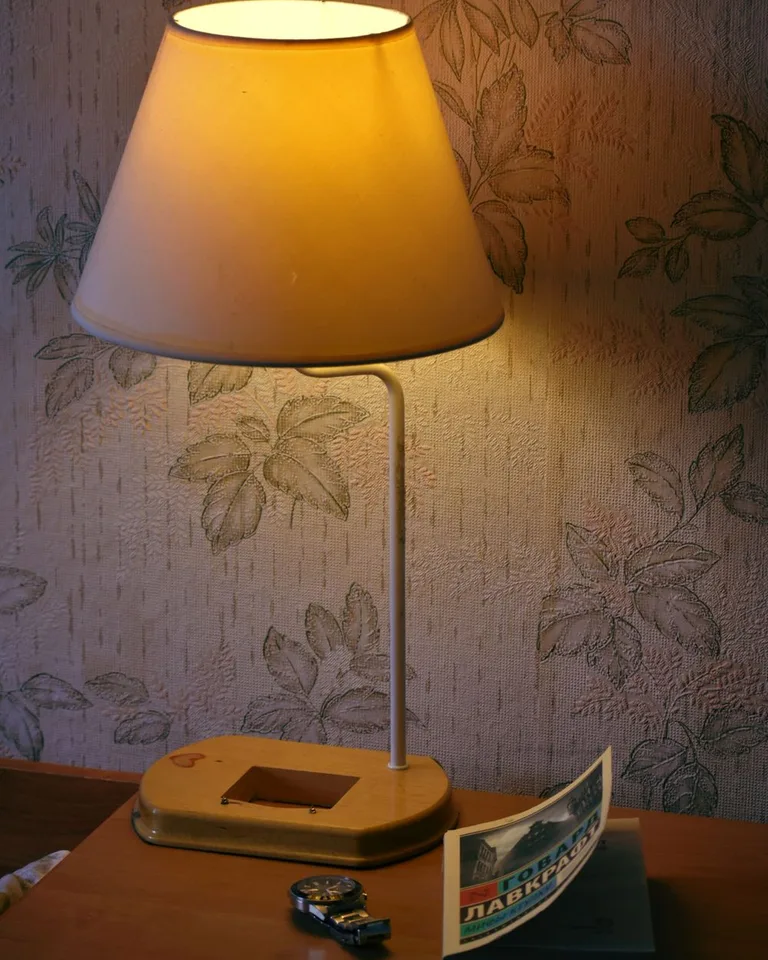
5. A Statement Bedside Lamp for Warm Light
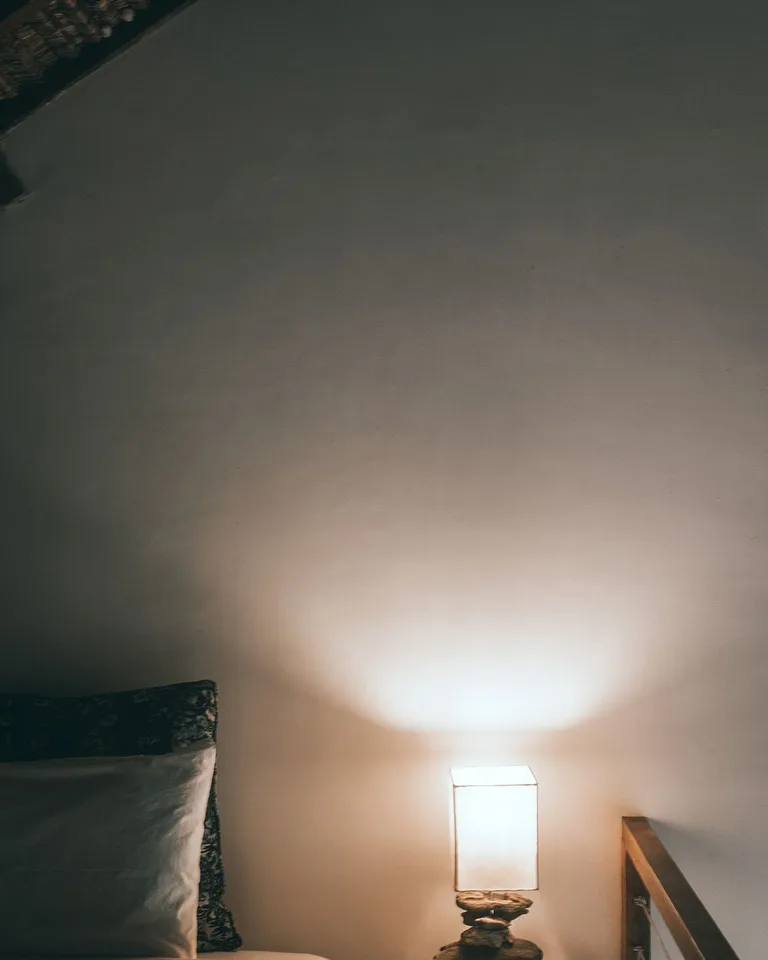
The overhead ceiling light is the enemy of a finished bedroom. One warm bedside lamp changes the room’s mood more than any single purchase, because it drops the light to eye level and softens every shadow. Look for a lamp with some presence — a ceramic, rattan, or sculptural base rather than the smallest lamp on the shelf — and fit it with a warm bulb around 2700K so the light reads golden, not clinical.
If you have two nightstands, two lamps double the effect and complete the symmetry from the previous idea. If you only have one, put the lamp on the side you use most and add a small second light source elsewhere in the room, like the sconces below. The goal is three light sources in total: your bedside lamp, one more lamp or sconce, and one dimmable or ambient option for evenings. If you read in bed, the same warm, low light is what makes a corner feel inviting — our cozy reading nook ideas show the chair-and-light formula that works in bedrooms too.
6. Plug-In Wall Sconces for a Hotel-Style Glow
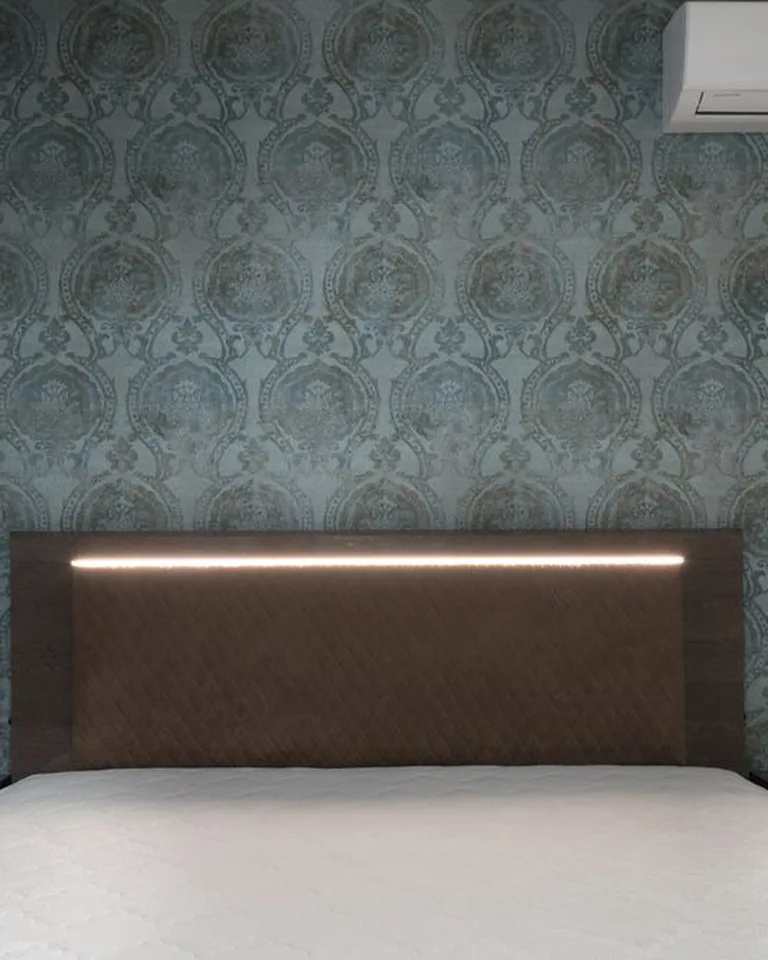
Sconces are the piece most renters skip and the one that most makes a bedroom feel like a boutique hotel. Battery-powered or plug-in sconces need no wiring: they mount with adhesive strips or a single small screw, and the cord can run down behind the nightstand or inside a slim cord cover painted to match the wall. Mounted just above and slightly outside each nightstand, they free up nightstand space and give you dedicated reading light.
Match the sconce finish to something already in the room — brass with a brass curtain rod, black with a black lamp base — so the new piece feels like it belongs. A pair of sconces plus your bedside lamp is the fastest way to reach that layered-lighting goal, and it costs far less than rewiring anything.
7. A Leaning Floor Mirror to Bounce Light
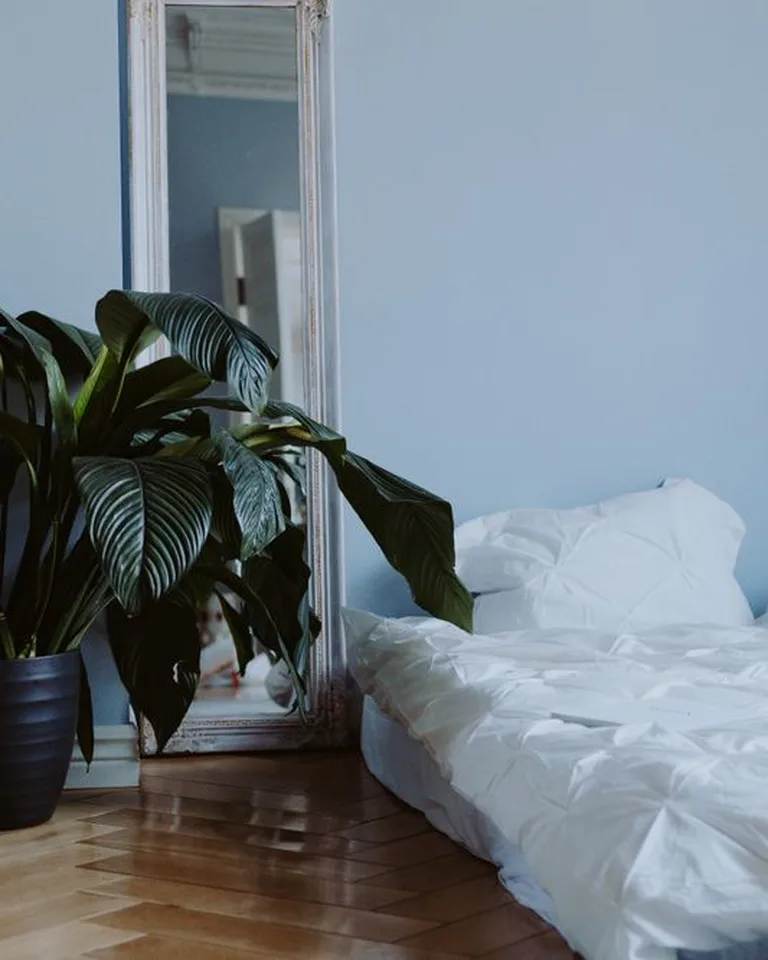
A full-length mirror leaning against the wall does three jobs at once: it gives you a place to check an outfit, it bounces daylight deeper into the room, and it makes a small bedroom feel larger by reflecting the opposite wall. Lean it rather than hanging it if your lease restricts wall anchors, and secure the top to the wall with an adhesive furniture strap if you have kids or pets.
Placement matters more than the frame. Angle the mirror so it reflects a window or a pretty corner, not the closet door or a blank wall. A simple wood or thin metal frame suits most apartments; an ornate frame works only if the rest of the room already leans traditional. Keep the floor in front of it clear — a mirror crowded by laundry or boxes reflects clutter back at you twice. If the room still feels improvised after the mirror goes up, the problem is usually storage, not decor; our guide to no-closet bedroom decor ideas that look intentional fixes that side of the finished look.
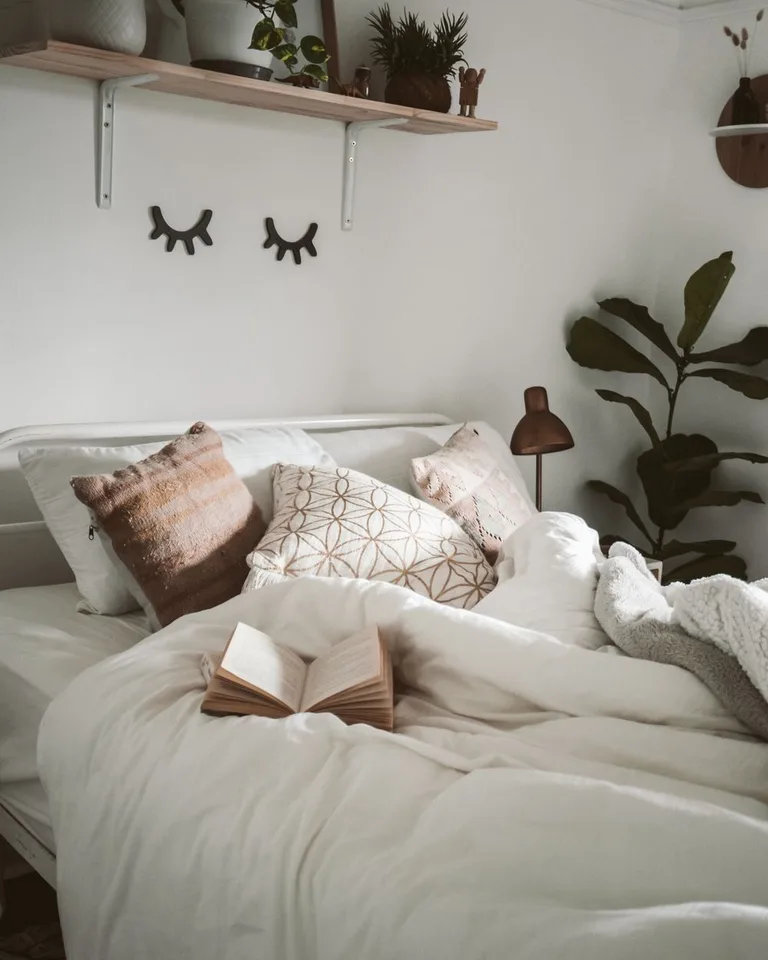
8. Textured Throw Pillows in a Tight Color Story
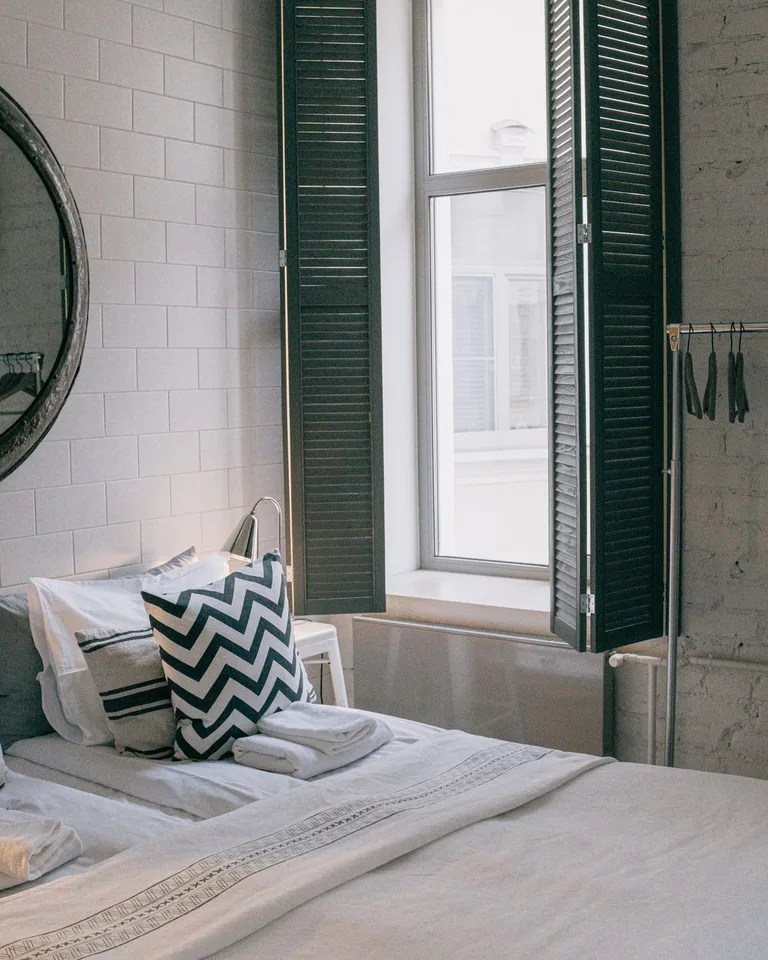
Throw pillows are where renters can afford to be bold, but the mistake is buying five unrelated pillows. Pick a color story first — two or three colors already in the room — and build the pillow set inside it: one solid in your main color, one pattern that mixes two of the colors, and one texture that contrasts with the bedding, like velvet against linen or knit against cotton. Three to five pillows on a queen bed is plenty; more than that turns bedtime into a chore.
Mix sizes rather than stacking identical squares: two standard sleeping pillows, two Euro squares in front of them, and one smaller lumbar pillow in front of that. The different sizes create depth, and the lumbar pillow is the easiest place to put your accent color. When the season changes, swap just the lumbar pillow and the throw — the cheapest refresh in this whole list.
9. A Throw or Quilt Layer at the Foot of the Bed
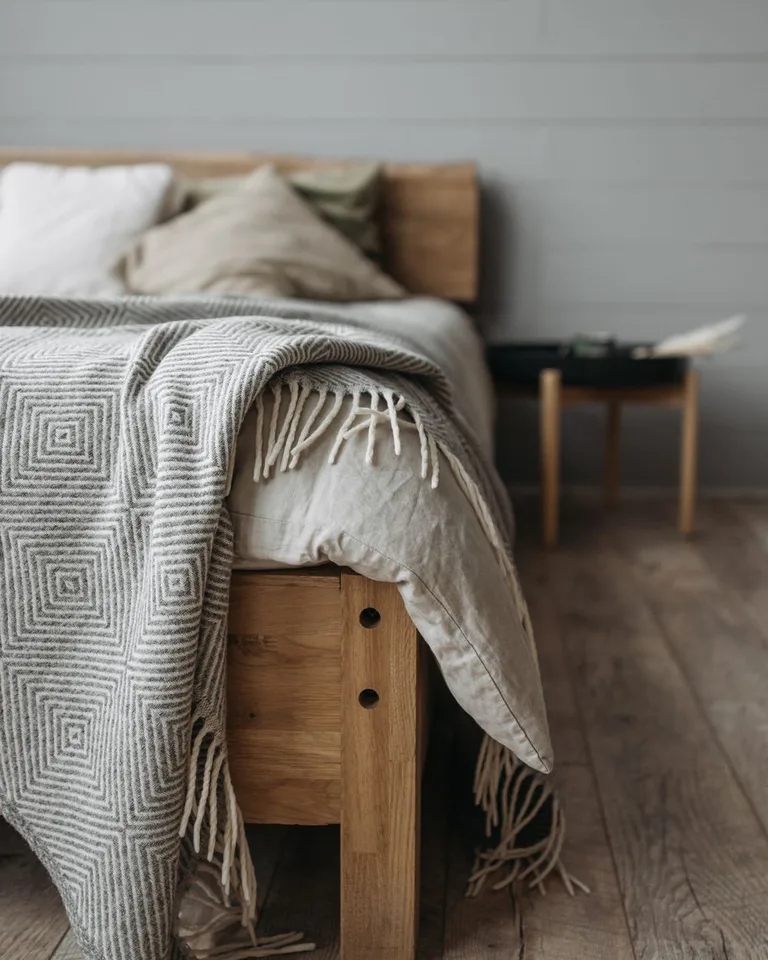
The last layer on the bed is what separates a made bed from a styled one. A throw or lightweight quilt folded across the foot of the bed adds a second texture, a second color, and a visual full stop at the end of the mattress. It also earns its keep on cold nights, which is more than most decor can say.
Choose a throw that contrasts with your duvet: a chunky knit over smooth cotton, a patterned woven throw over a solid cover, or a quilt in your accent color over neutral bedding. Fold it into thirds so it covers the bottom third of the bed, and let one edge drape slightly longer on one side for a relaxed rather than rigid look. If you already own a throw in another room, try it here first — the right throw is often one you already have. Small finishing touches like this are exactly what makes a house feel lived in rather than staged; our piece on small details that make a house feel homey collects more of them.
10. One Large Framed Piece Above the Bed
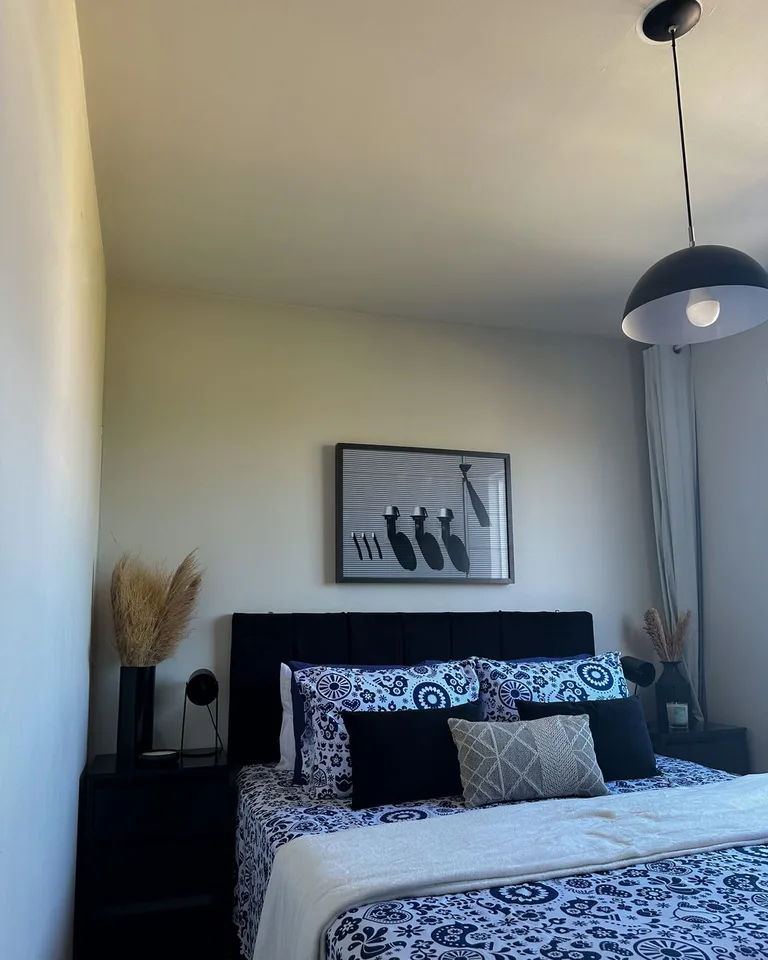
One large piece of art above the bed beats a scatter of small frames every time. It anchors the bed wall, ties your color story together, and gives the room the single focal point it needs. As a sizing rule, the art should span roughly two-thirds of the bed’s width — one wide piece, or two or three frames hung as a single unit with consistent spacing and matching frames.
Renters can hang art without holes using adhesive strips rated for the frame’s weight, or lean a large framed piece on the dresser if the bed wall is off-limits. Choose art you actually like looking at, in colors that echo the bedding or rug, rather than a generic print chosen only to fill space. Abstract landscapes, botanical prints, and calm photography all work in bedrooms; busy text art and high-contrast graphics tend to fight with sleep. Hang the center of the piece at eye level from the bed — roughly 57 to 60 inches from the floor for a standard bed — and step back to check it from the doorway, which is where you will see it most.
Frequently Asked Questions
How can I beautify my bedroom?
Start with the bed, since it is the largest object in the room: layered bedding, a headboard, and one piece of art above it. Then pick one warm color palette, add a rug and curtains, and finish with layered lighting. Do the free steps first — clear surfaces, hide clutter, and move what you own into better positions — before buying anything, and spend first on the single item that fixes your biggest gap, usually a lamp or a rug.
How can I add personality to my bedroom if I can’t paint?
Use pieces that move with you: statement mirrors, removable wall decor, textiles, rugs, warm lighting, and personal accessories. A colorful duvet, textured throw pillows, and a rug can completely change the room’s atmosphere without touching a wall, and peel-and-stick wallpaper on the bed wall adds a bold accent that removes cleanly at move-out.
What colors are best for a bedroom?
Warm neutrals work in most bedrooms: cream, oatmeal, sand, sage, and warm brown. Pick one palette and keep it across bedding, curtains, and one textile, with a single accent color for pillows, throws, or art. If you want more color, add it through one throw or cushion rather than through walls you cannot repaint.
What makes bedroom decor work?
A bedroom feels finished when it has one focal point, three light sources, and several textures. The focal point is usually the bed wall, the three lights are a bedside lamp plus a second lamp or sconce and one ambient option, and the textures come from mixing linen, wool, wood, ceramic, and cotton so the room feels layered instead of flat.
The finished look is not about buying everything at once. Pick the gap that bothers you most when you walk in — the bare window, the harsh ceiling light, the bed against a blank wall — and fix that one piece this weekend. Each piece on this list builds on the last, and by the time the tenth one is in place, the room will look like someone designed it on purpose. Because, by then, someone will have.