
12 No-Closet Bedroom Decor Ideas That Make the Room Look Intentional
A bedroom without a closet has a specific problem, and it is not storage — it is how the room looks. Even when every shirt has a hanger and every drawer is organized, a rack of clothes in an otherwise bare room reads as temporary: a bedroom that is still waiting to become one. The fix is a styling layer, not more storage furniture. Treat the exposed clothing like decor, give the eye somewhere intentional to land, and layer textiles, light, and art the way you would in any finished bedroom.
The short answer: make your no-closet bedroom look intentional by styling your open garment rack like a boutique display — one set of matching hangers, one color story, an edited seasonal selection — then build the rest of the room around it: a focal wall with wallpaper or art, floor-to-ceiling curtains, an oversized rug, a finished headboard, warm dimmable lighting, and one sculptural plant. The 12 decor ideas below turn a closet-less room into a finished bedroom with no renovation.
One important boundary: this is a decor guide, not a storage guide. Nothing here teaches you where to put things — it teaches you how to make the room look finished once everything has a place. For the functional side, pair these ideas with our small-bedroom storage ideas that hide clutter — but start here, with what the eye sees first.
1. Style the Garment Rack Like a Boutique Display

The garment rack is the biggest visual fact in a closet-less bedroom, so it gets the boutique treatment or it ruins everything. What separates a rack that looks intentional from one that looks like laundry day is three decisions: one set of matching hangers (slim velvet or wood — the uniform hanger line does more than any other single move), a color-curated selection (group by tone, not by garment type — a drift from cream to tan to charcoal reads as styling; random order reads as chaos), and an edited rack (current-season favorites only, 15 to 25 pieces; the rest lives behind doors).
Choose a rack with a clean frame — matte black metal, bamboo, or warm wood — rather than a chrome-plated utility rack, which always looks temporary. If the rack has a lower shelf, treat it as display space: two or three folded knits in a neat stack and a woven basket, never a pile of shoes spilling outward.
2. Conceal the Rest With a Floor-to-Ceiling Curtain Wall

You do not have to display everything. The designcorral approach to dresser-free rooms is right on this point: curtains that run from near the ceiling to the floor create an “intentional wall” out of thin air, and whatever sits behind them — overflow clothing, bins, a second rack — simply stops being part of the room’s visual story.
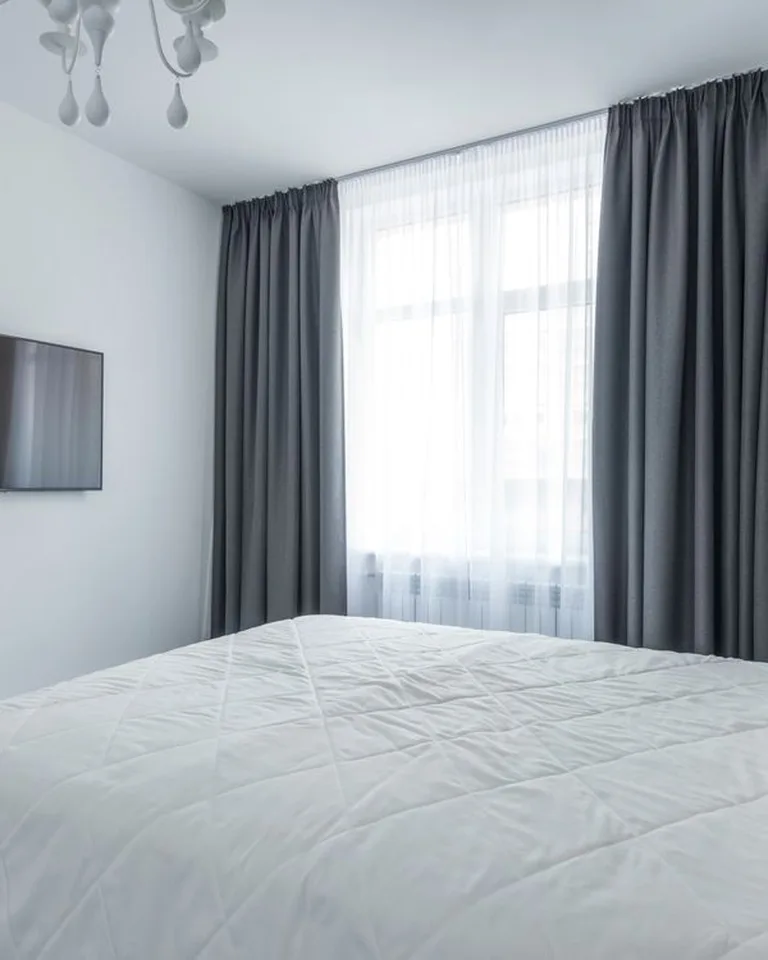
Use linen or cotton panels in a tone close to the wall color so the curtain reads as architecture rather than a hiding trick. Mount the rod as close to the ceiling as you can — the unbroken vertical drop pulls the eye upward and makes the wall feel taller and more deliberate, which is the opposite of what a sagging, mid-wall rod communicates. Machine-washable panels are worth the small premium; a concealed zone behind a curtain still needs airing out.
3. Lean a Big Full-Length Mirror to Fake Depth

Built-in closet doors give a bedroom visual depth for free. Without them, one wall can feel flat and unfinished. A full-length mirror — 60 to 72 inches tall, leaned rather than hung — restores that missing dimension: it bounces light, doubles whatever styling you have done, and gives you the outfit check that a closet door used to provide.
Frame it to look finished. A slim wood or painted frame turns a plain leaning mirror into a decor piece; thrifted mirrors in heavy ornate frames can be sanded and painted the wall color so they read as built-in. Lean it at a slight angle with a wall bumper behind the top edge for safety, and aim it at a wall or window — never at the ceiling. For placement rules that avoid doubling a room’s problems, see our full-length mirror placement guide for bedrooms.
4. Give the Room a Focal Point With Peel-and-Stick Wallpaper

A bedroom without closet doors often feels like it is floating — no built-in feature anchors the eye, so everything reads as scattered. One accent wall fixes this. Peel-and-stick wallpaper behind the bed gives the room a clear focal point, and everything else — rack, mirror, bedding — suddenly looks like it was placed in relation to something.
Choose matte, removable vinyl or non-woven paper in a low-contrast pattern or a solid, interesting color that already lives in your bedding: warm clay, dusty sage, or a soft botanical print. See how these tones behave at different light levels in our warm beige bedroom ideas. One wall only — wallpapering around the whole room in a small space fights the bedding and the rack for attention. Test a corner on older rental paint first; most modern papers lift cleanly, but 40-year-old paint is unpredictable.
5. Anchor Everything With an Oversized Rug
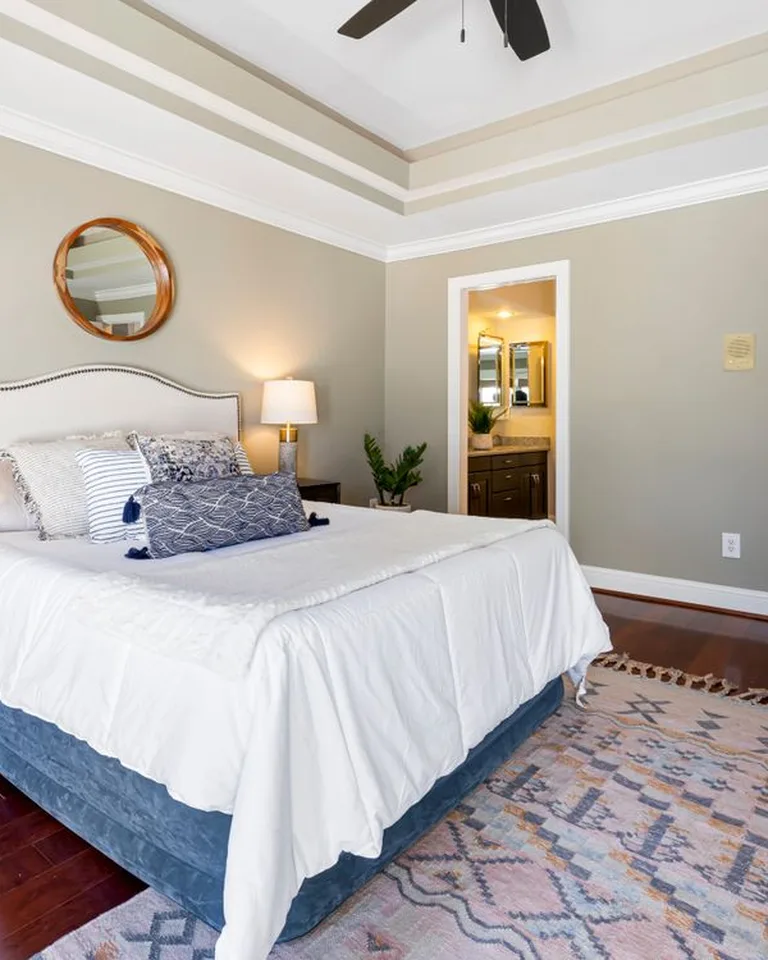
With no closet wall to define zones, furniture in a closet-less bedroom tends to drift apart — bed here, rack there, nothing quite connected. A rug that extends at least 18 to 24 inches past the sides and foot of the bed pulls the whole composition into one island. The room stops looking like storage arranged around a bed and starts looking like a bedroom that happens to have an open rack.
Size is the entire trick here: a rug that stops short of the bed legs fragments the floor into pieces. Flat-weave or low-pile in a natural fiber (jute-cotton blends shed less than pure jute) is practical for a room that gets daily foot traffic to the rack, and it rolls up easily when you move — a real consideration for renters. Our small-bedroom styling rules explain why the floor plane decides how big a room feels.
6. Add a Renter-Safe Headboard
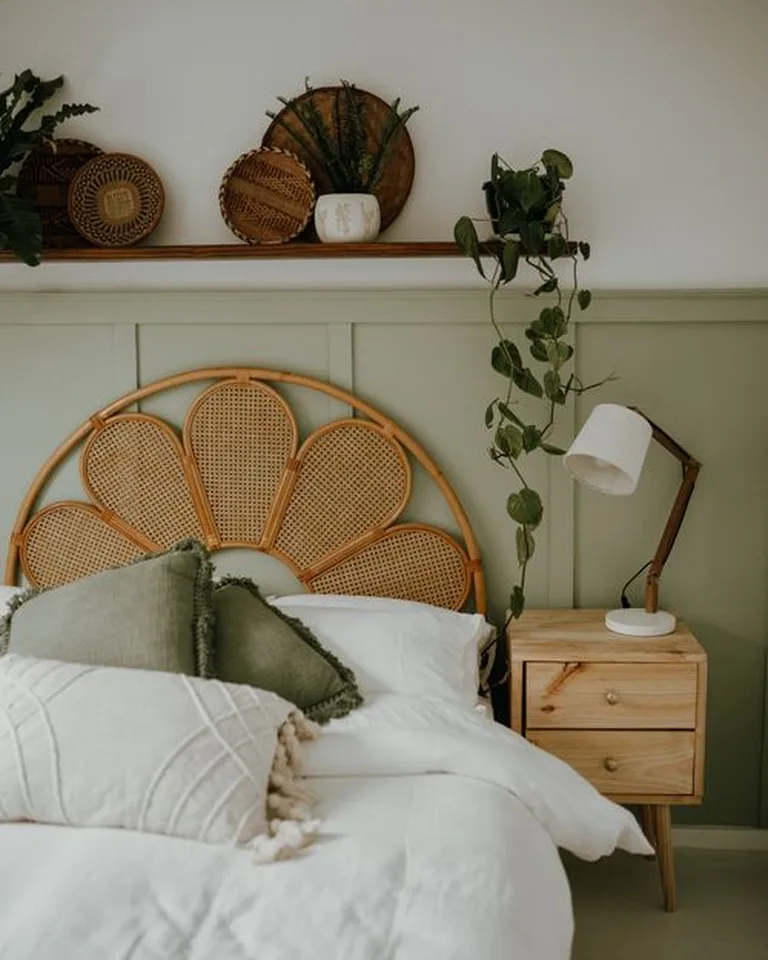
An unfinished bed is the second thing — after the rack — that makes a no-closet room look temporary. The eye goes to the head of the bed first, and a bare mattress against a bare wall says “just moved in.” A headboard fixes that in one move, and you do not need to drill for one: a slim rattan, cane, or upholstered panel simply leans against the wall, or a fabric peel-and-stick panel mounts with removable strips.
Keep the profile slim and neutral — natural rattan, washed oak, or oatmeal linen — so it coordinates with whatever rack frame and curtain color you chose. A strip of non-slip rug pad under the base stops a leaning headboard from creeping forward on hardwood. This single piece upgrades the whole bed zone from “mattress on frame” to “designed room.”
7. Layer the Bedding Until the Bed Looks Finished

The bed is the largest object in the room, and in a no-closet bedroom it has to carry more visual weight than usual — there is no closet wall or built-in wardrobe sharing the load. A flat duvet and two sleeping pillows will not do it. Build up: Euro shams (26 inches) standing behind your standard pillows, a quilted coverlet or duvet in washed linen, and a throw folded across the lower third in a tone drawn from the rug or curtains.
Keep the palette tonal — cream, oatmeal, soft clay, dusty sage — because the rack already contributes plenty of color and pattern; the bed needs to be the calm anchor, not a second display. Texture does the interesting work: mix linen, knit, and quilted weaves in the same tone. For how layered textiles warm a room without visual heaviness, see our cozy layered bedding ideas.
8. Claim the Dead Corner With One Sculptural Plant

Corners in no-closet bedrooms become dumping grounds — the chair that collects clothes, the bag pile, the “I’ll deal with it later” zone. Put something tall and intentional in the worst corner and the clutter habit has nowhere to land. A single sculptural plant — a fiddle-leaf fig, an olive tree, or a snake plant in a woven planter — activates the full height of the room and makes the corner read as a design decision.
One plant, one corner. A whole jungle in a small room competes with the rack for visual attention and starts looking like a greenhouse rather than a bedroom. Set the pot directly on the floor in a 12- to 16-inch woven planter — a plant stand adds height and instability you do not need — and keep it where the rack and the bed do not block its light.

9. Hang a Picture Ledge Above the Bed

With no closet doors to break up the walls, a bedroom can feel like four blank planes — especially above the bed, where the eye lands most. A picture ledge (24 to 48 inches, slim, in matte black or warm wood) gives you gallery-wall impact with a fraction of the holes: two screws or heavy-duty removable strips, and you can restyle the arrangement in minutes.
Mix small thrifted frames in two or three finishes with one larger statement print as the anchor — the big piece keeps the group from looking random. Keep the art landscape-oriented and tonal; the rack is already the room’s busy element, so the wall above the bed should be the calm one. Swap prints seasonally without patching a single hole.
10. Soften a Bare Wall With a Textile Hanging

All that exposed clothing and hard rack metal makes a no-closet room visually harsh, even when it is tidy. A soft textile on one wall — a macramé hanging, a woven wall tapestry, a simple fabric panel — adds the softness that closet doors normally supply. It is texture without permanence: one hook, no paint, no commitment.
Choose 40 to 60 inches wide on a wooden dowel, cream or warm beige cotton with fringe, and hang it above the bed or on the wall opposite the rack — the softness balances the rack’s hard lines across the room. Keep the weight under 4 pounds so a single quality hook carries it, and skip anything with glass or heavy beads that a curtain of fabric cannot support.
11. Make the Lighting Warm and Dimmable
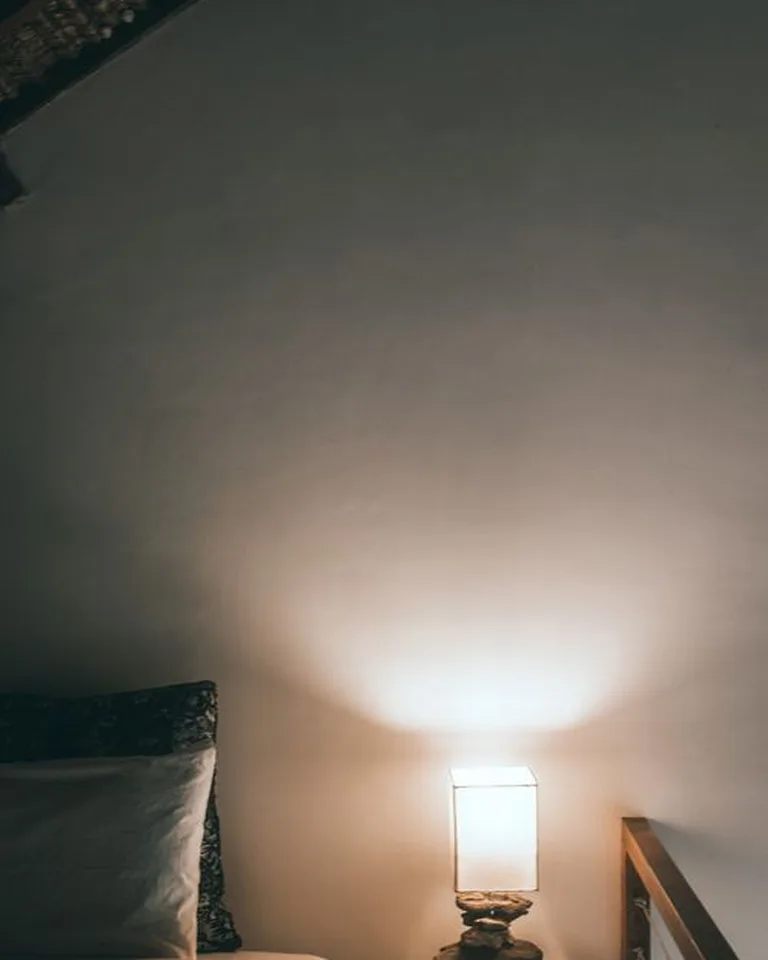
Harsh overhead light is the enemy of a no-closet bedroom: one cool ceiling bulb turns an open rack into a clothing warehouse and every wrinkle into a headline. Warm, dimmable light does the opposite — it blurs edges, flatters fabric, and makes the rack look like a boutique after closing. Put a plug-in dimmer on the bedside lamp (no electrician, no rewiring) and swap bulbs to 2700K warm white.
Layer it: a small lamp on the nightstand for reading, plus a soft glow source near the rack — a clip-on swing-arm lamp on the rack’s side post or a slim plug-in sconce on the adjacent wall. Light the rack like a display and the clothes start reading as merchandise in the best sense: curated, intentional, worth looking at. Keep string lights restrained — one warm strand along the curtain rod or picture ledge, not a web across the ceiling.
12. Style Floating Shelves as Display Vignettes

Floating shelves hold folded things in a no-closet bedroom, but how you style them decides whether they read as storage or decor. The rule from every styled open-wardrobe editorial is the same: shelves earn their place by looking arranged. Fold knits in tight, even stacks. Use woven baskets — never open plastic bins — for the overflow, in one material family so the shelf reads as one unit. Then give each shelf one non-clothing item: a small plant, a framed print, a candle.
Mount two shelves 8 to 12 inches deep above a low dresser or beside the rack, in white, oak, or matte black to match the rack frame. Leave breathing room — a shelf packed edge to edge reads as a warehouse shelf; a shelf at 70 percent capacity with one decorative object reads as a boutique wall. Removable-strip shelves or freestanding leaning shelves keep renters safe.
3 Decor Mistakes That Make a No-Closet Bedroom Look Temporary
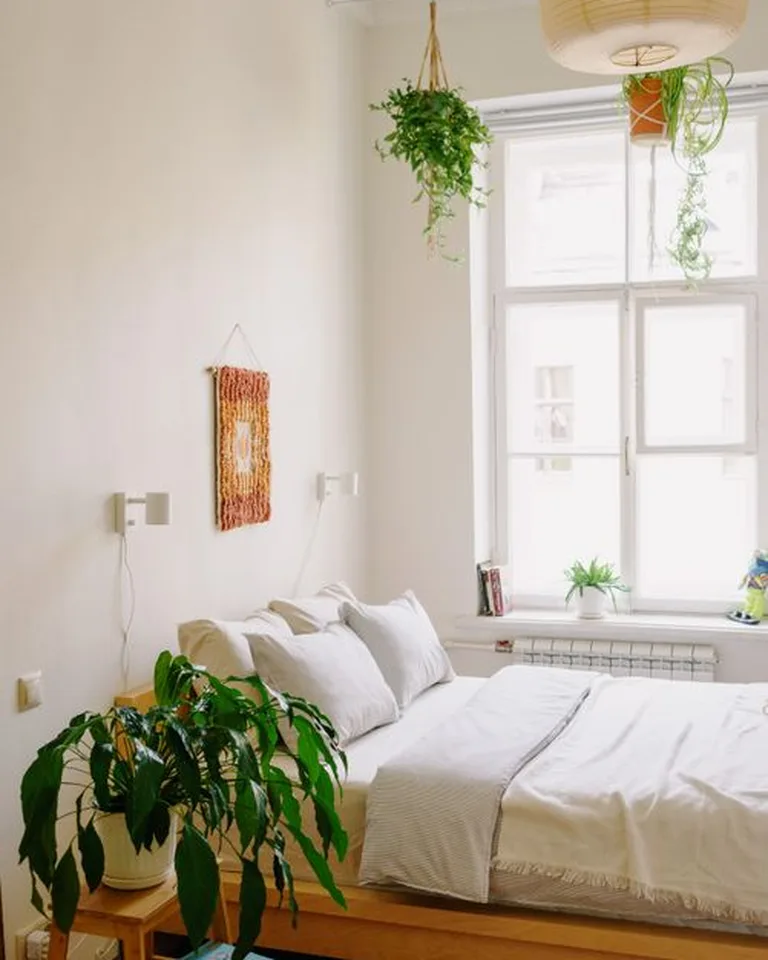
Before you buy anything, make sure you are not committing one of these three errors — each one undoes the work above:
1. Mixed hanger chaos. Wire hangers, plastic hangers, suit hangers, and hotel hangers all on one rack is the single fastest way to make an open wardrobe look like a dry cleaner’s back room. One matching set costs less than a pizza and changes the entire rack. This is the cheapest decor upgrade in the whole article.
2. Lighting the rack like a workbench. A cool-white overhead bulb aimed at the clothing makes every fabric look institutional and every color slightly wrong. Warm light at 2700K, dimmed in the evening, is what separates a boutique from a storage unit. Change the bulb before you buy a single decor item.
3. Leaving the window wall unfinished. In a no-closet bedroom, attention concentrates on the rack wall — so the window wall gets ignored: bare glass, a cheap blind, no curtain. Then the room’s brightest wall is its least finished. Floor-to-ceiling curtains on the window wall balance the rack wall and make the whole room feel complete instead of half-decorated.
Frequently Asked Questions
How can I make a bedroom without a closet look organized?
Make the visible parts look styled and hide the rest. Style the open rack like a boutique display — matching hangers, color-grouped clothing, an edited seasonal selection — and put everything else behind doors, inside woven baskets, or behind a floor-to-ceiling curtain panel. Keep the floor clear, coordinate your storage containers in one material, and give the room a focal point (wallpaper, art, or a headboard) so the eye lands somewhere intentional. Our small-apartment decor ideas use the same hide-and-display balance for tight rooms.
Are open clothing racks a good idea?
Yes, when they are styled rather than just loaded. Open racks work best with matching hangers, clothes arranged by color, an edited selection of current-season pieces, and a clean-framed rack (matte black metal, bamboo, or wood — not chrome utility). They double as decor in a room with no closet, which is exactly why the styling matters: an unstyled rack looks like overflow, while a styled one looks like a boutique display.
What is the best renter-friendly way to hang clothes without a closet?
A freestanding garment rack is the fastest no-drill setup — add a bottom shelf or baskets for shoes. If floor space is tight, a tension rod mounted between two walls creates an invisible hanging zone, and a ceiling-mounted track with curtains can hide an entire storage wall without drilling into it. Leaning headboards, peel-and-stick wallpaper, and picture ledges on removable strips let you finish the decor layer renter-safe too.
Can a bedroom still look stylish without a dresser?
Yes. The dresser-free bedroom works when you balance light, texture, and a clear focal point so the room feels designed rather than bare. Layer textiles (a woven rug, linen curtains, a macramé hanging), choose one accent wall or statement art piece to anchor the eye, and keep the visible storage styled — baskets and folded stacks in one material family. The rooms that fail are the ones that simply remove the dresser and add nothing in its place.
How do I hide clothes in my bedroom without a closet?
Floor-to-ceiling curtain panels are the highest-impact concealment: one rod near the ceiling and two linen panels can hide an entire rack, bin wall, or cluttered corner while adding softness the room was missing. Behind the curtain, woven baskets and lidded boxes in one material keep things tidy out of sight. Reserve the open, visible rack for your best current-season pieces — the display edit is what makes the rest of the concealment look like a choice rather than a cover-up.
A bedroom without a closet does not have to look like one. The rooms that pull it off share a single trait: nothing in them looks accidental. Style the rack like you mean it, give the walls a focal point, layer the textiles, warm the light — and the missing closet stops being the first thing anyone notices.