
14 Studio Bedroom Decor Pieces That Make a Small Space Feel Finished
A studio bedroom feels finished when three things are true: the bed has its own defined zone, the lighting works in layers instead of one harsh overhead, and everyday clutter has a closed home. You do not need a renovation or a big budget to get there. The fourteen decor pieces below each solve one specific problem that makes a studio bedroom look temporary, and together they turn one open room into a place that reads as intentional.
Start with the layout, not the shopping. Decide where the bed zone ends and the living zone begins, then let a rug, a screen, or a curtain mark that line. Everything else in this guide hangs off that one decision. If you are still working out the bones of the room, read studio bedroom design ideas for a cohesive look first, then come back for the finishing pieces.
Start by Marking the Zones on Paper
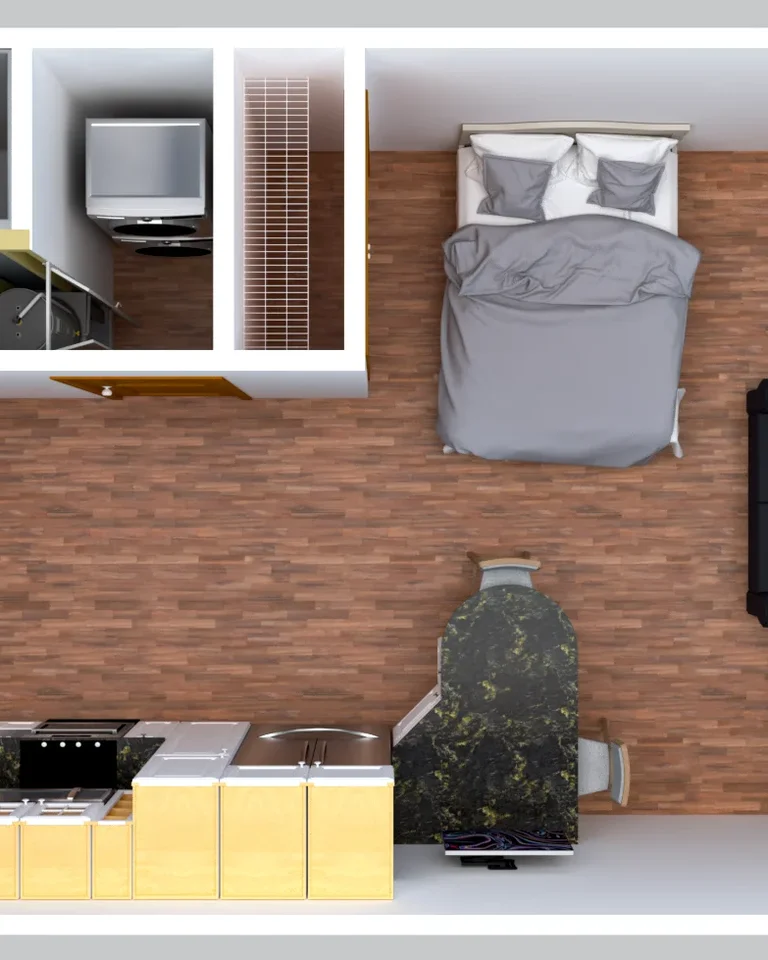
Before buying anything, sketch the room and mark the bed zone, the walkways, and the door swing. In a studio, a piece that fits the room but blocks the path to the kitchen will feel wrong no matter how good it looks. Measure the bed wall, the window wall, and the clear floor you need to walk around the bed, which is about two feet on the open side. That sketch tells you whether a bench fits at the foot of the bed, whether a screen has room to fold, and where a tall plant can live without becoming an obstacle.
1. A Rug That Draws the Bedroom’s Boundary
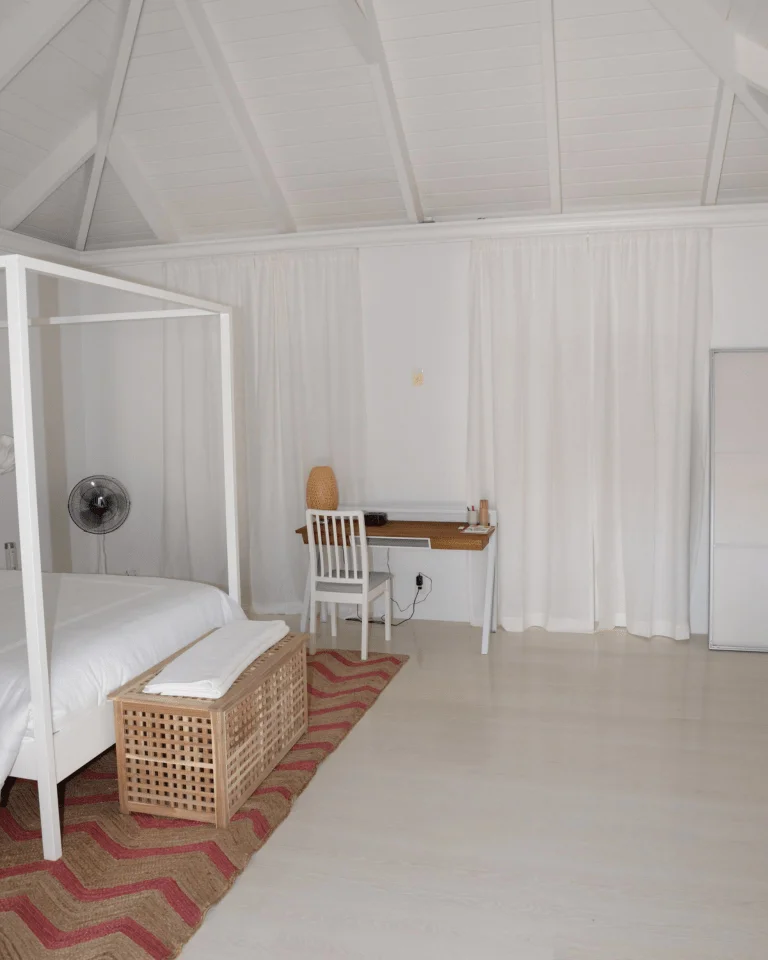
A rug is the fastest way to tell the eye where the bedroom starts. In a studio there is no wall to do that job, so the floor has to. Choose a rug large enough to slide under at least the bottom two-thirds of the bed and extend past both sides, so your feet land on something soft and the bed looks anchored rather than dropped in the middle of the floor.
Texture matters more than pattern here. A flat, low-pile rug with a subtle weave adds warmth without competing with bedding or art, and it is easier to clean in a room where the bed zone also serves as a walkway. If your budget only stretches to one rug, put it under the bed, not in the living area. For more ways to stretch a small footprint, see small bedroom ideas that make a tiny room feel bigger.
Tip: if the rug is slightly too small, layer a larger inexpensive jute rug underneath it. The layered edge reads as deliberate and buys you the size you need.
2. Layered Bedding Finished With a Bed Runner
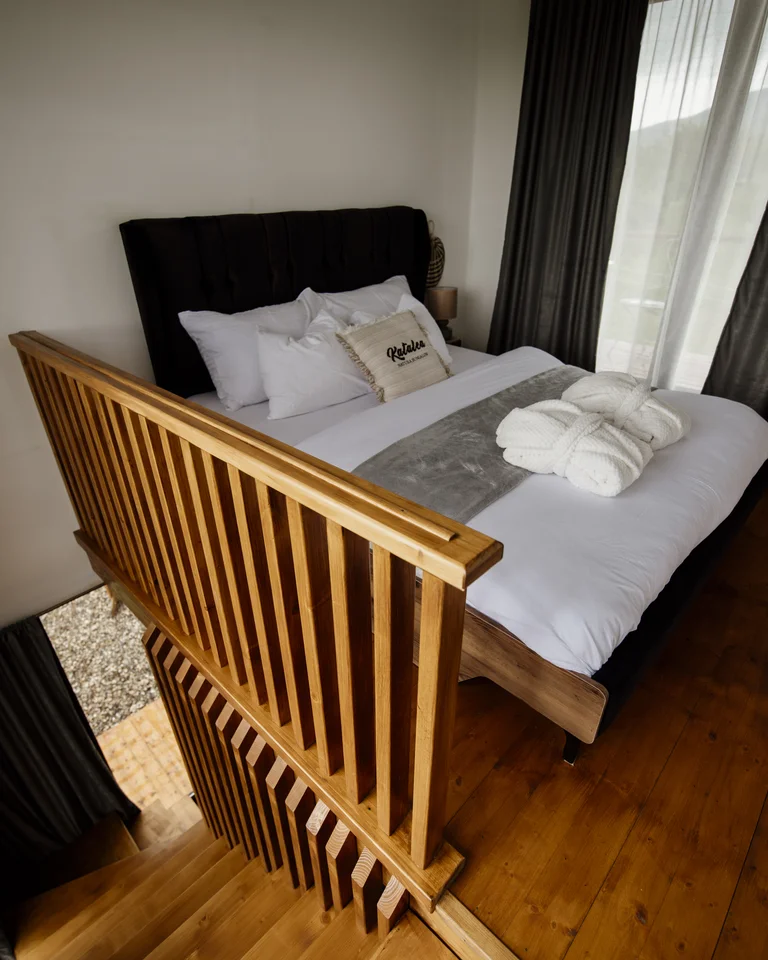
A bare duvet is the single biggest reason a studio bed looks like a dorm bed. The fix is layering: a fitted sheet, a duvet in a washable cover, a folded throw or bed runner across the foot, and pillows stacked in two rows. The runner is the piece most people skip, and it is the one that makes the bed look dressed rather than just made.
Keep the palette tight. Two main colors plus one accent, repeated in the runner and at least one pillow, is enough to tie the bed zone to the rest of the room. In a studio the bed is visible from the front door, so bedding is not private. Treat it like upholstery you chose on purpose.
Tip: a chunky knit or waffle-weave runner adds texture without heat, so the bed still looks layered in summer.
3. One Oversized Piece of Art Above the Bed
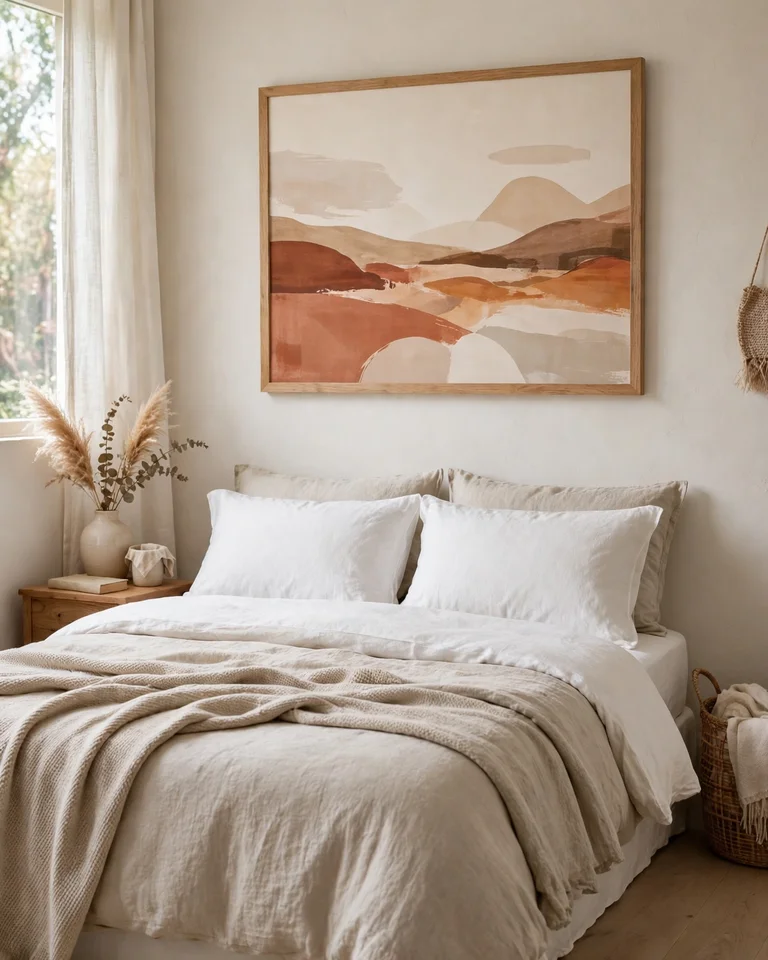
Small frames scattered across a studio wall read as clutter. One large piece above the bed does the opposite: it gives the sleeping zone a focal point and makes the whole wall feel designed. Aim for art about two-thirds the width of the bed, hung so its center sits at eye level when you are standing, not when you are lying down.
Abstract landscapes, botanical prints, and soft geometric work are safe choices because they set a color story without demanding attention. Pull one color from the art into your bedding or rug and the room starts to feel coordinated without matching sets.
Tip: if you rent and cannot drill, a picture ledge holds a large framed print and lets you swap art seasonally without new holes.
4. A Leaning Floor Mirror That Borrows Light
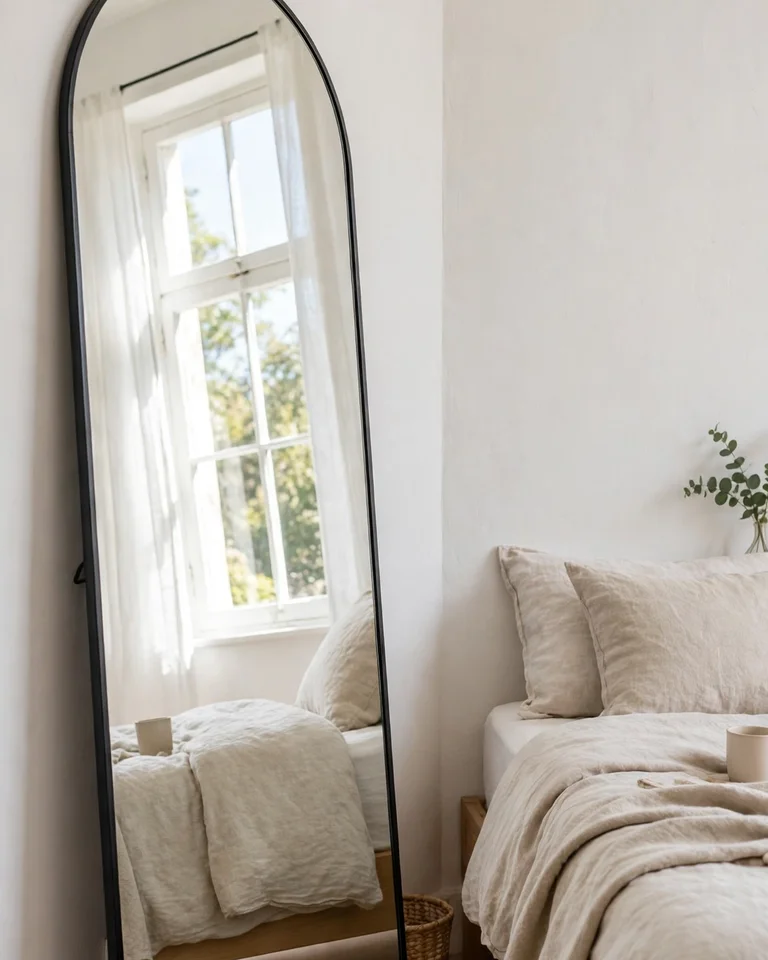
A full-length mirror leaning against the wall does two jobs in a studio: it gives you a place to check an outfit, and it bounces daylight deeper into the room. Place it where it reflects a window or a lamp, not a messy corner, because a mirror doubles whatever it faces.
A slim arched or rectangular frame keeps the piece from dominating a small wall. Anchor the top to the wall with a discreet strap if you have pets or wobbly floors, and keep the floor in front of it clear so the reflection stays clean.
Tip: a mirror opposite the bed zone makes the sleeping area feel twice as deep from the doorway, which is exactly the illusion a studio needs.
5. Wall Sconces and Layered Light, Not the Big Light
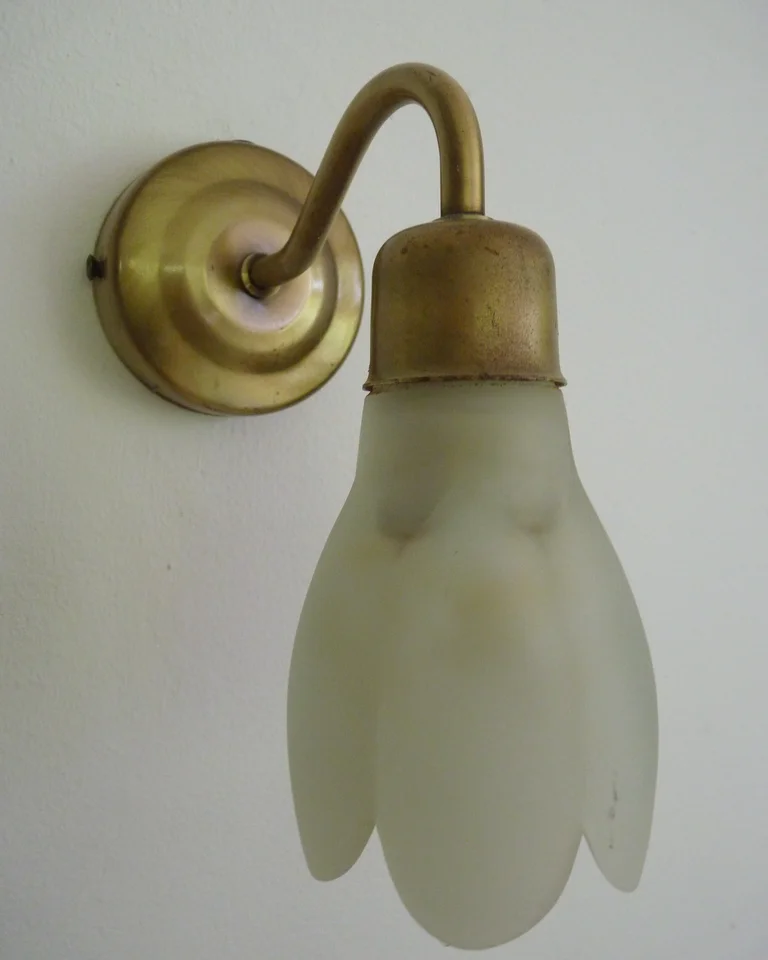
Nothing says unfinished faster than a single ceiling fixture doing all the work. Plug-in wall sconces beside the bed free up nightstand space, give you proper reading light, and let you switch the room from bright to soft without touching the overhead. Add a small table lamp on the far side of the room and you have three layers, which is what makes a space feel warm at night.
Choose warm bulbs, around 2700K, for the bed zone. Cool white light in a sleeping area feels like an office, and in a studio that light spills into the living zone too. Dimmer plugs cost very little and make even basic sconces feel considered.

Tip: hang sconces so the bottom of the shade sits just above shoulder height when you sit up in bed. That puts reading light where you need it and keeps glare out of your eyes.
6. A Slim Bench at the Foot of the Bed
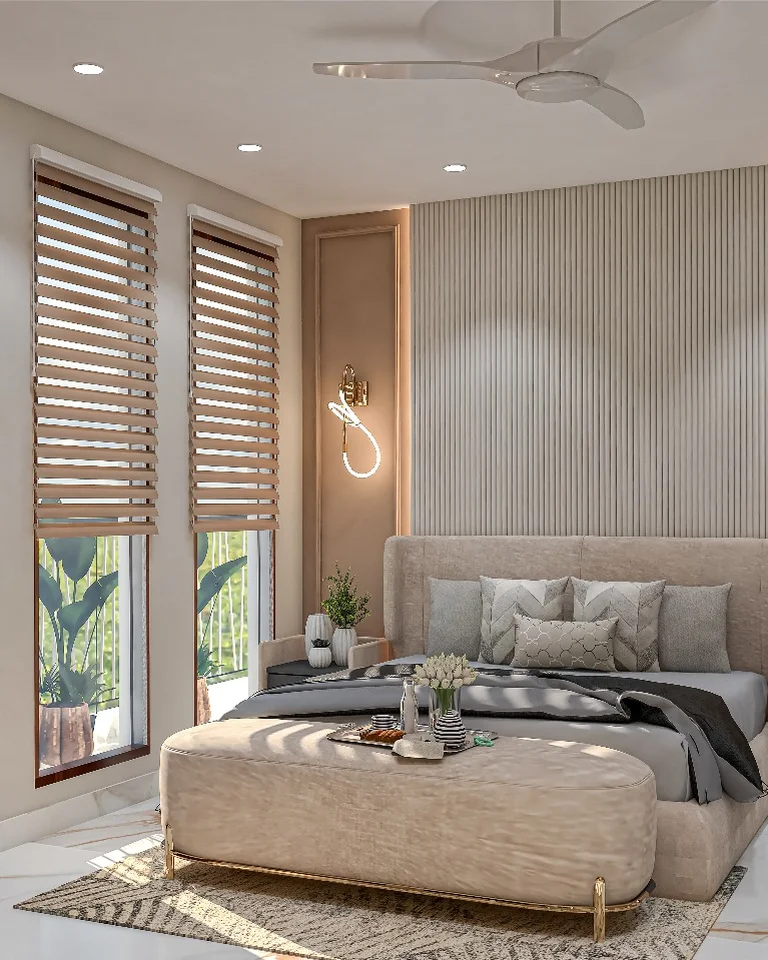
A bench at the foot of the bed is the piece that makes a studio bedroom look like a bedroom rather than a bed in a room. It gives you a place to sit while putting on shoes, a landing spot for tomorrow’s clothes, and a visual full stop at the end of the bed. In a studio, pick a slim upholstered bench with open legs so it does not block sightlines or eat floor space.
Storage benches earn their footprint twice over. One that opens up holds extra blankets, off-season bedding, or the throw you only use in winter, which keeps bulky items out of sight in a room with no spare closet.
Tip: leave at least two feet between the bench and the wall or furniture opposite, or the walkway around the bed becomes a squeeze.
7. A Folding Screen That Divides Without a Wall
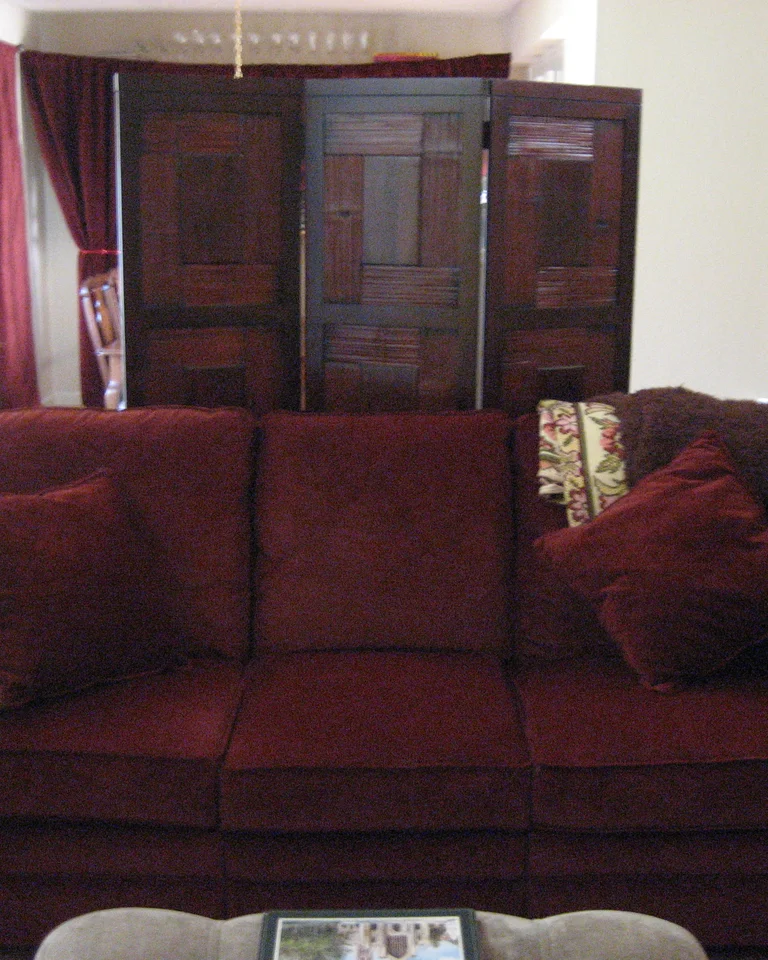
When you want the bed to feel private without building anything, a folding screen is the most flexible divider a studio allows. It stands on its own, folds away when guests come, and costs nothing to move when the layout changes. Wood, rattan, and fabric screens each change the mood: wood reads warm, rattan reads airy, fabric softens sound slightly.
Do not push the screen flush against the bed. Leave a small gap so air and light move around it, and so the bed zone feels like a nook rather than a box. A screen that blocks the window light will make the whole studio feel smaller, so angle it rather than running it straight across the room.
Tip: if your layout is awkward, a screen can hide the worst angle while you fix the rest. See awkward layout bedroom decor pieces for a finishing look for more problem-spot solutions.
8. A Tall Plant for the Empty Corner
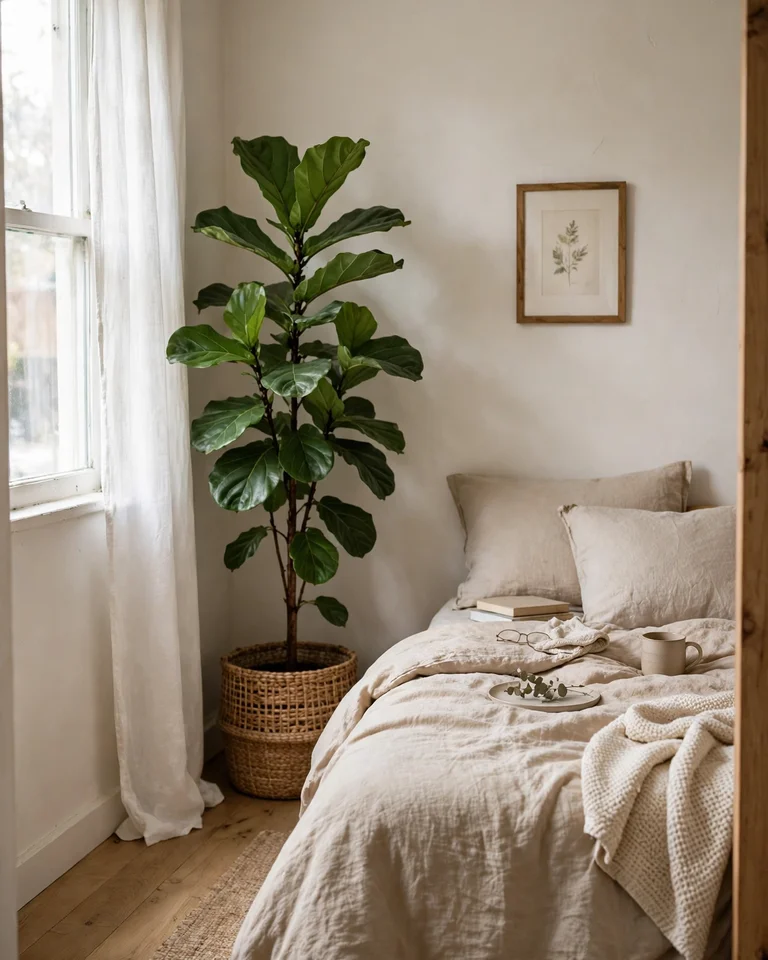
Every studio has one dead corner, usually where the bed wall meets the window wall, that no furniture quite fits. A tall plant fills it with height and life instead of another object. A fiddle-leaf fig, a monstera, or a tall snake plant all work, and a woven basket planter makes the pot itself part of the decor.
Be honest about light before you buy. If the corner gets little direct sun, a snake plant or ZZ plant will survive where a fiddle-leaf will sulk. One healthy tall plant beats three struggling small ones, and a dead plant in the corner is worse than an empty one.
Tip: raise the plant on a short stand so its leaves start above nightstand height. That keeps the corner from reading as a dark hole.
9. A Real Nightstand With a Catch-All Tray

A chair with a phone charger on it is not a nightstand, and the difference shows. Even a tiny nightstand with one drawer changes the bed zone, because it gives the small things of bedtime a real home. Add a catch-all tray on top for your phone, glasses, and jewelry, and the surface stops collecting random clutter.
If floor space is truly zero, a wall-mounted shelf at nightstand height does the same job without legs. Keep the styling to three things: light, the tray, and one personal item such as a book or a small vase. More than that and the surface becomes the clutter it was meant to solve.
Tip: a nightstand with a closed drawer hides chargers and cables, which matters twice as much when the bed is visible from the sofa. If storage is tight overall, studio bedroom storage ideas cover the rest of the room’s hidden spots.
10. Matching Baskets for Everything in Sight
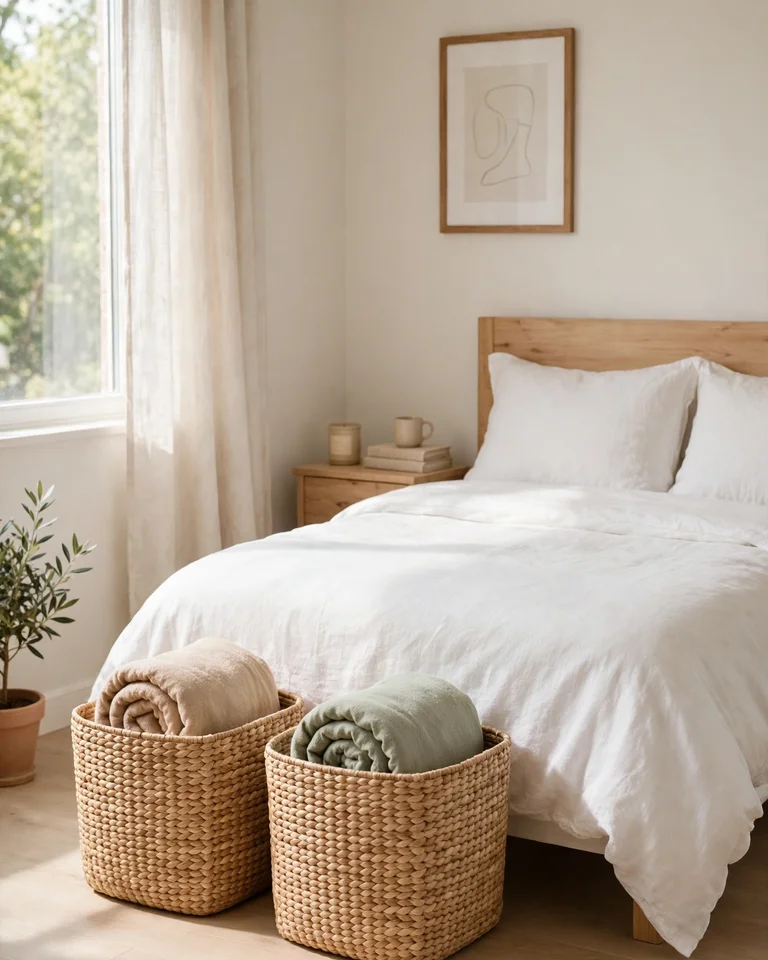
In a studio, storage is decor whether you like it or not, because there is nowhere to hide it. Matching baskets turn that problem into a style choice. Use the same material and a similar size for the baskets that hold throws, shoes, and extra linens, and the room reads as coordinated instead of improvised.
Seagrass, cotton rope, and woven paper baskets all soften the hard lines of bed frames and shelving. Keep lids on the baskets that hold laundry or anything you do not want to look at, and leave open baskets only for things that look good, like folded throws.
Tip: buy the baskets after the rug and bedding are set, so you can match their tone instead of guessing. Two large baskets beat five small ones in a small room.
11. Curtains Hung High and Wide
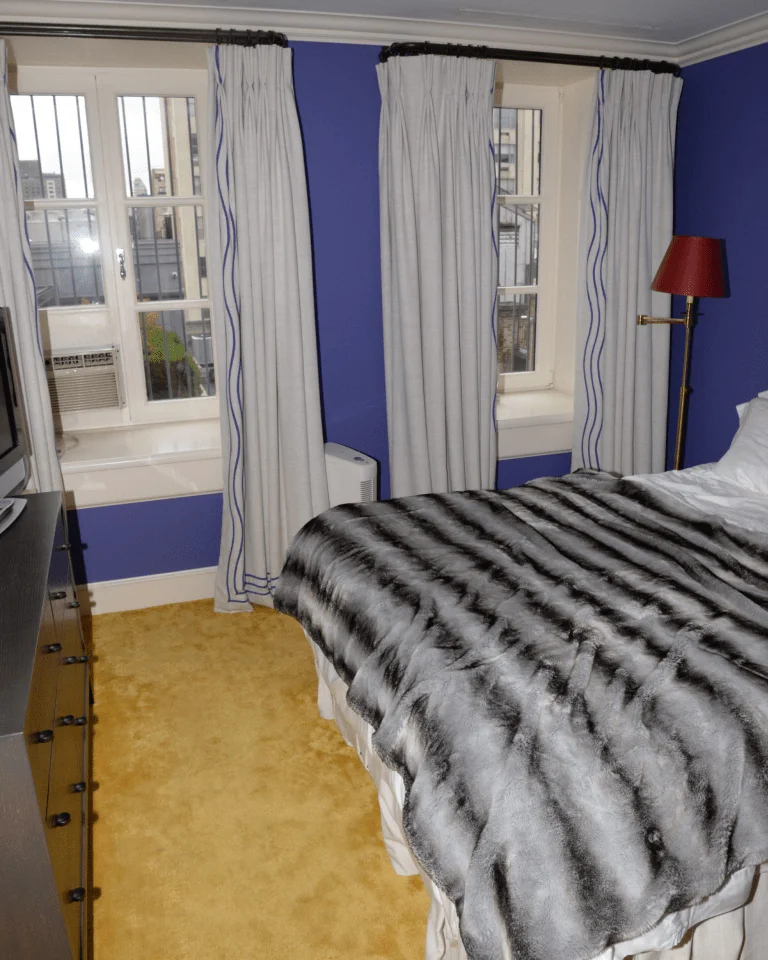
Curtains hung at the window frame’s edge make a window look small. The same curtains hung close to the ceiling and extended well past the frame on both sides make the window, and the wall, look larger. In a studio bedroom that trick also softens the hardest wall in the room and adds fabric warmth that bare walls and blinds cannot.
Linen and cotton blends drape well and filter daylight without blocking it. If you are stuck with rental blinds, hang the curtains over them and leave the blinds raised during the day. The layered look is intentional, and the blinds still work for privacy at night.
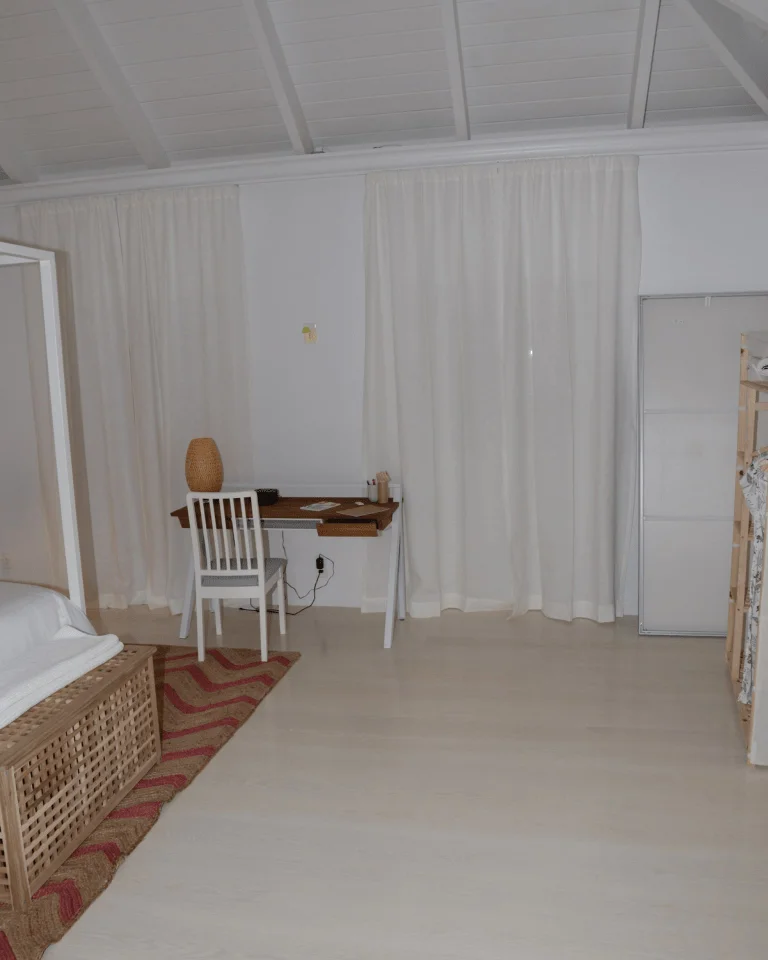
Tip: iron or steam curtains before hanging. Creases from packaging are the small detail that quietly makes new curtains look cheap.
12. A Headboard That Anchors the Bed

A bed pushed against a bare wall always looks temporary, even with good bedding. A headboard fixes that by giving the bed a back and the wall a purpose. Upholstered headboards add softness and make sitting up to read comfortable, which matters in a studio where the bed doubles as a lounge spot. Rattan and wood slat versions read lighter and suit warmer rooms.
If a real headboard does not fit the budget or the lease, an oversized piece of art or a fabric wall hanging at headboard width creates the same anchor. What matters is that something with clear edges sits behind the pillows, so the bed looks placed rather than parked.
Tip: match the headboard height to your art and sconces. When the three sit in one horizontal band, the whole bed wall looks designed.
13. A Lidded Hamper That Looks Like Furniture

Laundry is the most honest clutter in a studio, because there is no laundry room door to close. A structured hamper with a lid keeps it invisible and, if you choose woven or canvas in a tone that matches your baskets, it reads as furniture rather than a chore. Avoid mesh pop-up bags in the bedroom zone entirely; they are the visual equivalent of leaving the closet open.
Place the hamper where you actually undress, not where it looks tidiest in photos. A hamper that is a step too far away will not get used, and clothes on the bench undo the work of every other piece in this guide.
Tip: a hamper with a removable, washable liner stays fresh and means the basket itself never needs a deep clean.
14. Cord Covers and a Clear Floor
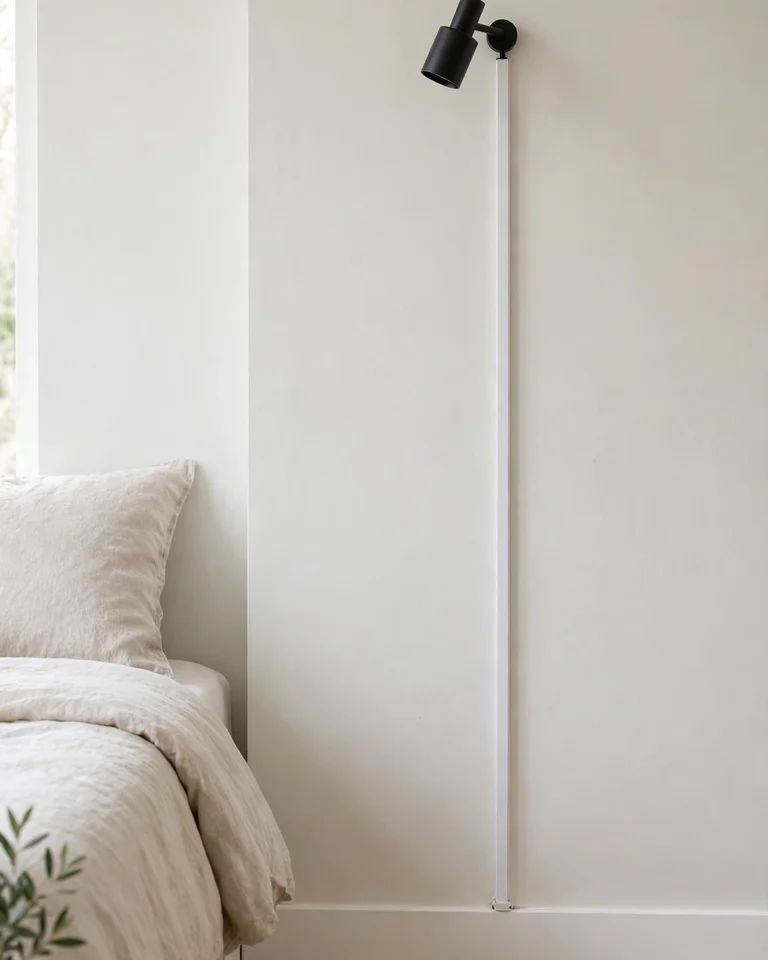
Visible cords are the last thing standing between a styled studio bedroom and a finished one. Lamp cords, sconce cords, and charger cables all gather around the bed, and the eye catches them even when everything else is right. Paintable cord covers run the cables along the baseboard or wall and, painted the wall color, disappear almost completely.
Start at the bed: route the lamp and sconce cords first, then the charger cable, then anything running to the TV or desk zone. A small cable clip behind the nightstand keeps the charging cable from falling to the floor every time you unplug.
Tip: do the cord covers last, after every other piece is placed. Moving a lamp after the covers are painted means redoing them.
Your Finished Studio Bedroom Checklist
Work through the room in this order and stop when it feels done, not when you have bought everything: define the bed zone with a rug, layer the bedding, hang one large piece of art, fix the lighting, give clutter a closed home, and hide the cords. Most studios feel finished after eight or nine of these pieces, and the rest are upgrades for later. If you are still deciding between a studio-specific plan and a general apartment approach, apartment bedroom decor pieces for a finished look covers the wider version of this guide.
Frequently Asked Questions About Studio Bedroom Decor
How do I make my studio bedroom feel bigger?
Define the bed zone with a rug, use a large mirror to bounce light, and keep furniture on visible legs so the floor shows through. One oversized piece of art beats several small frames, and closed storage keeps visual clutter down, which is what actually makes a small room feel cramped.
What small changes make the biggest difference in a studio?
Layered lighting, layered bedding, and curtains hung high and wide. Those three changes alter how the room feels at every hour of the day, cost less than a furniture swap, and work in rentals because nothing is permanent.
How big should artwork be above a bed?
About two-thirds the width of the bed. Smaller art floating on a big wall looks lost, while a piece at two-thirds width anchors the bed zone and reads as a deliberate focal point.
How do I decorate rental walls without damage?
Use picture ledges, leaning mirrors and screens, and adhesive hooks rated for the weight. A leaning floor mirror and a folding screen add major decor impact with no holes at all, and a picture ledge lets you swap art without drilling.
How do I keep a studio bedroom from looking like a dorm?
Replace temporary-looking items with finished versions: framed art instead of taped posters, a lidded hamper instead of a mesh bag, a real nightstand instead of a chair, and layered lighting instead of one overhead fixture. The swap from temporary to finished is what changes the whole room’s impression. For closets and clothes storage specifically, no-closet bedroom ideas and wardrobe alternatives go deeper.